Public Ground Near Elmira
Finding quality public hunting ground near Elmira, New York, can feel like a real challenge, especially when you're used to seeing vast stretches of private farmland or dense suburbs. Many hunters struggle to pinpoint accessible, productive spots without trespassing or getting lost in the maze of local regulations. This guide is here to cut through that confusion, helping you confidently identify and effectively hunt the public lands that surround the Elmira area, unlocking new opportunities for deer, turkey, and small game.
The Public Land Landscape Near Elmira
The Southern Tier of New York, where Elmira is nestled, offers a distinct character when it comes to public hunting lands. Unlike the sprawling, heavily protected Forest Preserves further north, this region's public access often comes in the form of State Forests. These lands are managed for multiple uses, including timber production, recreation, and wildlife habitat, which creates a dynamic and often highly productive environment for hunters.
State Forests: The Backbone of Local Public Access
When you're looking for public hunting opportunities near Elmira, your first thought should always turn to the New York State Forests. These aren't just patches of woods; they are often substantial tracts of land, sometimes thousands of acres, that dot the landscape across Schuyler, Chemung, Tioga, and Steuben counties. These forests are actively managed, which means you'll find a mosaic of habitat types: mature hardwoods, younger regenerating timber from past logging operations, scattered conifer plantations, and even old fields slowly reverting to brush. This variety is crucial for wildlife, offering everything from bedding cover to diverse food sources.
For example, large state forests like Schuyler County's Sugar Hill State Forest or Chemung County's Erwin Wildlife Management Area (which, despite its name, functions much like a State Forest in terms of general access) provide extensive opportunities. What makes these State Forests so appealing is their accessibility and the sheer amount of ground they cover. You can often find access points directly from town or county roads, and once you're in, you can typically walk for miles. These areas are a far cry from the wilderness of the Adirondacks, but they offer an authentic Southern Tier hunting experience, often with good populations of deer, turkey, and grouse. Understanding how these areas are managed for timber can also give you a leg up; recent logging operations create fantastic browse for deer and thick cover for grouse and rabbits. Check out Southern Tier State Forest Blocks for more on these important areas.
Wildlife Management Areas: Habitat Focused Opportunities
While State Forests are abundant, Wildlife Management Areas (WMAs) in the broader region also offer excellent hunting, albeit with a slightly different management focus. WMAs are specifically managed for the production and well-being of wildlife, meaning habitat improvement projects are a primary goal. While not right in Elmira, a significant WMA like Connecticut Hill Wildlife Management Area, located a reasonable drive northeast, is a prime example. This WMA is one of the largest in the state and features diverse habitats including mature forests, brushy fields, and wetlands, all managed to maximize wildlife populations.
These areas can be goldmines for certain species. For instance, a WMA might have specific fields planted with food plots, or clearings maintained to benefit early successional species that grouse and woodcock thrive in. However, because they are often well-known and relatively easy to access, WMAs can see heavier hunting pressure, especially on opening days. It pays to do your homework and scout these areas thoroughly, looking for less obvious access points or deeper sections that other hunters might overlook. You can get a better sense of access through Connecticut Hill Wildlife Management Area Access. Always remember that WMAs might have specific regulations that differ slightly from general State Forest rules, so always consult the DEC website or signage at the property.
County Forests and Other Local Options
Beyond the larger state-managed lands, you might also find smaller, localized opportunities in the form of county forests or other municipal lands. These are less common than State Forests and WMAs, but they can sometimes offer secluded spots, especially for smaller game. These tracts often vary widely in their hunting regulations and access policies, so it's critical to research each one individually. A quick call to the county clerk or local land management office can usually clarify what's allowed.
It's not uncommon for these smaller parcels to be former farmsteads or woodlots acquired by the county, offering a mix of open land and mature timber, often bordering private agricultural fields. While they might not provide the vast acreage for a multi-day backcountry hunt, they can be excellent for a morning turkey hunt, an afternoon squirrel hunt, or even setting up for deer if you've done your scouting and understand deer movement patterns between the small public parcel and surrounding private land. Sometimes, these small tracts are truly overlooked, offering a quiet hunting experience that larger public areas can't provide.
Navigating and Scouting Your Public Ground
Once you've identified potential public hunting spots near Elmira, the real work begins: learning how to navigate them and, more importantly, how to scout effectively. Relying solely on a paper map or vague directions can lead to frustration and wasted time. Modern tools and good old-fashioned legwork are your best friends here.
Essential Digital Tools: onX Hunt and GoHunt
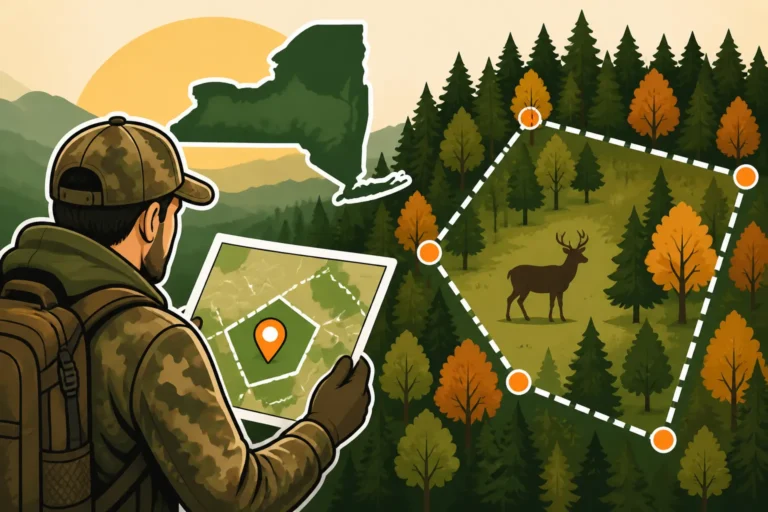
In today's hunting world, digital mapping applications are absolutely indispensable, especially when you're hunting public land near developed areas like Elmira. Services like onX Hunt and GoHunt have revolutionized how hunters approach scouting and navigation. These apps allow you to see property lines with incredible accuracy, which is paramount when public and private lands are intermingled. You can instantly tell if you're standing on State Forest land, a WMA, or an adjacent private parcel, preventing accidental trespass.
Beyond boundary lines, these apps provide invaluable topographical maps that reveal terrain features like subtle ridge lines, steep ravines, and swampy bottoms—all critical for understanding deer and turkey movement. You can mark waypoints for sign you find, potential stand locations, or access routes. Imagine virtually scouting an area from your couch, identifying potential funnels or bedding areas before you ever step foot on the ground. Reading Aerial Photos for Southern Tier Deer is an excellent resource for this. The ability to download maps for offline use is also a game-changer, as cell service can be spotty in many of these wooded areas. Whether you're using onX Hunt to track your walk and mark a fresh scrape, or GoHunt to analyze historical satellite imagery for changes in timber cuts, these tools empower you to make informed decisions about where to spend your hunting time and how to safely navigate unfamiliar territory.
Physical Reconnaissance: Boots on the Ground
While digital maps are powerful, there's no substitute for putting boots on the ground. Pre-season scouting allows you to verify what you see on your maps and discover nuances that no aerial photo can convey. Walk the boundaries, especially where public land meets private, to identify pinch points, fencelines, and funnels that deer might use. Look for active deer trails, rub lines, and fresh scrapes, which can tell you a lot about buck activity. Pay attention to changes in elevation, water sources, and different timber types—these are all key elements of good habitat.
When scouting for turkeys, listen for gobblers in the spring, look for scratching in the leaves, and identify potential roosting areas along creek bottoms or on prominent ridges. For grouse, focus on dense, young timber, especially aspen thickets or alder runs. Grouse Hunting New York Aspen Cover provides great insights here. The more time you spend in the woods before the season opens, the better you'll understand the local wildlife patterns and the lay of the land. Remember to scout quietly and leave no trace, just as you would during hunting season.
Understanding Hunting Pressure and Finding Seclusion
Public lands, especially those easily accessible by road, will inevitably experience hunting pressure. This is a reality you have to accept and plan for. However, just because there are other hunters doesn't mean you can't find success. The key is often to go where others aren't willing to go. Look at your maps and identify areas that are a half-mile or more from the nearest road or parking area. Often, a few hundred yards off the beaten path is all it takes to find less disturbed ground.
Consider terrain. Steep hillsides, dense briar patches, or swampy areas often deter casual hunters. These "hard-to-reach" spots can become sanctuaries for deer and other game, especially after opening day. Pay attention to wind direction and thermals, particularly on ridgelines, to plan entry and exit routes that minimize your disturbance. Sometimes, it's not about finding entirely new ground, but simply understanding how to access and hunt familiar areas more strategically to avoid the crowds and find game that has been pushed into thicker cover.
Species-Specific Opportunities on Elmira's Public Lands
The public lands around Elmira offer a fantastic array of hunting opportunities for various species. Each animal has its preferred habitat and behaviors, and understanding these can significantly increase your chances of success.
Deer Hunting: Whitetails in the Southern Tier
Deer hunting is undoubtedly the most popular pursuit on New York's public lands, and the Southern Tier whitetail population is robust. On State Forests near Elmira, you'll find deer scattered throughout the mixed hardwood forests, especially where timber harvests have created new growth for browse. Look for clear-cuts that are 3-10 years old; these areas offer excellent food and bedding cover. Mature oak ridges are also crucial during the fall, providing acorns that are a prime food source. Deer will often travel considerable distances to feed on acorns, then retreat to thick cover to bed down.
Early in the season, deer might be focused on agricultural fields on adjacent private land, using public woodlots primarily for bedding and travel corridors. As the season progresses and hunting pressure mounts, they'll become more elusive, often retreating into the densest cover. During the rut, however, bucks will be on the move, chasing does across all types of terrain, including public ground. Focus on funnels, saddles, and creek bottoms that connect different habitat types. Consider still-hunting through thick sections, or setting up a treestand near a well-used trail between feeding and bedding areas. Don't forget to report your harvest according to New York Deer Reporting Requirements.
Turkey Hunting: Spring and Fall Gobblers
New York's wild turkey restoration has been a massive success, and the public lands around Elmira offer fantastic spring and fall turkey hunting. In the spring, gobblers will be vocal and focused on breeding. Listen for their morning calls from the roost along creek bottoms or prominent ridge lines. Once they hit the ground, they'll be looking for hens, often moving through open hardwoods and sometimes into old fields or logging clearings to strut. Setting up against a large tree with good visibility and calling them in is a classic tactic. Calling a New York Gobbler Off the Roost offers excellent strategies.
Fall turkey hunting is a different beast entirely. Flocks are often larger and more spread out. The most effective strategy is often to locate a flock, bust it up, and then set up to call the birds back together an hour or two later. Public lands with a mix of mature timber and dense undergrowth are ideal, as turkeys need roosting trees and ample foraging opportunities. They'll scratch through fallen leaves for acorns, beechnuts, and insects. Fall hunting requires patience and good woodsmanship, but the rewards of a successful hunt can be incredibly satisfying. For more details, refer to Hunting New York's Fall Turkey Season.
Small Game and Upland Birds
Beyond deer and turkey, the public lands around Elmira provide excellent opportunities for small game and upland birds. Gray squirrels are abundant in virtually any mature hardwood forest, especially those with oak, hickory, or beech trees. Look for cuttings on the forest floor, indicating where squirrels have been feeding. Rabbit populations thrive in areas with thick brush, briar patches, and regenerating clear-cuts—places where hunters might shy away due to the difficulty of travel.
Ruffed grouse, while their numbers have seen some decline, can still be found in appropriate habitat on these public lands. Focus your efforts on younger timber stands, especially those dominated by aspen or dense alder thickets along streams. These areas provide the cover and food sources grouse need. Woodcock also utilize alder runs and damp, brushy areas, often found in similar habitats to grouse. Hunting these birds often involves walking slowly and deliberately, pausing frequently, and being ready for a sudden flush. A good bird dog can be invaluable, but even without one, methodical still-hunting can yield results. For specific tactics, consider Hunting Grouse and Woodcock Together.
Rules, Regulations, and Respect
Hunting on public land comes with responsibilities. Knowing the rules and regulations, and practicing good ethics, ensures that these precious resources remain available and enjoyable for everyone.
General Public Land Regulations
New York State Forests and WMAs generally operate under a set of common rules, but it's vital to remember that specific areas might have unique restrictions. Always double-check the current DEC regulations for the specific parcel you plan to hunt. Here are some common points:
- Vehicle Access: Most State Forests have designated parking areas, and vehicle access on unpaved roads or trails is usually restricted. Respect posted gates and signage.
- Treestands and Blinds: Portable treestands and ground blinds are typically allowed, but they must be removed at the end of the hunting season (and often within a few days after season close). Nails, screws, or any other method that damages trees are generally prohibited. Make sure to adhere to Treestand Rules on New York Public Land.
- Camping: Primitive camping is often allowed on State Forests, but there might be restrictions on length of stay or proximity to water sources. Campfires might require permits or be prohibited during dry periods.
- Litter: Pack it in, pack it out. Leave no trace of your visit. This includes spent shell casings, food wrappers, and anything else you bring in.
- Legal Shooting Hours: Adhere strictly to New York Legal Shooting Hours, which typically start 30 minutes before sunrise and end 30 minutes after sunset.
- Blaze Orange/Pink: During firearm seasons, blaze orange or pink is required for safety. Consult New York Blaze Orange Requirements for specific rules regarding how much is needed.
Ethical Hunting and Respect for Fellow Outdoorsmen
Being a responsible hunter goes beyond just following the letter of the law. It means practicing ethical hunting and showing respect for the land, wildlife, and other users.
- Game Recovery: Make every effort to recover any game you harvest. This might mean following a blood trail for hours, or returning the next morning if darkness falls.
- Shot Selection: Take only ethical shots within your effective range, ensuring a clean kill.
- Sharing the Resource: Public lands are for everyone. If you encounter another hunter, a hiker, or a birdwatcher, be courteous. A friendly nod or a brief conversation can go a long way. If someone is already set up in a spot you intended to hunt, find another area. There's plenty of public land for everyone if we're all considerate.
- Minimizing Disturbance: Be mindful of how your actions impact other hunters and the wildlife. Avoid loud noises, keep dogs under control if hunting with them, and try to enter and exit your hunting areas as quietly as possible.
- Reporting Violations: If you witness poaching or other illegal activities, report them to the DEC Law Enforcement immediately. Protecting the resource is everyone's responsibility.
| Public Land Type | Primary Characteristics | Primary Game Species | Hunting Pressure (General) | Notes |
|---|---|---|---|---|
| State Forests | Managed timber, mixed hardwoods, old fields, diverse terrain | Deer, Turkey, Squirrel, Rabbit, Grouse, Bear | Moderate to High | Good mix of food and cover due to active management; extensive acreage. |
| WMAs | Habitat-focused management, varied ecosystems, food plots | Deer, Turkey, Waterfowl, Upland Birds, Bear | High | Excellent habitat but can be popular; check specific regulations. |
| County Forests | Smaller tracts, often mixed with private land, varying rules | Deer, Small Game, occasional Turkey | Low to Moderate | Requires local research; can offer secluded spots. |
Navigating the public hunting landscape around Elmira definitely has its learning curve, but with the right tools, some dedicated scouting, and a solid understanding of local regulations, you can unlock some truly rewarding experiences. Embrace the variety these Southern Tier lands offer, and you'll find yourself making memories and filling your freezer for years to come.
Disclaimer
This article is for general informational purposes only and does not constitute professional advice. Laws, prices and regulations vary by location and change over time. Consult a qualified professional for guidance on your specific situation.