New York Legal Shooting Hours
One of the trickiest parts about hunting in New York, especially for those who are new to it or who hunt multiple species, is keeping track of the legal shooting hours. It’s not just a simple "sunrise to sunset" rule that many imagine; there are nuances for different game, different seasons, and even different zones, and missing the mark can easily land you in hot water with the DEC. This guide is here to untangle all those rules, offering clear explanations and practical advice so you can stay legal and maximize your time in the field, whether you're after a big buck or a brace of ducks.
Understanding the Basic Framework of New York's Shooting Hours
New York's hunting regulations regarding shooting hours are designed to ensure fair chase, promote safety, and give wildlife a bit of a break during the deepest dark. But let's be honest, it can feel a bit like trying to solve a puzzle when you’re just trying to figure out when you can legally pull the trigger.
The "Dawn to Dusk" Principle: What it Really Means
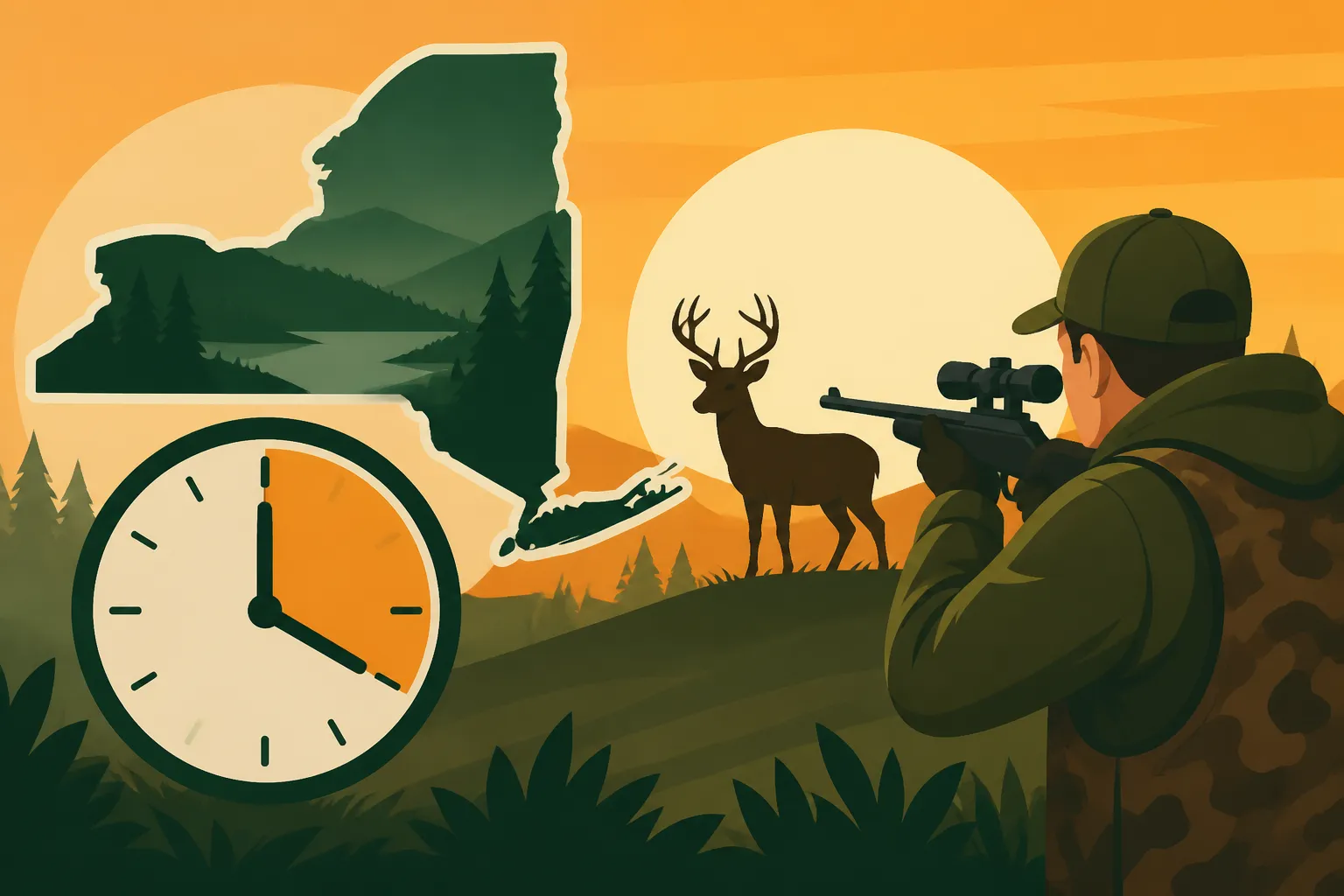
When you hear "dawn to dusk," most people picture the exact moment the sun peeks over the horizon and the second it dips below. However, for most big game and small game hunting in New York, the legal shooting hours extend a bit beyond these literal moments. Specifically, for deer and bear, you can legally shoot from a half-hour before official sunrise until a half-hour after official sunset. This "half-hour window" is absolutely crucial, and it’s where many hunters either gain an advantage or make a critical mistake. It acknowledges that there's still usable light, often the best light for deer movement, both before the sun officially rises and after it sets. For example, if sunrise is at 7:00 AM, you can start shooting at 6:30 AM. If sunset is at 5:00 PM, you can continue to shoot until 5:30 PM. This extra time is especially valuable during the late season when daylight hours are short, and deer are often on their feet early and late. Understanding these precise timings, rather than just guessing, is key to success and legality.
General Rules for Big Game and Small Game
While the half-hour window before sunrise and after sunset applies broadly to most big game in New York, like white-tailed deer and black bears, it's not a universal rule for all species. Small game, such as squirrels, rabbits, pheasants, and grouse, generally follow the same half-hour rule. This means whether you're sitting in a treestand for a deer or walking a brushy fencerow for cottontails, your legal shooting window for these animals will align with the daily sunrise and sunset times plus those precious thirty minutes on either end. The idea behind this consistent rule is to offer hunters ample opportunity during periods of active wildlife movement, while also creating a clear, easy-to-understand standard for enforcement. It simplifies things for hunters who pursue various species throughout the year, removing some of the guesswork that might otherwise lead to violations.
The Role of Official Sunrise and Sunset Times
The term "official" is important here. You can't just eyeball the sky and guess when the sun is up or down. New York State relies on official sunrise and sunset times, which are calculated by the National Oceanic and Atmospheric Administration (NOAA) for specific locations. These times vary not only day by day but also significantly from east to west across the state. What might be official sunrise in Montauk on Long Island could be minutes different from sunrise in Buffalo on the same day. It's vital to check the official times for your specific hunting location each day you head afield. Many hunting apps, weather apps, and even a quick search online can provide these exact times. Without knowing these precise moments, you're essentially flying blind, risking a ticket or worse. Always know your local times; don't rely on general newspaper listings that might be for a central point in the state, or worse, just what your buddy told you.
Navigating the Nuances: Specific Species and Zones
While the general half-hour rule covers a lot of ground, New York hunting regulations have specific carve-outs for certain species, particularly migratory birds, due to federal guidelines. These differences can catch even experienced hunters off guard, so it’s essential to be aware of them.
Deer and Bear: The Critical Half-Hour Windows
For deer and bear hunters, the half-hour before sunrise and half-hour after sunset rule is your golden standard. These periods, often referred to as "low light," are when deer and bear are most active, transitioning from bedding areas to feeding grounds or vice-versa. This is why experienced hunters often choose stand locations that allow them to watch travel corridors during these specific times. Imagine sitting in your treestand in the Catskill Forest Preserve, bundled up against the chill, and seeing that trophy buck step out of a thicket just as the sky starts to lighten – you need to know exactly when your legal shooting time begins. Missing that first or last legal minute could mean the difference between a successful hunt and watching the animal disappear into the shadows. Similarly, when Hunting Bears Without Bait in New York, understanding these critical low-light periods is paramount as bears often move under the cover of darkness. This consistent rule helps simplify the experience for hunters pursuing these popular big game species throughout New York's diverse landscapes, from the Adirondacks to the Southern Tier. For instance, knowing the precise "New York Southern Zone Firearm Dates" or "New York Northern Zone Firearm Dates" is only part of the equation; understanding the daily legal shooting hours within those dates completes your preparation.
Waterfowl and Migratory Birds: Federal Regulations at Play
Here’s where things get a bit more complex, primarily due to federal regulations governing migratory birds. For ducks, geese, and other migratory game birds, the legal shooting hours are typically from a half-hour before official sunrise until official sunset. Notice the difference? You don't get that extra half-hour after sunset that you do for deer and bear. This distinction is vital for waterfowl hunters who often find themselves setting up decoys in the pre-dawn darkness and packing up as the last rays fade. The U.S. Fish and Wildlife Service, which oversees migratory bird regulations, sets these hours to provide hunting opportunities while also protecting bird populations, and states like New York must adhere to these federal mandates. If you're out in the blinds on Lake Champlain, for example, remember that when the sun dips below the horizon, your shooting time is over. This means checking your official sunset time is even more critical when pursuing waterfowl, as there's no grace period on the back end. Hunters should always consult the current New York Waterfowl Zones and Seasons guide and ensure they have their New York Migratory Bird Certification to understand all the specific rules.
Coyote and Predator Hunting: When the Rules Change
New York offers hunters unique opportunities for coyote and other predator hunting, and the shooting hours for these species can vary significantly. For coyotes, the rules are often much more liberal, allowing for hunting 24 hours a day, meaning you can hunt them day or night throughout much of the year. This is a significant departure from big game and small game regulations and is largely due to coyote population management goals, as they are often seen as a nuisance or predator of livestock and deer fawns. However, there are specific regulations concerning how you can hunt coyotes at night, including restrictions on artificial lights, calls, and firearms in certain areas. It's not a free-for-all; you still need to know the specific rules for night hunting, which might involve limitations on weapon types or the use of specific lighting devices. Always review the detailed New York Coyote Hunting Season Rules before heading out after dark. For other furbearers and predators, the rules might revert to the standard big game shooting hours, so it's always best to check the current NYSDEC hunting guide for each specific species you intend to pursue. The variability here really underscores why knowing the regulations for your target species is paramount.
The Impact of Time Changes and Digital Tools
Beyond the species-specific rules, the constantly shifting nature of time itself, particularly with Daylight Saving Time, adds another layer of complexity. Fortunately, modern technology offers excellent solutions to keep you legal and on track.
Daylight Saving Time: Adjusting Your Hunt Schedule
Ah, Daylight Saving Time (DST) – the biannual ritual that throws everyone off their stride, especially hunters. When the clocks "spring forward" in March, we lose an hour of morning light, and suddenly that 6:00 AM start feels like 5:00 AM. Conversely, when clocks "fall back" in November, we gain an hour in the morning, pushing back legal sunrise by a full 60 minutes. This can be incredibly disorienting for your internal clock and your hunting schedule. A spot you scouted for an early morning sit might suddenly be illegal to hunt for another hour after the time change, or your evening hunt might end prematurely because you miscalculated the new sunset. It's not just about getting to your stand in the dark; it's about making sure you are legally able to shoot when you arrive. Always, always make a conscious note of the DST changeovers and adjust your alarm, your planning, and your mental clock accordingly. A simple error here can easily lead to a violation, or at the very least, a missed opportunity because you arrived too early or stayed too late.
Using Technology to Stay Legal: Apps and Websites
In this modern age, there's absolutely no excuse for not knowing the exact legal shooting hours for your specific location. Forget trying to remember complicated formulas or carrying around bulky tables. Technology has made this incredibly easy. Many excellent hunting apps are available for smartphones that automatically calculate and display the official sunrise and sunset times, along with the legal shooting windows, based on your current GPS location.
One fantastic resource for this is the GoHunt platform. While GoHunt is renowned for its western big game mapping tools, similar comprehensive apps exist that provide precise, localized sunrise/sunset data for New York. These apps often integrate with detailed maps, showing property lines and public land boundaries, which is incredibly useful for planning your approach and exit routes. The New York State DEC's own HuntFishNY app is another invaluable tool that provides official times and relevant regulations. I recommend finding an app that you find user-friendly and making it a habit to check it every morning before you head out, and every evening before your last sit. These digital tools can also help you with Scouting New York Public Land Before Season by providing topo maps and aerial imagery, letting you plan exactly where you want to be when those legal hours open up.
The Importance of Scouting and Pre-Dawn/Post-Dusk Movement
Knowing the legal shooting hours is one thing; being in position to capitalize on them is another. This is where thorough scouting comes into play. If you plan to be in your treestand a half-hour before sunrise, you need to know exactly how long it will take you to walk in, navigate any tricky terrain, and get settled without making excessive noise or bumping deer. This means practicing your entry routes in the dark. Similarly, for that half-hour after sunset, you need a safe and quiet exit strategy.
For example, when Hunting the Southern Zone Holiday Hunt, those short daylight hours make the very beginning and end of legal light incredibly precious. You should be familiar enough with your route to reach your stand in the pre-dawn darkness without needing a bright Headlamp for Walking Out After Dark, which could spook game. Many hunters use a red-light setting on their headlamps for minimal disturbance. Planning your approach to a stand on a Finger Lakes Region Deer ridge or a Southern Tier Farmland Deer field edge in total darkness is crucial. The goal is to be completely settled and ready to hunt before the legal shooting window opens, allowing the woods to quiet down around you. This also means understanding where deer might be moving to and from in those low-light conditions, positioning yourself strategically along a game trail or near a bedding area.
Common Misconceptions and Avoiding Violations
Despite the clear rules, misunderstandings about legal shooting hours persist. These can lead to frustrating encounters with law enforcement or, more importantly, put you at risk of making an illegal harvest.
The Difference Between Legal Shooting Time and Legal Hunting Hours
This is a subtle but critical distinction that often trips up hunters. "Legal shooting hours" refer to the specific window during which you are permitted to discharge a firearm or bow at legal game. "Legal hunting hours," on the other hand, often refer to the broader period during which you can be afield with hunting implements. For example, while you might be allowed to be in the woods for many hours before and after the legal shooting window for deer, it does not mean you can take a shot at an animal outside of that designated half-hour before sunrise to half-hour after sunset period. You might be legally walking to your stand an hour before sunrise, but you cannot raise your rifle or bow until the clock ticks over to that half-hour mark. This distinction becomes particularly important for activities like tracking wounded game, which you might be doing outside of legal shooting hours but still within legal hunting hours. Always ensure your actions, especially the act of taking a shot, strictly adhere to the legal shooting times for the specific game you are pursuing.
When a Flashlight Isn't Enough: Staying Within the Law
Modern optics have made it possible to see surprisingly well in extremely low light, and advanced rifle scopes even offer features like illuminated reticles. Similarly, powerful flashlights or headlamps can cut through the pre-dawn gloom or post-dusk darkness. However, just because you can see an animal doesn't mean it's legal to shoot it. The legal shooting hours are determined by official astronomical calculations, not by the capabilities of your equipment or how much artificial light you can cast. Using a flashlight to spot a deer and then shooting it outside of legal shooting hours is a clear violation, regardless of whether you could "see" the animal. New York's laws are very specific about the use of artificial lights in conjunction with hunting, especially for big game. While a flashlight is indispensable for navigating to and from your stand, or for following a blood trail, it is generally illegal to use it to spot or shine an animal with the intent to shoot it during illegal hours. This rule emphasizes fair chase and prevents hunters from exploiting the vulnerability of animals in complete darkness. Make sure your Low-Light Performance in a Scope doesn't tempt you into an illegal shot outside of the official window.
Penalties for Violating Shooting Hour Regulations
Violating New York's legal shooting hour regulations is no minor infraction; it carries serious consequences. Depending on the specifics of the violation, you could face significant fines, revocation of your hunting license, and even potential jail time. If an animal is illegally taken outside of shooting hours, you could also face charges related to illegal taking of game, which compounds the penalties. For example, the penalties for an early or late shot on a deer could be steep, potentially including forfeiture of your firearm or bow, and loss of hunting privileges for several years. The New York State DEC takes these regulations very seriously, and for good reason—they are fundamental to ethical hunting and wildlife management. Avoiding these violations means being meticulously aware of the time, checking your local sunrise/sunset, and always erring on the side of caution. If you're unsure if you have enough light, wait. That extra minute of patience is always worth it to avoid a lifetime of regret and legal trouble. Always be prepared to provide proof of your New York Deer Reporting Requirements, should you be checked by a DEC officer, but first and foremost, ensure the shot was legal.
Practical Tips for Maximizing Your Time in the Field
Being a successful hunter in New York often comes down to maximizing your time efficiently and legally. The margins can be tight, especially during those precious low-light periods, so smart planning and gear choices make all the difference.
Planning Your Approach and Exit Routes
Successful hunting isn't just about what happens during legal shooting hours; it's heavily influenced by what happens before and after. This is where meticulous planning of your approach and exit routes comes into play. If you want to be in your stand a half-hour before sunrise, you need to know exactly how long it takes to walk there, considering terrain, potential obstacles, and the need for quiet movement. I always recommend scouting your chosen route during the daytime, noting any tricky spots, noisy leaves, or areas where the wind might swirl. Then, practice walking it in the dark, perhaps a day or two before your hunt, so you're familiar with every step.
For that evening sit, your exit strategy is just as crucial. You'll likely be walking out in complete darkness. Knowing your path, perhaps even marking it with reflective tacks (where legal and appropriate), or saving it on your GoHunt app or GPS device, can prevent you from getting lost or making excessive noise that could spook deer for the next day. The goal is to minimize disturbance both going in and coming out, ensuring that the animals in your hunting area remain as undisturbed as possible, and that you're always back at the truck long before midnight. Remember, good entry and exit routes are a cornerstone of effective deer hunting, especially on public land where deer are often pressured.
Low-Light Optics and Their Legal Limits
Quality optics can significantly enhance your ability to hunt safely and effectively during those crucial low-light periods. Binoculars and rifle scopes with larger objective lenses (e.g., 50mm or 56mm on a scope, 42mm or 50mm on binoculars) gather more light, offering a brighter, clearer image when light is scarce. Features like high-quality glass and anti-reflective coatings also contribute to superior low-light performance. An illuminated reticle in a rifle scope can be a game-changer, allowing you to clearly see your aiming point against a dark animal or background without obscuring your view.
However, it's vital to remember that even the best optics don't extend legal shooting hours. They simply allow you to make a more accurate and ethical shot within the legal window. You are still bound by the official half-hour before sunrise and half-hour after sunset. Using your optics to spot an animal outside these times, no matter how clearly you can see it, does not make it legal to shoot. It’s also important to note that thermal and night vision devices are generally illegal for hunting deer and bear in New York, and their use is restricted even for other species. Always check "New York Legal Firearms for Deer Hunting" and the specific rules for any advanced optics you plan to use, ensuring they comply with state regulations. Good optics help you make a clean, ethical kill when it's legal, not extend your hunting day.
The Value of Patience and Observation
Ultimately, successful hunting within the legal shooting hours boils down to patience and observation. Many hunters are eager to make that shot right at the crack of legal light or squeeze off a round in the fading moments of the evening. But rushing can lead to mistakes – a poor shot, misidentification of a buck's antlers, or even a shot outside the legal window. Instead, use those low-light periods as intense observation times. Listen to the woods waking up or settling down. Watch for subtle movements. Use your quality optics to carefully scrutinize every shadow and rustle.
Patience means waiting for the animal to offer a clear, ethical shot, even if that shot comes later in the morning or earlier in the evening than you anticipated. It also means trusting your judgment on light. If you have any doubt about whether you have enough legal light to make a responsible shot, don't take it. The rewards of waiting for perfect conditions and ensuring legality always outweigh the risk of a rushed, unethical, or illegal shot. Sometimes the best decision at the very edge of shooting light is to simply watch and enjoy the privilege of being in the woods, knowing that another opportunity will come.
| Game Species / Type | Legal Shooting Hours | Important Notes |
|---|---|---|
| Big Game (Deer, Bear) | 1/2 hour before sunrise to 1/2 hour after sunset | This is the general rule for most deer and bear seasons. Always verify official sunrise/sunset times for your specific location. |
| Small Game (Rabbit, Squirrel, Pheasant, Grouse) | 1/2 hour before sunrise to 1/2 hour after sunset | Similar to big game, this window applies to most upland small game. |
| Waterfowl & Migratory Birds (Ducks, Geese) | 1/2 hour before sunrise to sunset | Crucial difference: No extra half-hour after sunset. Federal regulations apply. Be extremely diligent with sunset times. |
| Coyotes | 24 hours a day (day or night) | Specific regulations apply to night hunting, including restrictions on artificial lights and weapon types. Always consult the New York State Hunting and Trapping Regulations Guide for current rules, especially for Night Hunting Rules for New York Coyotes, as these can be complex and vary by specific methods or zones. |
| Other Furbearers / Predators | Typically 1/2 hour before sunrise to 1/2 hour after sunset | Check specific regulations for fox, bobcat, etc., as rules can vary. |
Disclaimer
The information provided in this guide is for general informational purposes only and is not a substitute for the official New York State Department of Environmental Conservation (DEC) hunting regulations. Hunters are responsible for knowing and adhering to all current laws and regulations. Always consult the most recent official NYSDEC hunting guide or visit their website for the most accurate and up-to-date information before heading afield. Laws and seasons can change, and your due diligence is essential for a safe and legal hunt.