What New York Trespass Law Requires
It's an unfortunate truth that one of the biggest anxieties many New York hunters face isn't just finding a deer, but knowing for sure where they can and cannot legally be. The fear of unknowingly crossing a property line, or worse, getting caught on private land without proper authorization, can cast a long shadow over an otherwise exciting hunt. This guide is here to help you navigate the nuances of New York's trespass laws, ensuring your time in the field is both successful and legally sound.
Understanding "Posted" Land and Implied Permission in New York
The topic of "posted" land often feels like a gray area for many, especially when property lines aren't always clear on the ground. It's not just about a sign; it's about the legal intent and how that intent is communicated to the public. Failing to understand these details can lead to fines, loss of hunting privileges, and a whole lot of headache.
The Legal Definition of "Posted"
In New York, for land to be legally "posted" against trespass, it generally requires specific signage. These signs must be conspicuous, meaning they're easily visible and readable. They need to be placed at regular intervals, typically no more than 500 feet apart, along the boundaries of the property. Crucially, they must also be at all corners of the property and at points where public roads or trails enter the private land. Just one faded, old sign tucked behind a thick bush isn't enough to properly post a large tract.
This legal standard exists to prevent accidental trespass. Imagine you're still-hunting a beautiful patch of hardwoods, completely focused on the forest floor, and suddenly you realize you've crossed an invisible line. If the landowner hasn't taken the time to properly mark their boundaries, it's difficult for them to claim you willfully trespassed. However, if those bright orange signs are everywhere, even a moment of inattention could land you in trouble. It’s on the landowner to make the boundaries unambiguous, but ultimately, it's on us as hunters to respect them.
The Concept of Implied Versus Express Permission
Here's where many misunderstandings crop up. In some casual social contexts, "implied permission" might exist – like walking across a neighbor's lawn to chat, assuming they don't mind. When it comes to hunting in New York, however, you absolutely cannot rely on implied permission. The law is very clear: hunting on private land requires express permission from the landowner or leaseholder.
This means you need a direct, explicit "yes" to be there with a weapon. A friendly wave from a farmer while you're driving down the road doesn't grant you permission to park your truck and head into their back forty. It's not enough to think, "Well, they didn't say no." You need them to say, unequivocally, "Yes, you can hunt here." This is a fundamental principle of New York Trespass and Permission Law and something every hunter needs to internalize to avoid trouble.
The Nitty-Gritty of Obtaining and Proving Permission
Getting permission is often the hardest part of hunting private land, but proving you have permission is just as critical. Many hunters have faced uncomfortable situations with landowners or law enforcement because their permission wasn't clearly documented or communicated. Taking a few extra steps upfront can save a lot of grief down the line.
Why Written Permission is Always Best
While not always legally mandated, written permission is, without a doubt, your strongest defense against any trespass accusation. It removes all ambiguity. A simple note, signed by the landowner, detailing exactly what you're allowed to do, where, and when, is invaluable. Think of it as your hunting insurance policy. It's not just for the legal side of things; it's a mark of respect for the landowner, showing you take their property rights seriously.
A good written permission slip should include:
- Landowner's Name and Contact Information: So there's no question who granted permission.
- Hunter's Name and Contact Information: For easy identification.
- Specific Dates: Whether it's for a single day, a week, or the entire season.
- Clearly Defined Area: A description or even a simple hand-drawn map showing where you can hunt.
- Permitted Activities: Hunting (specifically what game, if applicable), scouting, retrieving game, parking location, etc.
- Any Special Conditions: Such as "no ATVs," "stay off cornfields," or "call me before you come."
- Signatures and Date: Crucial for legal validity.
Having this in your pocket or easily accessible on your phone, perhaps as a photo, provides undeniable proof. It can also save you when a new landowner or a family member who wasn't aware of the arrangement questions your presence. This kind of due diligence is essential, especially when you consider Do You Need Written Permission in New York? for certain situations.
Verbal Permission and Its Limitations
We've all been there: a quick chat with a landowner by their mailbox, they say "Sure, go ahead," and you feel like you've struck gold. Verbal permission is common, especially with neighbors or long-standing relationships. It’s certainly convenient, but it comes with inherent risks. The biggest problem is proving it if challenged. It's your word against theirs, or perhaps against a family member who wasn't privy to the conversation.
If verbal permission is your only option, try to mitigate the risks. Ask if you can confirm the details in a text message, creating a digital record. "Just to confirm, Bob, you're good with me hunting your north forty for deer this Saturday?" is a great way to solidify the agreement. If possible, have a witness present during the conversation. Make sure you understand the exact boundaries the landowner has in mind. If you're talking about Hunting Small Private Tracts in New York, these conversations can often be informal, but clarity is still king. Never assume anything.
What Happens If You Trespass While Hunting in New York?
Ignorance of the law is never an excuse, and while most trespass is unintentional, the consequences can still be severe. It's vital to understand what's at stake if you find yourself on the wrong side of a property line without permission. This isn't just about a slap on the wrist; it can impact your hunting privileges for years to come.
Penalties and Consequences
Trespassing while hunting in New York is generally a misdemeanor offense. This means you're looking at potential fines, which can range from a couple hundred dollars to significantly more, depending on the specifics and whether it's a repeat offense. Beyond the financial hit, you could face the revocation or suspension of your hunting license and privileges. Imagine being sidelined from deer season for a year or more, all because you didn't confirm your location. In more egregious cases, like if you're found armed on posted land with intent to hunt, or if property damage occurs, the charges could escalate to criminal trespass, carrying even harsher penalties, including potential jail time.
The New York Department of Environmental Conservation (DEC) officers and local law enforcement take trespass very seriously, especially when it involves hunting. They often work closely with landowners who are fed up with unauthorized hunters. It’s not just about upholding property rights; it’s about maintaining public safety and the integrity of the hunting community. A conviction can also leave a mark on your record, potentially affecting future opportunities. Understanding New York Wildlife Violation Penalties helps underscore just how seriously these infractions are viewed.
Retrieving Game from Private Land
This is one of the most frustrating and ethically challenging situations a hunter can face: you make a good shot, the animal runs, and then you watch it disappear onto clearly posted private land. What do you do? In New York, even if you've legally shot an animal, you generally cannot enter private land to retrieve it without the landowner's explicit permission. This is a tough pill to swallow, especially with the urgency of blood trailing and meat care.
The best course of action is to immediately try and contact the landowner. If you have their number from a prior conversation or a mapping app, use it. Explain the situation calmly and respectfully. Offer to wait for them to accompany you. If you can't reach the landowner, contact a DEC officer. They might be able to assist in making contact or, in rare cases, facilitate the retrieval, though this is not guaranteed. Under no circumstances should you just walk onto the property. Doing so turns a difficult situation into a clear case of trespass. This scenario highlights why having a plan for Retrieving Game From Private Land in New York is crucial before you ever pull the trigger.
Using Mapping Tools to Stay Legal
In today's age, there's no excuse for not knowing where you stand. Technology has given hunters incredible tools to navigate the complex tapestry of public and private land. Leveraging these resources can significantly reduce your risk of unintentional trespass and give you more confidence in the field.
Leveraging Technology Like onX Hunt
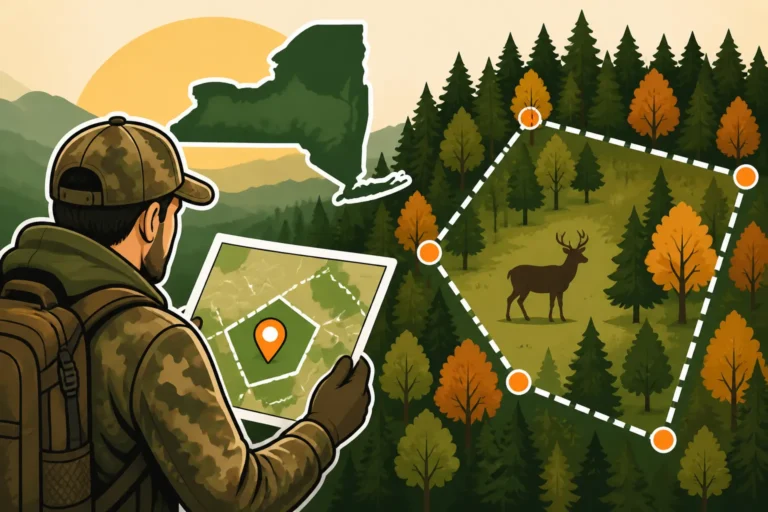
Modern mapping applications are a game-changer for avoiding trespass. Tools like onX Hunt provide detailed property line information, often displaying landowner names directly on your phone or GPS device. This is incredibly powerful. You can see precisely where public land ends and private land begins, identify specific landowners for permission requests, and even drop waypoints to mark boundaries or access points.
Imagine you're scouting a new piece of New York State Forest Hunting land, and you see a promising looking ridge that appears to cross into private property. With onX Hunt, you can instantly confirm the boundary, identify the landowner, and even find their contact information to request permission to hunt that specific part of the ridge. This capability not only helps you stay legal but also opens up more potential hunting opportunities by facilitating respectful communication with landowners. It truly empowers hunters to be more responsible and effective.
Complementary Tools and Best Practices
While digital mapping tools like onX Hunt and GoHunt are incredibly valuable, they are just that – tools. They complement, but don't replace, good old-fashioned due diligence. Always cross-reference. Physical scouting, especially before the season, remains critical. Walk those property lines, look for fences, old stone walls, or painted boundary markers. These physical cues are often more reliable than a GPS signal in heavy cover.
Another best practice is to always have a backup plan. What if your phone battery dies? What if you lose signal in a deep ravine? Carrying a traditional paper map and compass, or a handheld GPS unit with pre-loaded maps, can be a lifesaver. Furthermore, checking with local town or county clerk offices for plat maps can provide the most accurate and legally binding property information, especially for large tracts of land. Remember, technology is fantastic, but combining it with traditional methods ensures you're always operating with the most accurate information possible to avoid unintentional trespass. You might even use the Scouting With the New York HuntFishNY App in conjunction with other resources to maximize your preparedness.
Here's a quick overview of permission types and their relative risks:
| Permission Type | Description | Pros | Cons | Risk Level |
|---|---|---|---|---|
| Written | Documented agreement with landowner signature | Legally binding, clear boundaries, strong proof | Requires planning, landowner might be reluctant | Low |
| Verbal | Spoken agreement with landowner | Easy, informal, quick | Difficult to prove, landowner might forget or deny, no witness | Medium |
| Implied | Assumed permission based on past interactions or lack of objection | No effort required | Not legally recognized for hunting, high potential for misunderstanding and trespass charges | High |
Disclaimer
This article is for general informational purposes only and does not constitute professional advice. Laws, prices and regulations vary by location and change over time. Consult a qualified professional for guidance on your specific situation.