Hunting Small Private Tracts in New York
It's no secret that finding quality hunting land in New York can feel like an uphill battle. With vast public lands that often come with significant hunting pressure, and large private tracts usually tied up in leases, many hunters feel squeezed. This guide is all about equipping you with the strategies and mindset to successfully navigate hunting those smaller, often overlooked private parcels across our diverse state, turning what seems like a limitation into an advantage.
Understanding New York's Private Land Landscape
Hunting in New York isn't just about the vast Adirondack Forest Preserve or the State Forests. Much of the state, especially the southern and western regions, is a mosaic of smaller private properties. Understanding this landscape is your first step to unlocking new opportunities.
The Reality of Land Ownership in New York
While we often dream of sprawling, untouched wilderness, the reality for many hunters in New York is far different. Our state is heavily populated, and land ownership, particularly outside of the designated "Forever Wild" areas, tends to be fragmented. This means that a lot of land is broken into smaller parcels, often 5-50 acres, owned by individuals or families. These aren't necessarily large farms or timber tracts; they might be woodlots behind someone's house, a small chunk of overgrown pasture, or a forgotten corner of an old family estate.
These smaller parcels might not scream "big buck country" at first glance, but they often act as critical refuges for deer, turkeys, and other game, especially if they’re tucked between agricultural fields, suburban developments, or busy roads. Deer learn quickly where they are safe from the constant pressure found on larger, more accessible lands. The challenge isn't that game isn't there; it's about gaining access to these pockets. It's easy to get discouraged when you see "No Trespassing" signs everywhere, but remember, every sign represents an owner you can potentially build a relationship with.
Legalities of Accessing Private Land
Navigating private land in New York means understanding the rules. Unlike many western states with "implied consent" laws, New York operates under "posted land" statutes. This means if the land is posted with "No Trespassing" signs, or if it’s fenced or enclosed, you must have permission to hunt it. Even if it's not explicitly posted, if it's private land, you still need permission from the landowner or leaseholder. This isn't just good manners; it's the law.
Verbal permission is legally binding, but let's be realistic: a handshake and a "sure, go ahead" might work in some situations, but it's always a good idea to seek something more concrete. For deeper insights, you can explore the specifics of New York Trespass and Permission Law. Many experienced hunters, myself included, prefer written permission, especially when investing time and effort into a property. This protects both you and the landowner, clearly outlining what's allowed, where, and when. Having a signed agreement can prevent misunderstandings or future disputes, particularly if the landowner forgets a conversation or if someone else questions your presence. The question of Do You Need Written Permission in New York? often comes up, and while not strictly mandated in all cases, it's highly recommended for peace of mind.
Strategies for Gaining Access
So, how do you actually get your foot in the door (or, more accurately, into the woodlot)? It takes effort, a thick skin, and a genuine approach.
The Art of Knocking on Doors
This is perhaps the most daunting, yet often most rewarding, method for securing private land access. It’s not a numbers game where you just knock on fifty doors; it’s about quality interactions. Start by doing your homework. Use mapping tools like GoHunt or onX to identify landowners of promising parcels. Look for properties that might connect larger woodlots, offer unique topography, or provide a buffer zone near known public land. Once you have a few targets, choose your moment wisely. Don't show up in your camo on opening day. Try a casual visit during the off-season, perhaps in late summer or early fall, on a weekday afternoon or weekend when people are usually home.
When you approach a home, be polite, well-dressed (but not overly formal), and speak clearly. Introduce yourself and explain why you're there. "Hello, my name is [Your Name], and I was admiring your property from the road. I'm an avid deer hunter, and I was wondering if you ever allow hunting on your land." Be prepared for a "no," and don't take it personally. If they say yes, ask specific questions about boundaries, access points, and any rules they might have. Offer to share your harvest, help with chores, or keep an eye on their property. Building rapport is key. For more tips on this crucial step, read up on Knocking on Doors in Southern Tier Farm Country.
Building Relationships and Trust
Getting permission once is great; keeping it is even better. Hunting small private tracts isn't a one-and-done deal; it's about forming a relationship. Always leave the property better than you found it. Pick up any trash, even if it's not yours. Respect their property as if it were your own. If you have success, offer some venison to the landowner – it’s an incredibly powerful gesture that shows appreciation and often builds goodwill. A cooler full of backstraps can solidify a hunting friendship for years to come.
Communication is vital. Let them know when you plan to hunt and when you’ll be leaving. If you see anything out of the ordinary—a broken fence, suspicious activity, or even a sick animal—notify them. Offer to help with small tasks around their property outside of hunting season, like moving firewood, clearing brush, or fixing a gate. This year-round presence and willingness to help demonstrate that you're not just there for the hunting, but that you genuinely care about their land. Remember, you're a guest, and a good guest is always invited back. Think of it as a long-term investment in your hunting future.
Maximizing Your Hunt on Small Tracts
Once you've secured access to a small private tract, the real work begins: strategizing how to effectively hunt limited acreage without over-pressuring the game or disturbing the landowner.
Adapting Your Hunting Tactics
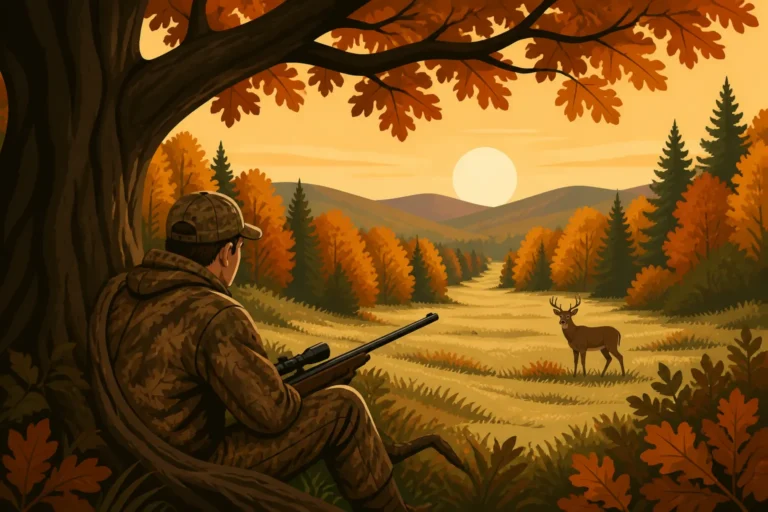
Hunting small parcels means your tactics need to be precise and low-impact. Forget about covering miles on a deer drive; those are better suited for Deer Drives With Three or Four Hunters on larger properties. Instead, focus on still-hunting slowly and deliberately, understanding every contour and cover patch. Ambush hunting becomes incredibly effective. Identify key pinch points, funnels, or bedding areas within the property's boundaries and set up accordingly. This might involve using a portable treestand or, even better, a ground blind. If you're considering a ground blind, learn more about Using a Ground Blind on New York Public Land, as many principles apply to private land too, especially regarding setup and concealment.
Because space is limited, minimizing your scent and movement is paramount. Deer on small tracts are often highly sensitive to pressure, having learned to avoid human activity. Approach and exit your stand or blind quietly, often in the dark, and avoid leaving excessive scent trails. Think about how deer are using the land as a sanctuary and how you can intercept them as they move in or out, or even within, these small safe havens. Your goal is to be a ghost, a transient presence that slips in and out unnoticed.
Utilizing Technology and Topography
Modern hunting technology is a game-changer for small-tract hunting. Satellite imagery and topographic maps available through apps like GoHunt or the Scouting With the New York HuntFishNY App are invaluable. Spend hours poring over these maps to identify subtle features: old logging roads, creek bottoms, saddlebacks, fence lines, and changes in vegetation. These often act as natural travel corridors or hidden bedding areas on even the smallest parcels. Look for areas where the property lines themselves might create a funnel, pushing deer into a predictable path.
Understanding how wind and thermals affect a small area is crucial. Even a 20-acre woodlot can have complex air currents, especially if it has varied elevation. Deer will use these to their advantage, and you need to as well. Map potential bedding areas and food sources, then plan your approach and stand locations based on prevailing winds. Additionally, pay close attention to the vegetation types. Is there an old apple tree row? A forgotten patch of honeysuckle? These small food sources can be magnetic to deer. For deeper insights into aerial map interpretation, check out Reading Aerial Photos for Southern Tier Deer. By combining detailed map study with on-the-ground scouting, you can discover hidden gems within a seemingly small piece of property.
Overcoming Challenges and Maintaining Access
Hunting small private tracts isn't without its unique set of challenges, from respecting invisible boundaries to managing neighbor relations. Being proactive about these potential pitfalls will ensure long-term success.
Respecting Boundaries and Neighbors
On small properties, your hunting area can literally be someone's backyard, or adjacent to another hunter's stand. Knowing your exact property lines is non-negotiable. Use your GPS or a mapping app like GoHunt to mark boundaries precisely. Straying onto a neighbor's land, even by accident, can immediately sour your relationship with your landowner and potentially lead to legal trouble. It’s also important to understand the proximity of houses or other structures. New York has strict laws about discharging firearms or bows within certain distances of occupied dwellings. Always check the current regulations for your specific location.
Beyond legal boundaries, consider the "social boundaries" as well. If the neighbor's kids play in the woods right across the property line, avoid hunting that edge. Be mindful of shot angles and backstops, especially when houses or roads are nearby. If other hunters are on adjacent properties, make eye contact if safe, and exchange friendly waves. You might even discover mutual interests and forge new connections. Often, the deer move between these small parcels, so being on good terms with everyone in the neighborhood can only benefit your hunting efforts.
Leaving No Trace and Being a Responsible Hunter
The adage "leave no trace" takes on even greater importance on small private tracts. Every single piece of trash, every disturbance, is more noticeable on a smaller scale. Pack out everything you pack in, including spent shell casings, broadhead packaging, and even your apple cores. If you use a treestand, make sure it’s securely installed and doesn't damage the tree. Consider portable climbing sticks and stands that can be removed after each hunt or at the end of the season, especially if the landowner prefers it.
When it comes to harvesting an animal, strive for ethical, quick kills and efficient recovery. The last thing a landowner wants is a wounded deer wandering off, or a gut pile left near their home. Always be prepared for Field Dressing a Deer in Cold Weather or any conditions, ensuring you can handle the animal respectfully and efficiently. Promptly Reporting a New York Deer Harvest Online is also a critical part of being a responsible hunter and helps the DEC manage our deer herd. By consistently demonstrating professionalism, respect, and a strong work ethic, you reinforce the landowner's trust and ensure that the privilege of hunting their land continues for years to come.
Remember, hunting private land is a privilege, not a right. The relationships you build are as valuable as the deer you harvest.
Permission Checklist & Best Practices
| Aspect | Verbal Permission (Pros & Cons) | Written Permission (Pros & Cons) | Best Practice |
|---|---|---|---|
| Ease of Procuring | + Quick, simple; often a casual conversation. | – Requires more effort, documentation. | Start with verbal, offer to formalize later. |
| Legal Standing | + Legally valid in NY. | + Legally valid, less open to interpretation. | Always prefer written for clarity and protection. |
| Clarity | – Can lead to misunderstandings (boundaries, dates, etc.). | + Clearly outlines rules, boundaries, access points, dates. | Use specific maps; review details verbally and in writing. |
| Landowner Comfort | +/- Some prefer casual; others want formality. | + Offers security and clear expectations for both parties. | Gauge landowner preference, but lean towards written. |
| Hunter Protection | – Harder to prove if challenged by neighbors or landowner. | + Provides documented proof if questioned. | Carry a copy with you while hunting. |
| Neighbor Relations | – Neighbors may question your presence if unsure. | + Can be shown to neighbors to verify permission. | Inform neighbors you have permission (with landowner's blessing). |
| Renewability | – Often requires re-asking annually. | + Can be set for specific terms (e.g., annual, multi-year). | Discuss annual renewal and ongoing communication. |
Disclaimer
Please note: Hunting regulations and laws can change. Always consult the most current New York State Department of Environmental Conservation (DEC) hunting guide and local ordinances before heading afield. This guide is for informational purposes only and is not a substitute for official regulations or legal advice.