Finger Lakes National Forest Deer Ground
For many New York hunters, finding accessible, productive deer ground feels like an endless quest, especially when you're trying to avoid the crowds on opening weekend. While state forests and WMAs get a lot of attention, the Finger Lakes National Forest (FLNF) offers a unique and often underutilized public land hunting experience. This guide will walk you through what makes the FLNF special and how to approach deer hunting within its diverse landscape.
The Unique Character of Finger Lakes National Forest for Deer Hunting
The Finger Lakes National Forest, nestled between Seneca and Cayuga Lakes in Schuyler and Seneca counties, is truly one of New York's hidden gems for hunting. Unlike the vast, unbroken tracts of the Adirondack or Catskill Forest Preserves, the FLNF is a mosaic of federally managed lands interspersed with private holdings. This creates a fascinating patchwork of habitats that directly influences deer movement and hunter strategy.
A Fragmented Landscape with Diverse Habitat
Imagine rolling hills, deep ravines, mature woodlands, open pastures, and even some active agriculture, all within a relatively small area. That's the FLNF. This isn't your typical "big woods" hunting. Instead, deer here benefit from an incredible variety of food sources and cover types. You'll find pockets of dense conifer stands offering thermal protection in winter, mixed hardwoods dropping acorns and other mast in the fall, and fields providing lush forage. This fragmentation means deer often don't have to travel far to find everything they need, leading to localized patterns that reward diligent scouting. It's a testament to how varied White-Tailed Deer Across New York truly are in adapting to their environment.
The Role of Pasture and Farmland in Deer Patterns
A significant portion of the FLNF is actively managed for grazing, with large open pastures defined by hedgerows and scattered woodlots. These pastures are often bordered by private agricultural fields, creating prime edge habitat. Deer here often bed in the security of the forest or dense brush within the national forest boundaries and then move out to feed in the pastures or adjacent private crops during low-light hours. Understanding these transition zones and how deer move between cover and food is absolutely key. It’s a bit like Hunting Southern Tier Farmland Deer, but with the added layer of public land access to those crucial transition areas.
Navigating the Landscape: Terrain and Access Considerations in the FLNF
Hunting the Finger Lakes National Forest requires a different kind of map sense and a solid understanding of land ownership. Its fragmented nature means you'll be constantly aware of boundaries, and the terrain itself presents its own set of challenges and opportunities.
Understanding the Checkerboard Ownership and Access Points
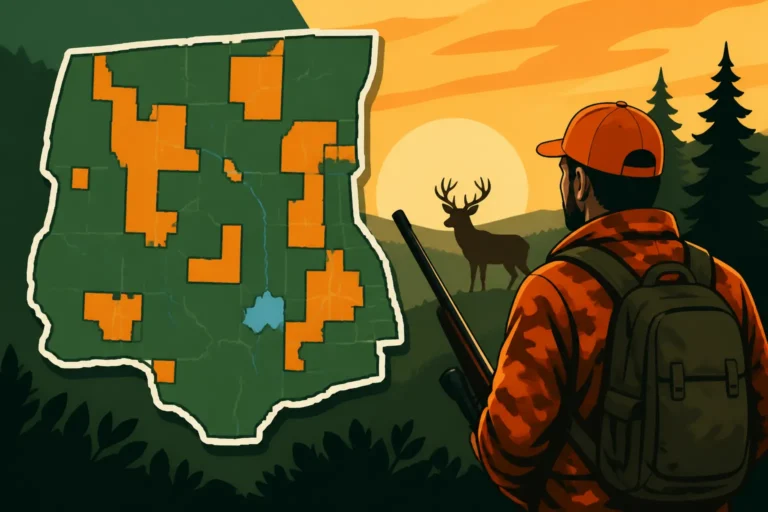
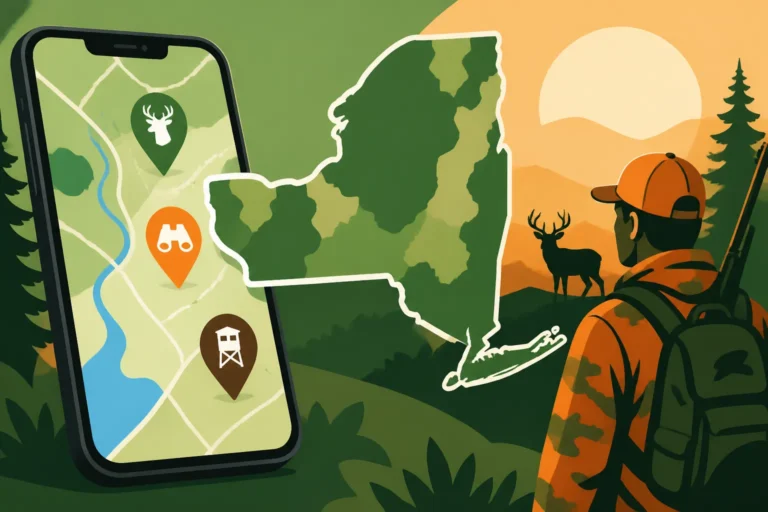
Because the FLNF is so broken up, it’s imperative to know where you are at all times. Federal land is interspersed with private property, and sometimes even state land or local municipality parcels. This can be frustrating for hunters accustomed to vast, contiguous public tracts. However, it also means there are numerous access points—from paved roads to dirt tracks—and often less pressure once you get a little walk in. Tools like onX Hunt are absolutely invaluable here. You can literally see the property lines on your phone, preventing accidental trespass and helping you identify those public land fingers that extend into tempting private feeding areas. This careful planning is crucial for successful Public Hunting Land in New York hunts.
Dealing with the Hills, Ravines, and Weather Challenges
The terrain in the FLNF is characterized by rolling hills, interspersed with steep ravines and gullies that often drain into the larger Finger Lakes. These ravines can be natural travel corridors for deer, offering cover and shelter from the wind. However, they also present a physical challenge, making walks in and out arduous. Fall and winter weather in the Finger Lakes region can be unpredictable, ranging from mild, rainy days to heavy lake-effect snow. Mud is a common companion, especially in the agricultural sections and low-lying areas. Good waterproof boots with excellent traction are non-negotiable, and layering your clothing is essential to stay comfortable through changing conditions. Thinking about Boots for New York Swamps and Snow is a good start, as you'll encounter a mix of both.
Effective Tactics for Hunting Deer in the Finger Lakes National Forest
Hunting deer in the FLNF is all about adapting to the unique blend of habitat and understanding how deer use this diverse landscape. It's not a place for one-size-fits-all strategies; rather, it demands flexibility and keen observation.
Identifying Key Food Sources and Transition Routes
Deer in the FLNF are opportunistic, constantly moving between various food sources throughout the season. In early archery, focus on white oak ridges where acorns are dropping. These stands, often tucked into the forested blocks, will be deer magnets. As the season progresses, old apple orchards—remnants of past farmsteads—become prime locations. Many of these forgotten orchards still produce fruit, drawing deer like a siren song. You'll also want to pay close attention to the edges of the active pastures and adjacent private fields. Deer will browse heavily along hedgerows and wood lines before slipping into the open to feed after dark. Look for well-worn trails entering and exiting these areas, as these are critical transition routes.
Once you’ve identified these food sources, the next step is to locate the bedding areas. In the FLNF, bedding can be surprisingly close to feeding, often in dense conifer thickets, brushy ravines, or even just a thick patch of multiflora rose. Scouting for rubs and scrapes along these transition routes, particularly during the pre-rut and rut, will help you pinpoint exactly where bucks are cruising. Remember that deer in this fragmented landscape often stick to smaller home ranges, making consistent scouting pay off even more.
Leveraging Terrain Features: Ravines and Benches
The numerous ravines and drainage features throughout the FLNF are natural highways for deer, offering cover and ease of travel through otherwise open or undulating terrain. These cuts in the earth act as funnels and pinch points, directing deer movement. Setting up a stand or ground blind overlooking where a ravine intersects with a ridge or a field edge can be incredibly effective. Consider how Wind and Thermals on a Catskill Ridge might apply here; the ravines can create their own micro-thermals, influencing how deer approach and depart.
Additionally, look for "benches" – flatter areas or terraces along hillsides. These often serve as staging areas before deer move to feed, or as secure bedding spots with good visibility. Deer will often pause on these benches, scanning for danger before committing to a crossing or an open area. A well-placed stand on a bench overlooking a transition route or a natural funnel can be a deadly tactic, especially if you've done your homework scouting. This kind of nuanced understanding of the landscape is what separates successful hunters from those who struggle.
Essential Gear and Planning for a Successful Finger Lakes Hunt
Hunting the Finger Lakes National Forest is an adventure that requires thoughtful preparation. From navigation to comfortable clothing, having the right gear and a solid plan can make all the difference in your success and enjoyment.
Mapping and Navigation Tools are Non-Negotiable
As mentioned, the fragmented nature of the FLNF makes reliable navigation paramount. A physical map and compass are always good backups, but digital mapping apps are your best friend here. Services like onX Hunt provide detailed satellite imagery, topo maps, and crucially, public/private land boundaries that update regularly. This helps you identify those slivers of public access and avoid accidental trespass. Even better, you can mark potential stand locations, historical deer sign, and track your movements. I also like using resources like GoHunt for pre-season scouting intelligence, which can give you a leg up on understanding general game patterns in the region. Always download your maps for offline use, as cell service can be spotty in the deeper ravines or more remote sections of the forest. Scouting With the New York HuntFishNY App is another good way to supplement your digital mapping arsenal.
Clothing for Changing Conditions and Physical Demands
The Finger Lakes region can throw all kinds of weather at you during hunting season. You might start a morning hunt in crisp, cold air, only to have it warm up significantly by midday, or be hit by a sudden rain shower or lake-effect snow squall. Layering is key. Start with a good moisture-wicking base layer, add insulating layers (fleece or down, depending on temperature), and top it off with a waterproof and windproof outer shell. Wool or synthetic blends are generally preferred over cotton, as they retain warmth even when wet.
| Layer Type | Purpose | Material Suggestions | Importance for FLNF |
|---|---|---|---|
| Base Layer | Wicks moisture, regulates temperature | Merino wool, synthetic blends | High |
| Mid-Layer(s) | Provides insulation | Fleece, synthetic puff, down (avoid in wet) | High |
| Outer Layer | Weather protection (wind, rain, snow) | Waterproof/breathable membrane (Gore-Tex, proprietary) | Critical |
| Headwear | Heat retention, sun protection, concealment | Wool beanie, blaze orange cap, facemask | High |
| Gloves/Mitts | Hand warmth and dexterity | Thin liners for shooting, insulated outer gloves/mitts | High |
| Footwear | Support, traction, waterproofing, warmth | Insulated waterproof boots (rubber or leather/synthetic) | Critical |
Given the varied terrain, from muddy pastures to rocky ravines, your footwear is perhaps the most critical component. Choose well-broken-in, waterproof boots with excellent ankle support and aggressive traction. A comfortable pack that can carry all your layers, snacks, water, and emergency gear is also essential for a full day of hunting. Don't forget a quality headlamp for those early morning walks in or late evening walks out, especially when traversing steep terrain.
Considerations for Stand Placement and Stealth
When it comes to stand placement in the Finger Lakes National Forest, think about the fragmented nature of the land. Instead of looking for traditional long-range setups, focus on closer encounters in tighter cover. Treestands or saddle hunting setups can work well in the hardwood blocks, allowing you to get above a deer’s line of sight and take advantage of terrain features like benches or ridge saddles. However, don't overlook ground blinds, especially if you're hunting along field edges or in dense brush where natural cover is abundant. A properly brushed-in ground blind can offer excellent concealment and warmth, perfect for patiently waiting out deer movements. When planning your approach, always consider Finding Ground Others Walk Past. Often, the best hunting spots are just a little further from established trails or roads, deeper into those less-traveled public land sections. Even a few hundred yards can make a huge difference in hunting pressure.
Disclaimer
This article is for general informational purposes only and does not constitute professional advice. Laws, prices and regulations vary by location and change over time. Consult a qualified professional for guidance on your specific situation.