Orange County Public Land for Deer
Finding quality public land to hunt deer in New York, especially in a more developed area like Orange County, can feel like searching for a needle in a haystack. Many hunters get discouraged by dense population centers and perceived lack of access. This guide is here to cut through that frustration, helping you uncover and effectively hunt the surprisingly robust public land opportunities for deer right here in Orange County.
Navigating Public Hunting Opportunities in Orange County
It's easy to look at a map of Orange County and assume there's just no room for big game hunting. We're nestled right up against the sprawling suburbs of New York City, and it can feel like every acre is either paved, privately owned, or a state park that doesn't allow hunting. But that's where a lot of hunters get it wrong. While it's certainly not the Adirondacks, Orange County actually holds some fantastic, albeit often overlooked, public hunting opportunities for deer. The trick is knowing where to look and how to approach these unique landscapes.
Understanding Orange County's Unique Hunting Landscape
Orange County's hunting landscape is a fascinating mix. You'll find pockets of dense woods, agricultural fields, old orchards, and marshy lowlands, often interspersed with residential areas and small towns. This fragmentation, which can be a challenge, also creates excellent edge habitat for deer. They thrive in these areas where they can feed in fields or browse in regenerating forests, then quickly retreat to thick cover when pressured. What might seem like a small, isolated woodlot to a human can be a sanctuary and travel corridor for deer moving between food sources and bedding areas. The key is to shift your mindset from vast wilderness to understanding how deer use these smaller, more intricate patches of habitat.
The biggest frustration for many local hunters is simply figuring out where they're allowed to go. Unlike large, unbroken tracts of state land up north, Orange County's public parcels often require a bit more legwork and a good mapping app to understand boundaries and access points. But for those willing to put in the effort, these areas can hold some surprisingly unpressured deer, especially away from obvious access points. The deer here are often accustomed to human presence, making them wary, but also potentially predictable in their movements around development.
Key Types of Public Land Available
When we talk about public hunting land in Orange County, we're primarily looking at a few categories, each with its own characteristics and rules. It's not just a free-for-all; you need to be aware of the specific management unit you're entering.
First and foremost are State Forests. These lands are managed by the New York State Department of Environmental Conservation (DEC) for multiple uses, including timber production, recreation, and, crucially for us, hunting. They are generally open for big game hunting without special permits beyond your regular license. They tend to offer more contiguous blocks of timber and varied terrain. Then there are Wildlife Management Areas (WMAs). These are specifically managed for wildlife habitat and public recreation, often with a strong emphasis on hunting. WMAs can be incredibly productive, but sometimes come with their own set of specific regulations, such as restrictions on ATVs or designated parking areas. Always check the DEC regulations for the specific WMA you plan to hunt. While less common for deer, some smaller county-owned lands or even certain public access areas might also offer hunting, though these are rarer and require even more diligent research into local ordinances.
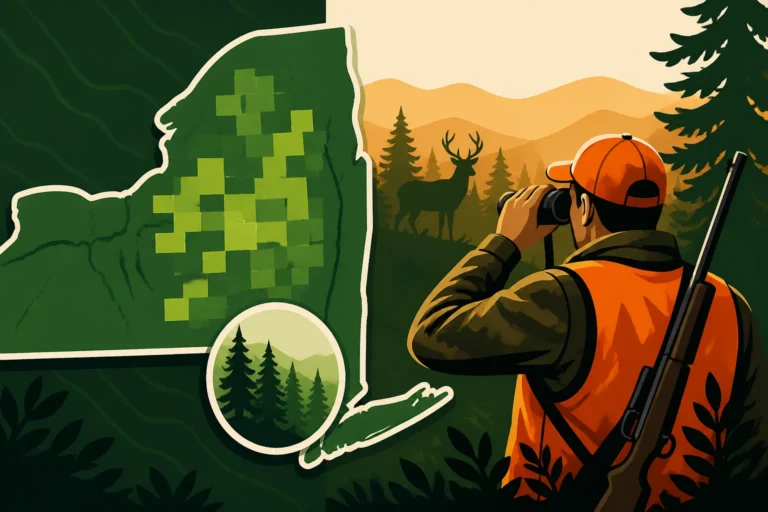
It's not just about finding a patch of green on a generic map. You need detailed boundary information, which is where tools like onX Hunt or GoHunt really shine. They provide invaluable layers that show property ownership, public land boundaries, and even features like trails and topography, helping you distinguish between a true State Forest and a neighboring parcel that might be privately owned or a non-hunting state park. This precision is absolutely vital in an area like Orange County where land ownership can be so fragmented.
Specific Public Lands for Deer Hunting in Orange County
Orange County might not boast vast expanses like some other regions of New York, but it does offer some solid choices for deer hunters willing to do their homework. The key is to focus on the larger, more contiguous parcels of public land, understanding that even these will have varied pressure and habitat within their borders.
Stewart State Forest: A Gem in the Hudson Valley
Without a doubt, Stewart State Forest is the crown jewel of public deer hunting in Orange County. Located near Newburgh and the Stewart International Airport, this massive tract of over 6,000 acres offers a diverse range of habitats and a significant amount of ground to cover. It's a lifesaver for many hunters in the region who struggle to find consistent access. You'll find everything from open fields and brushy clearings to mature hardwoods, conifer plantations, and extensive wetlands. This variety means deer have plenty of food, cover, and water sources, creating excellent opportunities throughout the season.
The sheer size of Stewart can be intimidating, but it also means there's always a quieter corner to find. During opening day, you might encounter more hunters near easily accessible parking lots and trails. However, with some effort, particularly if you're willing to walk a bit deeper, you can definitely get away from the crowds. Many hunters report seeing good numbers of deer, including mature bucks, within Stewart's boundaries. Focus on areas where different habitat types converge, like where a conifer stand meets a swamp edge, or where an old field transitions into dense woods. These "edge" zones are classic deer magnets. Also, pay attention to subtle elevation changes, even small ones, as deer will often use these to travel undetected. Scouting New York Public Land Before Season is particularly crucial here to understand deer patterns and identify less-pressured areas.
Other Notable State Forests and WMAs
While Stewart State Forest is the biggest player, there are other smaller, yet potentially productive, public land options scattered throughout Orange County that deserve your attention. These might require a bit more scouting and might hold less total deer, but they can be fantastic for those looking for a different experience or less competition.
- Harriman State Park (with specific hunting areas): While much of Harriman State Park is off-limits to hunting, specific areas do allow it, usually under very strict rules and often requiring special permits or drawing. These areas are typically managed to control deer populations in sensitive ecosystems. You absolutely must check the DEC regulations and Harriman State Park's specific hunting information directly for current rules, maps, and permit requirements before even thinking about hunting here. These opportunities are usually highly regulated and limited, but for those who gain access, they can offer exceptional hunting due to restricted pressure.
- Wickham Lake Wildlife Management Area: A smaller WMA, Wickham Lake offers primarily wetland and marsh habitat with some surrounding uplands. While it might be known more for waterfowl or small game, deer will certainly use the edges and thicker cover here. It's worth investigating if you're looking for a quieter, marshier environment. Deer will often bed down in dense cattail swamps or thick brush adjacent to water, using these areas for security. Access can sometimes be tricky due to the wet conditions, so be prepared with appropriate footwear like rubber boots or waders.
- Goosepond Mountain State Park (restricted areas): Similar to Harriman, Goosepond Mountain State Park typically has restricted hunting, but periodically offers special limited permit hunts for deer management. Again, direct inquiry with the DEC and park management is essential for understanding any current opportunities. These parks, when open to hunting, are often excellent due to high deer densities and low overall pressure.
Always remember that these smaller parcels can be more sensitive to hunting pressure. Being respectful of boundaries, other users, and local residents is paramount to ensuring these opportunities remain available for future generations.
Strategies for Successful Public Land Deer Hunting in Orange County
Hunting public land in Orange County, with its unique blend of suburban interface and diverse habitats, demands a thoughtful and adaptive approach. You can't just walk in and expect the deer to be waiting. Success here comes from smart scouting, understanding deer behavior under pressure, and employing the right tactics.
Scouting and Access
Effective scouting is the bedrock of successful public land hunting anywhere, but it's critically important in Orange County. You need to understand the lay of the land, identify deer sign, and, perhaps most importantly, pinpoint low-pressure areas. Start with digital reconnaissance. This is where modern mapping applications like onX Hunt and GoHunt become indispensable tools. These apps provide detailed satellite imagery, topographic maps, and, crucially, public/private land boundaries.
Here's how to use them for Orange County:
- Identify Public Land Boundaries: Precisely know where public land starts and private land ends. This helps prevent accidental trespassing and ensures you're always legal. The boundary lines are often clearly marked on these apps.
- Locate Access Points and Parking: Roads might look inviting on a basic map, but are they legal access points? Do they have official parking? These apps often show designated parking areas or unofficial pull-offs that other hunters use. Don't be afraid to walk past the first obvious entry point; many hunters pile up near the easy access.
- Analyze Topography and Habitat: Look for features like subtle ridges, drainages, swamp edges, and variations in tree cover. Deer will use these features for travel and bedding. Darker green areas might indicate dense conifer cover, excellent for bedding, while lighter areas could be regenerating clearcuts or open fields that provide food. Use the topography layer to find saddles, funnels, and natural pinch points.
- Identify Pressure Points: Road networks, established trails, and obvious parking areas often correlate with higher hunter pressure. Look for deeper, less accessible pockets that might require a longer walk or crossing more challenging terrain. This is where you'll find deer that haven't been pushed around as much.
Once you've done your digital homework, boots-on-the-ground scouting is essential. Walk the areas you've identified pre-season. Look for fresh rubs, scrapes, tracks, and bedding areas. Pay attention to natural food sources like acorn crops, apple trees, or browse lines. When you're physically in the woods, the landscape will tell you more than any map can. For example, Reading a Ridge for Catskill Deer Movement applies to the subtle ridges you'll find in Orange County, helping you predict how deer will navigate the terrain.
Hunting Tactics for Fragmented or Pressured Land
Deer in Orange County, especially on public land, are savvy. They deal with human activity constantly, whether it's hunters, hikers, dog walkers, or nearby suburban noise. This means your tactics need to be adaptable and subtle.
- Still-Hunting and Ground Blinds: For the more fragmented woodlots or areas with higher pressure, still-hunting can be incredibly effective. This involves moving slowly and deliberately through the woods, taking a few steps, then pausing to observe and listen. You're not just looking for deer, but parts of deer, or subtle movements. Use the wind to your advantage and hug thick cover. When you find a promising spot with fresh sign, a well-placed ground blind can offer excellent concealment without the need for a climbing stand, which can be difficult to manage in thick, less-than-ideal trees. Using a Ground Blind on New York Public Land provides excellent tips for this. Just remember to check WMA rules, as some might have regulations on unattended blinds.
- Focus on Security Cover: Deer on pressured land prioritize security. This means they will often bed in the thickest, nastiest cover they can find – dense briar patches, laurel thickets, conifer swamps, or steep, brushy ravines that other hunters avoid. Learn to identify these areas and focus your efforts on hunting the edges, or carefully slipping into them if conditions are right (e.g., strong wind in your favor, during light rain).
- Exploit Transitional Periods: Early morning, late afternoon, and especially periods of inclement weather (light rain, snow, or even high winds) can be excellent times to catch deer off guard. Hunters tend to stay home during less-than-ideal conditions, which means less pressure and more natural deer movement.
- Hunt Mid-Week: If your schedule allows, hunting on weekdays can significantly reduce the amount of hunter pressure you encounter. Weekends, particularly opening weekend, can see high numbers of hunters, especially in easily accessible public areas. Weekdays offer a quieter experience and can reveal different deer movement patterns.
- Utilize the Rut: Even on pressured land, the rut is a powerful motivator. Bucks will be on the move, searching for does, sometimes throwing caution to the wind. Focus on traditional rut sign like scrape lines and fresh rubs along travel corridors. Hunting the Rut in the Southern Zone offers insights that are highly applicable to Orange County.
| Tactic | Best for | Pros | Cons |
|---|---|---|---|
| Still-Hunting | Thick cover, pressured | Quiet, adaptable, covers ground | Requires patience, keen observation |
| Ground Blinds | Field edges, pinch pts | Concealment, weather protection | Fixed location, deer may pattern it |
| Tree Stands | Funnels, food sources | Elevated view, scent control aid | Setup time, limited to suitable trees |
| Hunting Edges | Habitat transitions | High deer traffic, good vantage | Can be visible, requires careful entry/exit |
| Deep Woods | Away from pressure | Less human activity, deer feel safe | Long walks, challenging navigation, dense |
Essential Considerations for Hunting Orange County Public Land
Hunting anywhere requires preparation, but when you’re on public land in a more populated region like Orange County, there are a few extra layers of consideration. It’s not just about finding the deer; it’s about being a responsible, safe, and effective hunter within a complex environment.
Understanding Regulations and Safety
New York State has specific hunting regulations that apply across the board, but individual WMAs or state parks can have additional, site-specific rules. It is absolutely vital to check the DEC regulations guide for the current year and any special regulations for the specific piece of Orange County public land you plan to hunt.
- Blaze Orange: In New York, during the firearm deer season, hunters are required to wear specific amounts of blaze orange or pink. Even during archery season, wearing some blaze orange when entering or exiting the woods is a smart safety practice, especially on public land where other users might be present. How Much Blaze Orange New York Requires details these rules. Always assume other people are in the woods, even if you don't see them.
- Legal Shooting Hours: Adhere strictly to legal shooting hours. These are typically half-hour before sunrise to half-hour after sunset. Consult the DEC guide for the precise times for your hunting date.
- Firearms Discharge Setbacks: New York law requires specific setbacks for discharging firearms from dwellings, schools, and other occupied structures. In Orange County, given the interspersed development, these setbacks are incredibly important. Know your surroundings, and never take a shot if you're unsure about what's beyond your target. New York Firearms Discharge Setback Rules is a critical read.
- Tree Stand Safety: If you plan to use a tree stand, safety should be your number one priority. Always use a full-body harness and a lifeline when climbing, hunting, and descending. Falls from tree stands are a leading cause of hunting injuries. Remember, some public lands also have rules regarding how long stands can remain in place or if they can be left overnight. Check those rules diligently.
- Respecting Other Users: Public land is for everyone. You'll likely encounter hikers, dog walkers, bird watchers, and mountain bikers. Be courteous, make your presence known, and remember that you are sharing the space. This positive interaction helps maintain a good image for hunters.
Dealing with Hunting Pressure
Public land, by its nature, attracts hunters, especially during peak seasons. Orange County public lands are no exception. The key is to acknowledge this pressure and adjust your tactics rather than letting it deter you.
- Go Deeper: This is classic public land advice for a reason. Most hunters won't venture more than a half-mile or a mile from an easy access point. If you're willing to walk further, perhaps even a couple of miles, you'll significantly reduce the pressure you encounter and increase your chances of finding less disturbed deer.
- Hunt Weekdays: As mentioned earlier, hunting during the week can be a game-changer. Weekends bring out the crowds. If you can sneak away for a morning or an afternoon hunt on a Tuesday or Thursday, you'll often find a much quieter woods.
- Hunt During Inclement Weather: Most hunters prefer comfortable conditions. A light rain, a steady drizzle, or a mild snowfall can often clear out the woods, leaving you with fewer competitors and deer that might be more active due to the reduced pressure. Just make sure you're dressed appropriately to stay warm and dry.
- Find Overlooked Areas: Deer will often seek refuge in small, difficult-to-access pockets of cover that hunters overlook. This might be a swampy area, a steep ravine, or a dense thicket on the back side of a small hill. These areas might be challenging to get into, but they can be sanctuaries for deer. Use your mapping apps like onX Hunt to identify these "nasty" areas that others might skip. Sometimes, Finding Ground Others Walk Past is the most rewarding strategy.
- Observe and Adapt: Pay attention to where you see other hunters. If you consistently see them walking a certain trail or sitting in a particular area, adjust your plans. Deer will quickly learn to avoid these high-traffic zones. Be flexible and willing to change your strategy based on observed pressure and deer movement.
By understanding these regulations, prioritizing safety, and adapting your hunting style to account for pressure, you can have a very rewarding deer hunting experience on the public lands of Orange County. It takes a little more effort and a lot more scouting, but the satisfaction of tagging a deer on public ground in this region is truly something special.
Disclaimer
This article is for general informational purposes only and does not constitute professional advice. Laws, prices and regulations vary by location and change over time. Consult a qualified professional for guidance on your specific situation.