Hunting Long Island and the Hudson Valley
Trying to hunt deer and other game in the more populated stretches of New York, like Long Island or the Hudson Valley, can feel like navigating a minefield of regulations and private property. It’s a completely different ballgame than the big woods up north or the rolling farmlands out west, and it often leaves hunters scratching their heads about where they can even set foot. This guide is all about demystifying hunting in these unique regions, offering practical advice on finding access, understanding the distinct rules, and employing tactics that actually work in fragmented and high-pressure environments.
The Unique Challenges of Hunting Long Island and the Hudson Valley
Let's be real: hunting in the shadow of major metropolitan areas isn't for the faint of heart. It presents a specific set of hurdles that you just don't encounter in, say, the Adirondacks. From dealing with dense neighborhoods to deciphering hyper-local regulations, it requires a different kind of preparation and mindset. It’s not impossible, but it demands diligence and a whole lot of respect for your surroundings.
Population Density and Fragmented Habitat
One of the biggest eye-openers for hunters accustomed to vast tracts of public land is the sheer lack of contiguous habitat on Long Island and in much of the Hudson Valley. You're often looking at small woodlots, isolated creek bottoms, and hedgerows squeezed between housing developments, golf courses, or busy roads. This fragmentation means deer, turkeys, and small game are highly concentrated in these pockets, but they're also incredibly sensitive to pressure. They learn quickly and adapt to human activity, making them notoriously challenging to hunt.
The challenge isn't just finding a spot, it's finding a spot that's big enough to hunt effectively and safely. You might see deer browsing in someone's backyard, but that doesn't mean you can pursue them. Property lines are everywhere, and what looks like a promising block of timber on a map might actually be a patchwork of small private parcels, each with its own owner. This reality often necessitates focusing on smaller game or investing significant time in obtaining private land permission, which can be a lengthy process but incredibly rewarding. Hunters need to be masters of micro-habitat and understand how animals move through these constricted landscapes.
Specialized Regulations and Local Ordinances
It’s easy to assume that statewide hunting regulations cover everything, but on Long Island and in many Hudson Valley communities, that simply isn't the case. You’ll frequently encounter local ordinances that further restrict hunting, especially concerning firearms discharge setbacks from homes, schools, or public spaces. Some towns might prohibit Sunday hunting even if the state allows it in that region, or they might have specific rules about carrying uncased firearms. It’s a bureaucracy headache, plain and simple, and it can catch an unprepared hunter off guard.
These specialized rules often stem from a desire to balance hunting opportunities with the safety and comfort of a dense non-hunting population. For instance, many areas on Long Island are archery-only zones, significantly limiting weapon choice. You absolutely cannot rely solely on the general New York State DEC hunting guide; you need to dig into county and even town-level regulations before heading out. This might mean checking local town clerk websites, contacting the local police department, or even reaching out to regional DEC offices. Ignoring these hyper-local rules can lead to fines, loss of privileges, and unfortunately, a negative public perception of hunting as a whole. Always double-check New York Firearms Discharge Setback Rules before setting up a stand.
Understanding Long Island's Deer Management Zones
Long Island's deer population, particularly in Suffolk County, has grown significantly in recent decades, leading to unique management challenges. With limited natural predators and vast swaths of protected yet fragmented habitat, deer numbers can quickly outstrip the carrying capacity of the land, resulting in increased deer-vehicle collisions and damage to landscaping and agriculture. To address this, the New York Department of Environmental Conservation (DEC) has implemented specific strategies for this region, making it distinct from other parts of the state.
Suffolk County Deer Management Permits
If you're looking to hunt deer on Long Island, especially in Suffolk County, you absolutely need to understand the unique Deer Management Permit (DMP) system in place. Unlike most of the state where DMPs are issued through a lottery with varying odds, Suffolk County often operates under more liberal antlerless deer tag allocations. The goal here is quite clear: to aggressively manage and reduce the deer population. This means hunters in Suffolk often have access to multiple antlerless permits, making it a prime location for those looking to fill their freezer or contribute to population control efforts.
These specific permits are designed to offer ample opportunity. It’s not uncommon to find that in certain Wildlife Management Units (WMUs) within Suffolk County, obtaining multiple DMPs is a straightforward process, sometimes even becoming instantly available after your initial permit. This approach reflects the ecological necessity of reducing deer impact on the local ecosystem and human communities. Be sure to check the DEC's specific guidelines for Suffolk County Deer Management Permits each year, as quotas and availability can change based on recent harvest data and population assessments. Don't assume your old strategy will work; always verify the current year's rules.
Long Island State Parkland Hunting Rules
While private land can be incredibly difficult to secure on Long Island, there are some precious parcels of public land, primarily state parks and state forests, that offer hunting opportunities. However, these areas come with their own stringent rules and often require special access permits on top of your standard hunting license. Examples include parts of the Rocky Point Natural Resources Management Area, Southaven County Park (which often requires special permits and archery-only hunting), and sections of the Long Island Pine Barrens. These are often archery-only zones, sometimes with very specific entry and exit points, and limited parking.
Hunting these public tracts means doing your homework. You can't just show up with your license and expect to hunt. Many require applying well in advance for specific hunting dates or zones, sometimes even participating in orientation sessions. Always check the specific park or management area's website or contact the park office directly for their current regulations and permit requirements. These areas are heavily utilized by non-hunters, so adherence to all rules, particularly those concerning safety and public interaction, is paramount. Think about it: a misstep here impacts not just you, but the future of hunting access for everyone. Dive into Long Island State Parkland Hunting Rules to get a full grasp on what's required.
Navigating Hudson Valley Public Hunting Opportunities
The Hudson Valley, stretching from Westchester County northwards through Dutchess, Columbia, Greene, and Ulster counties, presents a different kind of puzzle. While it's generally less densely populated than Long Island, it still carries a significant human footprint, especially along the river corridor. Yet, it also boasts more substantial tracts of public land than Long Island, offering a mix of state forests, Wildlife Management Areas (WMAs), and even portions of the Catskill Forest Preserve towards its western edge.
State Forests and Wildlife Management Areas in the Hudson Valley
For the public land hunter in the Hudson Valley, state forests and Wildlife Management Areas are your bread and butter. Places like Stewart State Forest in Orange County offer significant acreage, much of it varied habitat from dense woods to old fields and wetlands, providing opportunities for deer, turkey, and small game. Further north, you might find state forests in counties like Columbia or Greene, or even areas like Tivoli Bays WMA, which provides unique opportunities, particularly for waterfowl and other migratory birds. These lands are managed for wildlife and public recreation, making them a primary target for hunters.
When planning to hunt these areas, remember that while they are public, they often see considerable pressure, especially on opening days. Successful hunting typically requires scouting beforehand, understanding typical access points, and being willing to walk a bit further to find less disturbed pockets. Tools like onX Hunt or GoHunt can be invaluable for identifying property lines, access roads, and topographic features that might funnel deer. Always respect the New York State Forest Hunting rules regarding camping, treestands, and vehicle access. This is where truly detailed scouting pays off, allowing you to avoid the crowds and find overlooked cover.
Utilizing Deer Management Focus Areas
New York State has identified certain regions, including parts of the Hudson Valley, as Deer Management Focus Areas (DMFAs). These are specific geographical zones where deer populations are exceptionally high, leading to significant conflicts with human interests, such as agriculture, forest regeneration, and deer-vehicle collisions. The creation of DMFAs signifies an intensified effort to reduce deer numbers in these localized hot spots, and for hunters, this often translates into more liberal hunting opportunities.
What does "more liberal opportunities" actually mean for you? It can involve extended hunting seasons, increased antlerless deer permit availability (sometimes even unlimited permits for a period), or even special harvest quotas beyond the standard DMPs. These areas are essentially prime locations if your primary goal is to harvest antlerless deer and contribute to population management. Before heading out, always consult the current DEC regulations for specific DMFA rules, as they can change annually based on population assessments and management goals. These zones are specifically designed to leverage hunters as a primary tool for ecological balance, making them a key resource for the dedicated deer hunter in the Hudson Valley. You can often find detailed information on these specific areas on the DEC website, or look up Hudson Valley Deer Management Focus Areas for current boundaries and opportunities.
Securing Private Land Access in Populated Regions
In areas like Long Island and the Hudson Valley, where public land can be limited or heavily pressured, gaining access to private land often becomes the golden ticket. It's not always easy, but the rewards—less pressure, potentially higher quality hunting, and a more consistent experience—can be immense. Building relationships with landowners is a cornerstone of this strategy.
The Art of Knocking on Doors in Farm and Suburban Areas
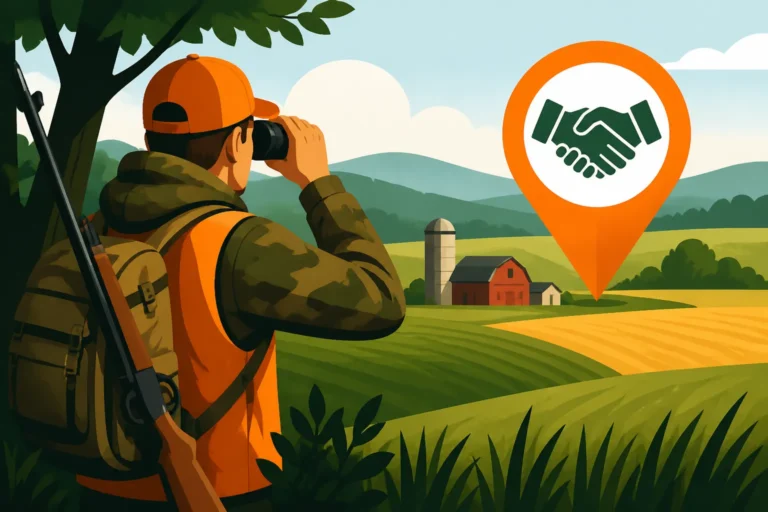
Approaching a landowner, whether they manage acres of farmland or a suburban woodlot, requires a polite, respectful, and professional demeanor. Many hunters shy away from this, assuming they'll be turned down, but with the right approach, you might be surprised. Start by identifying properties that hold game animals—often visible by tracks, rub lines, or even direct sightings from roads (respectfully, of course). Then, find out who owns the property. Tools like onX Hunt or local county tax maps can be incredibly helpful for this, providing landowner names and sometimes even contact information.
When you make contact, be prepared and presentable. Dress neatly, introduce yourself, and clearly state your intentions: you're looking for permission to hunt. Explain that you are a responsible hunter, highlight safety, and offer to share some of your harvest. Many landowners appreciate venison or simply knowing that someone responsible is helping to manage their deer population. Be ready to provide references, show proof of insurance, or even sign a liability waiver. Remember, a "no" today isn't necessarily a "no" forever. A polite rejection leaves the door open for future requests. Check out Asking a New York Farmer for Permission for more detailed advice on making that initial contact, and definitely know Do You Need Written Permission in New York? as it's often a requirement on private land.
Leveraging Technology for Property Research and Contact
In today's world, technology has made the process of finding and researching private land infinitely easier. Gone are the days of relying solely on plat maps or driving around aimlessly. Modern mapping applications are absolutely essential for hunters seeking private land access in populated areas. Brands like onX Hunt and GoHunt provide invaluable tools for this specific challenge.
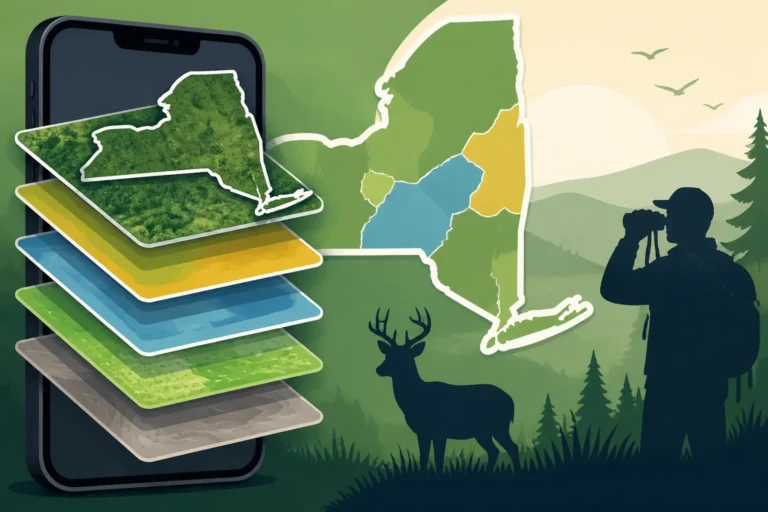
These apps overlay property ownership information onto detailed topographic and aerial maps. This means you can pinpoint exact property boundaries, identify the owner's name, and sometimes even get contact information like mailing addresses. Imagine scouting a promising hedgerow that looks like prime deer cover; with onX Hunt, you can immediately identify the parcel, see who owns it, and start planning your approach to ask for permission. This streamlines the process immensely, allowing you to focus your efforts on landowners who are most likely to grant access. You can also use these tools to assess habitat, identify potential access points away from homes, and even mark potential stand locations, all before ever stepping foot on the property. It’s a game-changer for respectful and efficient private land reconnaissance.
Effective Hunting Strategies for Small Woodlots and Fragmented Cover
Hunting small, fragmented woodlots and cover in areas with high human density demands a refined approach. The game here, especially deer, are often hyper-aware, accustomed to human presence, but also incredibly skilled at using whatever meager cover is available to them. You can't just crash through the woods; every move needs to be deliberate and calculated.
Scouting and Stand Placement in High-Pressure Areas
Scouting becomes an art form in these fragmented landscapes. You're not looking for miles of unbroken wilderness; you're looking for overlooked pockets, thickets, and natural funnels that act as highways for deer moving between feeding and bedding areas. Deer living near suburban or agricultural zones will often bed down in surprisingly small, dense patches of cover that humans tend to ignore or write off. Think about those nasty, thorny thickets or swampy lowlands that nobody wants to walk through – that's often where the deer are.
When it comes to stand placement, subtlety is key. You need to minimize your footprint. Consider using a compact treestand or a lightweight saddle setup that allows for quiet, low-impact entry and exit. Focus on pinch points, such as narrow strips of woods between fields, creek crossings, or areas where thick cover transitions to more open ground. Aerial maps on your hunting app (like those in GoHunt) are indispensable for identifying these features. Pay close attention to wind direction, as deer in these areas are highly sensitive to human scent. Your goal is to be invisible and odorless. Even small details, like identifying distinct travel corridors along a fenceline, can lead to success. Learning Reading Aerial Photos for Southern Tier Deer can be adapted to spot these micro-funnels in the Hudson Valley too. When Hunting Small Private Tracts in New York, every advantage counts.
Low-Impact Hunting and Minimizing Disturbance
In areas where deer are constantly exposed to human activity, minimizing your disturbance is not just polite; it's crucial for sustained success. Over-pressuring a small woodlot can quickly make the resident deer go nocturnal or abandon the area entirely. This means adopting a "ghost" mentality: getting in and out without being detected. This includes careful entry and exit routes that avoid known bedding areas or visible crossings, often requiring you to take a longer, less direct path.
Scent control is more critical than ever. Use scent-eliminating sprays, wash hunting clothes in scent-free detergent, and store them properly. When walking to your stand, avoid breaking branches or making unnecessary noise. Still-hunting, a slow, deliberate method of stalking through the woods, can be highly effective in these smaller areas, especially when cover is sufficient. If you choose to use a ground blind, ensure it's well-brushed in and set up far in advance to allow deer to get used to its presence. For public lands, know the Using a Ground Blind on New York Public Land and Ground Blind Rules on New York WMAs to ensure you're compliant. The less impact you make, the more comfortable the deer will be, and the better your chances of encountering them during legal hunting hours.
Species Beyond Deer: Small Game and Turkey Opportunities
While deer often steal the spotlight, Long Island and the Hudson Valley offer surprisingly robust opportunities for other game species. These can be excellent options, especially if deer access is challenging or you're looking to extend your time in the field outside of deer season. Don't overlook these often-accessible and enjoyable hunts.
Squirrels, Rabbits, and Pheasants in Developed Areas
Small game, such as gray squirrels and cottontail rabbits, thrive in fragmented habitats. You'll often find healthy populations in suburban woodlots, along hedgerows, and in brushy creek bottoms – exactly the kinds of places where deer hunting might be restricted. Squirrels, in particular, can provide fast-paced action and excellent table fare. Look for oak and hickory trees, and listen for the tell-tale chatter or rustle of leaves. Rabbits love briar patches, brush piles, and the edges of old fields. These hunts can be a fantastic way to introduce new hunters to the sport or simply enjoy a relaxing day in the woods.
New York also has a significant pheasant stocking program, and some of these releases occur in areas accessible within or near the Hudson Valley, and sometimes even on Long Island. While wild pheasants are scarce, stocked birds provide a fun, albeit different, hunting experience. Always check the DEC's stocking schedule and locations for current information. For these species, a good shotgun and a willingness to walk through thick cover are your best assets. Remember to review Hunting Squirrels in New York Hardwoods and Rabbit and Hare Hunting in New York for more specific techniques.
Spring and Fall Turkey Hunting in the Valleys
Wild turkeys have made an incredible comeback across New York, and the Hudson Valley is no exception. With a mix of agricultural fields, mature timber, and open woodlands, the habitat is often ideal for these birds. You'll find good opportunities for both spring gobbler hunting and, in designated zones, fall turkey hunting. Even on Long Island, certain areas hold huntable populations of turkeys, though access can be more limited.
Spring turkey hunting in the Hudson Valley can be phenomenal, with birds often roosting in mature trees along river bottoms or overlooking agricultural fields. Tactics here might involve early morning setups near roosts, or "run-and-gun" techniques across larger public or private land tracts. Fall turkey hunting, where it's permitted, often involves breaking up flocks and calling birds back in. Access for turkeys might be easier to secure on private land than for deer, as some landowners are more amenable to allowing turkey hunting. Just like deer, turkeys in these areas can be pressured, so realistic calling and patient setups are key. Read up on Turkey Tactics for Southern Tier Field Edges (which apply well to Hudson Valley farm edges) or Hunting the Long Island Fall Turkey Window for region-specific tips.
Essential Gear and Safety Considerations for Urban-Adjacent Hunting
Hunting in populated areas demands not only strategic thinking but also a careful selection of gear and an unwavering commitment to safety and ethical conduct. Your choices in these environments are often scrutinized, and a mistake can have far-reaching consequences.
Archery Focus and Stealth Gear
Given the proximity to homes, roads, and other recreational users, archery equipment often becomes the primary, and sometimes only, legal means of hunting deer in many parts of Long Island and the Hudson Valley. This means a reliable bow or crossbow setup is paramount. Focus on accuracy at typical whitetail ranges (usually under 40 yards in thick cover) and ensure your broadheads are sharp and tuned. You'll want to invest in quiet clothing and accessories to minimize noise while moving to and from your stand, especially in the pre-dawn darkness or post-dusk twilight.
Beyond your weapon, "stealth gear" includes anything that helps you remain undetected. A lightweight, easy-to-set-up treestand or a quiet saddle hunting system allows you to adapt to new spots quickly and minimize disturbance. Climbing sticks that don't clang together as you carry them are vital. Good quality binoculars are essential for glassing small patches of cover from a distance without disturbing the area. Don't forget a reliable headlamp with a red-light option for subtle movement. Reviewing options in Bow and Crossbow Setups for New York will provide excellent insight into the right equipment for these conditions.
Public Perception, Legal Compliance, and Ethical Hunting
Hunting in or near populated areas puts a spotlight on every hunter's actions. Public perception is incredibly sensitive, and a single instance of perceived recklessness or disrespect can damage the reputation of hunting for everyone. Therefore, legal compliance and ethical hunting are not just good practice; they are absolutely critical. This starts with understanding and strictly adhering to all setback distances for discharging firearms or bows from dwellings, schools, and roads. These distances can be more restrictive in populated zones, so always check local ordinances in addition to state laws.
Blaze orange or blaze pink is usually required during firearm seasons, but even during archery season, consider wearing a vest or hat while moving to and from your stand, especially on public land, to clearly identify yourself as a hunter to other users. Always carry your license and permits, and be prepared to show them if asked by law enforcement or a landowner. Ethical hunting also means making quick, clean kills, and having a plan for discreet game recovery. Nobody wants to see a blood trail winding through a neighborhood or a deer carcass being butchered on a front lawn. Be respectful, be safe, and be an ambassador for our sport. Proper New York Hunter Education Requirements cover many of these crucial safety aspects, but hyper-local conditions demand extra vigilance.
Here's a quick comparison of hunting conditions in these two regions:
| Feature | Long Island (Suffolk County) | Hudson Valley (Mid to Lower) |
|---|---|---|
| Population Density | Very High, especially closer to NYC. | High in southern parts, less dense further north. |
| Habitat | Highly fragmented, small woodlots, suburban sprawl, coastal. | More contiguous woods, agricultural lands, river corridors. |
| Primary Deer Method | Almost exclusively Archery (due to local ordinances). | Archery, Muzzleloader, Shotgun (with some rifle zones). |
| Public Land Access | Very limited, often permit-based state parks/management areas. | More State Forests and WMAs, still requires scouting. |
| Antlerless Tags | Often liberal/multiple DMPs (due to overpopulation). | Varies by WMU, some DMFA's offer liberal tags. |
| Small Game/Turkey | Pockets of opportunity, especially with private access. | Good to excellent opportunities, especially upriver. |
| Local Regulations | Extremely important to verify local town/county rules. | Important, especially for firearm discharge setbacks. |
| Private Land Access | Challenging but highly rewarding; landowner relationships key. | Essential for quality hunting outside crowded public lands. |
Disclaimer
This article is for general informational purposes only and does not constitute professional advice. Laws, prices and regulations vary by location and change over time. Consult a qualified professional for guidance on your specific situation.