Lead-Free Ammunition Choices for Deer
The thought of providing healthy, clean venison for your family and minimizing your environmental impact is something many New York hunters deeply care about. However, the silent concern about lead fragmentation in wild game meat and its effect on scavengers has been a quiet worry for years. This guide aims to clear up some of that confusion, helping you understand the lead-free ammunition options available for deer hunting in our beautiful state and how to make an informed choice for your next season.
Why Consider Lead-Free Ammunition in New York?
For a long time, traditional lead-core bullets were simply the option for hunting. They were effective, readily available, and affordable. But as we learn more about the delicate ecosystems we hunt in and become more health-conscious about the food we put on our tables, the conversation around lead-free ammunition has grown louder. It's not about being forced into a decision, but about making an educated choice for yourself, your family, and New York's wildlife.
Environmental Concerns and Wildlife Health
One of the biggest drivers for the move toward lead-free ammunition is the impact of lead fragments on scavengers. When you make a kill with a traditional lead-core bullet, especially if it hits bone, the bullet can fragment into hundreds of tiny pieces. These fragments, often too small to see, can contaminate the gut pile left in the woods or remain in any game meat that isn't meticulously processed.
Birds of prey, like our majestic bald eagles that have made such a comeback in New York, and other scavengers such as coyotes and ravens, often feed on these gut piles or discarded carcasses. They then ingest these lead fragments. Even tiny amounts of lead can accumulate in their systems, leading to neurological damage, behavioral changes, and even death. It’s a heartbreaking unintended consequence of our hunting activities. By choosing lead-free, you're directly helping to protect these vital parts of our ecosystem, ensuring the health and continued presence of these amazing creatures for future generations of hunters and wildlife enthusiasts alike. This is especially relevant in areas with significant public hunting access, like many of our State Forests or Wildlife Management Areas, where numerous gut piles might be left behind.
Food Safety for Your Family
Beyond the environmental impact, many hunters are rightly concerned about the lead content in the venison they bring home. The whole point of harvesting deer is often to provide a natural, lean, and healthy protein source for your family. The idea that invisible lead fragments could be present in that meat, especially if you have young children or pregnant family members, is unsettling.
Studies have shown that even a well-placed shot with a lead-core bullet can scatter microscopic lead particles throughout the surrounding meat, far beyond the visible wound channel. While the amount ingested from a single meal might be small, lead accumulates in the body over time. Switching to lead-free options can offer significant peace of mind. It ensures that every bite of that hard-earned venison is as pure and healthy as nature intended, free from any potential heavy metal contamination. When you're Field Dressing a Deer in Cold Weather or preparing a large batch of venison burger, the last thing you want to worry about is unseen fragments.
Types of Lead-Free Ammunition for Deer Hunting
The good news is that manufacturers have responded to the demand for lead-free options, offering a variety of choices that perform exceptionally well on deer. You don't have to sacrifice terminal performance to make a responsible choice. Let's look at the main categories you'll encounter.
Copper Monolithic Bullets
These are perhaps the most popular and widely recognized "true" lead-free bullet options. Instead of a lead core surrounded by a copper jacket, monolithic bullets are typically machined from a single piece of solid copper or a copper alloy. This design fundamentally changes how the bullet behaves upon impact.
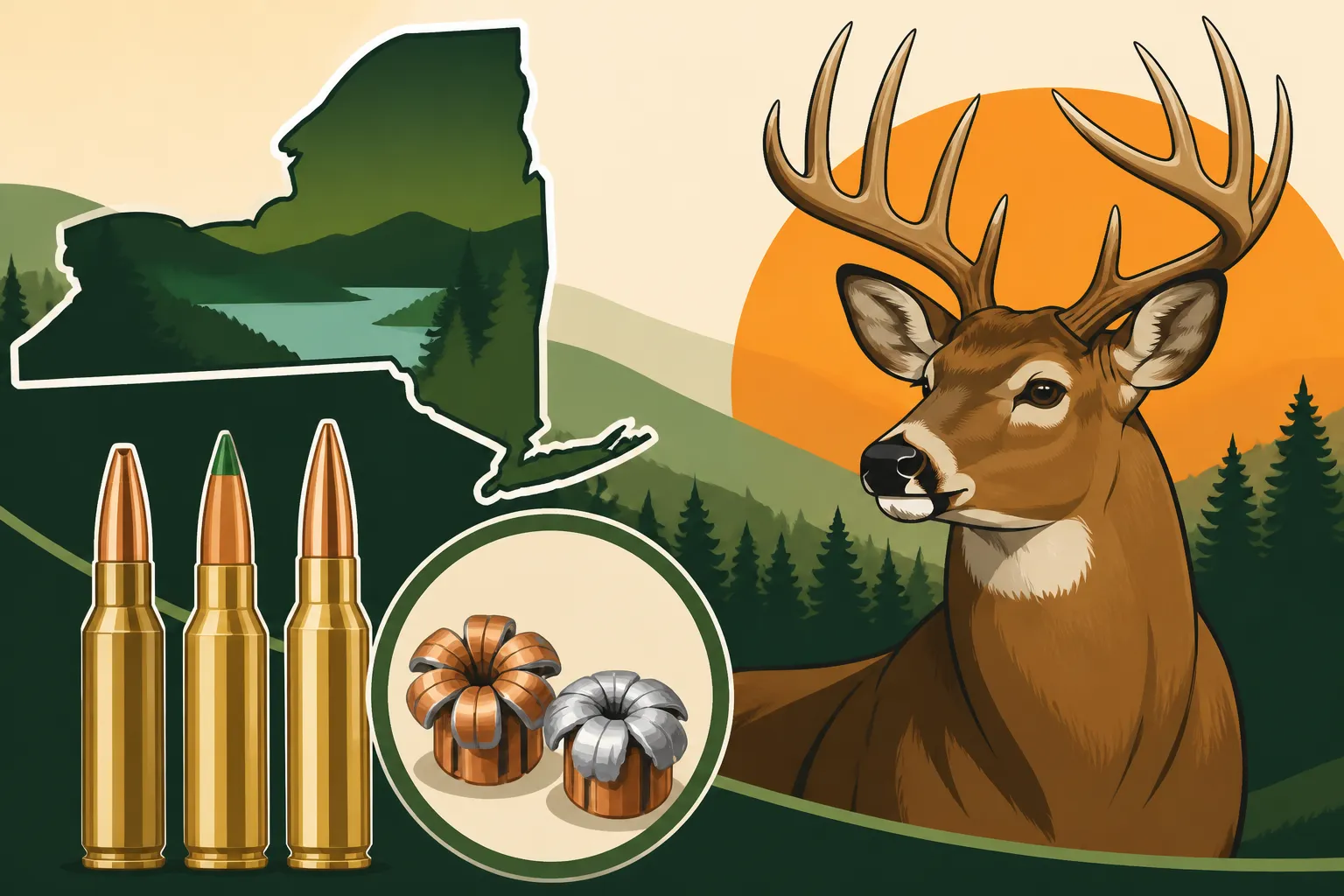
When a copper monolithic bullet strikes a deer, it’s designed for controlled expansion. Instead of fragmenting wildly, the nose of the bullet peels back into sharp petals, creating a wide wound channel while retaining almost all of its original weight. This high weight retention means the bullet continues to penetrate deeply, often resulting in complete pass-throughs, even on larger deer or at odd angles. The consistent, predictable expansion and minimal fragmentation make them an excellent choice for clean, ethical kills and greatly reduce the risk of lead contamination in meat and gut piles. Brands like Barnes TSX, Hornady GMX, and Federal Trophy Copper are well-known examples in this category. Be prepared for potentially different points of impact compared to your traditional lead bullets, so testing them at the range is crucial to Zeroing a Rifle for Mixed Distances and ensuring accuracy. Many hunters find that Choosing a Rifle Caliber for New York Deer becomes a much simpler process when focusing on the excellent performance of these copper bullets.
Bonded Core Bullets
While not entirely lead-free, bonded core bullets represent a significant step up in reducing fragmentation compared to older, traditional cup-and-core designs. In a bonded bullet, the lead core is chemically or mechanically bonded to the copper jacket. This strong bond prevents the jacket and core from separating on impact.
The primary benefit of a bonded bullet is its ability to hold together, even after encountering heavy bone. This results in far less fragmentation than conventional bullets, delivering more controlled expansion and higher weight retention. You'll still get a lead core, but the bonding process dramatically reduces the amount of lead shed into the surrounding tissue and gut pile. For hunters looking for a compromise between traditional bullet performance and reduced lead contamination, bonded bullets are an excellent choice. They often expand reliably across a wide range of velocities and offer robust terminal performance. Examples include Federal Fusion, Nosler AccuBond, and Swift A-Frame. These bullets can be a good intermediate step if you're not ready to fully commit to monolithic copper or if you're looking for different performance characteristics in Rifle and Shotgun Choices for New York Deer.
Other Non-Lead Alternatives
Beyond copper monolithics, there are other non-lead options, though they tend to be less common for centerfire rifle deer hunting. For instance, you might encounter bullets made from bismuth or tungsten-based alloys, particularly in shotgun slugs or for smaller game applications.
Bismuth, often used in shotshells for waterfowl where lead is universally prohibited, is softer than lead and nontoxic. While some bismuth slugs exist, they haven't seen the widespread adoption for rifle deer hunting that copper has. Tungsten, being very dense, can be used to create heavy-for-caliber bullets that retain energy well. However, tungsten is significantly more expensive and harder to work with than copper or lead, making it a niche option. For the vast majority of New York deer hunters considering lead-free rifle ammunition, copper monolithic designs will be the primary and most accessible choice, offering the best balance of performance, availability, and cost.
Practical Considerations for Switching to Lead-Free
Making the switch to lead-free ammunition isn't just about buying a different box of cartridges; it involves a few practical considerations to ensure you maintain your rifle's accuracy and your confidence in the field.
Rifle Performance and Accuracy
One of the first things many hunters notice when switching from lead-core to lead-free ammunition is a potential shift in their rifle's point of impact (POI). Copper bullets are often longer for their weight compared to lead-core bullets, which can affect barrel harmonics and how the bullet exits the muzzle. This means your rifle, which might have been perfectly sighted in with lead ammunition, will almost certainly need to be re-zeroed with your new lead-free choice. It's not uncommon to see groups shift a few inches in any direction, or even for your group size to change slightly.
The best practice is to purchase a few different brands or bullet weights of lead-free ammunition in your caliber, head to the range, and thoroughly test them. Pay attention to how your rifle groups with each. Some rifles "like" certain bullets better than others, and you might find that one lead-free load shoots exceptionally well, while another doesn't. Investing the time in this process is crucial for confidence. When you're out there on New York State Forest Hunting land, perhaps scouting with the GoHunt app, you need to trust that your shot will go where you aim, every single time. Don't skip the range time; it's an essential part of becoming proficient with any new ammunition.
Availability and Cost
It's no secret that lead-free ammunition can sometimes be a bit more expensive than its traditional lead-core counterparts. This is due to the higher cost of materials (copper vs. lead) and often more complex manufacturing processes. Additionally, while lead-free options are becoming more common, they might not be as readily available in every small-town sporting goods store compared to popular lead-core rounds.
This means a bit more planning might be in order. Instead of grabbing a box last minute, you might need to check with larger retailers or order online. Services like GoHunt can sometimes assist hunters in finding retailers that stock these specialized loads or provide reviews from other hunters. While the initial cost might be higher, consider the long-term benefits: the environmental impact, the peace of mind regarding food safety, and the excellent terminal performance on game. Many hunters view the slightly higher cost as a worthwhile investment in ethical hunting and responsible stewardship. Don't let the price deter you without first considering the value it brings to your hunting experience and the quality of your venison. Remember that New York Hunting Licenses and What They Cost is an investment in itself, so adding the right ammunition is just part of that larger commitment.
Terminal Ballistics and Shot Placement
Lead-free monolithic bullets perform differently on game than traditional lead-core bullets, and understanding these differences is key to ethical hunting. Because copper monolithic bullets retain so much of their weight, they tend to penetrate very deeply. This is a huge advantage for punching through bone or taking shots that might be less than ideal. However, some hunters find that the wound channel, while ample for a clean kill, might appear "cleaner" with less hydrostatic shock damage compared to a rapidly expanding, fragmenting lead bullet.
This isn't a downside, but rather a characteristic to be aware of. It reinforces the paramount importance of precise shot placement. While deep penetration is fantastic, aiming for the vitals (heart and lungs) remains critical. A well-placed lead-free copper bullet will deliver a quick, humane kill. Practice your shooting, understand your rifle and ammunition's capabilities, and always strive for the best possible shot. Knowing your limits and being disciplined with shot placement is always the hallmark of a responsible hunter, regardless of the ammunition type you choose. When dealing with bigger game, like during Handling a Bear After the Shot, consistent penetration is always a desired characteristic.
New York's Stance and Future Trends
New York hunters often keep a keen eye on regulations, whether it's understanding New York Deer Management Permits Explained or staying abreast of CWD zones. When it comes to ammunition, it's good to know where we stand and what might be on the horizon.
Current Regulations and Recommendations
As of right now, lead-free ammunition is not mandated for deer hunting statewide in New York. Hunters are free to use either lead-core or lead-free bullets for white-tailed deer. However, this doesn't mean the topic is ignored. There's a growing awareness within the state's wildlife management community about the potential benefits of reducing lead in the environment, especially for species like bald eagles.
While there isn't a state-wide mandate, the Department of Environmental Conservation (DEC) does encourage the voluntary use of non-lead ammunition. They provide educational resources and discussions on the topic, emphasizing the environmental benefits. It's a testament to the proactive spirit of many New York hunters that even without a regulation, many are choosing to make the switch on their own. This voluntary adoption helps pave the way for a healthier ecosystem without imposing restrictive rules on everyone. This discussion is often paralleled with concerns about diseases like New York's Chronic Wasting Disease Containment Area, where hunter cooperation is vital.
Preparing for Potential Changes
Across the country, there's a clear trend toward increasing restrictions or outright mandates for lead-free ammunition, particularly in states with significant public land or critical wildlife populations. While New York hasn't gone down that road for deer statewide yet, it's wise for hunters to be prepared for potential future changes.
Being proactive and experimenting with lead-free options now puts you ahead of the curve. You’ll have time to find a load your rifle likes, become proficient with its ballistics, and build confidence in its performance. Waiting until a mandate is in place can lead to scrambling for ammunition, potential supply shortages, and less time to practice. By adopting lead-free hunting now, you're not just making an environmentally conscious choice; you're also ensuring you're ready for whatever the future of hunting in New York may bring. It’s about being a forward-thinking steward of our hunting heritage and the wild places we cherish. Many resources, including those found on platforms like GoHunt, can help you stay informed about evolving regulations and product availability.
| Bullet Type | Composition | Key Benefit | Potential Drawbacks | Lead-Free Status |
|---|---|---|---|---|
| Copper Monolithic | Solid Copper/Alloy | Near 100% weight retention, deep penetration, minimal fragmentation | Higher cost, potential POI shift, might require barrel re-tuning | Fully Lead-Free |
| Bonded Core | Lead core bonded to copper jacket | High weight retention, controlled expansion, significantly reduced fragmentation vs. traditional lead | Still contains lead, can be more expensive than traditional lead | Not fully lead-free (reduced lead) |
| Traditional Lead-Core | Lead core, copper jacket | Generally affordable, wide availability, historically proven performance | Significant fragmentation, lead contamination in meat and environment | Contains Lead |
Disclaimer
This article is for general informational purposes only and does not constitute professional advice. Laws, prices and regulations vary by location and change over time. Consult a qualified professional for guidance on your specific situation.