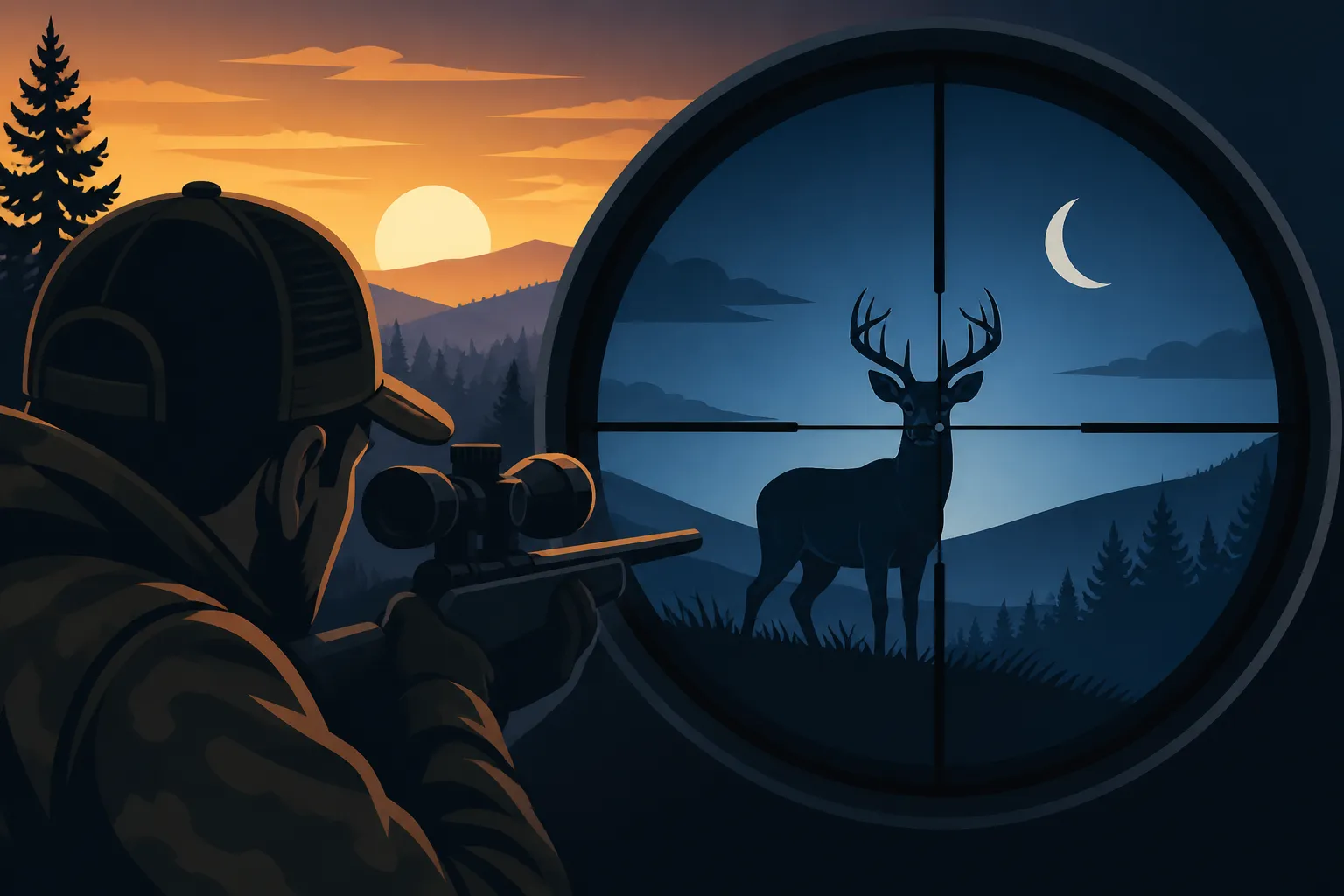
Low-Light Performance in a Scope
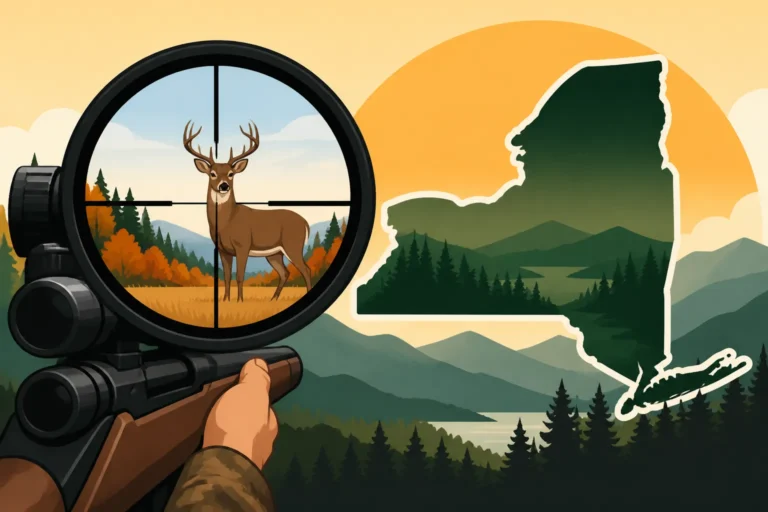
There's nothing quite like the anticipation of dawn breaking over a frost-kissed Catskill ridge or the hushed stillness as dusk settles over a Southern Tier field edge. Those crucial first and last minutes of legal shooting light are often when the biggest bucks move, but they're also when a hunter's optics are truly put to the test. If you've ever found yourself squinting through a blurry scope, desperately trying to make out antler points or a deer's vitals as the light fades, you know the frustration. This guide will dive deep into what makes a hunting scope perform well in low light conditions, helping you understand the technical jargon and choose the right glass for those magic moments in the New York woods.
Understanding Low-Light Performance in a Hunting Scope
When we talk about "low-light performance" in a hunting scope, it's not just a buzzword; it refers to a scope's ability to gather and transmit available light to your eye, allowing you to see a clear, bright image even when the sun is barely kissing the horizon or has just dipped below it. This capability is absolutely vital for ethical shot placement during prime hunting hours, especially in thick New York cover where legal shooting light can feel even shorter.
The Role of the Objective Lens
The objective lens, the large lens at the front of your scope, is your primary light collector. Think of it as a funnel for photons. A larger objective lens can physically gather more light. This is why you often see scopes marketed with objective lens sizes like 40mm, 42mm, 50mm, or even 56mm. While it might seem intuitive that bigger is always better, there's a practical limit. A massive objective lens adds weight and bulk, can require higher rings, and might even interfere with your rifle's balance or carrying comfort, particularly if you're still-hunting through dense hemlock stands. For many New York scenarios, a 40mm or 42mm objective lens strikes a good balance between light-gathering capability and manageable size.
Exit Pupil and Your Eye
The exit pupil is the diameter of the column of light that leaves the eyepiece and enters your eye. It's calculated by dividing the objective lens diameter by the magnification setting. For example, a 3-9x40mm scope set at 6x magnification has an exit pupil of approximately 6.6mm (40 / 6). During low light, your eye's pupil dilates to around 5-7mm (for a younger person) to gather as much light as possible. To get the brightest image, you want your scope's exit pupil to be at least as large as your eye's dilated pupil. If the scope's exit pupil is smaller, your eye won't be able to utilize all the light the scope is transmitting, effectively dimming the image. This is why high magnification in low light can actually make things darker – it reduces the exit pupil size.
| Objective Lens (mm) | Magnification | Exit Pupil (mm) | Low Light Performance Consideration |
|---|---|---|---|
| 32 | 4x | 8 | Good for compact, close-range. |
| 32 | 8x | 4 | Dim at high power in low light. |
| 40 | 4x | 10 | Excellent for low light. |
| 40 | 8x | 5 | Very good, but approaching eye limit. |
| 50 | 5x | 10 | Superb light gathering. |
| 50 | 10x | 5 | Good at mid-range magnification. |
| 56 | 7x | 8 | Top-tier, but very large. |
| 56 | 14x | 4 | Optimal at lower magnifications. |
The Science of Light Transmission and Coatings
Beyond the physical size of the lenses, the quality of the glass and the coatings applied to it are arguably more critical for true low-light performance. Think of it this way: a big bucket is great for catching rain, but if that bucket has holes, you're losing water. The same principle applies to light.
Glass Quality and Index of Refraction
Not all glass is created equal. High-quality optical glass, often referred to as "ED" (Extra-low Dispersion) or "HD" (High Definition) glass by various manufacturers, has a lower refractive index. This means it bends light more uniformly, reducing chromatic aberration (color fringing) and allowing more light to pass through the lens without scattering or distortion. When you're trying to differentiate a deer from the shadows in the dark timber, this clarity makes all the difference. Cheaper glass can produce a cloudy, less vibrant image, especially at the edges, which is a significant handicap when every photon counts.
Multi-Coated Lenses and Anti-Reflective Properties
Every time light passes through a glass surface, a small percentage of it is reflected away, rather than transmitted through the scope to your eye. Over a scope with multiple lenses, this cumulative loss can be significant. That's where lens coatings come in.
- Coated: A single layer on at least one lens surface.
- Fully Coated: A single layer on all air-to-glass surfaces.
- Multi-Coated: Multiple layers on at least one lens surface.
- Fully Multi-Coated: Multiple layers on all air-to-glass surfaces.
Fully multi-coated optics are the gold standard. These layers are designed to minimize reflections and maximize light transmission, often pushing transmission rates above 95% or even higher. Imagine trying to spot a fawn tucked away in the shadows while Hunting After a Poor Acorn Year when deer are naturally more scattered – every bit of light transmission helps. Brands often have their own proprietary coating formulas, which is a major factor in their performance and price point.
Why Low-Light Performance is Crucial for New York Hunters
New York's diverse hunting landscapes, from the dense Adirondack forests to the rolling farmlands of the Southern Tier, present unique challenges that make low-light scope performance non-negotiable. Our deer, bear, and turkey often move during those dim transitional periods, and having a scope that performs well can be the difference between a successful, ethical hunt and a missed opportunity or, worse, an unsafe shot.
Maximizing Legal Shooting Hours
New York State has strict legal shooting hours – typically from one half-hour before sunrise to one half-hour after sunset. These windows are often when deer are most active, especially during the rut when bucks are cruising and less wary. A scope with superior low-light performance allows you to confidently identify your target and place your shot for the entire legal window. Without it, you might find yourself packing up early, missing out on those last few minutes of opportunity when a deer might just step out into a clearing. This is particularly relevant when Hunting the Rut in the Northern Zone or Hunting the Rut in the Southern Zone, where deer movement often peaks at dawn and dusk.
Navigating Dense New York Cover
Many of our best hunting spots in New York are in areas of thick timber, dense brush, or deep ravines. Even in the middle of the day, these areas can be dimly lit. As the sun begins to fade, they become practically impenetrable to the naked eye. A high-quality low-light scope helps cut through the gloom, allowing you to pick out the subtle details of an animal that might be partially obscured by branches or shadows. Whether you're in the hardwoods of the Catskills or the thick conifer swamps, being able to resolve detail in challenging light is paramount.
Ethical Shot Placement in Challenging Conditions
Ultimately, low-light performance boils down to ethical hunting. Being able to clearly identify your target, confirm it's a legal animal, and place your shot precisely is critical. A fuzzy or dark image increases the risk of a poor shot or misidentification. Imagine seeing a deer silhouette at last light but being unable to discern if it's a buck or a doe, or if it has legal antlers if you're in an antler restriction zone. A scope that brightens and clarifies the image can prevent these situations, ensuring a clean kill and a responsible hunt. This is especially true when attempting to fill Extra DMPs in Unlimited WMUs where you might be looking to take an antlerless deer but need to be absolutely certain of your target.
Key Features to Prioritize for Low-Light Performance
When you're shopping for a new scope, especially one intended for those critical low-light moments, there are several key features beyond just objective lens size that you'll want to scrutinize. Don't just go by price; really dig into the specifications and, if possible, compare them side-by-side.
Reticle Illumination
While not strictly a "light gathering" feature, an illuminated reticle can dramatically improve your ability to take a shot in low light. In very dim conditions, a traditional black reticle can disappear against a dark background, like a deer's hide or a shadowed tree line. An illuminated reticle, typically in red or green, provides a crisp aiming point that stands out without washing out the target. You want an illumination system with adjustable brightness settings, so you can fine-tune it to the exact ambient light without creating glare or halo effects. Some modern scopes even offer ambient light sensors that adjust illumination automatically. When you're using a tool like the GoHunt app for scouting and planning, knowing your gear will perform when the moment arrives is priceless.
Tube Diameter
The main tube diameter of a scope (usually 1-inch or 30mm, though 34mm is becoming more common) doesn't directly affect light transmission through the optical elements themselves. However, a larger tube allows for greater internal adjustment range for windage and elevation, and it can also contribute to a more robust overall construction. Some argue that a larger tube can allow for larger internal lens elements, which might indirectly aid light transmission, but the primary factors remain glass quality and coatings. For New York hunters, a 30mm tube often provides a good balance of durability and adjustment range without excessive bulk.
Coatings and Their Impact
As mentioned, coatings are paramount. Look for scopes that explicitly state "fully multi-coated" on all air-to-glass surfaces. Beyond that, many manufacturers have proprietary coating formulations designed to enhance specific wavelengths of light or improve overall light transmission. Brands like Zeiss, Swarovski, Leupold, and Vortex are known for their advanced coatings. While marketing names can be confusing, the key takeaway is that more and higher-quality coatings mean less light loss and a brighter, clearer image. Don't be shy about asking questions at your local sporting goods store about the specific coating technology used by different brands. A quick search on GoHunt or other reputable gear sites can provide detailed breakdowns of these technical features.
Maintaining Your Scope for Optimal Low-Light Use
Even the best low-light scope won't perform to its potential if it's not properly cared for. A little preventative maintenance and good habits can ensure your glass is crystal clear and ready for those critical dawn and dusk moments.
Cleaning Your Lenses Properly
Dust, dirt, fingerprints, and even dried raindrops can severely degrade your scope's light transmission. However, cleaning lenses requires a delicate touch. Never use your shirt, a paper towel, or harsh chemicals.
- Blow off loose debris: Use a can of compressed air or a soft lens brush to remove any loose dust or grit. Skipping this step can lead to scratching the lens if you wipe it.
- Apply lens cleaning solution: Use a purpose-designed optical lens cleaning solution, spraying a small amount onto a microfiber lens cloth, not directly onto the lens.
- Wipe gently: Gently wipe the lens in a circular motion, starting from the center and working outwards. Use a fresh part of the cloth for each wipe.
- Finish with a dry cloth: If needed, use a separate dry, clean microfiber cloth to remove any streaks.
Carrying a small lens cleaning kit in your pack, like those from Zeiss or Vortex, is always a good idea, especially after a long trek through the mud or a sudden rain shower.
Protecting Your Lenses from Damage
Lens caps are your best friends. Always use them when your scope isn't actively being used. Whether your rifle is in the truck, propped against a tree, or being carried through thick brush, caps protect against scratches, dings, and the accumulation of grime. Flip-up caps are particularly convenient for quick deployment. Additionally, store your rifle in a padded case when transporting it to and from your hunting grounds. Bumps and jostles can not only damage the lenses but also throw off your scope's zero. If you're hunting in heavy rain or snow, consider using scope covers or even a small piece of electrical tape over the objective and eyepiece to keep moisture out until the shot presents itself. Keeping a Muzzleloader Dry in Lake-Effect Snow is just as important as keeping your modern rifle scope clean.
Regular Zero Checks and Mount Integrity
While not directly related to light transmission, ensuring your scope is securely mounted and holds its zero is fundamental to ethical hunting, especially in low light. A loose mount can cause shifts in your point of impact, leading to missed shots or wounded game.
- Torque check: Periodically check the torque of your scope rings and base screws using a torque wrench to ensure they're at the manufacturer's recommended specifications.
- Zero verification: Before each season, and ideally after any significant travel or accidental drops, verify your rifle's zero at the range. Don't assume it's still dead-on. This practice is crucial, whether you're planning for Opening Weekend Tactics in the Southern Zone or gearing up for a late-season sit. Knowing your rifle shoots true removes one major variable when you're faced with a low-light shot. Many New York hunters even carry a small, durable scope cover that integrates into their rifle sling for quick access and added protection in the field. GoHunt's resources often highlight the importance of proper scope mounting and zeroing, underscoring its role in successful hunting.
Disclaimer
This article is for general informational purposes only and does not constitute professional advice. Laws, prices and regulations vary by location and change over time. Consult a qualified professional for guidance on your specific situation.