Hunting a Standing Cornfield in Farm Country
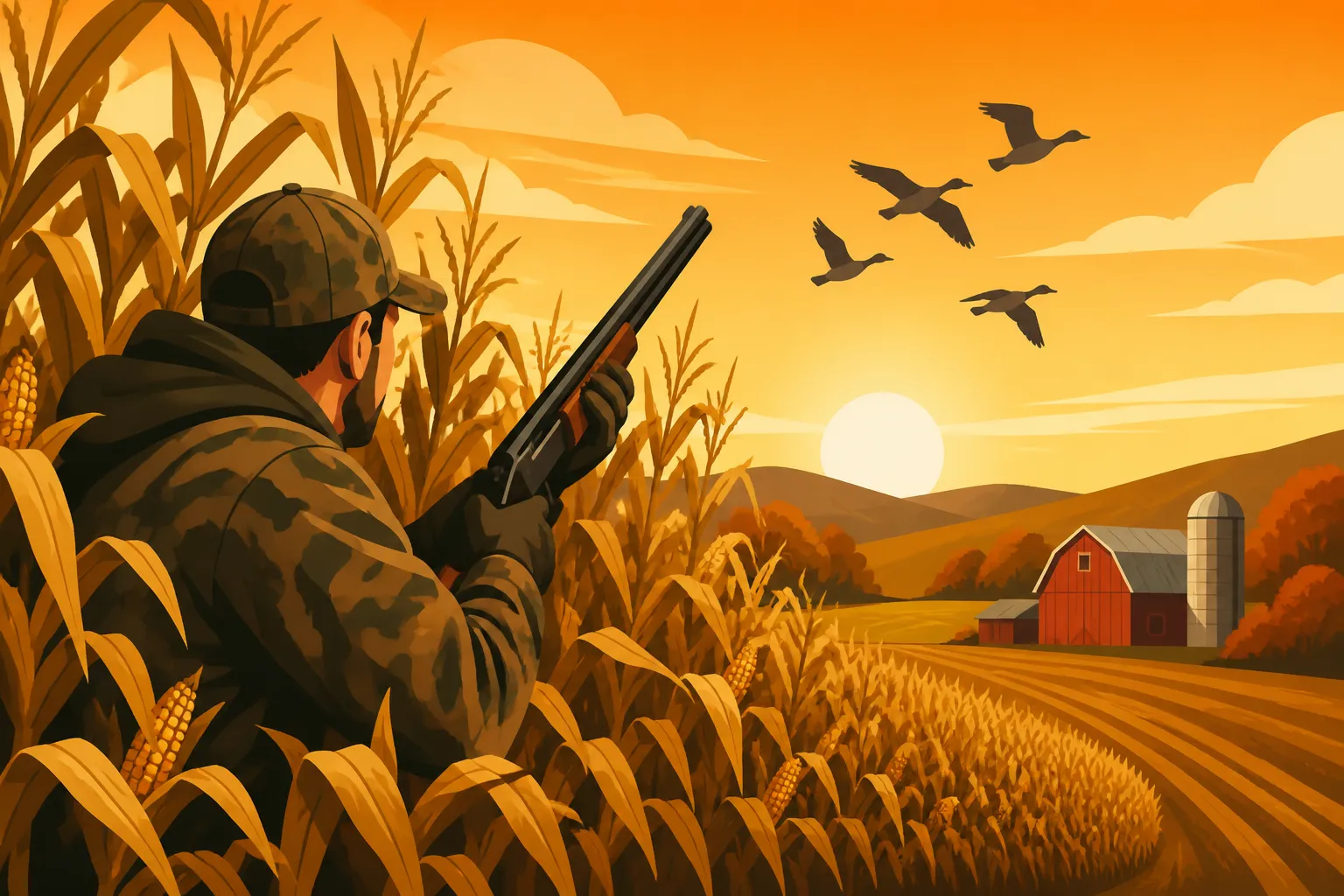
Hunting standing cornfields in New York's farm country can feel like trying to find a needle in a haystack – or rather, a big buck in a sea of stalks. It's a frustrating but incredibly rewarding challenge, as these fields offer incredible cover and food, making them deer magnets. If you've ever felt lost trying to figure out how to effectively hunt these agricultural giants, you're in the right place. This guide will walk you through the nuances of scouting, strategizing, and successfully hunting those elusive whitetails that call the cornfields home.
The Allure and Challenge of Standing Corn for Deer
Standing cornfields are truly a double-edged sword for New York deer hunters. On one hand, they are absolute magnets for whitetails, providing everything a deer needs to thrive. On the other hand, their dense, towering nature makes them incredibly difficult to hunt effectively. Understanding why deer love corn so much, and what that means for a hunter, is the first step to success.
Why Deer Love Standing Corn
Deer aren't just passing through cornfields; for much of the fall, they often live in them. These agricultural powerhouses offer a unique combination of resources that are hard for a whitetail to resist.
- Food Source: This is the most obvious draw. As the corn matures, it provides an abundant, high-energy food source. Deer will gorge themselves on the nutritious kernels, packing on fat reserves critical for surviving the colder months. They don't have to travel far to feed, making the cornfield an all-you-can-eat buffet right outside their bedroom. This makes it a prime target for hunters who know that deer often stick close to reliable food sources, especially in areas like the Southern Tier where agriculture is prevalent.
- Unrivaled Cover and Security: Imagine a dense, green jungle stretching for acres, sometimes even miles. That's what a standing cornfield feels like to a deer. The tall, thick stalks provide incredible visual and olfactory cover, allowing deer to move with confidence and remain hidden from predators, including us hunters. Bucks, especially, cherish this security, using the corn to elude pressure and grow old. It's a place where they feel safe, making them less likely to move during daylight hours if they can fulfill all their needs within the stalks.
- Thermal Regulation: Cornfields offer more than just food and cover; they also provide a microclimate. On hot early-season days, the dense canopy creates shade and can be several degrees cooler than an open field. Conversely, on cold, windy late-season days, the stalks break the wind, offering a welcome refuge from the biting chill. This ability to regulate their body temperature within the corn makes it an even more appealing sanctuary for deer throughout the hunting season.
The Hunter's Dilemma: Finding the Needle
For all the advantages standing corn offers deer, it presents significant challenges to the hunter. It’s like trying to find an animal in a living labyrinth.
- Limited Visibility: This is perhaps the biggest frustration. Once you step into a standing cornfield, your visibility drops to mere feet. You might be within bow range of a deer and never know it. This makes traditional stand hunting difficult, as finding a vantage point to see deer movement is nearly impossible. Even when hunting the edges, deer often stay just out of sight, relying on the cover. This is a common pain point for hunters, especially those used to more open timber where visual scouting is easier.
- Difficulty Tracking: When a deer is shot in standing corn, the challenge of tracking truly begins. The dense stalks can make blood trailing incredibly difficult, as blood smears easily and tracks are often obscured. Combine this with a wounded deer that can travel a surprising distance within the maze, and recoveries can be heartbreakingly tough. This is where meticulous shot placement and patience become even more paramount.
- Wind and Scent Management: Hunting deer is always about playing the wind, but in a cornfield, it's amplified. The tall stalks create swirling air currents and can make predicting scent dispersal a nightmare. A slight breeze that might carry your scent one way in open woods can eddy and swirl in a cornfield, carrying it in multiple directions. This makes approaching a field, or moving within it, a high-stakes gamble with your scent cone.
Mastering the Art of Scouting Standing Cornfields
Effective scouting is the bedrock of successful cornfield hunting. You can't just walk into these fields hoping for the best; you need a plan, and you need to understand how deer use the corn. This means a mix of aerial reconnaissance and intense on-the-ground detective work.
Pre-Season Aerial Reconnaissance and On-the-Ground Intel
Before the season even begins, you can gather a wealth of information from afar, then verify it with boots on the ground.
- Using Mapping Tools: Modern technology is your best friend here. Platforms like GoHunt, or other robust mapping apps, allow you to study aerial photos of potential hunting areas. Look for the shape of the cornfield itself. Are there fingers of timber extending into it? Are there waterways or ditches cutting through it? How does the cornfield connect to other cover, such as woodlots, swamps, or even other crop fields like soybeans or alfalfa? These features create natural funnels and pinch points that deer are likely to use. Pay close attention to how fields of various types are situated relative to bedding areas; this will inform your understanding of deer movement. You can learn a lot about how deer move by reading aerial photos for Southern Tier deer in particular.
- Identifying Key Entry/Exit Points and Funnels: Deer are creatures of habit, even within the vastness of a cornfield. From your aerial maps, identify points where deer are likely to enter and exit. These often occur at corners, along fencerows, where the corn borders a timber patch, or where a slight depression in the terrain creates a natural travel corridor. Once you're on the ground, confirm these with actual deer sign. Look for heavily used trails, worn paths that emerge from the corn, and areas where tracks are concentrated. These are your prime ambush locations.
- Looking for Physical Sign: Tracks, Rubs, Scrapes: While you might not find a rub line deep within the corn, the edges are often hot zones for sign. Walk the perimeter of the cornfield, paying meticulous attention to deer tracks entering and exiting. Look for rubs on saplings along the treeline bordering the corn, or scrapes scratched into the dirt where bucks are communicating. These signs are gold, telling you not just that deer are using the corn, but where and when they are doing so. Pay attention to fresh sign versus older, faded indicators. The more recent the sign, the better your chances of encountering that deer.
Timing Your Scouting Missions
When you scout is almost as important as how you scout. Different times of the year offer different clues about deer behavior.
- Before the Stalks Mature: Get out there in late summer, before the corn grows too tall and dense. This is a great time to identify those natural funnels, pinch points, and cover transitions that become almost invisible once the corn is shoulder-high. You can see the contours of the land, observe where deer are likely to cross low spots, or where a small creek might run through the field. This early intel is invaluable and will save you a lot of guesswork later.
- Immediately After Harvest: This is arguably the most critical scouting period for cornfields. As soon as the combines roll, the deer's world changes dramatically. What was once impenetrable cover is now an open stubble field. This reveals every hidden trail, every bed, every travel corridor deer used within the corn. You'll see exactly where they were living. Get out there immediately after the harvest, before rain or snow obscures the sign. This is when you can confirm your aerial map predictions and identify new high-traffic areas. This intel is crucial for understanding how deer use the field and will significantly impact your tactics for hunting the stubble field later in the season.
- Mid-Season Edge Scouting: Throughout the archery and early firearm seasons, continue to scout the edges. You won't be able to penetrate deep into the standing corn without disturbing it, but you can monitor the ingress and egress points. Fresh tracks appearing after a rain, new rubs, or active scrapes along the treelines can indicate increased deer activity. Don't be afraid to use a good pair of binoculars to scan the edges from a distance during low-light hours to spot deer feeding or staging before entering the field.
| Scouting Method | Best Time to Use | Key Information Gained | Advantages | Challenges |
|---|---|---|---|---|
| Aerial Mapping (GoHunt) | Pre-season, Year-round | Field shape, adjacent cover, potential funnels, access | Efficient, non-intrusive, long-range perspective | Doesn't show fresh sign, ground verification needed |
| Edge Walking / Perimeter Scan | Early/Mid-season, Post-harvest | Entry/exit points, fresh tracks, rubs, scrapes | Confirms deer presence and travel patterns | Can be time-consuming, risk of spooking deer on edges |
| Post-Harvest Field Walk | Immediately post-harvest | Exact bedding locations, internal trails, historic usage | Reveals hidden patterns, confirms theories | Limited time window, requires access to harvested field |
| Remote Camera Placement | Year-round, especially pre-season | Time-stamped deer activity, buck patterns, population info | Passive, gathers data when you're not present | Requires permission, risk of theft, limited range |
Strategic Approaches to Hunting New York's Cornfields
Once you understand deer behavior in corn and have thoroughly scouted your area, it's time to devise a hunting strategy. Cornfield hunting requires flexibility, adapting your approach based on the stage of the season and whether the corn is still standing.
Stand and Ground Blind Placement
Where you set up is critical, especially given the limited visibility. You need to focus on areas where deer movement is concentrated.
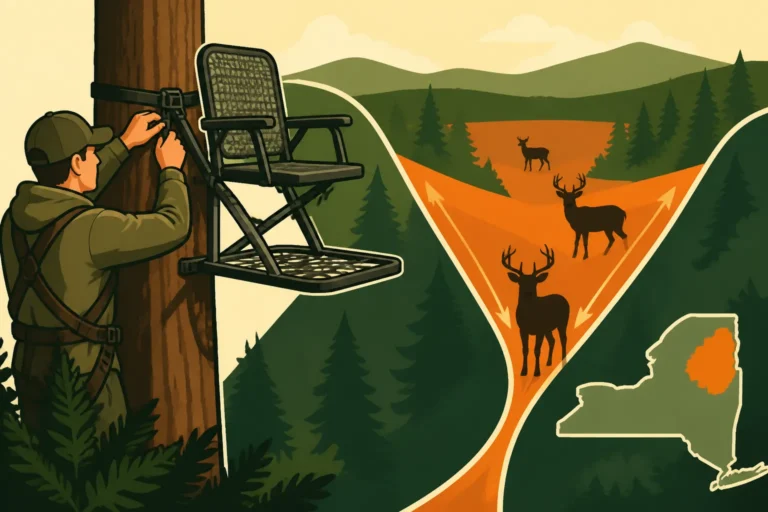
- Hunting Field Edges and Transition Zones: This is often the most productive strategy while the corn is standing. Deer will spend most of their daylight hours inside the corn, but they have to eventually come out to other food sources or to stage before moving to bedding. Place your stand or ground blind in a tree or along a fencerow that offers a clear shot at a natural entry/exit point. Focus on where the corn meets a woodlot, a creek bottom, or another food source like an alfalfa field. These transition zones are high-traffic areas. Remember, your goal is to catch them as they enter or exit. For detailed advice, check out Setting Up on a Southern Tier Field Edge.
- Hunting Internal Pockets and "Islands": Less common, but potentially deadly, is hunting internal pockets. Sometimes, farmers will leave a small patch of timber or an overgrown ditch within a large cornfield, or there might be an area of downed corn. These "islands" become core bedding areas or travel corridors within the corn. Identifying these on aerial maps (with tools like GoHunt) and then confirming them on the ground can lead to incredible success, but it requires careful entry and exit to avoid spooking deer.
- Using a Ground Blind on New York Public Land: If you're on public land or a private parcel without suitable trees for a treestand, a ground blind can be an excellent option. Position it strategically along a known travel corridor or a field edge, making sure it's well brushed in with natural vegetation. The key is to get it out early so deer can get used to it. For tips on deployment, read Using a Ground Blind on New York Public Land. Ensure it blends seamlessly; a poorly camouflaged blind will alert deer immediately.
Still-Hunting and Drives Through the Maze
When deer are locked down deep in the corn, more aggressive tactics might be needed. These methods require careful planning and execution.
- Quiet Movement and Wind Awareness: Still-hunting a standing cornfield means moving extremely slowly, taking a few steps, and then pausing to scan and listen. Every rustle of corn stalks will be amplified, both by you and by the deer. The wind becomes your compass; you must move into the wind or crosswind to keep your scent from spooking deer ahead of you. It's a game of inches, trying to catch a glimpse of an ear or a flicker of movement before the deer busts you. This is an exhausting but potentially rewarding way to hunt, especially if you know deer are bedded deep within.
- Organized Drives: For larger cornfields, especially later in the season when deer are pressured, an organized drive can be very effective. This involves a group of hunters (pushers) walking through the corn, attempting to push deer toward other hunters (standers) positioned at strategic exits or bottlenecks. This requires coordination, communication (two-way radios are essential for a deer drive with three or four hunters), and a clear understanding of safety protocols. Always know where every hunter is located and ensure shooting lanes are clear. This can be an excellent way to move deer that are stubbornly holding tight.
- Tracking a Deer in Fresh New York Snow: While primarily a tactic for recovering downed game, fresh snow can also turn a cornfield into a tracking paradise. If you get an early snowfall while the corn is still standing, you might be able to pick up a fresh track and slowly still-hunt it, moving at a snail's pace, trying to catch up to the deer. This is less about driving and more about patient pursuit.
When the Corn Comes Down: Post-Harvest Tactics
The harvest completely changes the landscape, and with it, deer behavior. Your strategies must adapt.
- Hunting the Stubble Fields: Once the corn is cut, deer lose their primary security cover. They will still visit the stubble fields to glean leftover kernels, which are now easily accessible. This makes the newly exposed field a prime food source. Set up stands or ground blinds overlooking these fields, focusing on the first few days after harvest before the deer completely adjust their patterns. They'll be vulnerable and visible.
- Shifting Deer Patterns: The loss of corn cover will force deer to shift their bedding and travel patterns. They'll likely relocate to nearby woodlots, swamps, or thicker cover. Your focus will then shift from hunting in the corn to hunting the transitions between these new bedding areas and the now-open cornfields. They'll still feed in the stubble, but their approach and exit routes will change.
- Late-Season Food Sources for New York Whitetails: As winter approaches, remaining corn (even as stubble) becomes an even more critical food source. Coupled with other available late-season food sources like brassicas, standing soybeans, or even browse, these stubble fields can be magnets. Cold weather will push deer to feed more heavily, and the high-calorie corn can be irresistible. This is an excellent time for a cold-weather sitting strategy in New York, as deer movement may increase during daylight hours.
Essential Gear and Safety Considerations
Hunting standing cornfields presents unique challenges, making certain gear and safety precautions particularly important. Being prepared can make the difference between a successful, safe hunt and a frustrating or even dangerous one.
Navigational Tools and Communication
Getting lost in a cornfield is a real possibility, and communicating with hunting partners is vital, especially during drives.
- GPS and Mapping Apps: A reliable GPS unit or a smartphone with a robust mapping app (like GoHunt) is non-negotiable. Mark your entry point, your stand location, and any key deer sign you find. These fields can be disorienting, with rows upon rows of identical stalks. Without a GPS, you can easily lose your bearings, especially as daylight fades. Always carry a power bank for your phone, as GPS use drains batteries quickly.
- Two-Way Radios for Drives: If you're conducting a deer drive, clear communication is paramount for safety and effectiveness. Two-way radios allow pushers and standers to stay in constant contact, coordinating movements and informing each other of deer sightings or potential hazards. This is crucial for avoiding accidents and ensuring everyone knows where others are at all times.
Blaze Orange and Visibility
Safety should always be your top priority, especially when hunting in dense cover or with multiple hunters.
- New York's Blaze Orange Requirements: New York State has specific blaze orange requirements for hunters, especially during firearm seasons. You need to know how much blaze orange New York requires for your particular hunting method and season. This highly visible color is designed to make you stand out to other hunters, reducing the risk of mistaken identity.
- Importance for Still-Hunting and Drives: Even if not legally required (e.g., during archery season), wearing blaze orange or blaze pink is a wise choice when still-hunting or participating in a drive in a cornfield. Your visibility is already minimal, and standing out to other hunters, whether they are part of your group or not, is crucial. It’s a proactive step to ensure safety in a challenging environment.
Tracking and Recovery Challenges
As mentioned, recovering a deer from standing corn can be incredibly tough. Having the right tools and knowing the right procedures is vital for ethical hunting.
- Blood Trailing After Dark in New York: If you shoot a deer late in the day and it runs into a thick cornfield, you might find yourself blood trailing after dark in New York. This is where a powerful headlamp or spotlight becomes critical. Move slowly, mark the last known blood trail, and be prepared for a long, arduous process. If the shot isn't perfect, or if you suspect a gut shot, backing out and waiting until morning is often the best course of action to allow the deer to expire and stiffen up.
- Field Dressing a Deer in Cold Weather: When you do recover your deer, proper field dressing is essential, regardless of the temperature. However, if you're hunting in late season, you might be field dressing a deer in cold weather. This is advantageous as the cold helps preserve the meat, but it still requires efficient work. Have a sharp knife, game bags, and consider a deer sled or cart if you're pulling it a long distance from the cornfield to your vehicle. The goal is to get the deer cooled down and processed as quickly and cleanly as possible to ensure quality venison.
Disclaimer
Always consult the most current New York State Department of Environmental Conservation (DEC) hunting regulations before heading afield. Laws and seasons can change, and it is every hunter's responsibility to know and follow them.