How Old a Cut Should Be for Grouse
Finding prime ruffed grouse cover in New York can feel like searching for a needle in a haystack these days, especially with how much the landscape has changed. It's frustrating to walk for miles through seemingly good woods only to jump nothing. This guide will help you understand the specific age of timber cuts that grouse absolutely thrive in, and how to pinpoint those sweet spots, dramatically increasing your chances of finding birds.
Understanding Ruffed Grouse Habitat Needs
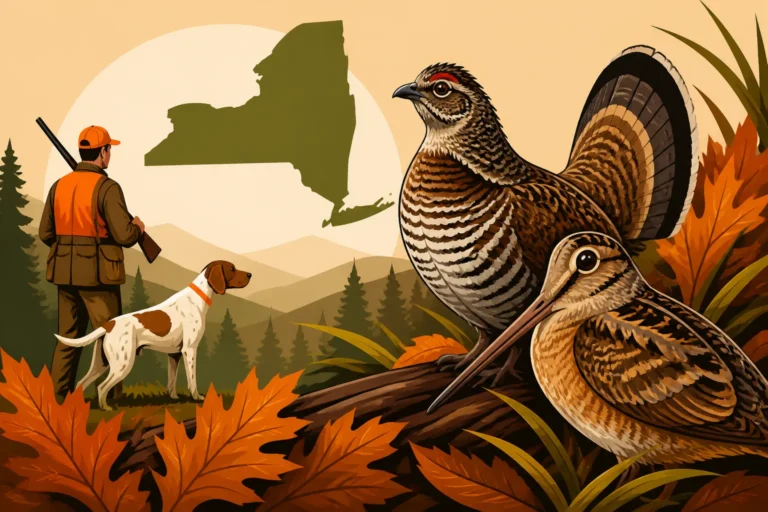
Ruffed grouse are birds of the forest, but not just any forest. They are creatures of disturbance, meaning they rely heavily on young, regenerating woodlands created by things like timber harvests, fires, or even significant wind events. When you're trying to figure out how old a cut should be for grouse, it’s really about understanding their survival strategy.
Why Young Forests Are Crucial
Think about what a grouse needs to survive: food, cover from predators, and places to nest. Mature, open forests, while beautiful, typically don't offer the dense, tangled understory that grouse depend on for safety. Young forests, on the other hand, are a haven. They provide thick, almost impenetrable cover that hides them from hawks and owls above, and foxes and coyotes below. This dense growth also harbors a fantastic buffet of insects, berries, and buds—all staples of a grouse diet. Without this early successional habitat, grouse populations simply can't thrive, which is a major factor in the documented New York Ruffed Grouse Decline.
Imagine yourself as a tiny grouse, no bigger than a football. Would you feel safer in a park-like stand of mature hardwoods with clear sightlines for predators, or in a chaotic tangle of saplings, fallen logs, and berry bushes where you can disappear in an instant? The answer is obvious. These young woods, often the result of timber harvesting, are their sanctuary, providing both escape cover and foraging opportunities in one package.
The Role of Diverse Cover Types
While young cuts are essential, the absolute best grouse habitat isn't just one monolithic block of uniform saplings. Grouse really benefit from diversity within these younger stands. They love areas where different age classes of timber meet, creating varied edges. For instance, a cut that transitions into a slightly older stand, or abuts a mature softwood patch, offers them different options depending on the weather, time of day, or the type of predator they’re trying to avoid. They might feed in a younger, brushy area but roost in a nearby conifer stand during a snowy night.
Having a mix of food sources is also key. A dense stand of young aspen, for example, provides crucial winter buds and excellent drumming sites. But if that aspen stand also has some pockets of elderberry, hawthorn, or even a few leftover oak trees, it becomes an even richer habitat. This mosaic of cover and food allows grouse to meet all their needs within a relatively small home range, reducing their exposure to predators during travel.
The Sweet Spot: Ideal Timber Cut Ages for Grouse
When we talk about timber cuts, we're really looking for that Goldilocks zone – not too young, not too old, but just right. The age of a forest stand after a harvest is one of the most critical factors in determining its suitability for ruffed grouse.
Early Successional Stages: 5-15 Years Old
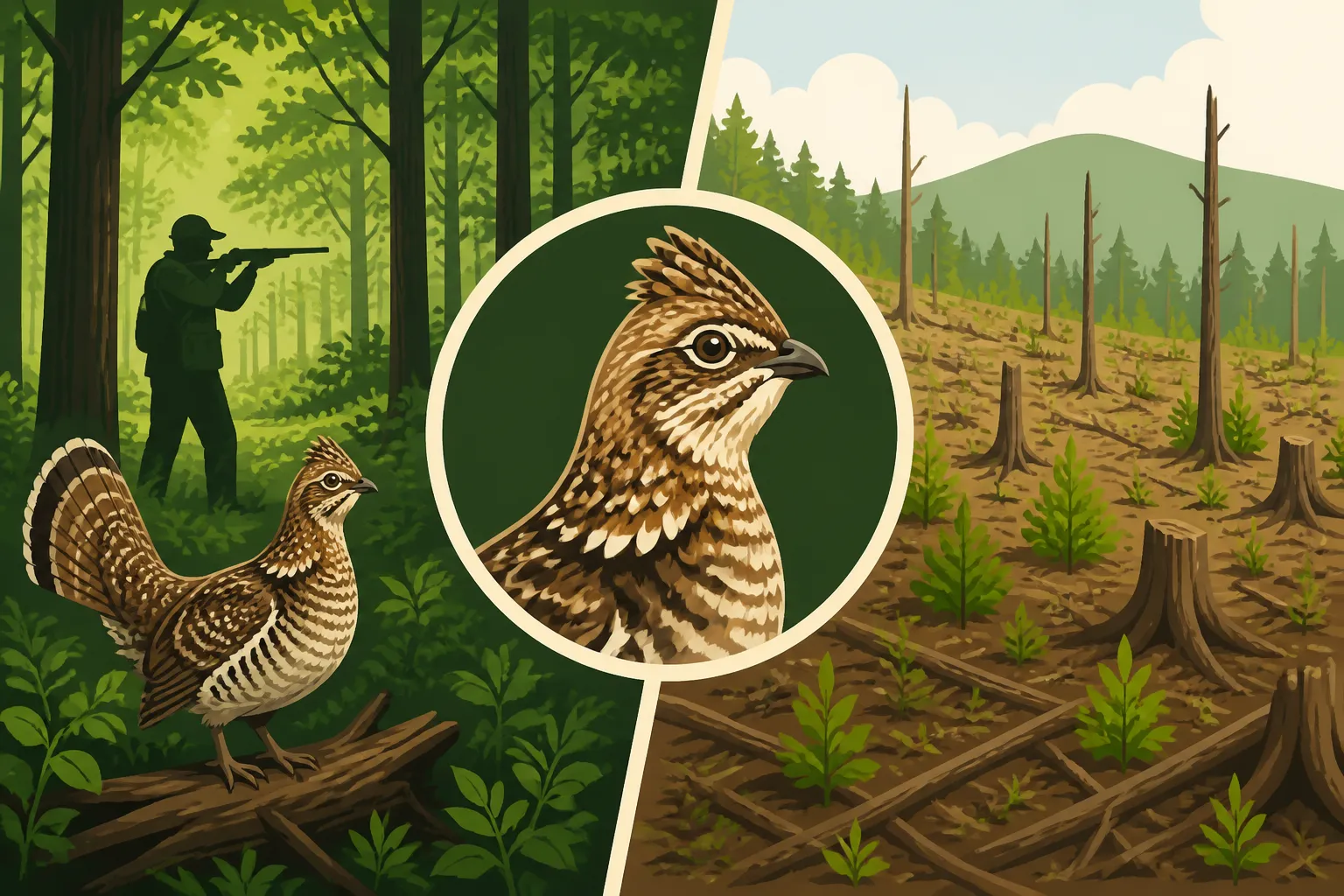
This is often where the magic happens for grouse hunters. A timber cut that’s about 5 to 15 years old has typically exploded with dense regeneration. Think about a clear-cut or even a heavy selection cut from a decade ago. The ground is now covered in a thicket of young hardwoods like aspen, birch, maple, and cherry, all growing vigorously. This stage provides incredible horizontal cover, making it extremely difficult for aerial predators to spot a bird on the ground, and for ground predators to move through silently.
At 5 years post-cut, the new growth might still be a little sparse, but by 7-10 years, it's usually a bird-holding machine. The trees are often 10-15 feet tall, creating a nearly impenetrable canopy close to the ground. This provides excellent escape cover, drumming logs, and an abundance of small fruits and insects. Hunters often find themselves pushing through these areas, hoping to kick up a bird. It's tough walking, but often worth the effort. In areas known for Aspen Management and New York Grouse, these age classes are meticulously planned.
Maturing Cuts: 15-25 Years Old
As a timber cut approaches 15 to 25 years old, it starts to transition. The trees are getting taller, and the lower branches may begin to self-prune, meaning the canopy begins to lift slightly off the forest floor. While it might not be as overwhelmingly dense as the 5-15 year range, these maturing cuts can still be incredibly productive. The trees might be 20-30 feet tall, and while the understory thins a bit, there's often still plenty of residual brush, brambles, and saplings that didn't grow quite as fast.
This age class often offers a good balance: enough cover to hold birds, but sometimes a bit easier for hunters to navigate than the super-dense younger stuff. Plus, these stands often have a greater variety of food sources developing, from more mature berry bushes to the first mast crops from any remaining oaks or beeches. It's a great time to be Grouse Hunting New York Aspen Cover, especially if it's mixed with other cover types. You might find birds holding tighter, making it more challenging if you're Flushing Grouse Without a Dog.
When Cuts Become Less Productive
Unfortunately, good things don't last forever, at least not in terms of grouse habitat. Once a timber cut passes the 25-30 year mark, its value to ruffed grouse typically starts to decline significantly. The trees have grown tall, forming a closed canopy that shades out the forest floor. This lack of sunlight prevents the dense understory growth that grouse rely on. The woods become more open, and while you might still find an occasional bird, it’s usually because they’re passing through or utilizing a specific microhabitat, not because the entire stand is prime cover.
By 30-40 years, most of these stands revert to what we call "pole timber" or even early sawtimber. The ground is often relatively clear, devoid of the tangled thickets that provide security. At this point, new timber harvests are needed in the vicinity to restart the cycle and create fresh, young growth. This constant need for disturbance is why active forest management is so critical for sustaining healthy grouse populations. Without it, the "forever wild" ideal, while noble, actually works against this specific game bird.
Here's a quick reference for optimal cut ages:
| Cut Age (Years) | Description | Grouse Suitability | Key Characteristics |
|---|---|---|---|
| 0-4 | Freshly cut, early regeneration | Low | Very little cover yet, mostly slash piles. |
| 5-15 | Dense young growth, sapling stage | Excellent | Thick, horizontal cover; abundant food; tough walking for hunters. |
| 15-25 | Maturing saplings to pole timber, canopy lifting | Good to Excellent | Still good cover, more varied food sources, slightly easier navigation. |
| 25-35 | Pole timber, closed canopy | Declining | Understory thinning, less dense cover, birds utilize edges or specific features. |
| 35+ | Mature timber, open understory | Low | Very little protective cover for grouse; typically only found in dense pockets or passing through. |
Beyond Age: Other Factors for Prime Grouse Cover
While the age of a timber cut is a huge piece of the puzzle, it's not the only piece. Several other factors play a significant role in making a piece of ground truly exceptional for ruffed grouse. Understanding these nuances can turn a good hunting spot into a fantastic one.
Species of Trees Matter
Not all young forests are created equal. The type of trees that regenerate after a cut dramatically influences the quality of the grouse habitat. Aspen and birch, for instance, are often considered premier grouse trees, especially in areas like the Adirondacks and Catskills. Aspen buds are a critical winter food source, and the dense, fast-growing nature of aspen stands provides excellent cover. Birch catkins are also a favored food. Hardwood species like maple, cherry, and oak also contribute, providing buds and mast, but it’s the thick, brushy understory they create in their younger stages that really matters.
Conifers, like spruce and fir, play a different but equally important role. While not typically preferred for nesting or primary feeding, dense conifer stands, especially hemlock or white pine, provide crucial thermal cover during harsh winter weather and deep snow. Grouse will often "bud up" in aspens or birches during the day and then duck into a nearby conifer thicket for warmth and protection overnight. A great grouse spot often has a mix of these species, offering both food and shelter in close proximity.
Proximity to Water and Food Sources
Just like any wildlife, grouse need access to water, though they typically get much of what they need from dew, snow, and the vegetation they consume. However, damp areas, seeps, and stream bottoms often hold different types of vegetation, such as alders, which are another favored cover type and food source. If a young timber cut is adjacent to one of these wetter areas, it only enhances its appeal.
Beyond the general food sources found in young growth, specific "superfoods" can draw and hold birds. Wild apple trees, hawthorns, dogwoods, and various berry bushes (like highbush cranberry or elderberry) are absolute magnets for grouse, especially in late summer and fall. If a timber cut has these interspersed throughout or along its edges, it becomes exponentially better. Many savvy grouse hunters will specifically target old farmsteads or logging road edges where these persistent food sources can often be found, especially in places like the Southern Tier.
Topography and Aspect Considerations
The lay of the land can also influence where grouse decide to set up shop. South-facing slopes, for example, tend to receive more sunlight, warming up faster in the spring and drying out quicker after rain. This can lead to earlier insect hatches and plant growth, making them attractive to grouse. Conversely, during the heat of summer, grouse might favor cooler, north-facing slopes or shaded stream bottoms.
Steep, rugged terrain, especially in places like the Catskills or parts of the Adirondacks, can also offer unique advantages. Such areas are often harder for people to access, meaning less hunting pressure. The broken terrain provides natural barriers and varied microclimates. Also, "benches" or subtle flat spots on a hillside can act as natural travel corridors or feeding areas within otherwise steep country. When you're Scouting New York Public Land Before Season, paying attention to these topographical features in relation to timber cuts can give you a significant edge.
Scouting for Grouse: Putting Knowledge into Practice
Knowing what kind of habitat grouse prefer is one thing; actually finding it on the ground is another. Effective scouting is crucial, blending modern technology with good old-fashioned legwork.
Using Maps and Aerial Imagery
Before you ever set foot in the woods, the best place to start is with maps and aerial imagery. Digital mapping tools have revolutionized how we scout. Services like GoHunt (and the New York DEC's own Using the New York HuntFishNY Map Tool) allow you to view detailed satellite images that can reveal recent timber cuts, distinct changes in forest density, and even access roads.
When you're looking at an aerial photo, try to identify patches of light green or areas with a very distinct, "bubbly" or "fuzzy" texture – these often indicate younger, regenerating forests. Look for sharp, straight lines that suggest clear-cuts or block cuts, or more irregular, mottled patterns that might indicate selective logging. By cross-referencing these visual cues with historical aerial photos (some platforms allow you to view imagery from different years), you can often estimate the age of a cut. For example, if a clear-cut showed up on a 2018 photo, but wasn't there in 2010, you know it's in that prime 6-14 year range right now. GoHunt, for instance, offers robust layers that can show public land boundaries, elevation changes, and even historic fire or logging areas if available, making it a powerful tool for this initial reconnaissance.
Boots on the Ground: What to Look For
Once you've identified potential areas on the map, it's time to hit the woods. This is where the real work—and fun—begins. When you're on the ground, confirm what you saw on the map. Look for:
- Density: Is the cover truly thick, or can you see a long way through the woods? You want horizontal cover that breaks up sightlines.
- Tree Size: Are the trees generally 10-25 feet tall? Are there a lot of small saplings and brush underneath?
- Sign: Keep an eye out for grouse droppings (small, dark pellets, often found on drumming logs or under favored roost trees). Look for clipped buds on aspen or birch branches, especially in winter. Drumming logs, often large, mossy fallen trees, are a dead giveaway if you find them.
- Food Sources: Are there wild apple trees, hawthorns, or berry bushes present? Are there conifers nearby for thermal cover?
Remember to walk slowly and deliberately, pausing often. Grouse are masters of camouflage and can sit incredibly tight. Listen for the rustle of leaves or the tell-tale whirr of wings. This is especially true if you’re using a Best Shotgun Gauge for New York Grouse and a Choke Choice for Fast Flushes.
Patience and Persistence
Grouse hunting is not a high-volume activity in New York anymore. Our grouse populations have faced challenges, and finding birds requires dedication. Don't get discouraged if you walk a seemingly perfect cut and don't see anything. Grouse can be incredibly localized. A cut that was hot last year might be quiet this year, or vice-versa. Weather conditions, time of day, and even predator pressure can influence where birds are holding.
The key is to keep exploring. Use the knowledge of timber cut ages, combine it with detailed map scouting using tools like GoHunt, and then put in the miles on the ground. Over time, you'll start to recognize patterns and develop an instinct for where birds are likely to be. Dressing in appropriate gear, like sturdy Boots for Walking New York Aspen Cuts, will make those long walks much more bearable. Keep an eye on the New York Grouse Season Dates and be aware of why we're seeing the Why New York Grouse Numbers Keep Falling, but don't let that deter you from enjoying the pursuit. The reward of a flushing bird is well worth the effort.
Disclaimer
Please consult the most current New York State Department of Environmental Conservation (DEC) hunting regulations before heading afield, as rules and seasons can change. This information is for educational purposes and general guidance only.