Hanging a Stand on an Adirondack Funnel
Hunting in the vast expanse of the Adirondacks can feel like searching for a needle in a haystack, especially when you’re trying to pinpoint where those elusive whitetails are actually traveling. It's easy to get overwhelmed by the sheer scale of the timber, leaving many hunters frustrated by hours on stand with no deer sightings. This guide is dedicated to breaking down the mystery of Adirondack deer movement, showing you exactly how to identify, scout, and effectively hang a stand on those subtle but critical funnels that bucks consistently use.
Understanding Adirondack Deer Movement and Funnels
The Adirondacks are a beast of their own when it comes to deer hunting. It's not your typical farmlands or suburban woodlots; this is big country, and the deer play by different rules. Success here often hinges on understanding these nuances and using them to your advantage.
The Unique Challenges of Adirondack Whitetails
Forget about seeing dozens of deer every day. The Adirondack deer population is naturally lower than in the Southern Zone, a direct result of the harsh winters, predator presence, and the sheer lack of high-quality forage across such a massive landscape. This means every deer you encounter is a trophy in its own right, and every piece of sign you find holds significant value. Deer here are often more solitary, and their movements can be incredibly subtle, driven by survival instincts honed over generations in a rugged environment. They aren't just meandering; they're moving with purpose between bedding, feeding, and security cover. If you’re used to hunting agricultural areas, the lack of obvious trails or rub lines can be discouraging, but it simply means you need to adjust your perception of what "sign" looks like. It’s a game of connecting faint dots rather than following superhighways. When considering how deer survive the cold, you might find our article on how severe winters hit Adirondack deer insightful.
Identifying Natural and Man-Made Funnels
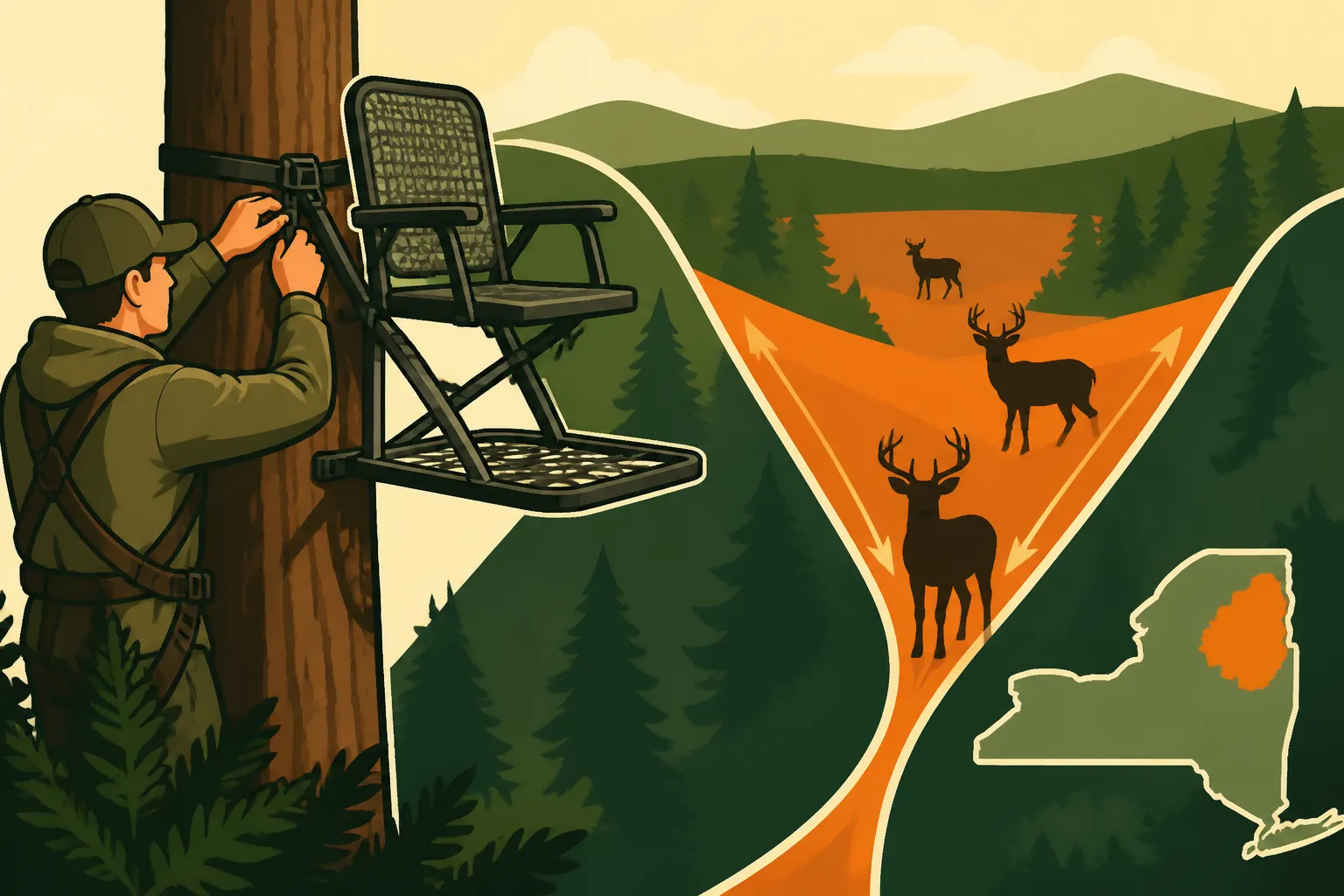
A "funnel" is essentially any feature that concentrates deer movement from a broader area into a narrower one. In the Adirondacks, these can be natural marvels or subtle remnants of human activity. Natural funnels often involve terrain features like saddles, which are dips between two ridges, or benches, which are flat areas on a hillside that deer prefer to traverse rather than climbing straight up or down. Think about those steep Catskill ridges; deer will always take the path of least resistance. Similarly, pinch points created by bodies of water – a swamp that forces deer to walk a narrow strip of high ground, or a creek winding through dense timber – can be absolute goldmines. Even transitions in cover, like where thick spruce thickets meet more open hardwood stands, can create subtle funnels. Deer inherently seek security, so the edge of a dense bedding area, particularly a spruce or cedar swamp that provides thermal cover, leading to an oak ridge for feeding, is a classic funnel.
Man-made funnels, while less common than natural ones, are still present. Old logging roads, some of which are now little more than faint two-tracks overgrown with brush, can act as deer highways. They offer easier travel through dense woods. Similarly, abandoned clearcuts from decades past, now choked with new growth, can create distinct edges where deer travel. Even an old stone wall, a relic of early settlers, can subconsciously direct deer movement along its length. These funnels become even more critical during the Northern Zone firearm season when deer may be pushed by increased pressure.
Reading Sign in Big Woods for Travel Corridors
Reading deer sign in the Adirondacks requires a keen eye and a patient approach. You won't always find obvious scrapes or massive rub lines like you might in areas with higher deer densities. Instead, you're looking for more subtle clues. Tracks are a primary indicator, especially if they show consistent travel in one direction or converge at a pinch point. Look for older, dried-out tracks as well as fresh ones to get a sense of historical movement. Droppings, especially if concentrated, can indicate a bedding area or a regular crossing.
Rubs and scrapes will be present, but often less dramatic. A series of small rubs on saplings, for instance, might mark a travel corridor even if there isn't a single "community scrape" to speak of. Pay attention to browse lines – the height at which deer are nipping off twigs and leaves – which indicate active feeding areas. Remember, deer in the big woods are wary. They often avoid the most obvious paths during daylight, opting for thicker cover adjacent to clear trails. Your job is to find those subtle parallel trails or crossing points that offer them security. Using tools like the New York HuntFishNY app can help you overlay public land boundaries and topographical maps to correlate sign with terrain features.
Scouting and Pinpointing the Perfect Funnel Location
Once you have a general idea of what a funnel looks like, the real work begins: putting boots on the ground and confirming your theories. This is where modern tools and old-fashioned woodsman skills combine for optimal success.
Utilizing Topographical Maps and Aerial Imagery
Before you even step foot in the woods, spend significant time studying topographical maps and aerial imagery. Digital mapping platforms, like GoHunt, have revolutionized this process, allowing you to identify potential funnels from the comfort of your home. Look for those saddles between peaks, the narrow strips of high ground threading through swamps, or the sharp bends in a creek that force deer to a specific crossing point. Identify natural barriers like cliff faces or uncrossable wetlands that would naturally push deer through a constricted area.
Aerial photos will show you changes in vegetation, which often correlate with deer movement. Can you spot the transition from dense conifer stands to more open hardwoods? Are there old logging roads or clearcuts that aren't obvious on a topo map? Mark these potential spots on your map and create a plan for ground-truthing them. Consider the scale of the Adirondack Forest Preserve and how vast these maps can appear. Zoom in, trace contours, and imagine yourself as a deer trying to navigate the landscape. These initial scouting efforts save immense time and energy once you're in the field.
Boots on the Ground Reconnaissance
There's no substitute for walking the ground. Take your digital maps, a compass, and perhaps a GPS unit (or rely on a phone app if you know how to use it without cell service) and physically explore the areas you've marked. Your goal is to confirm those funnels and find the freshest, most consistent deer sign. Look for heavily used deer trails that converge or pass through the narrowest points of the funnel. Pay attention to how deer are using these areas during different times of the year. Are there rubs and scrapes indicating buck activity? Are there fresh droppings?
During this reconnaissance, consider potential stand locations. Look for trees that offer good cover, a clear shot, and safe access. This is also the time to identify entry and exit routes that minimize disturbance. Can you approach your stand without walking through prime bedding areas or alerting deer in the funnel? The Adirondacks are home to more than just deer; knowing where New York black bears live might also influence your approach, as you want to avoid surprising any wildlife.
Considering Wind and Thermals for Stand Placement
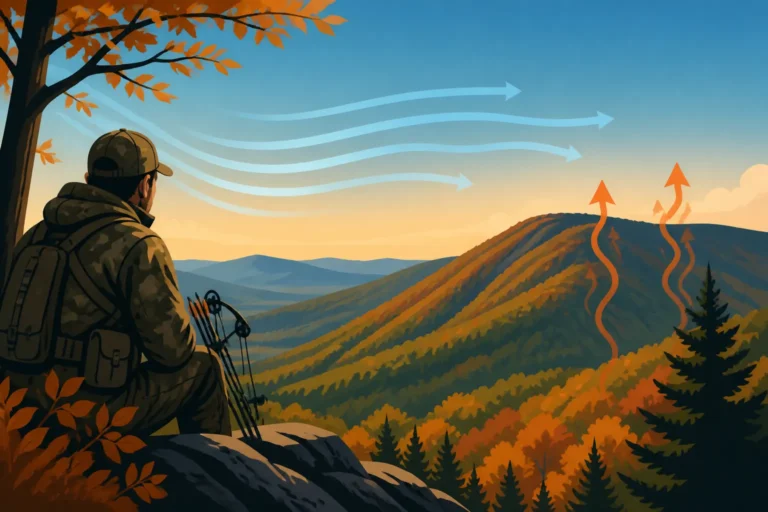
Wind and thermals are perhaps the most critical, yet often overlooked, factors in treestand placement, especially in mountainous or hilly Adirondack terrain. Deer rely heavily on their sense of smell, and a shifting wind can instantly bust your hunt. Understand the prevailing winds in your hunting area. Generally, winds blow uphill in the morning as the ground warms and downhill in the evening as it cools (thermals). However, topography can create unpredictable eddies and swirls.
When selecting a tree for your stand, always consider the wind direction you'll be hunting in. You want your scent to blow away from the funnel and any suspected bedding or travel routes. It’s often better to have multiple stand sites for different wind conditions or to be flexible with your hunting schedule. A good strategy is to position your stand slightly downwind of the anticipated travel route, allowing your scent to be carried away without alerting incoming deer. Spend time observing the wind during your scouting trips; toss milkweed seeds or use a commercial wind checker to see how the air currents move through the funnel.
| Funnel Type | Characteristics | Best Stand Placement Considerations |
|---|---|---|
| Saddle | Dip between two ridges; deer avoid steep climbs, prefer easy crossings. | On a tree just downwind of the lowest point, overlooking both sides of the saddle. |
| Bench | Flat, horizontal strip on a steep hillside; deer travel horizontally. | Along the bench, either above or below, with wind blowing parallel to the bench or away from it. |
| Pinch Point (Water) | Narrow land bridge between two swamps/water bodies. | At the narrowest point, with escape routes and bedding in mind. Account for water currents. |
| Thick Cover Transition | Edge where dense bedding (spruce, cedar) meets more open feeding areas. | On the feeding side, facing the thick cover, ensuring wind carries scent away from bedding. |
| Old Logging Road | Overgrown historical trail, easier travel through dense woods. | Intercepting where deer cross or travel along the road. Prioritize concealment and wind direction. |
Selecting and Setting Up Your Treestand on the Funnel
Choosing the right equipment and executing a stealthy setup are paramount to turning your scouting efforts into hunting success in the Adirondacks.
Choosing the Right Stand for Adirondack Timber
The type of treestand you choose will significantly impact your setup. Climber stands are fantastic for portability and quick setups on relatively straight, limbless trees, common in some Adirondack hardwood stands. However, they're useless in thick, limby conifers or on trees with irregular bark. Hang-on stands, used with climbing sticks, offer more versatility. They can be placed in almost any suitable tree, allowing you to access those specific funnel trees you've identified. The downside is more gear to carry in and a more involved setup. Saddle hunting has also gained popularity for its ultralight nature and 360-degree shooting capability, making it ideal for the mobile hunter in rugged Adirondack terrain where you might be packing in packs for a multi-day backcountry hunt.
Consider the specific tree species in your funnel. Are they mostly hardwoods like maple and beech, or dense conifers like spruce and balsam fir? This will dictate what type of stand is most practical. Weight is also a huge factor. You'll likely be hiking a considerable distance into these remote areas, so a lightweight setup is always preferred. For more detailed information, check out our guide on Treestand Setups in Adirondack Hardwoods. Always prioritize safety; treestand safety gear for steep ground is non-negotiable, especially when you're far from help.
Strategic Stand Placement and Entry/Exit Routes
Once you've chosen your funnel and stand type, the precise placement within that funnel is critical. You want to cover the funnel effectively, ideally catching deer as they enter or pass through during daylight hours. Look for a tree that offers natural cover – perhaps a conifer with low branches, or a hardwood with a dense crown that breaks up your outline. The tree should also allow for clear shooting lanes to cover the funnel, but without excessive trimming that could alert deer.
Your entry and exit routes must be as stealthy as possible. Plan routes that avoid likely bedding areas and cross the funnel at a point that minimizes disturbance. Ideally, you want to approach with the wind in your face or crosswind to your stand, never blowing your scent towards the deer's likely approach. If you’re hunting a saddle, for instance, perhaps a steep, noisy approach from the backside of the ridge would be best, keeping you out of the deer's primary travel path. Think about what time of day you'll be entering and exiting. Morning hunts often require you to sneak in during darkness, while evening hunts demand a silent exit long after legal shooting light.
Prepping the Area and Long-Term Considerations
After selecting your tree and stand location, prep the area minimally but effectively. Trim only what is absolutely necessary for shooting lanes, and clear any noisy debris from around your tree. Small branches or leaf litter can make an otherwise silent entry into a crunching symphony, so make sure your immediate vicinity is clear. Carry out all trimmings and refuse; leave no trace. If you plan to leave your stand up for an extended period, ensure it's secured properly and marked according to DEC regulations for public land.
For a long-term setup, consider brushing in a ground blind if the terrain or cover dictates. While many prefer elevated stands, a well-placed ground blind can be incredibly effective, especially in areas with very thick undergrowth or where suitable stand trees are scarce. Remember, the goal is to become invisible to the deer. The less disturbance you create, the more likely deer are to continue using that funnel as if you were never there. If you’re hunting Where Adirondack bucks bed, understanding their security needs is crucial.
Hunting the Adirondack Funnel Effectively
Having done all the hard work of scouting and setup, the final piece of the puzzle is actually hunting the funnel smart. It’s not just about being there; it’s about being there at the right time and in the right way.
Timing Your Hunt for Peak Activity
Timing is everything in funnel hunting. While a funnel will see some deer movement throughout the season, there are peak windows when it becomes a hotspot. Early archery season, when deer are still on summer patterns, might see increased activity as deer move between specific food sources like early mast crops and bedding. During the peak of the rut, roughly early to mid-November for most of the Adirondacks, funnels can be absolutely explosive as bucks cruise these natural travel corridors searching for does. You can learn more about hunting the rut in the Northern Zone to optimize your timing. Late season, when deep snow and cold weather push deer into thermal cover, can also make funnels leading to conifer thickets or south-facing slopes prime locations. Keep an eye on weather forecasts; impending storms or sudden cold snaps can trigger increased deer movement as they feed heavily.
Minimizing Scent and Movement
Deer have an incredible sense of smell, far superior to ours. In the big woods, where deer densities are lower and encounters can be rare, every advantage counts. Meticulous scent control is non-negotiable. Shower with scent-free soap, wash your hunting clothes in scent-free detergent, and store them in airtight containers. Use scent elimination sprays on your clothes, boots, and gear before heading into the woods. Avoid strong-smelling foods, coffee, or tobacco products while hunting.
Movement is equally critical. Once you're in your stand, become a statue. Any unnecessary movement can be easily detected by a keen-eyed Adirondack deer, especially against the backdrop of an open sky or dense timber. Use your binoculars (8×42 or 10×42 are often ideal for timber hunting) to scan slowly and methodically, minimizing head movement. Drawing your bow or raising your rifle must be done in a slow, controlled manner when deer are not looking your way. The more still and silent you are, the greater your chances of success. Finding sign in big Adirondack timber can often mean finding very subtle clues, which is why minimal disturbance on your part is key.
Adjusting to Conditions and Pressure
Adirondack hunting conditions are rarely static. Weather can change dramatically, bringing anything from warm, sunny days to freezing rain or heavy snow. Your hunting strategy needs to be adaptable. On warm days, deer movement might be concentrated early and late, with a mid-day lull. Cold, crisp days, however, can see deer moving throughout the day. Snow can reveal fresh tracks, helping you confirm deer travel patterns, but it can also make your own movement noisier. Keeping a muzzleloader dry in lake-effect snow is a skill in itself for late-season hunts.
Hunting pressure from other hunters can also impact deer movement. If you notice an increase in hunting activity around your funnel, deer might shift their patterns to become more nocturnal or utilize even thicker, less accessible routes. Use aerial maps like those found on GoHunt to identify potential routes deer might use to escape pressure. Sometimes, the best strategy is to sit tight, knowing that other hunters' movements might push deer towards your well-placed stand. If things get too crowded, don't be afraid to pull your stand and move to a less pressured area, or simply pack it in for the day and try another spot. The total New York deer population estimate helps underscore why patience and strategic placement are so vital here.
Disclaimer
Please note: Hunting regulations, license requirements, and season dates are subject to change. Always consult the most current New York State Department of Environmental Conservation (NYSDEC) hunting and trapping regulations guide before planning any hunting activity. This content is for informational purposes only and does not supersede official regulations.