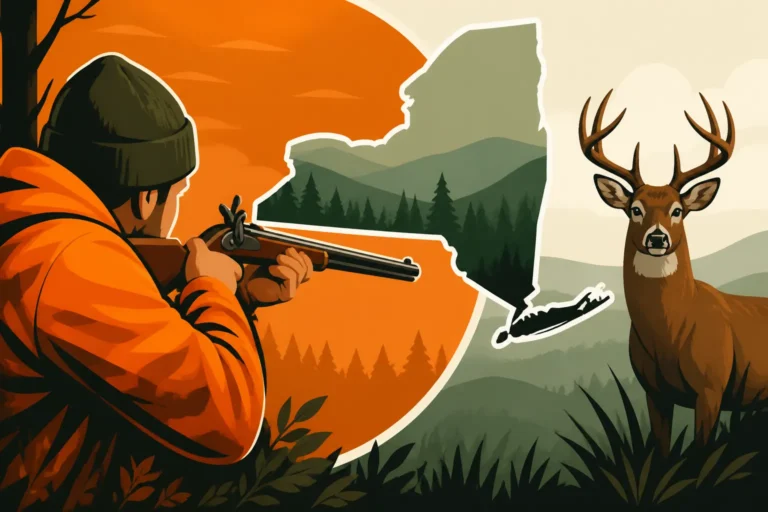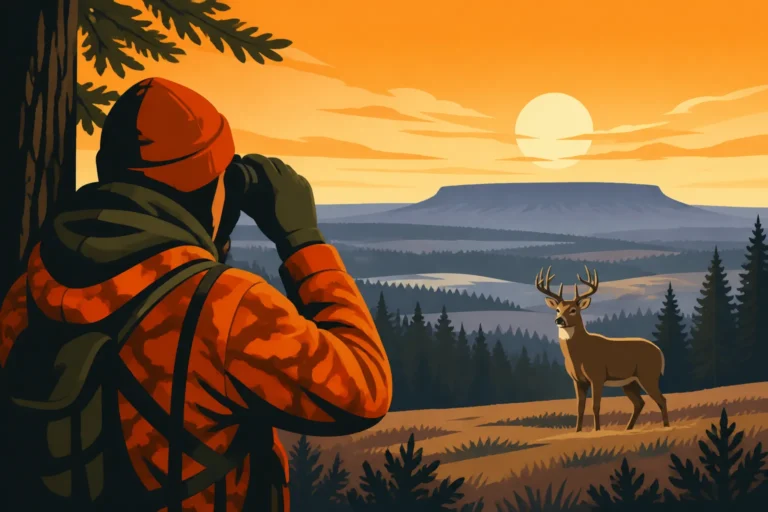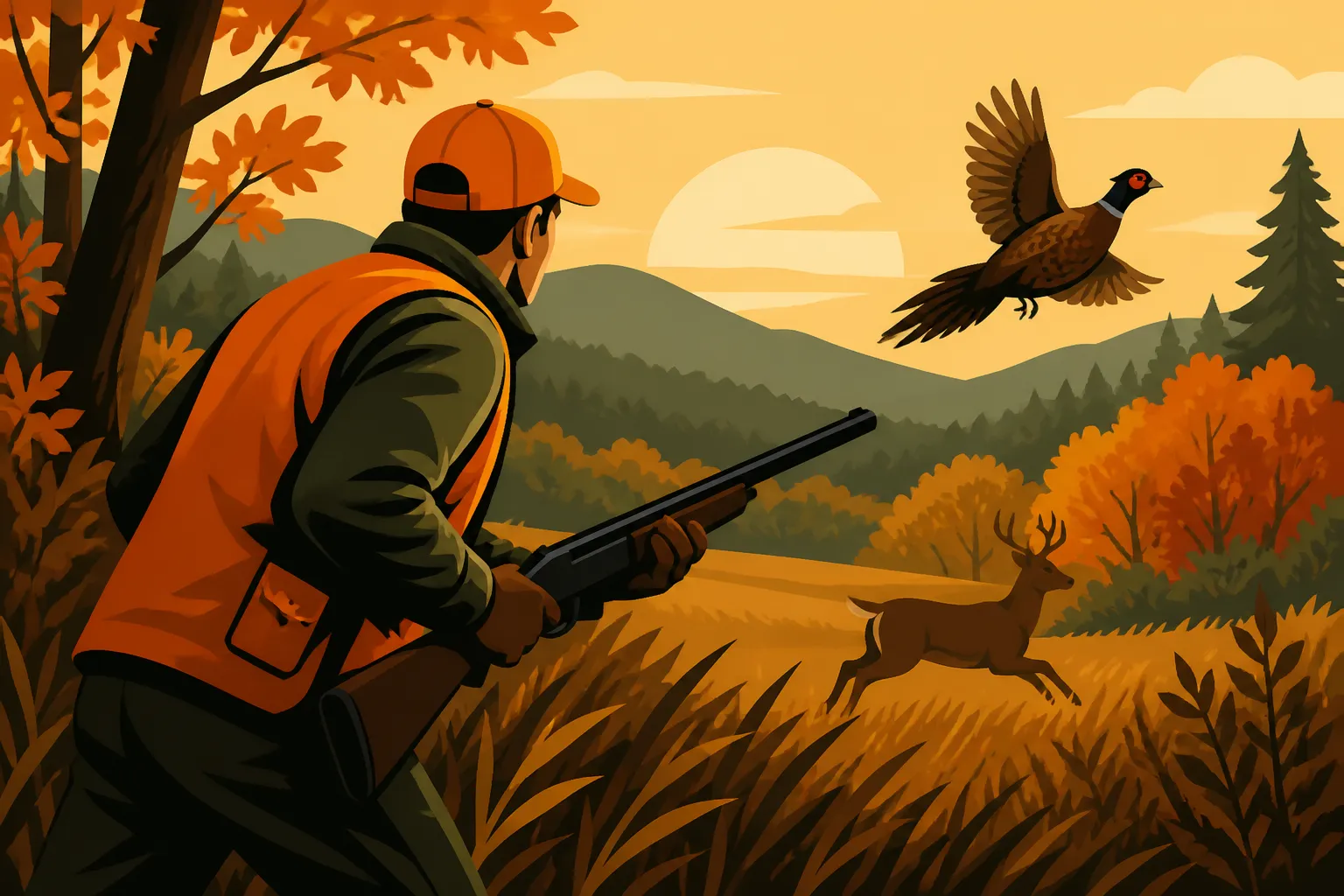
Run-and-Gun on New York Public Land
Feeling stuck in the same old treestand or blind on New York's public lands, watching the squirrels play while the deer and turkeys remain elusive, is a frustration many of us know all too well. The sheer size, varying terrain, and often intense hunting pressure can make traditional sit-and-wait tactics feel like a losing battle. This comprehensive guide is here to break down the highly effective "run-and-gun" approach, a dynamic and active hunting method that helps you locate and engage game on the move, giving you an edge in the challenging but rewarding environment of New York's public hunting grounds.
Embracing the Run-and-Gun Philosophy for New York's Public Lands
The run-and-gun philosophy isn't just about walking around; it's a mindset that prioritizes aggressive, adaptable, and mobile tactics to cover ground and actively seek out game. Unlike traditional static hunting, where you pick a spot and wait for animals to come to you, run-and-gun means you're going to them. This approach is particularly potent on New York's vast public lands, whether you're navigating the sprawling Adirondack Forest Preserve, the rugged Catskill Mountains, or the diverse State Forests and Wildlife Management Areas scattered across the Southern Tier. You're trying to locate game, quickly assess the situation, and make a move before they know you're there.
Why Mobile Tactics Excel in New York's Varied Terrain
New York's hunting landscape is incredibly diverse, from the thick, mixed hardwoods and conifer stands of the Northern Zone to the rolling hills and agricultural fringes of the Southern Zone. This variety presents unique challenges that a static approach often can't overcome. A treestand might be perfect for an hour or two, but what if the deer are feeding half a mile away in a different timber stand, or the gobblers are strutting on a distant ridge?
With run-and-gun, you become a hunter of opportunity. You're not relying on deer or turkeys to follow a predictable pattern to your stand; instead, you're constantly searching for their patterns in real-time. This can be especially effective when dealing with the significant amount of pressure found on much of the public land. Deer and turkeys quickly learn to avoid easy-access spots, pushing them deeper into cover or to less obvious feeding areas. By staying mobile, you increase your chances of stumbling upon these less-pressured pockets, often finding deer and turkeys that haven't been pushed by other hunters. It’s about leveraging the sheer amount of available ground, rather than being confined to a single acre. The ability to adapt your location based on fresh sign, changing wind conditions, or unexpected encounters is a game-changer.
Adapting to Hunting Pressure on Public Ground
Let's be real, public land in New York can get crowded, especially during peak seasons like the opening weeks of rifle season or the heart of the spring turkey hunt. This pressure fundamentally changes game behavior. Deer become more nocturnal, sticking to thick cover, and turkeys get call-shy after hearing every possible setup under the sun. This is where the run-and-gunner shines. While many hunters are still trudging to their pre-set stands near parking lots, the mobile hunter is often pushing deeper, exploring areas others deem too difficult or too far.
The key is to use the pressure to your advantage, or at least to escape it. Deer often get pushed from high-traffic areas into overlooked draws, thick swamps, or remote ridge lines. A run-and-gun approach allows you to systematically investigate these hideouts. For turkeys, it means not just sitting and calling from a single spot, but moving through different terrain features, trying to locate a bird that hasn't been pressured yet, or one that has broken off from a flock. Understanding Hunting Pressure on New York Public Land is crucial for success, and run-and-gun gives you the tools to react to it rather than just enduring it. It empowers you to be proactive, rather than reactive, in environments where game animals are constantly reacting to human presence.
Essential Gear for the Mobile New York Hunter
When you're constantly on the move, every ounce in your pack counts. The wrong gear can slow you down, make you uncomfortable, and ultimately hinder your ability to adapt and be stealthy. A mobile hunter's kit is streamlined, functional, and designed for efficiency, prioritizing necessity over luxury. This doesn't mean sacrificing comfort or safety, but rather choosing versatile items that serve multiple purposes and are built to withstand the rigors of New York's backcountry.
Lightweight Packs and Clothing for Stealth and Comfort
Your pack is your mobile base camp, carrying everything you need for the day's hunt. Forget the massive expedition packs; a good daypack or minimalist vest is often all you need for run-and-gun. Look for something that fits snugly, allows for a full range of motion, and has easily accessible pockets for calls, water, and snacks. A pack in the 1800-2500 cubic inch range is usually ideal, providing enough space without being bulky. When you're constantly stopping, listening, and glassing, you don't want a pack that snags on branches or makes noise. Brands like Sitka, Kuiu, and Mystery Ranch offer excellent options built for hunting, but even a good quality hiking pack can work. The goal is to minimize bulk and weight. For more in-depth advice on what to carry, consider exploring Packs for a Day on Public Land.
Clothing choice is equally critical. Layering is your best friend in New York, where temperatures can swing wildly from morning chill to midday warmth, and then back down with a sudden rain shower. Start with a moisture-wicking base layer, add a mid-layer for insulation, and an outer shell that's both quiet and weather-resistant. Avoid bulky cotton, which absorbs moisture and holds scent. Merino wool or quality synthetics are excellent choices because they breathe, insulate even when damp, and dry quickly. For deer season, blaze orange is a requirement during firearm seasons, and there are many lightweight, breathable options available. The key is to be able to shed layers as you warm up from moving and add them back when you stop to sit and call.
Navigational Tools and Mapping Apps
Getting lost is not an option, especially when you're pushing deep into unfamiliar territory. A reliable GPS unit or a smartphone with a robust mapping app is absolutely non-negotiable. While dedicated GPS units like those from Garmin are incredibly reliable and durable, modern smartphone apps have come a long way. Services like GoHunt offer detailed topographical maps, satellite imagery, public/private land boundaries, and the ability to mark waypoints for your truck, potential sign, or ideal setup locations. These apps can be a game-changer for Scouting New York Public Land Before Season and navigating effectively during the hunt.
Before you head out, make sure your devices are fully charged, and consider carrying a portable power bank. Download offline maps for the areas you plan to hunt, as cell service is often spotty or non-existent in much of New York's public land. Familiarize yourself with how to use your chosen navigation tool to mark points, measure distances, and track your route. Knowing how to interpret contour lines, identify terrain features, and understand your position relative to boundaries and potential escape routes is paramount. It’s not just about knowing where you are, but how the land lays out around you. For a deeper dive into these options, read about GPS Units Versus Phone Apps.
| Gear Category | Essential Items | Why It's Crucial for Run-and-Gun |
|---|---|---|
| Backpack | Lightweight daypack (1800-2500 cu in) | Minimal bulk, allows mobility, carries essentials. |
| Clothing | Layered system (base, mid, outer), merino/synthetic | Adapts to changing temps, quiet, moisture-wicking. |
| Footwear | Comfortable, waterproof, supportive hiking boots | All-day comfort, protection from varied terrain and wetness. |
| Navigation | GPS unit or smartphone with GoHunt app, compass | Prevents getting lost, aids in scouting, identifies land boundaries. |
| Optics | Compact binoculars (8×32 or 10×32) | Spotting game at a distance, assessing cover without moving. |
| Calls | Handheld/mouth calls (turkey), grunt tube (deer) | Actively engaging game, imitating natural sounds to draw them in. |
| Safety | First-aid kit, headlamp, signaling device, water | Essential for emergencies, low-light navigation, hydration. |
| Weapon | Lightweight rifle, shotgun, or bow | Easy to carry and maneuver quickly. |
Optics and Calls for Active Engagement
For run-and-gun, compact binoculars are indispensable. An 8×32 or 10×32 pair is perfect – light enough to carry all day, but powerful enough to spot a flick of an ear in thick cover or a strutting gobbler across an open field. You'll be using them constantly, not just to spot game, but to scan ahead for optimal routes, identify subtle changes in terrain, or locate rub lines and scrape lines. Good glass helps you make informed decisions about where to move next without exposing yourself.
Calls are the voice of the run-and-gunner. For turkeys, a variety of friction calls (slate, glass) and mouth calls allow you to mimic the full range of turkey vocalizations. You need to be able to make soft purrs to aggressive cuts. For deer, a grunt tube and rattling antlers (or a synthetic rattle bag) are crucial. The goal isn't just to make noise, but to communicate. You might use a series of soft yelps to locate a gobbler, or a quick grunt to stop a buck cruising through a saddle. The ability to make a quick series of calls and then move, or to call while on the move, is a core run-and-gun skill. For turkey hunters, mastering the art of Calling a New York Gobbler Off the Roost requires precision and knowing when to be aggressive versus subtle, skills that translate well to general run-and-gun calling strategies throughout the day.
Scouting and Strategy for Effective Run-and-Gun Tactics
Success in run-and-gun hunting isn't random; it's built on a foundation of thorough scouting and strategic decision-making. You're not just wandering aimlessly; you're moving with purpose, guided by a deep understanding of the land and the animals you pursue. This preparation starts long before the season opener and continues dynamically throughout your hunt.
Pre-Season Map Reconnaissance and Digital Tools
Before you ever set foot in the woods, the real work begins with detailed map reconnaissance. Utilize online resources like the DEC's interactive maps, Google Earth, and specialized hunting apps like GoHunt. These tools allow you to virtually scout vast areas, identifying key terrain features that dictate animal movement. Look for:
- Funnels and Choke Points: Saddles between ridges, narrow strips of timber between fields, river bends, or swamp edges that force animals into predictable travel corridors.
- Thick Cover and Bedding Areas: Dense young growth, cedar swamps, or deep ravines where deer feel safe to bed. For turkeys, look for areas with mature trees for roosting and dense undergrowth for nesting.
- Food Sources: Oak flats for acorns, old apple orchards, cut corn fields (on adjacent private land often influencing public land movement), or berry patches.
- Water Sources: Streams, ponds, and seeps, especially in drier periods.
- Access Points and Pressure Hotspots: Identify where other hunters are likely to enter, and then actively plan routes to skirt around or push past these areas to find unpressured zones. This is vital for Reading Aerial Photos for Southern Tier Deer and other areas.
Don't just look at the obvious. Zoom in. Look for faint logging roads, old clear-cuts, or benches on steep hillsides. The more intimate you become with the topography on a map, the more efficient your movement will be when you're actually on the ground. Print out maps, or better yet, download them to your GoHunt app for offline use, marking potential travel routes and points of interest. This digital scouting saves valuable boot leather and focuses your efforts where they're most likely to pay off.
Identifying Key Terrain Features and Animal Sign on the Move
Once you're in the field, your eyes and ears become your primary scouting tools. You're constantly scanning, listening, and interpreting the landscape. Look for:
- Fresh Tracks: Not just size, but direction and stride. Are they walking leisurely or hurrying?
- Droppings: Freshness indicates recent presence. What are they eating?
- Rubs and Scrapes: Especially during deer season, these indicate buck activity. Pay attention to the size and height of rubs; older, bigger rubs mean a more mature buck.
- Food Preferences: Are they hitting acorns, browse, or leftover crops?
- Natural Funnels: As discussed, these are crucial. Look for where a ridge pinches down, a creek makes a sharp bend, or a swamp narrows, concentrating animal movement.
- Roost Trees (Turkeys): Look for large, mature trees (often pines or oaks) on ridges or near water where turkeys might spend the night.
- Dusting Bowls (Turkeys): Areas of soft, loose dirt where turkeys bathe to rid themselves of parasites.
This continuous, on-the-go scouting helps you adjust your strategy dynamically. If you cut fresh tracks heading a certain direction, you follow. If you hear a distant gobble, you close the distance. It's about being observant and responsive. Don't be afraid to change your plan entirely if you find better sign elsewhere. The mobile hunter is always learning, always adapting. This constant evaluation of the environment, both subtle and obvious, allows you to locate Finding Ground Others Walk Past, maximizing your chances of encountering game that has seen less human interference.
Executing the Hunt: Moving, Calling, and Deciding
This is where the rubber meets the road—literally. The execution phase of run-and-gun hunting demands a blend of stealth, patience, and decisive action. You're constantly balancing the urge to cover ground with the need to be quiet and observant, ready to capitalize on any opportunity that arises.
Moving Stealthily and Reading the Wind
Moving silently is paramount. Every step you take should be intentional. Lift your feet, don't drag them. Place your heel down first, then roll to your toe, feeling for twigs or leaves that might snap. Wear soft-soled, comfortable boots that offer good traction but don't creak or squeak. Boots for New York Swamps and Snow should be chosen with both stealth and protection in mind.
Always be mindful of the wind direction. For deer, the wind is your most critical factor. Hunt into or across the wind, ensuring your scent is carried away from where you expect the deer to be. On a typical still-hunt, you might move 50-100 yards, stop for 5-10 minutes to scan and listen, then move again. For turkeys, the wind isn't as critical for scent, but it can make it harder to hear distant gobbles and harder for birds to hear your calls. Strong winds also make turkeys more wary and often keep them on the ground. Pay attention to thermals in hilly or mountainous terrain like the Catskills; as the sun rises, warm air flows uphill, and in the evening, cool air sinks down. Understanding these subtle air currents is vital for keeping your scent out of a deer's nose.
Strategic Calling and Decoy Deployment
Calling is an active component of run-and-gun. You're not just calling once and sitting; you're often calling, moving, calling again, and listening intently for a response. For turkeys, this might involve a series of locator calls (crow, owl, coyote) to pinpoint a gobbler, followed by hen yelps to draw him in. If he doesn't respond after a few minutes, move to another vantage point and try again. Sometimes, being aggressive with cuts and yelps can provoke a hot gobbler, especially early in the morning, while softer purrs and clucks might reassure a wary bird later in the day.
For deer, rattling and grunting can be very effective, especially during the rut. A short, sharp grunt can stop a walking buck, while a series of grunts and snort-wheezes can challenge a dominant buck. Light rattling can simulate a small skirmish between bucks, drawing in curious deer. The key is knowing when to call and when to stay silent. Often, less is more. Make your calls sound natural, not overly practiced or machine-like. If you use decoys, keep them lightweight and minimalist. For turkeys, a single hen or jake decoy that folds easily is perfect. Position it where it's visible but doesn't hinder your shot, ensuring it faces away from your intended shooting lane, as incoming birds will often face the decoy, presenting a perfect shot.
Knowing When to Commit to a Stand or Keep Moving
One of the hardest parts of run-and-gun is knowing when to stop and set up, or when to push on. This comes with experience, but some general guidelines apply. If you get a strong, sustained response from a gobbler, or you spot a promising deer movement pattern, it's time to commit. Quickly find cover, set up your decoy if applicable, and prepare for a shot. This might involve setting up a quick Treestands and Saddles on New York Public Land, or simply finding a good blowdown or thick cedar to break up your outline.
However, if calls go unanswered, or if the sign diminishes, don't be afraid to keep moving. The run-and-gun strategy is about covering ground until you find the game. Don't fall into the trap of sitting too long in a dead area. Your biggest advantage is your mobility. If you bump a deer or a flock of turkeys, observe their direction of travel and consider swinging wide to get ahead of them, or give them some time and circle back. Sometimes, bumping an animal can give you crucial information about where they prefer to hide or how they react to pressure. It's a continuous chess match against the instincts of wild animals, and your willingness to adapt on the fly is your ultimate weapon.
Disclaimer
Please remember that hunting regulations, seasons, and licensing requirements can change. Always consult the most current New York State Department of Environmental Conservation (DEC) hunting and trapping regulations guide before heading into the field. Safety should always be your top priority. Ensure you have the proper licenses, permits, and have completed required hunter education courses.