Shot Placement on a New York Black Bear
Hunting black bears in New York can be one of the most exciting and challenging pursuits our state offers, but when that magnificent animal finally steps into your shooting lane, the adrenaline surge can make precise shot placement feel like an impossible task. This guide is here to walk you through the critical anatomy of a New York black bear, detail the most effective shot angles, and help you understand the ethical considerations that ensure a clean, humane harvest.
Understanding New York Black Bear Anatomy and Vitals
When you're out in the Catskills or the Adirondacks, glassing for bears or still-hunting through thick cover, knowing where to aim isn't just about hitting the animal; it's about making a lethal shot that brings it down quickly and humanely. Unlike deer, bears have a slightly different internal layout and a much more robust build, which means what works for a whitetail might not be ideal for a black bear. Understanding their anatomy is the first step to becoming a more effective bear hunter.
The Critical Heart-Lung Zone
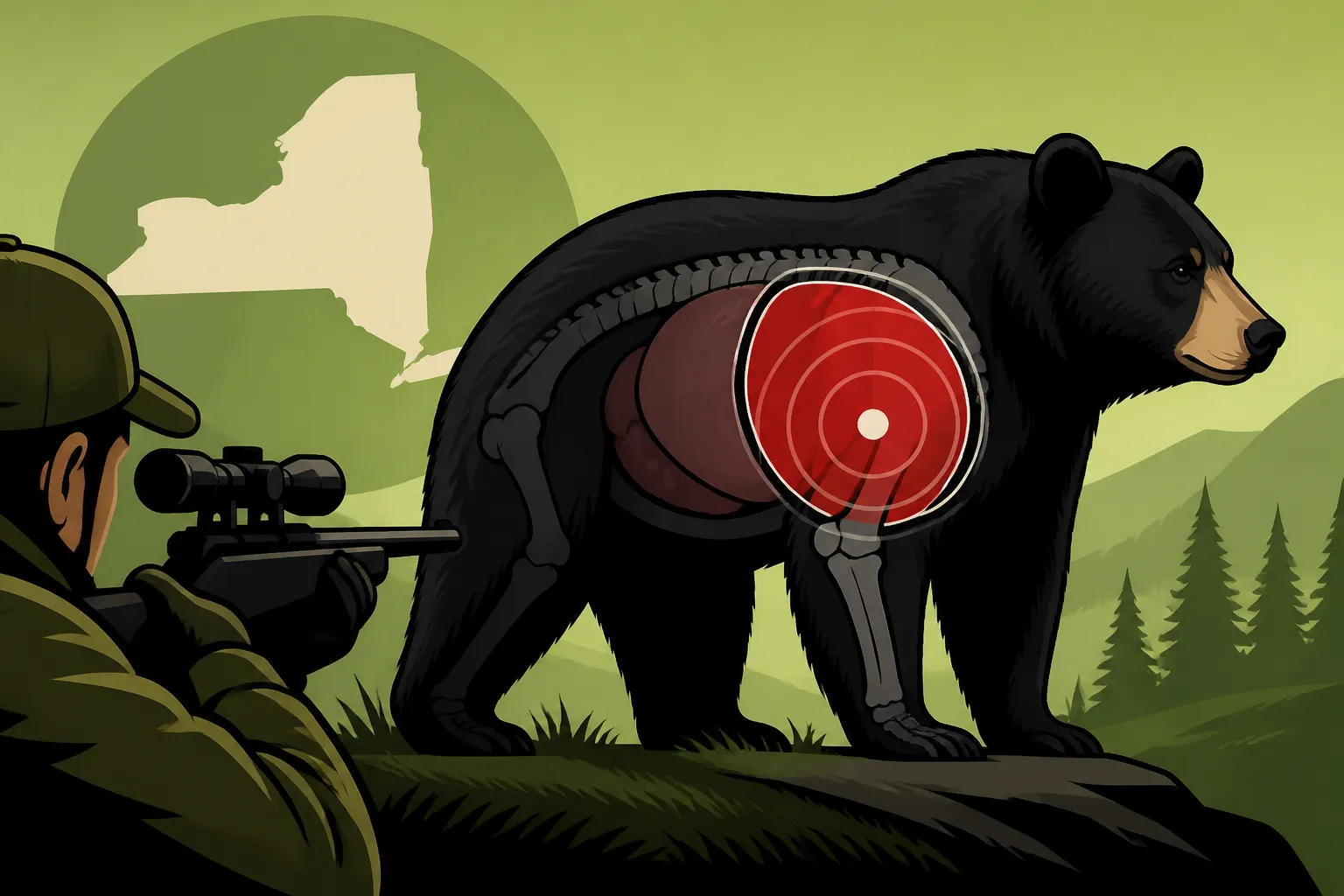
The heart-lung area, often referred to as the "vitals," is your primary target zone on a black bear. This region contains the heart, lungs, and major blood vessels, all of which are essential for a quick, ethical kill. On a broadside bear, this zone is located just behind the shoulder, roughly one-third of the way up from the bottom of the chest. It's a relatively large target compared to the brain or spine, making it the most forgiving yet highly effective area to aim for. A solid hit here will cause rapid blood loss and organ failure, leading to a swift demise. Remember, New York's black bear population is healthy, but respecting each animal with a clean kill is paramount.
When you're looking at a bear, visualize a vertical line running up from the crease of the front leg and a horizontal line running through the middle of the body. Where these two lines intersect, or just slightly behind the vertical line, is your bullseye for the heart and lungs. Bears have dense muscle and bone protecting this area, so proper bullet or broadhead selection is critical for adequate penetration. Think about the impact a large, tough bullet or a sharp, fixed-blade broadhead needs to make to reach these deep-set organs.
Shoulder Blade and Bone Structure Considerations
One of the biggest challenges when aiming for the vitals is the bear's heavy shoulder blade and associated bone structure. Bears have thick, powerful shoulders, and a shot that impacts directly on the shoulder blade can be deflected or stopped, resulting in a wounded animal and a potentially difficult or impossible recovery. This is particularly true if your bullet or arrow lacks sufficient energy or construction for deep penetration. Many hunters are tempted to aim for the center of the shoulder for maximum impact, but for a bear, this often means hitting bone first.
To avoid the shoulder blade, you want to aim behind it, or, if the bear is slightly quartering away, to angle your shot to pass through the cavity without directly hitting the heavy scapula. If you absolutely must break a shoulder (for instance, to anchor a bear that's about to escape into thick cover), understand that this requires significant energy and a bullet designed for bone-breaking penetration. For most scenarios, aiming for the soft tissue just behind the shoulder, where the rib cage begins, is a much safer and more effective strategy. This area offers a clearer path to the heart and lungs, ensuring your projectile does its job efficiently.
The Brain and Spine: High-Risk, High-Reward Shots
While a shot to the brain or spine can result in an instantaneous drop, these are extremely high-risk, low-reward shots for the vast majority of hunters. The brain of a black bear is remarkably small, roughly the size of a softball, and is encased in a thick skull. A miss by even an inch can result in a superficial wound to the jaw or snout, leading to immense suffering and a lost animal. Similarly, the spine is a thin, segmented target running along the bear's back. While a hit can paralyze, a slight deviation can merely wound the animal, causing severe injury without being immediately lethal.
Ethical hunting dictates that we minimize suffering. Unless you are an expert marksman with extensive experience, a perfectly calm bear, and a high-powered, accurate rifle at close range, a head or spine shot is not advisable. The consequences of a slight miscalculation are too severe. Instead, focus on the much larger and more forgiving vital zone, which offers a higher probability of a humane kill. For hunters in New York, where you often encounter bears moving through dense timber and without the aid of bait, these precision shots are even harder to execute reliably.
Optimal Shot Angles for New York Bear Hunting
Getting a bear to present the perfect shot can feel like a game of chance, especially when you're Hunting Bears Without Bait in New York. Unlike areas where baiting can sometimes offer more controlled shot opportunities, New York bear hunters often encounter animals on the move, browsing natural food sources, or responding to calls. This means you need to be prepared for various angles, but always prioritize the best possible shot.
Broadside: The Ideal Scenario
A broadside shot is the gold standard for bear hunting. When a bear is standing perfectly perpendicular to you, both the heart and lungs are fully exposed, offering the largest target area. For a broadside bear, you want to aim for the center of the lung cavity, which is typically just behind the shoulder, about one-third of the way up from the bottom of the chest. This aiming point will ensure you hit both lungs and, with good penetration, potentially the heart or major blood vessels.
The advantage of a broadside shot is that it minimizes the amount of bone your projectile has to pass through and provides an excellent entry and exit wound for a good blood trail. This is crucial for tracking, especially in the thick cover often found in New York's bear country, like parts of the Catskill Forest Preserve. Waiting for this shot requires patience, but it significantly increases your chances of a quick, humane kill and a successful recovery. If you're using a bow, ensure your broadhead is razor sharp and your arrow has enough kinetic energy to pass through cleanly.
Quartering Away: A Close Second
The quartering-away shot is another highly effective angle, often presenting itself when a bear is moving away from you at an angle. For this shot, your aim point shifts further back and angled forward, targeting the vitals on the opposite side of the bear. Visualize your arrow or bullet exiting the bear's off-side shoulder. This means your entry point will be closer to the rear of the rib cage on your side, but angled forward to pierce both lungs and potentially the heart.
This angle offers a fantastic opportunity for maximum penetration and lethal impact, as the projectile travels through the largest part of the vital cavity. However, it's critical to understand the exact angle to avoid merely gut-shooting the bear. A mapping tool like GoHunt can be invaluable for scouting potential bear travel corridors and setting up in a way that encourages quartering-away shots. If your setup allows for sufficient penetration, a quartering-away shot can be incredibly effective, often creating an excellent exit wound for a robust blood trail, aiding significantly in the Handling a Bear After the Shot process.
Quartering Towards: High Risk, Limited Opportunity
A quartering-towards shot is when the bear is angled towards you, presenting its front shoulder and chest at an angle. This is generally considered a higher-risk shot and one that many seasoned hunters prefer to pass on. The main challenge is that the bear's heavy shoulder and sternum bones are largely protecting the vitals. Your projectile would need to penetrate a significant amount of bone and muscle to reach the heart and lungs.
If you absolutely must take a quartering-towards shot, the aim point would be much further forward, targeting the vital organs on the far side of the bear. You're essentially aiming to slip your projectile under the shoulder blade on your side and penetrate deeply towards the opposite shoulder. This shot demands immense precision, a powerful firearm, and a bullet designed for extreme penetration. For bowhunters, this angle is even more precarious due to the reduced kinetic energy of an arrow compared to a high-powered rifle bullet. Exercising extreme caution and, more often than not, waiting for a better opportunity is the most ethical choice here.
Frontal Chest Shot: Extreme Caution
A frontal chest shot, where the bear is facing directly towards you, is the riskiest of all primary shot angles. While a perfectly placed shot to the center of the chest can hit the heart and major arteries, the margin for error is incredibly small. The bear's thick sternum bone and front leg bones can easily deflect a bullet or stop an arrow, resulting in a superficial or non-lethal wound.
Unless you have absolute confidence in your shooting ability, an extremely stable rest, and a powerful weapon capable of punching through significant bone, it's advisable to pass on a frontal shot. Many experienced hunters will only consider this shot if using a heavy-hitting rifle at very close range. For most New York hunting scenarios, especially when navigating dense woodlands, waiting for a broadside or quartering-away opportunity is the safest and most ethical approach. Understanding Rifle and Shotgun Choices for New York Deer can provide insight into the power needed for such shots, but for bears, even more consideration is required.
Factors Influencing Shot Placement and Ethical Hunting
Achieving perfect shot placement on a black bear involves more than just knowing anatomy; it's a culmination of your preparation, equipment, and ethical judgment in the field. New York's bear seasons, such as the varied windows of the New York Northern Zone Firearm Season, mean hunters must be ready for diverse conditions and opportunities.
Equipment Considerations for Bear Hunting
The equipment you choose plays a massive role in your ability to execute a humane shot. For rifle hunters pursuing bears in New York, a caliber capable of delivering significant energy and penetration is crucial. While many deer calibers can kill a bear, bullets designed for larger, tougher game are highly recommended. Look for bullets that retain weight and expand reliably, ensuring a deep wound channel. Popular choices often include .30-06 Springfield, .300 Winchester Magnum, or even the .45-70 Government for closer range encounters in dense cover. It’s also important to understand Rifle Calibers for New York Bear specific to this species.
Bowhunters face an even greater challenge due to the nature of archery tackle. You need a setup that generates sufficient kinetic energy and momentum to drive a broadhead through thick hide, muscle, and potentially bone. Fixed-blade broadheads with strong, sharp blades are generally preferred over mechanicals for bear hunting due to their reliability and deep penetration capabilities. Ensure your bow is tuned, your arrows are properly spined, and your broadheads are shaving sharp. Remember, New York has specific regulations regarding Bow and Crossbow Setups for New York that you must adhere to.
Patience, Practice, and Ethical Recovery
Patience is perhaps the most undervalued tool in a hunter's arsenal. In the heat of the moment, it's tempting to take the first shot presented, but a truly ethical hunter will wait for the best possible angle, even if it means letting the animal walk away. A clear shot at the vital zone, with a calm, steady aim, is always superior to a rushed, questionable shot. Practice is also key; know your weapon's capabilities and your own. Spend time at the range, practicing from various positions and at different distances that mimic real-world hunting scenarios. This builds confidence and muscle memory, which are vital when a big bear steps out.
Beyond the shot, your ethical responsibility continues with recovery. If you take a shot, even if you doubt its effectiveness, assume you hit the animal and begin a systematic recovery effort. This might mean waiting for several hours (especially after a gut shot) to allow the bear to bed down and expire, minimizing the chance of bumping it. Use tools like a GPS (or a mapping app like GoHunt on your phone) to mark the last known location of the bear and the point of impact. GPS Units for Adirondack Backcountry Hunts can be invaluable in these situations. Thoroughly examine the blood trail, looking for clues about the type of hit (bright red, frothy blood often indicates a lung hit; darker blood might suggest a liver or muscle hit). Your commitment to finding the animal is a testament to your respect for the game and the hunting tradition.
Understanding Bear Behavior and Reaction to the Shot
Black bears don't always react to a shot the way deer do. A deer might mule kick or run a short distance and then collapse. A bear, with its incredible toughness and will to survive, can often absorb a lethal hit and still travel a considerable distance, sometimes without showing immediate signs of being hit. Don't assume a miss just because a bear doesn't drop on the spot or react violently. Many bears will run off as if unhit, only to pile up a short distance away.
After taking a shot, observe the bear's reaction intently. Did it flinch? Did it run with its head down or high? Did it stumble? These small clues can tell you a lot about the shot placement. Even if the bear shows no obvious reaction, assume a hit and follow your recovery plan. Wait at least 30-60 minutes for a suspected good hit (heart/lungs) before beginning to track, and often longer (3-6 hours or more) for less-than-ideal hits. This waiting period allows the bear to expire and prevents you from pushing a wounded animal further, which can lead to an impossible recovery. Remember, New York's Black Bear Population is resilient, and responsible hunters ensure every effort is made for a clean harvest.
Optimal Bear Shot Placement Guide
Knowing where to aim on a black bear can be the difference between a successful, ethical hunt and a heartbreaking loss. This table provides a quick reference for the most common and effective shot angles.
| Shot Angle | Aim Point | Ideal for | Considerations |
|---|---|---|---|
| Broadside | Just behind the front shoulder, vertically one-third up from the bottom of the chest. | Heart, both lungs, major vessels | Best angle for maximum vital exposure and clear blood trail. |
| Quartering Away | Back of the rib cage on your side, angled forward to exit the far shoulder/chest. | Both lungs, potentially heart/liver | Excellent penetration path; good for creating an exit wound. Requires careful angle estimation. |
| Quartering Towards | Front of the chest on your side, angled deeply towards the opposite rear shoulder (under the shoulder blade). | Limited exposure to vitals, potential for heart/lungs | High risk; requires heavy bullet/broadhead and precise angle. Often best to pass. |
| Frontal | Center of the chest, aiming for the heart/major arteries. | Limited exposure to vitals, potential for heart | Extremely high risk due to sternum and small target. Only for experienced hunters with powerful firearms at close range. |
Disclaimer
The information provided in this guide is for educational purposes only and is not a substitute for professional hunting instruction or official New York State Department of Environmental Conservation (DEC) regulations. Always consult the most current New York DEC hunting regulations before heading afield, and prioritize safety and ethical hunting practices above all else.