Hunting Bears Over Natural Food Sources
For many New York hunters, the thought of pursuing black bears brings to mind images of remote wilderness and a healthy dose of challenge. Unlike some states where baiting is common, New York requires a different approach, one that hinges on understanding a bear's natural diet and seasonal movements. This guide will walk you through the ins and outs of locating and hunting bears by keying into their preferred natural food sources, helping you unlock new opportunities in the woods.
Understanding New York's Black Bear Diet and Behavior
New York's black bears are omnivores, meaning they eat both plants and animals, but their diet is overwhelmingly plant-based, especially when abundant. This makes them incredibly adaptable, shifting their focus as different foods become available throughout the year. The key to hunting them effectively without bait is to think like a bear, anticipating what they'll be seeking out to pack on calories.
Their nutritional needs are largely driven by the annual cycle: bulking up for hibernation, supporting cubs in spring, and then the critical pre-hibernation feeding frenzy in late summer and fall. During these peak feeding times, bears can spend upwards of 20 hours a day foraging, making them highly predictable if you know what they're looking for and where they'll find it. This reliance on natural foods also means that bear movements are often directly tied to weather patterns that influence crop production – a drought year might mean poor berry crops, pushing bears to different areas than a wet year. For a broader picture of these fascinating animals, check out our piece on New York's Black Bear Population.
Seasonal Shifts in Bear Foraging
The bear's pantry changes dramatically with the seasons, and so too should your scouting and hunting strategy.
- Spring and Early Summer: After emerging from their dens, bears are looking for easily digestible greens to get their metabolism going. Young shoots, tender grasses, skunk cabbage, and dandelions are prime targets. They’ll also hit any winter-killed deer or other carrion they can find, providing much-needed protein. As spring progresses into early summer, certain berries like serviceberry or wild strawberries become available.
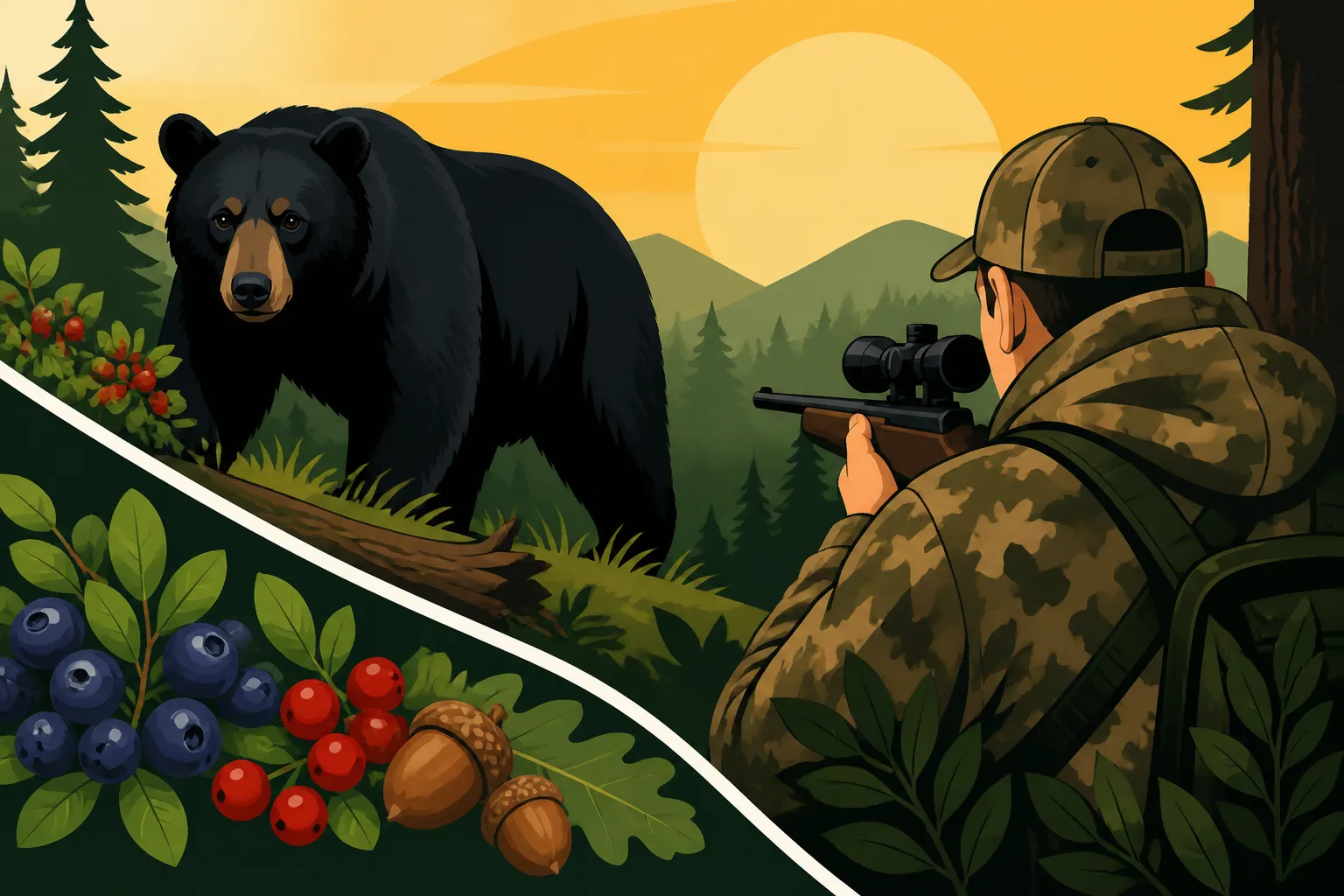
- Late Summer and Early Fall: This is when bears really start to put on weight. Soft mast – think blueberries, blackberries, raspberries, and chokecherries – becomes incredibly important. They'll spend hours in dense berry thickets. As these fade, hard mast begins to drop. Acorns are king, especially from red and white oaks, but beechnuts and hickory nuts are also crucial. Agricultural crops, particularly cornfields, can also draw bears in like a magnet.
- Late Fall and Pre-Hibernation: Acorns and other hard mast remain critical, but bears will opportunistically hit whatever they can find. If acorn crops are poor, they might focus more heavily on late-season apples or even shift into areas with more persistent soft mast. This is a crucial time for hunters, as bears are under immense pressure to consume as many calories as possible before denning. Understanding this drive is central to Hunting Bears Without Bait in New York.
Why Food Sources Dictate Bear Movement
Think of natural food sources as bear magnets. Where the food is, the bears will be. Unlike deer, which might use a wider range of habitat for bedding and feeding, bears are far more tethered to their primary food source, especially in the calorie-dense months before winter. This means that if you can locate an area with an abundance of ripe berries, a healthy stand of mast-producing oaks, or a secluded cornfield, you’ve likely found where a bear will spend a significant portion of its day.
Factors like elevation, aspect (which way a slope faces), and soil type can influence when and where certain plants produce food. For instance, a south-facing slope might have berries ripen earlier than a north-facing one, or certain oak species might grow better in specific soil conditions. This level of detail in scouting can be a game-changer. Using tools like the mapping features in GoHunt can help you analyze these factors, overlaying public land boundaries with terrain features to identify potential food hotspots.
Key Natural Food Sources by Season in New York
Pinpointing the exact natural food sources bears prioritize is like deciphering a secret code of the woods. It changes year to year, depending on rainfall, temperature, and even insect populations, but some mainstays consistently draw bears in.
Spring and Early Summer: The Green Rush
As winter’s grip finally loosens, bears emerge ravenous, but often still a bit groggy. Their initial diet is geared towards easily digestible items that help cleanse their system and get their digestive tracts working again.
- Tender Green Shoots and Forbs: Skunk cabbage, dandelions, wild leeks (ramps), and clover are incredibly appealing. You'll often find bears grazing in damp, low-lying areas, creek bottoms, or along the edges of swamps where these plants thrive. Areas that catch early sun, like south-facing slopes, will green up first and often attract bears.
- Winter Kill and Carrion: While less palatable to us, the protein and fat from a deer or other animal that didn't make it through the winter is a goldmine for an emerging bear. Keep an eye out for concentrations of ravens, coyotes, or eagles, which can sometimes tip you off to a carcass. Bears will guard these spots aggressively.
- Early Berries: Serviceberries (also known as Juneberries or saskatoons) are among the first wild berries to ripen, typically in June. While not always widespread, if you find a patch, bears will definitely know about it. Look for them along forest edges and in open woods.
Late Summer and Early Fall: The Berry Bonanza and Early Mast
This period sees bears really focusing on building fat reserves. It’s a transition zone where soft mast dominates before the hard mast fully drops.
- Blueberries, Blackberries, Raspberries: These are perhaps the most iconic bear foods. Bears will spend hours, if not days, in dense thickets of these berries. Look for old clear-cuts, powerline rights-of-way, or areas where past logging has created open, sunny patches that allow these plants to flourish. In the Adirondacks, high-bush blueberries can be particularly abundant. When scouting, you’re not just looking for the berries themselves, but also the crushed vegetation, scat, and paw prints that indicate a bear has been feeding heavily.
- Chokecherries and Wild Grapes: Often overlooked, these fruits can be incredibly important, especially in the Catskills and Southern Tier. Chokecherries grow in thickets along fencerows and forest edges, while wild grapes often climb high into trees, providing a continuous food source as they ripen.
- Early Acorns and Beechnuts: Depending on the year and specific tree species, some acorns (especially from white oak varieties) and beechnuts might start to drop in late August or early September. Bears will quickly shift to these higher-calorie foods as they become available. Beech trees, in particular, can be bear magnets in the Adirondacks when they have a good mast crop.
Late Fall and Pre-Hibernation: The Hard Mast Harvest
This is the make-or-break season for bears and often the most productive time for hunters. Bears are frantically gorging themselves, sometimes eating over 20,000 calories a day to prepare for the long winter nap.
- Acorns (Red and White Oaks): The absolute prime bear food in much of New York, especially the Southern Zone and Catskills where oak forests are prevalent. White oak acorns are preferred because they are less bitter, but bears will readily consume red oak acorns, which persist longer on the ground into colder weather. You’ll want to identify stands of mature oaks and look for fresh droppings, disturbed leaf litter, and claw marks on trees.
- Hickory Nuts: While not as widespread as oaks, hickory nuts are incredibly high in fat and protein. If you find a hickory stand, it's worth checking for bear activity, particularly in the Finger Lakes and Southern Tier regions.
- Cornfields: In agricultural areas, secluded cornfields are massive caloric draws. Bears will often raid cornfields at night, bedding down in adjacent thick cover during the day. Look for broken stalks, bear trails leading in and out of the field, and scat containing corn kernels. This is a common pattern for bears in areas like Western New York farmland.
- Late Apples: Old apple orchards or even individual wild apple trees can be huge attractants, especially if they are dropping fruit late into the season. These can be particularly effective in areas with mixed agriculture and forest, often drawing bears from considerable distances.
Scouting for Bear Food Sign and Activity
Successful bear hunting over natural food sources isn't about luck; it's about diligent, thoughtful scouting. You need to become a detective, piecing together clues that bears leave behind. This isn’t a one-and-done activity; it requires consistent monitoring as the seasons change.
Pre-Season Reconnaissance
Your bear scouting should ideally begin well before the season opens. This means getting out in the summer and early fall to assess mast crops and berry production.
- Map Study: Start with maps, whether paper or digital like the ones available on GoHunt. Look for areas with diverse habitat: oak ridges, old clear-cuts, swamps, and agricultural fields. Identify potential travel corridors between these food sources and thick bedding cover. Mark potential areas of interest for further investigation.
- Mast Crop Assessment: In late summer, start checking oak and beech stands. Are there acorns developing? Are the beechnuts filling out? A good mast crop can mean bears will stick to these areas. A poor crop means they'll be more scattered, possibly focusing on alternative foods or agricultural fields. Talk to local foresters or other hunters to get a sense of the year's mast potential.
- Berry Patch Exploration: Hike through old logging cuts, powerline easements, and open forest areas looking for blackberry, raspberry, or blueberry bushes. Are they loaded with fruit? Signs of deer or other animals feeding on berries can be a good indicator that bears might also be in the area.
On-the-Ground Clues
Once you’re in the woods, it’s all about looking for specific bear sign.
- Scat: Bear droppings are perhaps the most definitive sign. They vary widely depending on what the bear has been eating. In a berry patch, scat will be loose and full of seeds. In an acorn flat, it will be firmer and contain acorn fragments. Freshness is key – look for moisture and insects to determine how recently a bear was there.
- Tracks and Trails: Look for large, five-toed paw prints in soft ground, mud, or snow. Bears often create distinct trails, especially between bedding areas and concentrated food sources. These trails will be wider and more heavily used than deer trails.
- Rub Marks and Claw Marks: Bears will often rub against trees or posts to mark their territory or scratch an itch. Look for hair on these rub posts. Claw marks on trees can indicate a bear climbed to access nuts or berries, or even to mark territory. Keep an eye out for these, especially on beech and oak trees.
- Disturbed Ground: In a mast-producing forest, bears will paw through leaf litter to find acorns or nuts. Look for freshly turned leaves and disturbed soil. In a berry patch, you'll see crushed plants where bears have been feeding.
- Broken Branches: Bears are surprisingly agile climbers. If you see broken branches in berry bushes or fruit trees, especially higher up, it’s a good sign a bear has been feeding there.
Using Technology for Enhanced Scouting
Modern tools can significantly aid your scouting efforts.
- GPS and Mapping Apps: Using an app like GoHunt can help you mark specific food sources, bear sign, and potential ambush points. You can track your movements, measure distances, and understand terrain features like elevation changes and aspect. This is invaluable when you're trying to figure out Where Adirondack Bucks Bed or where bears might be seeking out specific food sources in similar terrain.
- Trail Cameras: Strategically placed trail cameras near known food sources or along major bear trails can confirm activity, identify specific bears, and help you understand their patterns of movement. Just remember to check state regulations regarding trail camera use on public lands. For more details on this, you might consult resources on Trail Cameras on New York Public Land.
Hunting Strategies Around Natural Bear Foods
Once you've identified active natural food sources, the next step is to develop a hunting strategy that capitalizes on a bear's predictable behavior. This often means combining patient waiting with calculated movement.
Stand Hunting Over Productive Food Sources
This is arguably the most common and effective method for hunting bears over natural foods.
- Strategic Placement: Set up your stand or ground blind downwind of the most active feeding areas. Bears have an incredible sense of smell, and you absolutely do not want them winding you. Identify common entry and exit points bears are using to access the food source. Your setup should allow you to cover these approaches.
- Stealth and Patience: Bears are wary, despite their size. Approach your stand quietly, well before daylight, and plan to stay put for several hours, often until midday or even all day if conditions are right. Minimize movement and noise.
- Understanding Wind and Thermals: In hilly or mountainous terrain, thermals can be tricky. Early morning thermals typically pull scent downhill, while afternoon thermals rise. Factor this into your stand placement, especially if you're hunting in the Catskills or Adirondacks. A tool that helps you predict wind and thermals can be extremely beneficial.
- Optimal Times: Bears often feed most actively in the early morning and late afternoon, but during periods of intense pre-hibernation feeding, they can be active throughout the day. Overcast days or light rain can also encourage daytime movement.
Spot-and-Stalk in Open Areas
While much of New York is dense timber, certain areas, like old clear-cuts, powerline cuts, or larger agricultural fields, can lend themselves to a spot-and-stalk approach, particularly for hunters in areas like the Catskills.
- Glassing: Use good optics, like a high-quality pair of binoculars or a spotting scope, to systematically scan known food sources from a distance. Early morning and late evening are prime times. Look for any dark shape moving, even subtly. For advice on essential gear, consider our guide on Optics for Adirondack and Catskill Timber.
- Controlled Approach: Once a bear is spotted, plan a careful, downwind approach using terrain features for cover. This requires extreme patience, stealth, and an understanding of how to move quietly through the woods. This is a skill honed through practice, and it’s very similar to Spot-and-Stalk Tactics for Catskill Bears.
- Wind Checkers: Always carry a wind checker to constantly monitor wind direction, especially when on the move. A sudden shift can blow your cover.
Still-Hunting Through Food-Rich Cover
Still-hunting is an active form of hunting where you move slowly and deliberately through the woods, stopping frequently to scan and listen. This is particularly effective in large expanses of mast-producing timber or dense berry thickets.
- Slow and Deliberate: Take 10 steps, then stop for 10 minutes. Use your binoculars to pick apart every shadow, every cluster of leaves. Listen for subtle sounds: the rustle of leaves, the crunch of an acorn, the breaking of a branch.
- Cover All Your Senses: Bears are surprisingly quiet for their size. Look for movement, listen for feeding sounds, and occasionally sniff the air, especially if you think you're getting close to a fresh rub or scat.
- Focus on Overlap: Concentrate your still-hunting efforts in areas where food sources transition into thick bedding cover. These transition zones are often high-traffic areas for bears.
- GPS and Navigation: When still-hunting in big woods, it's easy to get disoriented. A reliable GPS or mapping app like GoHunt is essential for tracking your progress and ensuring you can navigate safely. This is especially true if you are Hunting Bears in the Adirondack Interior, where vast tracts of land can quickly become confusing. Using the mapping features to mark your route and key features is a smart move.
Understanding Bear Season Specifics
Always remember to double-check the specific New York Bear Season by Zone for the area you plan to hunt. Bear seasons can vary, and understanding these dates is crucial to ensure you're hunting legally and ethically. Whether you're targeting early season opportunities or the critical late-season push, aligning your hunting with peak food availability will significantly increase your odds of success.
Table: Seasonal Bear Food Sources and Hunter Tactics
To help visualize the connection between natural food sources and effective hunting strategies, here's a quick summary:
| Season | Primary Natural Food Sources | Hunter Tactics | Key Bear Activity |
|---|---|---|---|
| Spring | Tender greens (skunk cabbage, dandelions), carrion, early shoots | Scout low-lying, damp areas and sunny slopes. Still-hunt slowly. | Emerging from dens, seeking easily digestible food, occasional scavenging. |
| Early Summer | Serviceberries, wild strawberries, clover, young saplings | Scout forest edges, old clear-cuts, and open woods. Focus on fresh green growth. | Building strength, supporting cubs, widespread foraging. |
| Late Summer | Blueberries, blackberries, raspberries, chokecherries, early apples | Stand hunt or spot-and-stalk in berry thickets, powerline cuts, old clear-cuts. Check for heavy browse. | Intensive feeding on soft mast, rapid weight gain. |
| Early Fall | Acorns (white oak), beechnuts, wild grapes, cornfields | Stand hunt over active oak ridges/beech stands. Scout cornfield edges. Check for fresh mast sign. | Transition to hard mast, increased focus on high-calorie foods. |
| Late Fall | Acorns (red & white oak), hickory nuts, late apples, cornfields | Stand hunt dominant mast-producing areas. Still-hunt dense timber with known mast. Focus on pre-hibernation feeding frenzy. Optimal for New York's Southern Zone Firearm Season. | Peak calorie consumption, active feeding throughout the day, preparing for hibernation. |
Final Thoughts on Hunting Over Natural Food Sources
Hunting New York bears over natural food sources is a deeply rewarding challenge. It demands a keen understanding of ecology, seasons, and bear behavior. It’s not just about sitting in a stand; it’s about a comprehensive approach that integrates thorough scouting, patience, and adapting your tactics to what the woods provide year after year.
Remember to prioritize safety, inform others of your hunting plans, and always carry a reliable navigation device. Being prepared with a good pack that can handle extra layers, water, and emergency supplies is crucial, especially when pursuing bears in remote locations. For more on essential gear, consider our guide to Packs Built for a Multi-Day Backcountry Hunt. The rewards of harvesting a New York black bear, knowing you outsmarted it on its natural feeding grounds, are truly unforgettable.
Disclaimer
Hunting is an inherently dangerous activity. Always follow all applicable New York State hunting regulations, wear appropriate safety gear including blaze orange/pink when required, and prioritize firearm and archery safety. This guide provides general information and should not replace official DEC regulations or professional instruction.