Rifle Calibers for New York Bear
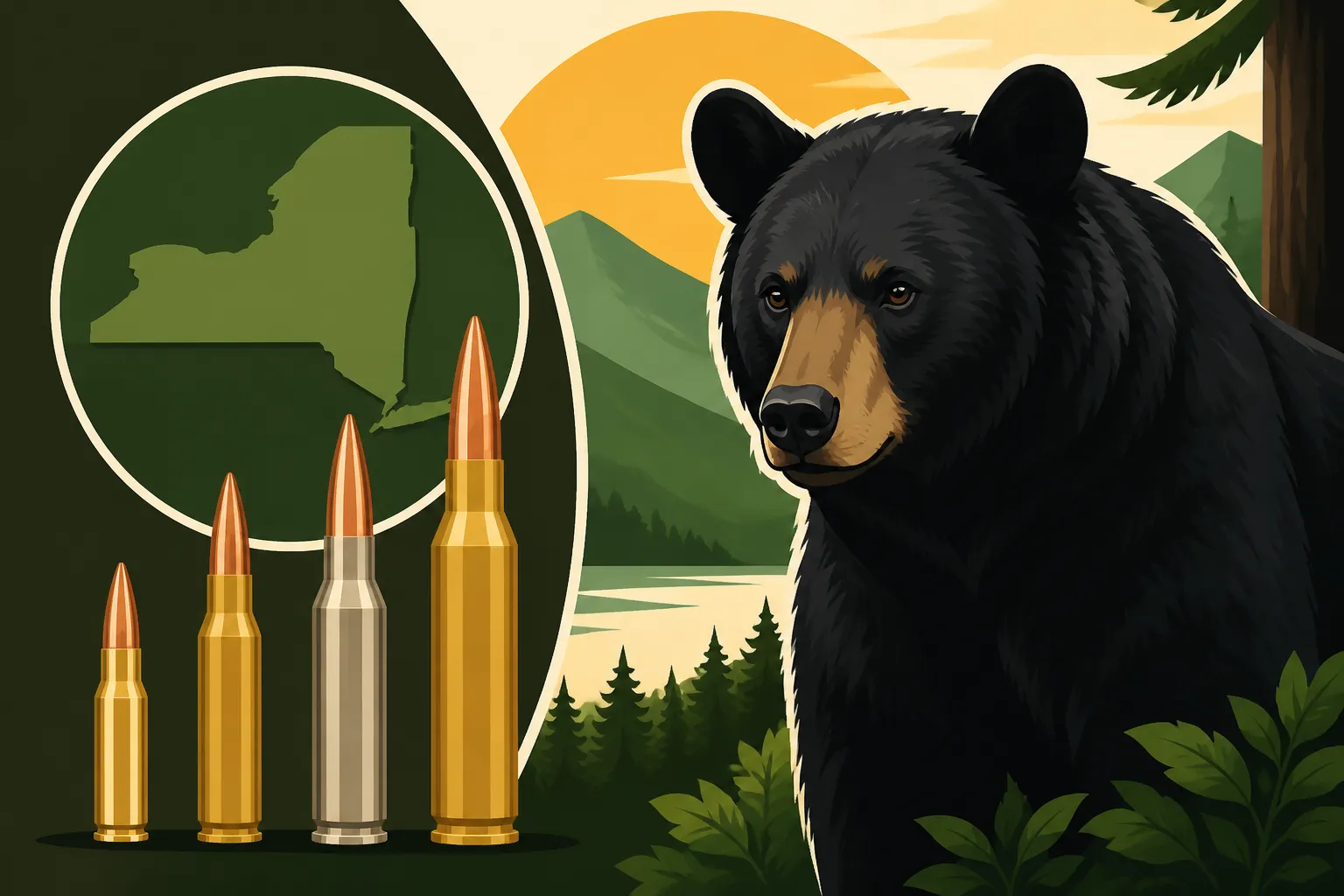
The thrill of chasing a New York black bear is something truly special, a blend of strategy, patience, and the profound connection with wild places. But when it comes time to pick the right rifle, many hunters find themselves wrestling with a crucial question: what caliber is truly adequate for these formidable animals? It’s a fair concern, because while a bear isn't impervious, a clean, ethical kill demands sufficient power and precision, especially with our state's unique hunting rules. This guide will walk you through the realities of New York bear hunting and help you confidently select a rifle caliber that's up to the task.
Understanding New York Black Bear Hunting Realities
Hunting black bears in New York isn't like hunting deer, and it certainly isn't like hunting bears in states where baiting is permitted. Our specific rules and the diverse landscapes where bears roam create a unique set of challenges and considerations that directly influence your choice of rifle caliber.
The "No Bait" Rule and Its Impact on Shot Selection
One of the most significant factors in New York bear hunting is the statewide prohibition on baiting. Unlike areas where bears might frequent a known bait site, offering a controlled, stationary target, New York hunters must rely on traditional hunting methods. This primarily means still-hunting, spot-and-stalk, or incidental encounters while deer hunting.
What does this mean for your shot? It means you're far more likely to encounter a moving bear, or one that's actively foraging in thick cover. Shot distances can vary wildly—from a brush-busting 20-yard encounter in a dense hemlock swamp to a longer, more open shot across a recent timber cut or a Catskill ridge line. The angle of the shot might not always be ideal, and you need a caliber that can deliver enough energy and penetration to reach the vitals through varying tissue and bone, even if the bear isn't perfectly broadside. This dynamic unpredictability elevates the importance of a capable cartridge.
Shot Placement and Bear Anatomy
No matter what caliber you choose, shot placement is king. A .30-06 placed poorly is far less effective than a .270 placed perfectly. Black bears, while generally not as large as their grizzly cousins, are incredibly tough animals. They possess heavy bone structure, thick muscle, and often a dense layer of fat, especially heading into winter. Their vital zone—heart and lungs—is relatively small and sits a bit lower and further forward in the chest cavity than on a deer.
Understanding this anatomy is critical. Your goal is always a double-lung or heart shot for a quick, humane kill. A bullet needs to penetrate deeply enough to reliably reach these organs and create sufficient tissue damage to cause rapid incapacitation and blood loss. Marginal hits, especially through the shoulders or gut, can lead to lengthy, difficult, and often unsuccessful tracking jobs. This is why a caliber that offers good penetration and energy retention is so highly valued. For more on this critical skill, check out Shot Placement on a New York Black Bear.
Common Hunting Environments in New York
New York's bear habitat is incredibly diverse, from the rugged, vast wilderness of the Adirondack Forest Preserve to the steep, timbered ridges of the Catskills, and even pockets of farmland and woodlots in the Southern Zone. Each of these environments presents different scenarios for bear encounters.
In the dense, dark timber of the Adirondacks, shots are typically close and fast, often under 100 yards, sometimes much closer. Visibility can be severely limited by thick evergreens, dense undergrowth, and uneven terrain. Here, a rifle that can handle heavy cover and deliver a decisive blow without excessive bullet deflection is a strong advantage. In the Catskills, you might find yourself glassing a distant clear-cut or a series of benches on a steep slope, potentially offering longer shot opportunities. Meanwhile, in the Southern Zone, bears can be found in a mix of agricultural fields and small woodlots, sometimes requiring a shot across a field edge. The variability of these environments means your chosen caliber needs to be versatile, performing well at common hunting distances for your specific hunting grounds, and for these reasons it's always good to use tools like GoHunt to understand the terrain you'll be hunting.
Key Factors in Choosing a Bear Caliber for New York
When you're trying to decide which rifle caliber is the right fit for New York black bears, it's not just about raw power. There are several interconnected factors that come into play, influencing not only the effectiveness of your shot but also your confidence and ability to place it accurately.
Energy and Bullet Construction
For black bears, adequate kinetic energy is paramount. Bears are built to withstand a lot, and you need a bullet that can deliver a sufficient blow to quickly incapacitate them. While there's no magic minimum energy number, generally, cartridges that deliver at least 1,500 to 2,000 foot-pounds of energy at impact are considered good starting points for black bear. This energy ensures that the bullet can not only penetrate through tough hide, muscle, and bone but also create a significant wound channel.
However, energy alone isn't the whole story. Bullet construction is equally, if not more, important. You're looking for a bullet designed for controlled expansion and weight retention. Thin-jacketed, rapidly expanding bullets designed for smaller game might dump all their energy quickly on the surface, failing to penetrate deep enough to reach the vitals. Instead, look for bullets with bonded cores, heavy jackets, or monolithic construction (like copper bullets) that are designed to hold together, penetrate deeply, and expand reliably but not explosively. These qualities ensure that the bullet maintains its integrity and delivers its energy where it counts—deep inside the animal.
Recoil Management and Shot Accuracy
It’s easy to get caught up in the "bigger is better" mindset when it comes to bear calibers, but there's a critical trade-off: recoil. A powerful magnum cartridge might look impressive on paper, but if the recoil prevents you from shooting it accurately or causes you to flinch, its effectiveness plummets. Accuracy, as mentioned, is the ultimate determinant of a successful hunt.
Choosing a caliber that you can comfortably and consistently shoot accurately is far more important than selecting the most powerful option available. This means spending time at the range, practicing from various positions, and becoming intimately familiar with your rifle and its recoil. If a particular magnum makes you anticipate the shot or develop a flinch, you'll be better served with a slightly milder, yet still capable, cartridge that you can shoot with utmost confidence and precision. Sometimes, a well-placed shot from a slightly less powerful rifle is all it takes, so don't let macho ideas about recoil override your practical shooting ability.
Versatility for Multi-Species Hunts
For many New York hunters, bear season often overlaps with deer season. This reality might influence your caliber choice, especially if you prefer to carry a single rifle for both species. A versatile caliber means you don't have to switch guns, re-zero, or change your mental approach if a bear suddenly appears when you're primarily focused on deer.
Many excellent deer calibers are also perfectly adequate for black bear, provided you choose the right bullet. A cartridge that performs well on whitetails in the Adirondacks, the Catskills, or the Southern Tier can often pull double duty for black bear. Consider the overall hunting strategy: are you specifically targeting bear, or are you hoping for an opportunistic encounter? If it's the latter, a dependable deer cartridge loaded with a premium bear bullet might be the ideal solution. Looking at resources from GoHunt could help you optimize your gear for multi-species hunts by understanding typical ranges and conditions in different WMUs.
Recommended Rifle Calibers for New York Black Bears
While many rifle calibers can take a black bear, we want to focus on those that offer a good balance of power, penetration, and manageability for the typical hunting scenarios we find here in New York. There’s a sweet spot where effectiveness meets practicality.
Tried-and-True Medium Bore Options
These calibers are often considered the workhorses of the deer hunting world, and for good reason—they also excel at taking black bears when paired with appropriate ammunition. They offer a good blend of manageable recoil and ample power.
-
** .30-06 Springfield:** Often called the "all-around" cartridge, the .30-06 is a superb choice for New York black bears. It launches bullets from 150 to 200 grains at respectable velocities, delivering plenty of energy for deep penetration. It's widely available, recoil is stout but manageable for most hunters, and its versatility means it's also a fantastic deer cartridge. With a quality 180-grain bullet designed for controlled expansion, the .30-06 is more than capable of handling any black bear in New York, whether it's an incidental encounter while Hunting the New York Rut in November or a dedicated bear hunt in the Catskills.
-
** .308 Winchester:** This short-action sibling to the .30-06 is another excellent option. It offers very similar ballistics out to typical hunting ranges, often with slightly less recoil and in a more compact rifle platform. The .308 is incredibly accurate, ammunition is readily available, and it can effectively launch 150- to 180-grain bullets with more than enough energy for black bear. If you're looking for a potent, accurate, and easier-to-handle rifle that can do double duty for deer and bear, the .308 is hard to beat, particularly in situations where you might be Still-Hunting Catskill Ridges or covering a lot of ground.
-
** .270 Winchester:** Don't let its smaller bullet diameter fool you; the .270 Winchester, especially with premium bullets, is a formidable bear cartridge. While typically shooting lighter bullets (130-150 grains) than the .30-caliber options, its higher velocity translates to excellent energy delivery and flatter trajectories. With a bonded or monolithic 150-grain bullet, the .270 provides ample penetration and terminal performance for black bear. It's known for its relatively mild recoil and excellent accuracy, making it a great choice for hunters who prioritize precision and don't want to step up to heavier recoiling options.
Stepping Up to Magnum Calibers
Some hunters prefer the added insurance of a magnum cartridge, especially if they anticipate longer shots or simply want the most power they can comfortably handle.
-
** 7mm Remington Magnum:** The 7mm Rem Mag is a popular choice for larger big game and long-range hunting, and it certainly has the power for New York black bears. It launches 140- to 175-grain bullets at high velocities, offering excellent energy and a flat trajectory. Recoil is notably heavier than the standard calibers but is still manageable for many experienced shooters. If you frequently find yourself in situations where longer shots across open country (like some of the bigger Adirondack clear-cuts or Catskill valleys) are a possibility, and you can shoot it accurately, the 7mm Rem Mag provides a significant margin of power.
-
** .300 Winchester Magnum:** If you want to maximize your rifle's power for black bear in New York, the .300 Win Mag delivers. It excels with heavier bullets (180-200+ grains) and higher velocities, translating to impressive kinetic energy and deep penetration. This is arguably more power than strictly necessary for a black bear, but it certainly offers confidence. However, the recoil is substantial, and sustained practice is crucial to avoid developing a flinch. For the hunter who wants maximum capability and is comfortable with the added recoil, the .300 Win Mag leaves no doubt.
Considering Brush Guns and Lever Actions
While not always the first choice for dedicated bear hunters, these options can be highly effective, especially for incidental encounters in very thick cover or for hunters who appreciate classic firearms.
-
** .30-30 Winchester:** The venerable .30-30, primarily found in lever-action rifles, is a classic "brush gun." While its effective range is limited (generally under 150 yards), within that range, it's perfectly capable of taking black bears with well-placed shots and appropriate ammunition. Modern loads with pointed polymer tips (like Hornady LEVERevolution) improve its ballistic performance and energy retention. For those still-hunting dense timber or hunting areas where shots are reliably close, a .30-30 provides a quick-handling, potent option. Many New York hunters carrying a .30-30 for deer would find it adequate if a bear surprised them at close range.
-
** .45-70 Government:** Stepping up significantly from the .30-30, the .45-70, especially in modern loadings, is a true big-bore hammer. While also typically a lever-action cartridge, its heavy, large-diameter bullets (300-400+ grains) deliver incredible knockdown power and straight-line penetration at close to medium ranges. Recoil is substantial, particularly with "buffalo bore" type loads, but if you're looking for a dedicated close-range bear stopper in thick Adirondack swamps or dense Catskill undergrowth, the .45-70 is undeniably effective.
Here's a quick comparison of popular calibers for New York black bear:
| Caliber | Typical Bullet Weights (grains) | Pros | Cons | Best Use Case |
|---|---|---|---|---|
| .270 Winchester | 130-150 | Mild recoil, flat trajectory, very accurate, widely available | May require premium bullets for optimal bear penetration | Versatile deer/bear, open timber, longer shots |
| .308 Winchester | 150-180 | Excellent balance of power/recoil, accurate, compact, available | Slightly less energy than .30-06 at extreme range | All-around deer/bear, thick cover, stand hunting |
| .30-06 Springfield | 150-200 | Proven track record, versatile, powerful, widely available | Slightly more recoil than .308 | All-around deer/bear, deep woods, varied terrain |
| 7mm Remington Magnum | 140-175 | High velocity, flat trajectory, excellent energy at range | Heavier recoil, more expensive ammunition | Dedicated bear hunting, open country, longer shots |
| .300 Winchester Magnum | 180-200+ | Maximum power, deep penetration, confidence booster | Significant recoil, often overkill for black bear, heavy rifle | Dedicated bear hunting, hunter comfortable with recoil |
| .30-30 Winchester | 150-170 | Classic "brush gun," quick handling, low recoil with standard ammo | Limited effective range, less energy at distance | Close-range incidental encounters, dense cover |
| .45-70 Government | 300-405 | Massive knockdown power, deep penetration, straight trajectory | Heavy recoil, very limited range, expensive ammunition | Close-range "stopper," heavy cover, dedicated bear |
Ammunition Choices and Ethical Considerations
Choosing the right rifle caliber is just one piece of the puzzle. The specific ammunition you feed that rifle, your commitment to practice, and your understanding of ethical hunting responsibilities complete the picture for a successful and humane black bear hunt in New York.
Bullet Selection for Black Bear
This cannot be stressed enough: the bullet you choose matters immensely, perhaps even more than the slight differences between capable calibers. As discussed, black bears are tough. You need a bullet designed to perform on robust game, not a varmint bullet or a deer bullet optimized for rapid expansion on lighter animals.
Look for bullets specifically marketed for "big game" or "heavy game." These typically feature bonded cores (where the lead core is chemically bonded to the copper jacket), monolithic construction (solid copper or alloy bullets), or stout, interlocked lead cores. Examples include Barnes TSX/TTSX, Nosler AccuBond, Hornady InterBond or CX, Federal Terminal Ascent, and Swift A-Frame. These bullets are engineered to retain their weight, penetrate deeply, and expand in a controlled manner, creating a substantial wound channel without fragmenting prematurely. This ensures that the bullet drives through hide, muscle, and potentially bone to reach the vitals, delivering maximum energy where it's needed most. Don't skimp on quality here; a premium bullet is a small price to pay for an ethical kill.
The Importance of Practice and Confidence
Having the "best" caliber on paper means absolutely nothing if you can't hit your target when it counts. Confidence in your rifle and your shooting ability is paramount. This confidence comes from consistent practice. Don't just zero your rifle once a year and call it good.
Spend time at the shooting range, not just punching paper from a bench, but practicing from field positions you might encounter while hunting: kneeling, sitting, or even shooting offhand or from a set of shooting sticks. Practice quickly shouldering your rifle, finding your target, and making a clean break. The adrenaline of a bear encounter can be intense, and muscle memory from practice will serve you well. Know your rifle's capabilities, but more importantly, know your own capabilities with that rifle. The most ethical shot is the one you can make accurately, every single time. And remember, good hunting tools, like those you might find on GoHunt, are only as good as the hunter wielding them.
Ethical Tracking and Recovery
A well-placed shot from an adequate caliber should result in a quick kill. However, even with the best shot, an animal may still run. Your responsibility as an ethical hunter extends well beyond the moment of the shot. Having a capable caliber that delivers a solid hit helps create a good blood trail and causes significant internal damage, increasing the chances of a swift recovery.
Always give a bear enough time after the shot before you begin tracking, especially if the shot wasn't immediately fatal. This allows the animal to expire, reducing the risk of a dangerous encounter with a wounded bear and increasing your chances of finding it. Be prepared with good tracking skills, a reliable headlamp, and a plan for Blood Trailing After Dark in New York if necessary. A quick, clean kill is the ultimate goal, and choosing the right caliber with the right bullet, combined with excellent marksmanship, helps ensure that outcome. For further tips, consider learning about Handling a Bear After the Shot to ensure proper care of your harvest.
Disclaimer
This article is for general informational purposes only and does not constitute professional advice. Laws, prices and regulations vary by location and change over time. Consult a qualified professional for guidance on your specific situation.