Working a Hedgerow for Late-Season Deer
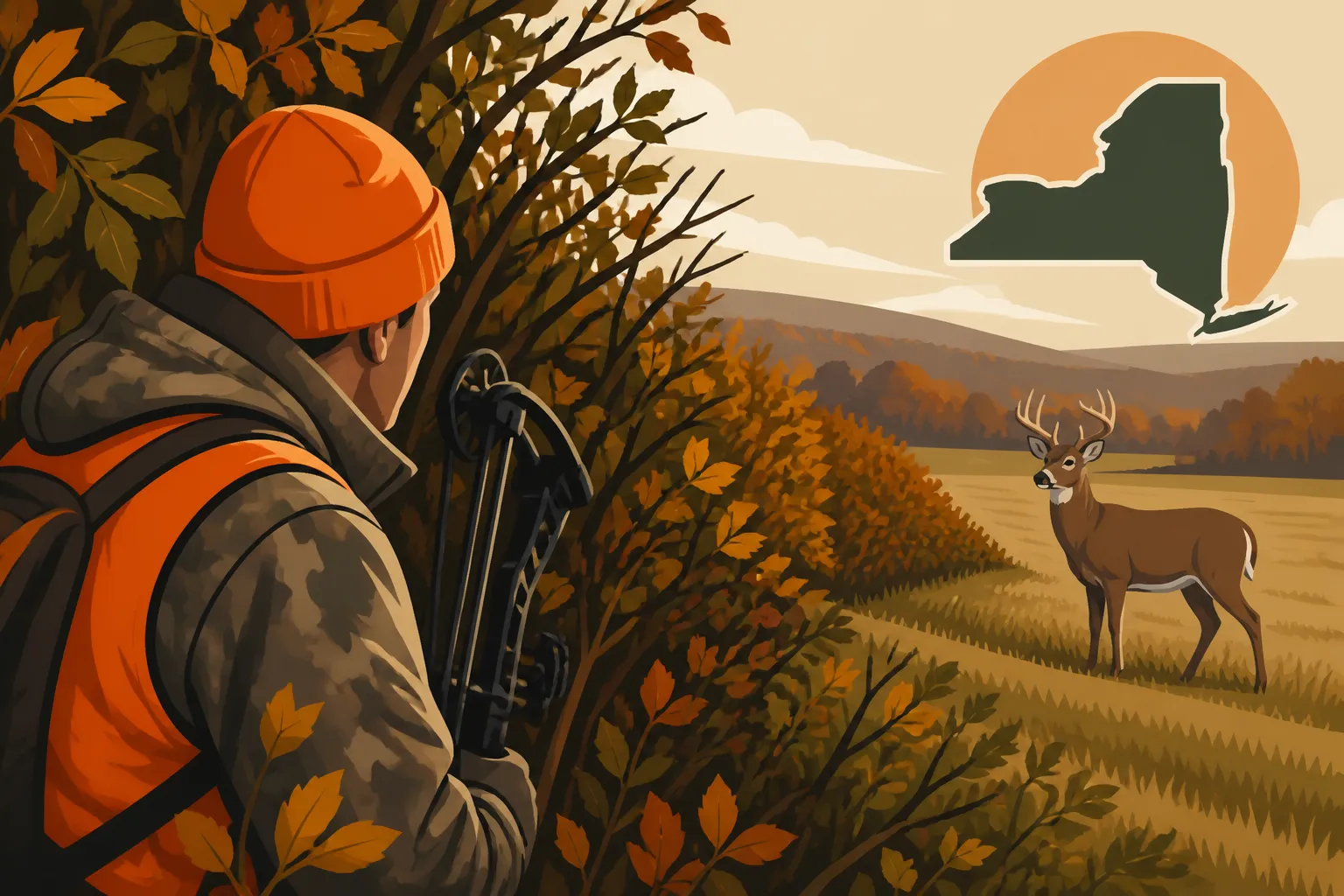
As the late season pushes into winter, many hunters in New York find themselves scratching their heads, wondering where all the deer have gone. The lush fields and thick woods that held deer reliably in October now seem barren, and those big bucks that were cruising during the rut have seemingly vanished. It's a common frustration, but often, the answer lies in overlooked features like hedgerows. This guide will walk you through exactly why hedgerows become prime real estate for whitetails in the colder months and how you can effectively hunt them for late-season success in New York.
Why Hedgerows Are Late-Season Havens for New York Deer
When the leaves drop and winter winds begin to bite, a deer's priorities shift dramatically. Food and cover become paramount, and while big timber blocks offer some sanctuary, those seemingly insignificant lines of brush, small trees, and briars crisscrossing open fields or property lines—what we call hedgerows—become absolute magnets. Many hunters overlook them, seeing them as mere property dividers, but for a deer facing down deep snow and biting cold, they're a lifeline.
Thermal Cover and Wind Breaks
Imagine being a deer on a blustery December day in a wide-open field or a thinned woodlot. There's no escaping the wind. Hedgerows, even sparse ones, act like natural windbreaks. The dense, interwoven branches, especially from species like multiflora rose, hawthorn, and even smaller cedars or pines mixed in, create a microclimate that can be several degrees warmer than the exposed areas. This thermal cover is critical for deer trying to conserve energy when temperatures plummet. They'll often bed down right against the leeward side of a hedgerow, soaking up any available sunlight and staying out of the direct wind. I’ve seen deer practically buried in snow right next to a thick hedgerow, completely invisible until I was almost on top of them. This is especially true after a fresh snowfall, where they can really hunker down and be hard to spot.
Travel Corridors and Escape Routes
Hedgerows are often the least exposed way for deer to travel between different areas, especially between feeding grounds and bedding cover. Think of them as natural highways that offer a measure of security. In agricultural areas, deer will use them to move from one cut cornfield to another, or from a secluded bedding area in a small woodlot to an accessible food source. They provide concealment from predators, including human hunters, as they traverse open country. Instead of walking exposed across a field, a deer can duck into a hedgerow and remain hidden. This becomes even more critical in late season when dense foliage is gone. They also serve as vital escape routes. If spooked from a feeding area, a deer will almost always dart for the nearest thick cover, and a hedgerow often fits that bill perfectly, allowing them to disappear quickly. Understanding these travel patterns is crucial for planning your approach, whether you’re still-hunting or setting up a stand.
Residual Food Sources
While most acorns and prime browse are long gone by late season, hedgerows can still hold overlooked food sources. Browse like greenbrier, sumac, and dogwood can be found within these linear features. More importantly, they often line the edges of agricultural fields. Even after a corn or soybean harvest, residual grains can be left behind, and deer will meticulously pick through these fields. A hedgerow provides a safe approach to these fields, allowing deer to feed at dusk and dawn, and sometimes even in the middle of the day during cold snaps. I’ve found deer pawing through light snow along a hedgerow for leftover corn that a combine missed. In some cases, you might even find persistent fruits like wild apples or persimmons clinging to branches within or adjacent to the hedgerow, offering a rare late-season treat.
Scouting Hedgerows for Key Deer Sign
Finding an active hedgerow isn't just about spotting a line of trees. It requires careful, deliberate scouting, often before the season opens, but also throughout the late season as deer patterns change. You're looking for the subtle clues that indicate consistent deer traffic and usage. Modern tools like the GoHunt app or even the Scouting With the New York HuntFishNY App can be incredibly useful for initial aerial assessments and marking potential hotspots before you even step foot on the ground.
Reading the Edges and Intersections
Deer are creatures of habit, and their movements along hedgerows will often concentrate at specific points. Look for where the hedgerow widens, narrows, or intersects with another line of cover, like a fenceline or a small creek bottom. These are natural funnels where deer movement will be channeled. Pay close attention to "entry and exit points"—spots where deer consistently move from the hedgerow into an open field or across a road. These will often be worn trails, even in stiff ground. A good practice is to walk alongside the hedgerow, just inside the field edge, looking for these obvious trails that lead into the thicker cover. If you see multiple trails converging, you've likely found a major travel artery. On properties where I have permission to hunt Southern Tier farmland deer, I always check the corners where hedgerows meet, as these are transition areas.
Identifying Active Rubs and Scrapes
While the peak of the rut is generally over by late season, you might still find rubs and scrapes along hedgerows. Bucks, especially older ones, will sometimes reactivate scrapes or make fresh rubs even into December, particularly if they're still searching for does or just marking their territory in a high-traffic area. Don't expect the massive, shredded trees you saw in November, but smaller rubs on saplings or subtle scrapes near a hedgerow intersection can indicate a buck is still using that corridor. A fresh rub, still showing moist wood, is a solid indicator. These are great spots to focus your efforts, as bucks are often creatures of habit and will revisit these areas.
Locating Hidden Bedding Areas
Deer don't just use hedgerows for travel; they often bed down within them or immediately adjacent to them. During your scouting, look for thicker pockets of briars, small cedars, or dense brush within the hedgerow itself. These areas offer both concealment and protection from the wind. Pay attention to south-facing slopes or sections that catch the most sunlight, as deer will seek these out for warmth. You might find "beds"—depressions in the leaves or snow—where deer have spent time. If you find several fresh beds in a secluded pocket of a hedgerow, you've likely found a prime bedding area. This is where understanding wind and thermals on a Catskill ridge, or in this case, a hedgerow, becomes critical; you want to approach and set up downwind of any suspected bedding to avoid blowing your cover. A detailed map on the GoHunt app can help you identify these thicker pockets even from your couch.
Effective Hunting Tactics for New York Hedgerows
Once you've identified promising hedgerows, it's time to devise a hunting strategy. Late-season deer are incredibly wary, having dodged hunters for weeks, so stealth and smart positioning are paramount. These tactics require patience and a keen understanding of deer behavior.
Stand and Blind Placement Considerations
Setting up a treestand or ground blind in a hedgerow requires careful thought. Unlike a large woodlot, a hedgerow offers limited options. Look for the thickest trees within the hedgerow that offer both cover for you and a good vantage point overlooking those identified travel corridors or feeding areas. Consider prevailing winds for your chosen setup. If deer are bedding in the hedgerow, you need to be downwind of their expected travel path between bedding and food. Many hedgerows are relatively low, making a traditional treestand setup difficult. This is where a well-brushed-in ground blind on a New York public land or private land edge can shine, providing excellent concealment at eye level with the deer. Remember to clear shooting lanes, but do so subtly to avoid alerting deer to your presence. I often recommend scouting and placing your stand or blind well in advance of the hunt to allow deer to get used to its presence.
Still-Hunting and Drives Along the Edge
Sometimes, a static stand isn't the best option, especially if deer patterns are unpredictable or you're hunting a long, winding hedgerow. Still-hunting, moving slowly and deliberately along the edge of a hedgerow, can be incredibly effective. The key is to move into the wind, taking one slow step at a time, pausing to scan thoroughly for deer. Use the hedgerow itself for cover, walking just inside or parallel to it, using the brush to break up your silhouette. This method allows you to cover more ground and potentially intercept deer moving within the hedgerow or exiting into a field. If you have a small group of hunters, a "mini-drive" can also work wonders on longer hedgerows. One or two hunters can slowly push through the hedgerow, while others post discreetly at anticipated escape routes or intersections. This is a common tactic when doing deer drives with three or four hunters, especially on smaller, linear pieces of cover.
Understanding Wind and Thermals
In late season, especially during those cold, calm mornings, thermals become a significant factor, even in seemingly flat terrain. Cold air sinks, meaning your scent will often fall into low-lying areas at dawn. As the sun rises and warms the air, thermals will begin to lift your scent. Conversely, in the evenings, air cools and falls. Always consider the wind direction, but also how thermals might influence your scent cone, particularly if you are hunting near a subtle dip or rise along the hedgerow. Your Cold-Weather Sitting Strategy in New York needs to integrate this knowledge. A common mistake is to hunt solely based on the general wind direction without accounting for these localized air currents. Checking a reliable weather app or even a small milkweed pod can give you vital clues about air movement.
Gear Considerations for Hedgerow Hunting
Late-season hunting in New York isn't just mentally challenging; it's physically demanding. Having the right gear can make the difference between an uncomfortable, short hunt and a successful, all-day sit. The conditions can be brutal, ranging from bitter cold to wet snow, so being prepared is essential.
Clothing for Cold, Static Sits
Layering is non-negotiable for late-season hunting. Start with a good base layer that wicks moisture away from your skin, followed by insulating mid-layers like fleece or wool. Your outer layer needs to be windproof and waterproof, protecting you from biting winds and freezing rain or snow. Brands like Sitka, Kuiu, and even more budget-friendly options like Arctic Shield offer excellent cold-weather gear. Remember, you'll likely be sitting for extended periods, so over-dressing slightly is better than being cold. Pay special attention to your extremities—a good pair of insulated boots for all-day sits, heavy gloves, and a warm hat or facemask are critical. Blaze Orange Jackets Versus Vests are important to consider for visibility and safety during firearm seasons.
Optics for Tight Cover
While hedgerows might not offer long-range shots, good optics are still crucial. A quality pair of 8x or 10x binoculars can help you pick apart dense cover, identify deer obscured by brush, or spot subtle movements. Given the lower light conditions often experienced in late season, especially in the early morning and late evening, binoculars with good low-light performance are a game-changer. A compact rangefinder is also invaluable for quickly and accurately determining distances to shooting lanes or potential deer pathways, even if your shots are under 100 yards. This eliminates guesswork and increases your confidence when a deer finally steps out.
Navigational Tools and Mapping
Even on familiar ground, mapping tools are essential, especially when venturing into thicker cover or new areas. A reliable GPS unit or a smartphone app like GoHunt or the DEC's HuntFishNY app can help you pinpoint your location, navigate property lines (crucial for hunting private land), and mark key sign or stand locations. The GoHunt app, in particular, offers detailed satellite imagery and property owner information that can be invaluable for understanding the landscape and avoiding trespass. These apps often allow you to download maps for offline use, which is critical in areas with poor cell service. Having your phone loaded with aerial photos for Southern Tier deer hunting or any region can significantly enhance your scouting and in-field navigation.
Here’s a quick comparison of still-hunting versus stand hunting a hedgerow:
| Feature | Still-Hunting Hedgerows | Stand Hunting Hedgerows |
|---|---|---|
| Pros | Cover more ground; adapt to changing deer movement; good for small, linear features. | Scent control easier; better vantage point; comfortable for long sits; less intrusive if deer are patterned. |
| Cons | More likely to spook deer; requires extreme stealth and patience; often limited shot opportunities. | Fixed location; less adaptable if deer change patterns; can be uncomfortable in extreme cold; limited setup options. |
| Ideal Scenario | Covering long, unbroken hedgerows; scouting new areas; active deer movement; trying to find bedded deer. | Known travel corridors; predictable deer movement; near food sources; areas with good stand trees/blind cover. |
Remember, late-season deer are survivors, and they’ve learned what to avoid. Working a hedgerow for late-season deer often comes down to patience, persistence, and a deep understanding of how these linear features offer sanctuary when everything else is stripped bare. Don't give up when the primary woods feel empty; shift your focus to these overlooked lifelines, and you might just tag out when others have packed it in. If you manage to track a deer in fresh New York snow, you'll find they often lead straight to the nearest hedgerow.
Disclaimer
Hunting is an inherently dangerous activity. Always prioritize safety, understand and follow all New York State hunting regulations, and ensure you have the proper licenses and permits before heading into the field. This guide is for informational purposes only and does not replace official DEC regulations or professional hunter education.