Finding Woodcock in Alder Runs
Finding those elusive American woodcock can sometimes feel like hunting ghosts in New York's dense cover, especially if you're not sure where to start looking. Many hunters get frustrated walking miles of seemingly good woods only to find nothing. But if you key into their specific habitat needs, particularly those dense, damp alder runs, you'll dramatically increase your chances. This guide will help you understand why alder is so crucial for woodcock, how to identify prime spots, and effective tactics to put more timberdoodles in your game vest.
Understanding Woodcock Habitat in New York
Woodcock, often affectionately called timberdoodles, are fascinating migratory birds with very specific needs that guide their movements and preferred habitats. Unlike ruffed grouse, who favor mature aspen stands or mixed hardwoods, woodcock are drawn to younger, wetter cover. If you understand these preferences, you're already half a step closer to finding them.
The Unique Needs of American Woodcock
American woodcock have a suite of unique biological and behavioral traits that dictate their habitat choices. First and foremost, their diet consists almost exclusively of earthworms, which means they need soft, moist soil to probe with their long, sensitive bills. This single dietary requirement is the driving force behind where you'll find them. They also require dense, young cover for roosting during the day, escape from predators, and nesting. Think of a place where you'd have trouble walking through without getting tangled up, and you're probably close to good woodcock cover. Areas with a mix of regenerating saplings, brush, and tall grasses are also critical, providing overhead cover and security.
Why Alder is a Woodcock Magnet
Now, let's talk about alder. When you think of a prime woodcock spot in New York, you should immediately picture a dense alder run. Alder shrubs thrive in wetlands, along stream banks, in boggy areas, and generally where the soil remains consistently damp, if not outright wet. This moist ground is a literal buffet line for woodcock, teeming with earthworms. The dense, multi-stemmed growth of alder also provides the perfect impenetrable cover these birds crave. It offers protection from aerial predators like hawks and owls, and ground predators like foxes. Look for these areas in low-lying depressions, along slow-moving creeks, or where old farm fields are reverting to brushland, especially if there's an underlying layer of damp, loamy soil. These spots don't just hold woodcock; they actively attract them.
Migration Patterns and Timing
Woodcock are migratory birds, passing through New York during both spring and fall. While you can find resident birds in some parts of the state during summer, the best hunting opportunities arise during their southbound migration in the fall. The timing of this migration is crucial; too early, and many birds haven't arrived from their northern breeding grounds; too late, and they've already pushed south. Generally, the prime window for migratory woodcock in New York kicks off in late September and can extend through October, sometimes even into early November in warmer years. The exact timing varies by region and depends heavily on weather patterns, especially the first hard frosts up north that drive birds south. Keeping an eye on weather forecasts in regions north of New York can give you a clue when to expect an influx of birds. For specific season dates, be sure to check the official New York Grouse and Woodcock Seasons for the current year.
Identifying Prime Alder Runs and Cover
Finding good woodcock cover isn't always about stumbling upon it. With a little pre-season scouting and smart use of modern tools, you can pinpoint high-probability areas before you even put your boots on the ground.
Reading the Landscape for Alder Sign
When you're out scouting, or even just driving around, look for key landscape features. Alder loves disturbed areas with wet soil. Think about places where beavers have been active, creating flooded lowlands or slowing down stream flow. Old logging roads that haven't been maintained often create ditches that hold water, leading to strips of alder. Look for transitions in habitat – where a mature hardwood stand drops down into a wet bottomland, or where a field gives way to a swampy edge. These "edge habitats" are often magnets for woodcock, providing them with both food-rich soil and dense cover. Topographical maps can be incredibly useful for identifying these low-lying, wet areas. Even if you don't see green alder on the map, look for contour lines that indicate depressions, swamps, or slow-moving water bodies.
Utilizing Mapping Tools for Scouting
In today's age, technology is your friend. Before you ever leave the house, spend some time studying satellite imagery and topographic maps. Applications like GoHunt or other digital mapping platforms with high-resolution satellite layers are invaluable. You can zoom in and identify distinct stands of alder, often appearing as brighter green, dense thickets in wet areas. Look for dark lines indicating creek beds, and then follow those to see where the dense, shrubby growth appears. Compare this with topographic lines to confirm it's a low-lying, potentially wet area. Pay close attention to public land boundaries too; many state forests and Wildlife Management Areas in New York, such as Connecticut Hill Wildlife Management Area in the Finger Lakes region, will have ideal woodcock habitat. The Using the New York HuntFishNY Map Tool is also excellent for identifying public access and specific habitat types.
Ground-Level Clues and Indicators
Once you're on the ground, don't just blindly walk into every patch of brush. Look for direct signs of woodcock activity. Their droppings, known as "splats," are a distinctive white splash with a dark center. You'll often find these on leaves or along bare patches of ground where they've been feeding. The ground itself should be soft and moist; if it's hard-packed or dry, it's unlikely to hold many worms, and thus, unlikely to hold many woodcock. Another tell-tale sign is the presence of the small, conical holes they make when probing for earthworms. These are often clustered in areas where they've been feeding heavily.
Here's a quick reference table for identifying ideal woodcock habitat:
| Habitat Feature | Description | Why it's Important for Woodcock |
|---|---|---|
| Alder Thickets | Dense, multi-stemmed shrubs (Alnus species) | Provides critical cover and thrives in moist soil |
| Moist/Soft Soil | Loamy, well-drained but consistently damp ground | Essential for earthworm foraging with their long bills |
| Young Forest/Brush | Regenerating timber, saplings, dense brush (5-20 years old) | Offers dense overhead cover and escape routes |
| Wetlands/Stream Edges | Swamps, boggy areas, slow-moving creek banks, beaver impoundments | Ensures constant moisture for earthworms and dense cover |
| Sunny Openings | Small clearings within dense cover or nearby fields | Used for evening feeding (roosting cover usually adjacent) |
| Edge Habitat | Transitions between fields and woods, hardwoods and wet bottoms | Combines diverse food sources and cover types |
Tactics for Hunting Woodcock in New York Alder
Once you've found a promising alder run, the real fun begins. Woodcock hunting is an active, invigorating pursuit, often requiring patience and keen observation.
Working Cover Effectively with Dogs
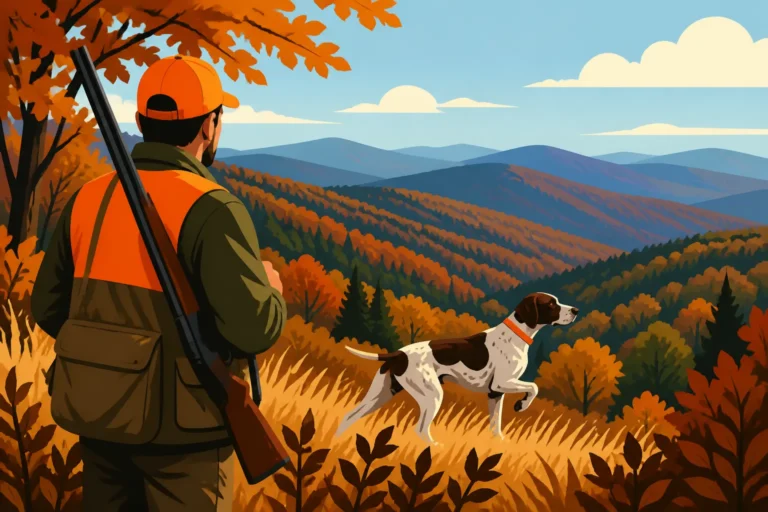
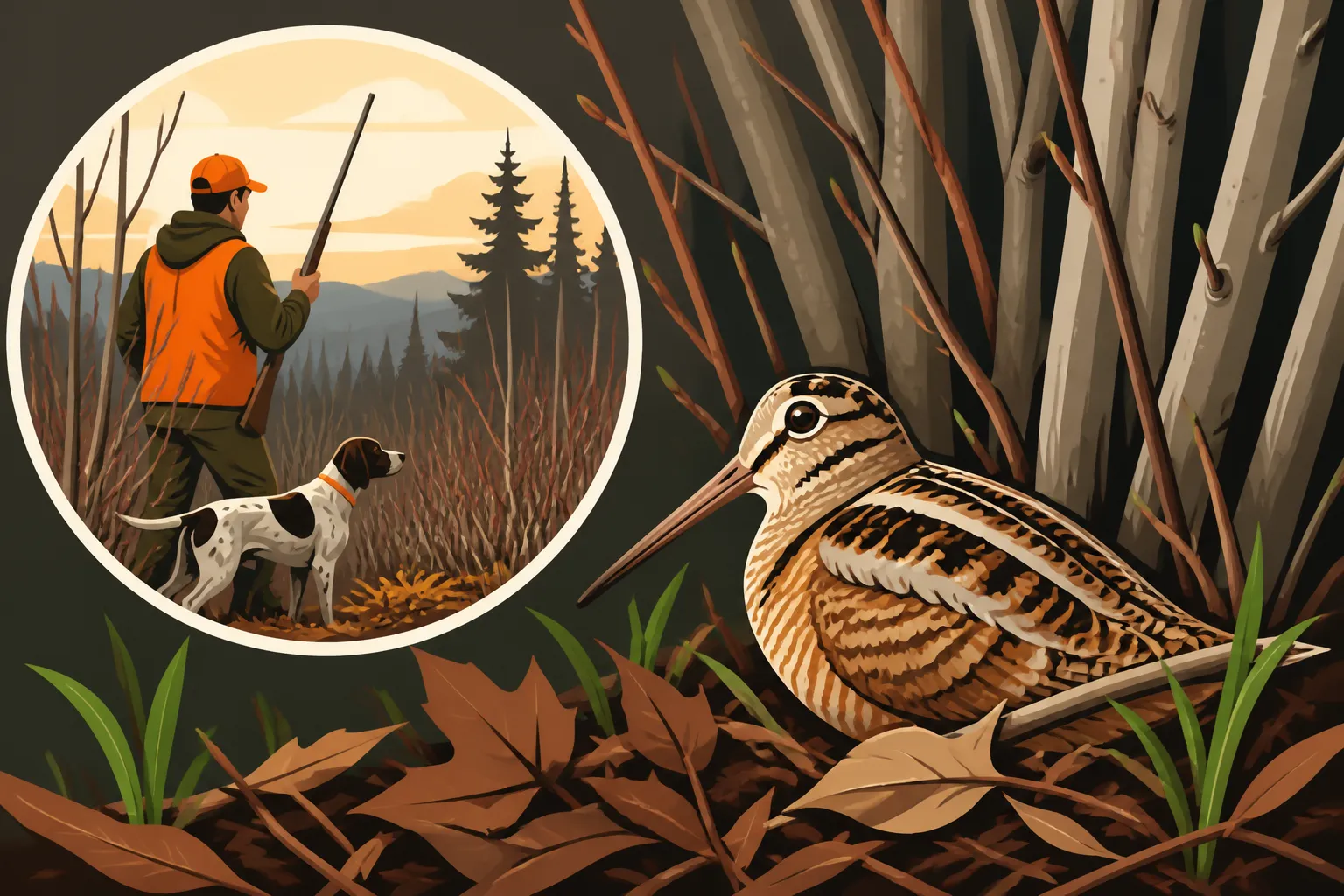
If you're lucky enough to hunt with a good bird dog, they are your single greatest asset when pursuing woodcock in thick New York cover. These birds hold incredibly tight, often letting you walk right past them without flushing. A well-trained setter or pointer will scent the bird, lock up on point, and guide you directly to the action. When your dog goes on point, approach cautiously from the side, anticipating which way the bird is likely to flush – usually straight up or forward through the densest part of the cover. Be ready for a quick shot; woodcock are small, erratic fliers, and the shooting windows in alder are tiny. Teach your dog to stay steady until the shot, and then to retrieve gently. Having a dog that can retrieve from the thickest brambles saves a lot of lost birds and frustration. For hunters targeting both species, consider Hunting Grouse and Woodcock Together since their habitats often overlap.
Flushing Strategies for Solo Hunters
Even without a dog, success is absolutely possible, though it requires a different approach. As a solo hunter, you become the "dog." This means systematically working through the cover, pushing through every inch of alder, pausing frequently to try and make birds nervous. Walk in a zig-zag pattern, covering as much ground as possible in a grid-like fashion. When you encounter especially thick patches, stop abruptly for 10-15 seconds. This often makes a woodcock, which was holding tight, decide to flush, thinking the danger has passed. Be prepared for a close-quarters flush, as they often blast off at your feet. Move slowly and deliberately, constantly scanning the ground ahead for subtle movements. It's an exhausting but rewarding way to hunt. Consider wearing an Upland Vests With Water Capacity to stay hydrated during these active hunts.
Shot Selection and Safety in Thick Cover
Due to the dense nature of alder runs, your shots will almost always be at close range, typically within 10 to 25 yards. This means you don't need heavy loads or tight chokes. An open choke, such as improved cylinder or skeet, is ideal for spreading your pattern quickly. Number 7.5 or 8 shot is perfectly adequate for these small birds. A fast-swinging, lightweight shotgun, often a 20-gauge or even a 28-gauge, is preferred by many upland hunters for navigating the thick cover and getting on a flushing bird quickly. You can find more details on ammunition in Shot Size for Grouse and Woodcock.
Safety is paramount. Always know where your hunting partners (if any) are, and never take a shot if you're not absolutely certain of your target and what's beyond it. In thick cover, it's easy to lose track of others. Wear plenty of blaze orange, even if not strictly required for woodcock in all situations, as it significantly increases visibility to other hunters. It’s also important to be aware of your footing; alder runs are often uneven, muddy, and riddled with hidden obstacles. Good, waterproof boots with ankle support, like those you might wear when Boots for Walking New York Aspen Cuts, are a must.
Navigating Public Lands and Regulations
New York offers a wealth of public lands, from State Forests to Wildlife Management Areas, where you can pursue woodcock. Understanding the regulations and how to access these areas is key to a successful hunt.
Popular Woodcock Destinations in New York
While woodcock can be found across much of New York where suitable habitat exists, some areas are particularly renowned for their bird numbers. The Southern Tier and Finger Lakes regions, with their mix of regenerating timber, old farm fields, and numerous creek bottoms, often provide excellent opportunities. Many State Forests, such as those in Steuben and Chemung counties, have pockets of ideal alder habitat. The Catskills and portions of the Adirondacks can also hold birds, especially in low-lying areas or along beaver-impacted streams, though the vastness of the Adirondacks often means more focused scouting is required. Keep an eye on reports about Where New York Woodcock Concentrate for updated information on population trends and hotspots. Platforms like GoHunt can help you scout these regions from a satellite perspective, allowing you to prioritize areas with the right blend of water and dense cover.
Understanding Seasons and Bag Limits
New York's woodcock season dates can vary slightly year to year, and sometimes by zone, so always consult the most current DEC regulations guide before heading afield. Generally, the season runs for about 45 days, typically starting in late September or early October. The daily bag limit for woodcock is usually three birds per hunter. Remember, a valid New York State hunting license and a federal migratory bird hunting and conservation stamp (duck stamp) are required to hunt woodcock, as they are a migratory game bird. You'll also need to register with the Harvest Information Program (HIP). All these requirements ensure that wildlife managers can track hunter participation and harvest numbers to make informed decisions about future regulations. Check When New York's Woodcock Season Opens for the most current dates.
Ethical Hunting and Conservation
As hunters, we have a responsibility to be ethical and contribute to conservation efforts. This means respecting private property, leaving no trace, and following all hunting regulations. For woodcock, careful shot placement and quick retrieval are crucial to minimize crippling loss. Consider the impact of your hunting on the resource and the experience of others. Conservation of woodcock habitat is vital, and hunters often play an indirect role by supporting organizations that promote young forest management, which benefits not only woodcock but also grouse, deer, and many other wildlife species. Supporting habitat initiatives, even by simply purchasing your licenses and stamps, contributes directly to these efforts. Remember, the challenge of finding woodcock in dense cover is part of the allure, and preserving their habitat ensures future generations can enjoy the same pursuit.
Disclaimer
Hunting is an inherently risky activity. Always prioritize safety, follow all local and state regulations, and obtain proper licensing and education before heading into the field. The information provided here is for educational purposes and should not replace official safety courses or current New York State Department of Environmental Conservation regulations.