Diver Hunting on Eastern Lake Ontario
Diver hunting on Eastern Lake Ontario is an incredible experience, but it’s far from a casual morning shoot. This vast, unpredictable body of water presents unique challenges for hunters, from navigating volatile weather to understanding the specific behaviors of these hardy ducks. If you’ve ever felt overwhelmed by the sheer scale of the lake or struggled to consistently connect with diver ducks, this guide is for you. We’re going to dive deep into everything you need to know to hunt Eastern Lake Ontario’s divers effectively and, most importantly, safely.
The Unique Challenge of Diver Hunting on Eastern Lake Ontario
Eastern Lake Ontario is a beast of a different color when it comes to waterfowl hunting. Unlike calm marshes or small potholes, this is big water, exposed to the full force of whatever weather system rolls in. Divers, by their very nature, are birds of open water, perfectly adapted to these conditions, which means hunters must be too. Understanding the environment and the birds that call it home, even if temporarily during migration, is the first step to success.
Identifying Key Diver Species and Their Behaviors
When you’re out on Eastern Lake Ontario, you’re primarily targeting a few key species of diver ducks, each with their own quirks and preferences. Knowing what to look for and how they behave can make a huge difference in your approach.
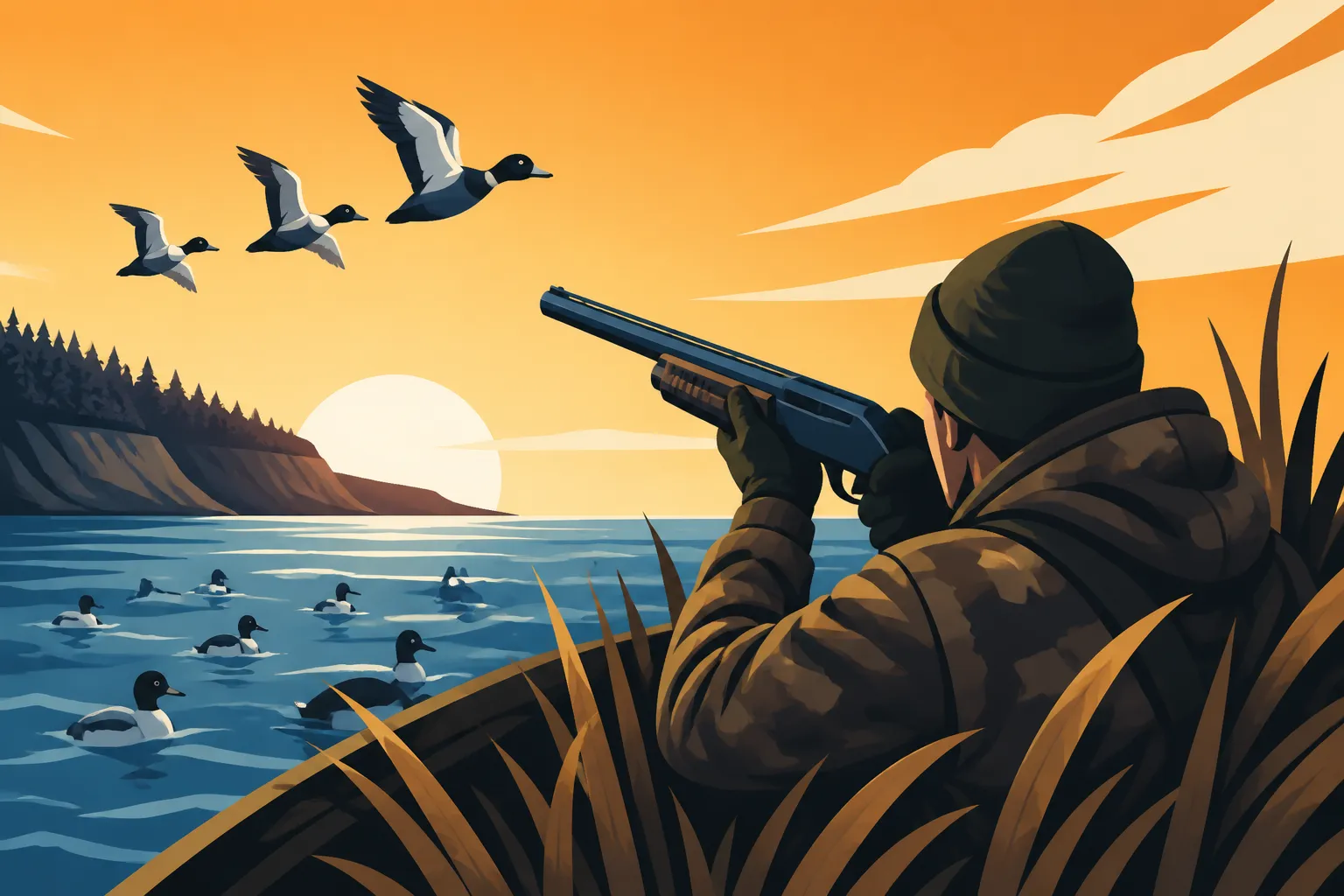
One of the most common sights will be scaup, both greater and lesser, often referred to as "bluebills." These birds travel in large rafts, moving constantly, and are known for their strong, direct flight. They'll readily decoy, especially when they see a big, convincing spread. Then you have the regal canvasback, often considered the king of ducks. Canvasbacks are fast, powerful flyers and can be particular, often circling a spread several times before committing. They prefer deeper water and tend to feed on submerged vegetation. Goldeneyes and buffleheads are smaller but equally tenacious. Goldeneyes are strong, swift flyers that often zip past, while buffleheads are tiny, fast, and incredibly agile, often disappearing and reappearing as they dive. Redheads are another beautiful diver that frequades these waters, known for their quick, erratic flight and tendency to be less wary than canvasbacks. Understanding these nuanced behaviors, like how a flock of goldeneyes might dart in compared to the more cautious approach of canvasbacks, will help you decide when to call the shot. It’s a lot like trying to read deer sign in the woods; each species leaves subtle clues in how they approach your setup.
Prime Eastern Lake Ontario Hunting Grounds and Habitat
Eastern Lake Ontario offers a mosaic of prime diver hunting grounds, each with its own character. The key to finding divers here often lies in locating their preferred food sources and protected resting areas. These ducks aren’t usually looking for a cozy cattail marsh; they want wide-open water with good visibility and plenty of aquatic invertebrates and vegetation.
You’ll often find divers congregating in major bays like Henderson Bay, Chaumont Bay, Mexico Bay, and Black River Bay. These areas provide a balance of open water, protection from the most extreme winds, and extensive shallow flats and shoals where submerged aquatic vegetation thrives. Henderson Bay, for instance, with its numerous islands and varying depths, creates excellent feeding and resting pockets. Another hotspot is the area around Stony Point and Galloo Island, where divers will stage before or after long flights, utilizing the shoals and deeper basins. The mouth of the Black River and its associated bays are also known for attracting large numbers of divers, especially during peak migration. When scouting, pay close attention to depth contours and bottom composition. Divers aren't usually in the shallowest mudflats; they're often over deeper shoals (5-15 feet) where they can dive for food. Using a good mapping application, such as those found on GoHunt, can help identify these critical underwater structures long before you even launch your boat. These spots act as natural funnels and feeding areas, much like a well-used deer trail in a dense woodlot.
Essential Gear for Successful and Safe Diver Hunting
Hunting divers on Eastern Lake Ontario isn't a venture for the ill-prepared. The gear you bring, from your decoys to your boat and clothing, needs to be robust, reliable, and designed for extreme conditions. Cutting corners here isn't just uncomfortable; it can be downright dangerous.
Crafting Effective Decoy Spreads for Big Water Divers
Decoys are your primary tool for attracting divers, and on big water like Eastern Lake Ontario, you need a different approach than puddle duck hunting. Size, numbers, and presentation all matter immensely.
For diver hunting, you need a substantial spread. These birds are used to seeing large rafts of ducks, so a dozen decoys just won't cut it. Most successful diver hunters run spreads of 50, 100, or even more decoys. The bigger the water, the bigger the spread. Longline rigs are a staple for divers, allowing you to deploy many decoys quickly and keep them organized. A single main line with multiple droppers, each holding a decoy, is far more efficient than individual Texas rigs or traditional weights on open water. You’ll also want to prioritize diver decoys, such as bluebills, canvasbacks, and redheads, mixed in with some coots or even a few goose decoys as confidence builders. As for placement, a classic J-hook or crescent shape, with the open end of the "J" or "C" facing downwind where you expect birds to approach, is highly effective. This creates a landing zone within shooting range. Sometimes, just a large, loose blob of decoys can simulate a resting raft. Consider adding a few motion decoys or jerk strings to create movement, especially on calmer days. Unlike puddle ducks, which might respond to subtle ripples, divers often need that visual reassurance of active birds. Getting your decoy spread right is like perfectly setting up on a Southern Tier field edge.
Navigating Eastern Lake Ontario: Boats and Safety First
This is perhaps the most critical aspect of diver hunting on Eastern Lake Ontario: your boat and your unwavering commitment to safety. This lake is notorious for kicking up quickly, and a calm morning can turn into a life-threatening situation in a matter of minutes.
A stable, seaworthy boat is non-negotiable. For many, this means a larger V-hull boat (18-24 feet) with a reliable outboard, or a dedicated layout boat if you're hunting in pairs and conditions allow. Layout boats, like those from Bankes or Fowl Play, are designed to sit low in the water and blend into the waves, providing incredible concealment, but they require a larger "mother ship" for transport and retrieving birds. If you're using a smaller boat, like a Jon boat, you need to be exceptionally cautious and only venture out on the calmest of days, staying close to shore. Always have a powerful, reliable main motor, and a kicker motor is highly recommended as a backup. GPS and a marine-band radio are essential for communication and navigation, as cell service can be spotty. Multiple heavy anchors are a must, especially for holding a layout rig in current or chop. Beyond the vessel itself, personal safety gear is paramount. Every person on board must wear a properly fitted life jacket (PFD) at all times, especially in cold water. Hypothermia is a silent killer on Lake Ontario. Have a first-aid kit, signaling devices (flares, whistle), a throw cushion or ring, and a fully charged spare battery. Always check the marine forecast before heading out and be willing to call off the hunt if conditions are questionable. A duck isn't worth risking your life. This dedication to safety is just as crucial as understanding New York Waterfowl Hunting by Zone and regulations.
Shotguns, Ammunition, and Staying Warm and Dry
The right firearm and appropriate clothing are key to effective and enjoyable diver hunting, enduring the harsh elements Lake Ontario often throws at you.
For shotguns, a reliable 12-gauge semi-automatic or pump-action is the standard. You'll be shooting at fast-moving birds, often in challenging conditions, so quick follow-up shots and dependable cycling are important. As for ammunition, federal regulations require the use of nontoxic shot in New York for waterfowl. Steel shot is common, but bismuth or tungsten-iron blends offer better performance with increased density, albeit at a higher cost. For divers, popular shot sizes range from #2 to BB. Some hunters even go with BBB or T shot for large canvasbacks and long-range shots. Pattern your shotgun with your chosen loads before the season to understand its effective range. When it comes to clothing, layering is your best friend. Start with moisture-wicking base layers, add insulating mid-layers like fleece or wool, and top it with a waterproof, windproof outer shell. Neoprene or breathable chest waders are essential, and make sure they're insulated enough for the bone-chilling water temperatures. Don't forget insulated, waterproof gloves, a warm hat that covers your ears, and even a face mask. Cold hands, feet, or head can quickly ruin a hunt and lead to dangerous situations. Remember, you’re not just battling the cold air, but often spray and waves as well.
Mastering Diver Hunting Tactics on Lake Ontario's Open Water
Once you have your gear sorted and you've picked your spot, it's time to talk tactics. Diver hunting isn't about blind luck; it's about strategic placement, keen observation, and adapting to ever-changing conditions.
Reading the Lake: Weather and Water Conditions
Lake Ontario is a dynamic environment, and understanding its moods is paramount to both success and safety. The wind, in particular, dictates everything.
Wind direction and speed are crucial for diver hunting. Divers almost always land and take off into the wind, much like an airplane. This means you need to position your decoys and blind so that incoming birds will approach from downwind, giving you a shot as they commit to land. A strong wind also creates chop, which can be both a blessing and a curse. Moderate chop can make your decoys look more realistic, adding motion without needing jerk strings. However, excessive chop makes for difficult boat handling, challenging shooting, and can scatter your spread. Always keep an eye on weather forecasts, not just for wind, but for approaching fronts, squalls, and fog. Dense fog can roll in quickly off the lake, reducing visibility to zero in minutes, making navigation incredibly dangerous. Ice is another major factor later in the season; open water might suddenly become inaccessible, or worse, trap your boat. Knowing when to hunt, and when to stay home, is a skill learned through experience. Consult multiple weather sources and marine forecasts, and if anything feels off, err on the side of caution. This is not the time to be a fair-weather hunter, but a smart weather hunter. This proactive approach applies to all waterfowl hunting, whether you're focusing on Hunting Western Zone Diver Ducks or setting up for resident geese.
Setting Up and Concealing Your Layout for Divers
Once you've read the conditions and chosen your spot, setting up your spread and concealing yourself effectively is the next critical step. This is where the "method" really comes into play.
If you’re using a layout boat, the challenge is getting it securely anchored and positioned correctly within your spread. You’ll typically have a mother ship that deploys the layout boat and then retreats to a distant hiding spot. The layout boat itself needs to be oriented into the wind, slightly off-center of the decoy spread's "landing zone." For concealment, most layout boats are designed with low profiles and natural camouflage patterns to blend with the water. Hunters inside wear dark, drab clothing. If you're hunting from a larger boat, you'll need to anchor it firmly and then construct or deploy a sturdy blind that breaks up your outline against the horizon. Natural shoreline vegetation can be used, but on open water, a well-brushed boat blind is essential. Even a slight silhouette can flare wary divers. Pay attention to the sun's position throughout the day; you want it at your back, if possible, to keep it out of the birds' eyes and prevent your shadow from casting over your spread. After the shot, retrieving birds on big water can be tricky. A long retriever pole is a good start, but often, the mother ship or another dedicated retrieval boat is needed, especially if birds are crippled and dive repeatedly. Efficient retrieval is also key to preventing birds from drifting away in strong currents, which can happen incredibly fast on Lake Ontario.
Advanced Techniques for Challenging Diver Hunts
Sometimes the birds are wary, the weather is tough, or the bite is just plain slow. That's when you need to dig deeper into your bag of tricks.
One effective tactic is to adjust your decoy spread based on the specific species you're seeing. If you're primarily seeing canvasbacks, make sure you have a good percentage of canvasback decoys and space them a bit wider, mimicking their natural raft. For scaup, a tighter, denser blob can be more appealing. Consider adding a few crow or gull decoys on prominent points in your spread to add confidence; these birds often hang around feeding ducks. Calling for divers is different from puddle ducks. While some use specific diver calls, often a simple chuckle or a series of clucks from a mallard call, or even just a confidence quack, is all you need. The visual of the spread is often more important than intricate calling. Sometimes, if birds are locked up on another distant raft, you might try a "run and gun" approach, pulling your spread and relocating closer to where the birds are staging, though this is much harder on big water than in a marsh. Another advanced technique involves using depth finders and mapping tools, like those you can find on GoHunt, to pinpoint specific submerged structure where divers are feeding. They might be keying in on a certain type of clam bed or weed growth, and if you can find that sweet spot, you'll find the birds. Don't be afraid to experiment with the position of your boat and decoys until you start seeing committed birds. It's a continuous learning process.
| Diver Species | Key Characteristics | Preferred Habitat | Flight Pattern | Decoy Strategy Suggestion |
|---|---|---|---|---|
| Canvasback | Large, long bill, red head (male), white body. | Deeper water, extensive submerged vegetation. | Fast, powerful, often in V-formations. | Use dedicated Can decoys, large spread, allow wide approach. |
| Greater Scaup | Black head with purple sheen, grey back, white sides (male). | Large open water, bays, feed on mollusks. | Fast, often in large, shifting rafts. | Numerous bluebill decoys, tight "blob" or longlines. |
| Lesser Scaup | Similar to greater scaup, but smaller, head often peaked. | Smaller water bodies, bays, shallow feeding. | Similar to greater, but often in smaller groups. | Can be mixed with greater scaup decoys, responds well to motion. |
| Redhead | Round red head, grey body, blue bill (male). | Bays, estuaries, feed on vegetation. | Erratic, quick, often less wary. | Good numbers of redhead decoys, can be mixed with scaup. |
| Common Goldeneye | White spot on face, dark green head (male), mostly white body. | Coastal waters, larger rivers, bays, feed on fish and insects. | Very fast, direct, "zippy" flight. | Place outside main spread, or use dedicated goldeneye decoys. |
| Bufflehead | Small, distinctive white patch on head (male). | Sheltered bays, coves, feed on small aquatic life. | Very fast, erratic, dive frequently. | Small numbers in tight groups, near edges of main spread. |
This table outlines some of the primary divers you'll encounter on Eastern Lake Ontario and how to adapt your strategy to their specific behaviors. For a broader overview of waterfowl opportunities across the state, be sure to check out New York Waterfowl Zones and Seasons. If you're thinking about other methods, consider exploring New York Muzzleloader Season Tactics for deer, or even Hunting the Rut in the Southern Zone if you're a big game enthusiast. When it comes to managing game meat, knowing How Many Black Bears New York Has can be interesting, or you can learn about Handling Bear Meat Safely after a successful hunt. Remember, every hunting trip, whether for divers or deer, benefits from solid preparation and understanding the rules, including something like the New York Federal Duck Stamp Requirement.
Disclaimer
Hunting is an inherently risky activity. Always prioritize safety, adhere to all local, state, and federal regulations, and obtain proper licenses and permits. This guide is for informational purposes only and should not replace professional instruction or personal judgment regarding safe hunting practices. Always check current New York State DEC regulations before heading afield, as rules and seasons can change.