Reading a Champlain Marsh for a Morning Flight
Hunting the vast, dynamic expanse of the Lake Champlain marshes for waterfowl can feel like trying to solve a puzzle with a thousand moving pieces. One day the ducks are there, the next they've vanished, leaving you scratching your head about where you went wrong. This guide aims to demystify the art of "reading" the Champlain marsh, helping you understand waterfowl behavior, adapt to ever-changing conditions, and position yourself for a successful morning flight, turning those head-scratching moments into triumphant ones.
Understanding the Unique Ecosystem of Champlain Marshes
Lake Champlain isn't just any body of water; it's a massive, diverse ecosystem straddling New York and Vermont, making it a critical stopover and breeding ground for countless migratory birds along the Atlantic Flyway. Understanding its unique characteristics is the first step to consistently finding birds, especially when you're targeting that early morning flight.
The Dynamic Nature of Water Levels and Vegetation
The water levels in Lake Champlain can fluctuate significantly throughout the hunting season due to rainfall, snowmelt, and even wind direction, which can push water around, affecting marsh access and bird distribution. What was a dry, walkable edge one week might be knee-deep, inaccessible bog the next. This constant change directly impacts where dabbling ducks like mallards and black ducks can feed in the shallower areas, and where diving ducks like bluebills or canvasbacks will settle in deeper, more open water. Areas with dense cattails, wild rice, or smartweed can offer vital cover and food, but if they're too high and dry, birds will move on. Conversely, if flooded too deep, preferred food sources might become inaccessible. Smart hunters always pay attention to the water levels, using tools like the GoHunt app or local river gauges to anticipate changes. This foresight can be the difference between setting up in a hot spot and wasting precious morning hours in a dead zone.
Key Waterfowl Species and Their Preferences
Lake Champlain hosts a wide array of waterfowl, each with its own preferred habitat and feeding habits. Knowing what species you're likely to encounter and what they're looking for is crucial for your setup.
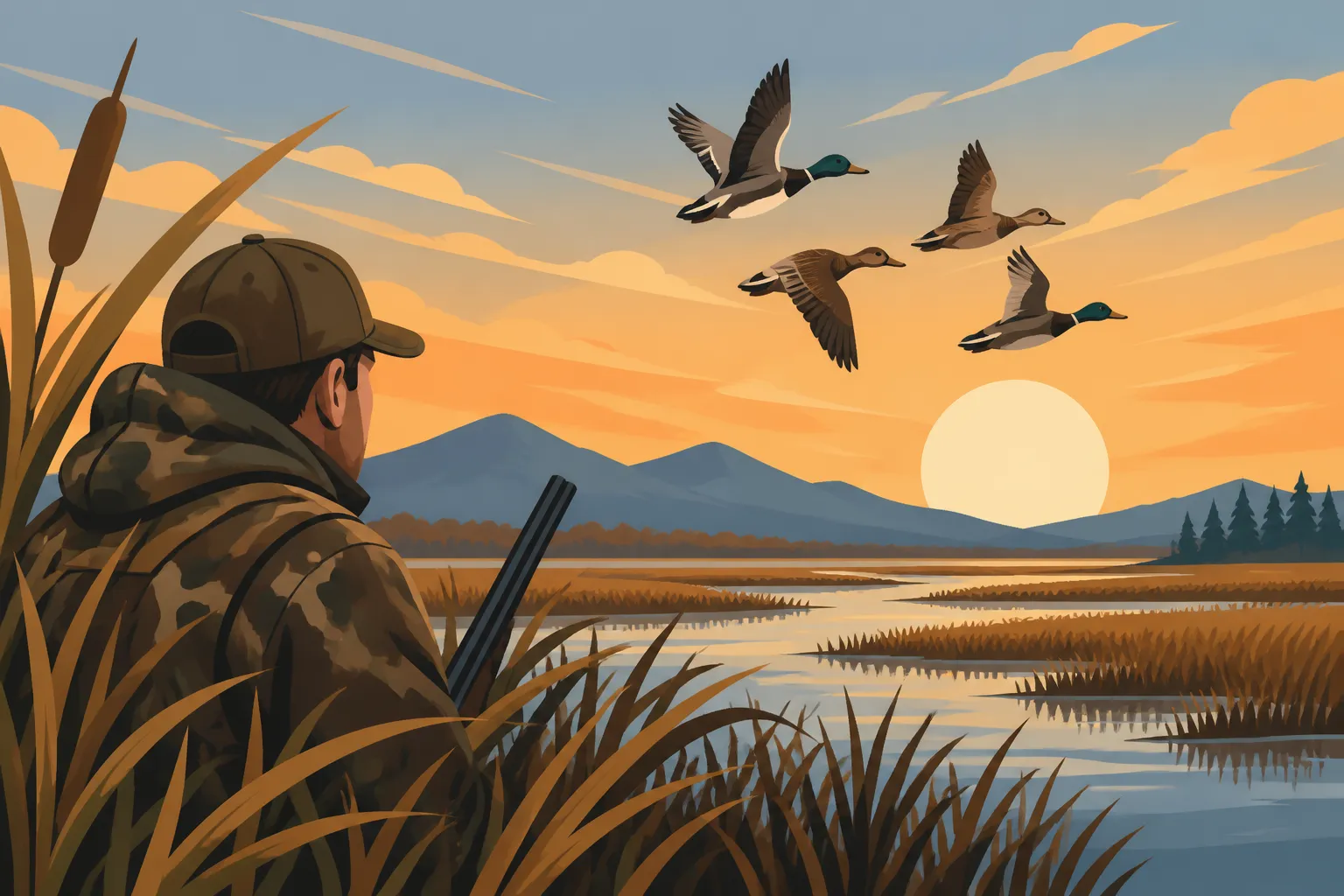
- Dabbling Ducks: Mallards, black ducks, wood ducks, and green-winged teal are common dabblers. They prefer shallow water, often feeding on submerged vegetation, seeds, and invertebrates by tipping up. You'll find them in the shallower fringes of the marsh, around emergent vegetation, or in flooded timber. Their morning flights often involve moving from roosting areas to feeding grounds.
- Diving Ducks: Bluebills (scaup), canvasbacks, redheads, and buffleheads are frequently seen divers. These birds prefer deeper, more open water where they can dive for aquatic plants, mollusks, and small fish. While they might briefly venture into shallower areas, their primary feeding and resting spots are typically in the main lake or larger, deeper marsh channels.
- Geese: Canada geese are abundant on Champlain, often using the marsh edges and adjacent agricultural fields for feeding. Early in the season, you might find them in smaller family groups, but as the season progresses, massive flocks can be seen flying between feeding and roosting areas. Understanding their flight paths is key, as they often follow established routes.
Successful marsh hunting isn't just about showing up; it's about matching your strategy to the species present. If you're seeing mostly diving ducks on your initial scout, a dabbler spread in shallow reeds might be ineffective. Instead, you'll want to focus on deeper channels or open water with a spread of diver decoys, possibly utilizing a layout blind and marsh boats for concealment, as discussed in our guide on Layout Blinds and Marsh Boats.
Impact of Migration Timing on Bird Behavior
The timing of the migration dramatically shapes waterfowl behavior on Lake Champlain. Early season (late September/October) often sees local birds and the first pushes of northern migrants. These birds might be less wary, and established patterns can hold for a while. As the season progresses into November and December, successive waves of new, often more pressured birds arrive from farther north. These late-season birds have seen it all; they've been shot at across multiple states and are incredibly sensitive to hunter pressure and unnatural setups.
For instance, understanding the broader New York Waterfowl on the Atlantic Flyway migration helps set expectations. When a big cold front pushes south from Canada, you can expect an influx of fresh birds, but also potentially warier ones. Conversely, during mild spells, birds might linger or even spread out, making them harder to concentrate. Our guide on Duck Migration Timing Through New York provides more detailed insights into these seasonal shifts. Keeping an eye on weather patterns in Quebec and Ontario can often give you a leg up on what's headed your way, helping you anticipate those morning flights.
Decoding Morning Flight Patterns on Lake Champlain
Waterfowl aren't random; they're creatures of habit, especially when it comes to their daily movements. For a successful morning flight, you need to think like a duck or a goose and anticipate where they'll be coming from, where they want to go, and what will make them commit to your spread.
The Critical Role of Wind and Weather
Wind is arguably the single most important factor in waterfowl hunting. Birds almost always take off and land into the wind, as it provides lift and control. This means on a windy morning, birds will approach your decoy spread facing directly into the breeze. Positioning your decoys and blind correctly relative to the wind is non-negotiable. If the wind is at your back, birds will want to land directly in front of you, giving you an ideal shot. If the wind shifts mid-hunt, you might need to adjust your setup or reposition your decoys.
Beyond wind, other weather conditions play a huge part. Overcast, drizzly days often bring lower flying birds and can make your decoys look incredibly realistic on the water. Bluebird skies, on the other hand, can make birds fly higher and be warier, spotting blinds and shiny faces more easily. Fog can be a wild card; sometimes it grounds birds, making for incredible close-range shooting, other times it confuses them, making them difficult to locate. A sudden drop in temperature or the first hard freeze can also shift birds dramatically, forcing them into different areas of the marsh for open water or new food sources.
Light Conditions and Optimal Decoy Placement
The "morning flight" is all about that window between first light and late morning. As the sun rises, light changes rapidly. Early on, low light means birds might not see your decoys from as far away, but they also might be less wary. As the sun gets higher, visibility increases for both you and the birds.
Decoy placement needs to consider this. In low light, larger, high-contrast decoys might be more visible. As light increases, realism becomes more important. Generally, you want your decoys positioned so that incoming birds will finish their approach "in your face," offering a clear shot. A common strategy for ducks is a "J" or "U" shaped spread with an open landing zone directly in front of your blind. For geese, a more scattered, natural-looking field spread often works best. The specifics of Decoy Spreads for New York Divers and dabblers can make a significant difference. Remember, the goal is to make your spread look like a safe, inviting place for tired, hungry birds to land.
Identifying Roosting Areas and Flight Corridors
Waterfowl establish predictable patterns: they roost in safe, often secluded areas overnight and then fly to feeding grounds at first light. Identifying these roosting areas and the flight corridors they use to travel is paramount. Roosts might be large, open water bodies for divers, or thick, sheltered marsh pockets for dabblers. Geese often roost on large open lakes or even private ponds.
To identify these, pre-season scouting is invaluable. Spend time observing birds from a distance during the evening fly-in and morning fly-out. Pay attention to how they enter and exit the marsh. They'll often follow natural features like river channels, tree lines, or points of land. These become your "flight corridors." Setting up along a frequently used corridor, especially downwind of a known roost, can put you right in the path of the morning flight. Mapping tools like those available through GoHunt can help you visualize these corridors and potential setup locations before you even step foot in the marsh.
Mastering Scouting and Setup for Early Success
Successful marsh hunting isn't about luck; it's about meticulous preparation. Knowing where to go and how to set up requires thorough scouting, the right tools, and an understanding of how to blend into the environment.
Leveraging Tools for Pre-Season Marsh Analysis
Long before opening day, your scouting should begin with maps and aerial imagery. Digital mapping applications, including the powerful GoHunt platform, are indispensable. These tools allow you to examine the topography, identify marsh channels, open water pockets, areas of dense vegetation, and even potential access points without disturbing the birds. Look for changes in water depth, points of land that might act as funnels, and areas adjacent to agricultural fields that geese might use.
I always recommend doing a few in-person scouting trips before the season, or at least before your hunt. Take notes on water levels, observe where birds are resting and feeding, and watch their flight patterns. If you see specific areas of the marsh consistently holding birds, mark them on your GoHunt map. Pay attention to signs like droppings, plucked feathers, and disturbed vegetation. Remember, the more you know about the specific marsh sections you intend to hunt, the better equipped you'll be to make informed decisions when it counts. It's also worth understanding Why Vermont Sets the Champlain Duck Calendar as the shared nature of the lake means what happens on one side often impacts the other.
Crafting Effective Decoy Spreads for Varied Species
The right decoy spread can make all the difference. For Champlain, you'll likely encounter a mix of dabblers and divers, and possibly geese. A general principle is to have separate spreads or a blended spread if targeting both.
- Dabbler Spreads: Typically involve mallards, black ducks, and teal. Create an open landing zone in front of your blind, perhaps with a "J" or "U" shape of decoys. Add movement with a jerk string or spinning wing decoy (where legal) to attract attention. For a more natural look, vary the direction of your decoys, with some facing into the wind, some preening, and a few actively feeding (feeder butts).
- Diver Spreads: Divers often prefer larger, more numerous spreads in open water. Bluebills and goldeneyes tend to raft up in tight groups, while canvasbacks might be more scattered. Consider "gang rigging" diver decoys to quickly deploy and retrieve a large number. Don't be afraid to mix in some coot decoys, as divers often associate with them.
- Goose Spreads: If geese are using the marsh, a separate goose spread can be effective. Full-body goose decoys are excellent, but shells and silhouettes can work, especially if you have a large number. Set them up in family groups, leaving an open landing hole. Geese are very wary, so concealment is paramount.
The size of your spread should match the conditions. On calm, clear days, a smaller, more realistic spread might be better. On windy, overcast days, a larger spread can be more visible from a distance. And don't forget the importance of proper Waders for New York Marsh Hunting if you're planning to set up in deeper marsh areas.
Concealment and Strategic Approach Paths
No matter how good your decoys or calling, poor concealment will ruin your hunt. Waterfowl have incredible eyesight. Your blind needs to blend seamlessly into the natural environment. If you're using a permanent blind, brush it in thoroughly with local vegetation. For portable blinds, use natural cover like cattails, brush piles, or flooded timber to break up your outline. Face your blind to take advantage of the prevailing wind, ensuring birds will land in front of you, but also consider the direction of the sun, especially for that morning flight, to avoid glare directly into your face.
Your approach path to the blind is equally important. Waterfowl will often circle before committing, so they'll observe your entire setup. Avoid disturbing the water near your blind, and always approach from a direction that keeps you hidden from potential incoming birds. Wading through thick mud or navigating a boat through tight channels can be noisy and leave a scent trail, so plan your entry and exit carefully. Walking well-worn game trails or even creating your own discreet path can minimize disturbance. Think about it from a duck's perspective – if they see anything out of place or hear unnatural noises, they'll flare, and your morning flight will be over before it begins.
Adapting to the Unexpected and Maximizing Your Harvest
The marsh is a living, breathing entity, constantly changing. What worked yesterday might not work today. Being able to adapt on the fly is a hallmark of a seasoned waterfowl hunter.
Adjusting Tactics to Changing Conditions
Even with the best scouting and planning, conditions can change rapidly. A shift in wind, unexpected fog, or a sudden burst of sunshine can throw a wrench into your original plan. If birds aren't working your spread, don't be afraid to make adjustments.
- Wind Shift: If the wind changes, quickly adjust your decoys to ensure the landing zone is still into the wind and in front of your blind. This might involve physically moving decoys or, for subtle shifts, just adjusting your body position in the blind.
- Bird Behavior: Are birds flaring at a certain distance? They might be seeing something they don't like (shine, movement, or a poorly brushed blind). Are they landing short or long? Your landing zone might be off. Sometimes a more conservative calling approach or even removing a spinning wing decoy can help wary birds commit.
- Pressure: If you suspect local birds have been heavily pressured, they'll become incredibly shy. This is where subtle decoy spreads, minimal calling, and absolute concealment become critical. Consider hunting during less popular times or finding less-accessible pockets of the marsh that other hunters overlook. Sometimes the best strategy is to simply pull up stakes and move to a new location if the birds aren't cooperating. This is especially true for hunters in the New York Northern Zone Firearm Season or even during Muzzleloader Deer Hunting in New York where adaptability is key.
Calling Strategies for Pressured Champlain Waterfowl
Calling can be a powerful tool, but in pressured areas like parts of Lake Champlain, it can also deter birds if overdone or done poorly. The goal of calling is to grab attention and reassure incoming birds, not to have a conversation.
- Less is More: For pressured birds, often a few soft quacks or a feeding chuckle are more effective than aggressive hail calls. Let the decoys do most of the work.
- Timing is Everything: Call when birds are far out and looking away, or when they're making a wide swing. Once they're locked onto your spread and committed, put the call down and get ready to shoot. Too much calling at close range can make them suspicious.
- Species-Specific Calls: While a mallard hen call is versatile, if you're seeing mostly teal or wood ducks, adding those calls can be highly effective. For geese, a soft cluck and moan can bring them in, but again, overcalling can spook them. Consider practicing your calls well before the season to ensure you sound realistic. If you're interested in calling tactics for other species, our article on Coyote Calling in a New York Winter offers some insights into using calls in different hunting scenarios.
Safe and Efficient Game Recovery in Marsh Environments
Successfully shooting a duck or goose is only half the battle; recovering it safely and efficiently in a marsh environment is the other. Marshes can be treacherous, with deep mud, tangled vegetation, and hidden obstacles.
- Retrieval Dogs: A good retrieving dog is an absolute game-changer in the marsh. They can navigate cover and water that would be difficult or impossible for a hunter, significantly reducing crippled birds and lost game.
- Marking the Fall: Always keep your eyes on the bird from the moment it's shot until it hits the water or ground. Pick a landmark (a distant tree, a specific patch of reeds) to help you pinpoint the fall. This is crucial in dense cover or choppy water.
- Safety First: If you're wading, be aware of water depth and soft bottom. Never push beyond your comfort or safety limits. If a bird falls into truly inaccessible terrain, sometimes it's better to accept the loss than to risk injury. Always wear your personal flotation device when in a boat, and be mindful of other hunters if you need to pursue a bird. When venturing into deep marsh environments, ensuring you have the right gear, like that highlighted in Waterfowl Gear for New York Marsh and Lake, can make the difference between a successful retrieval and a dangerous situation.
Remember, every morning on the Champlain marsh is a learning experience. By understanding the ecosystem, decoding flight patterns, mastering your setup, and adapting to conditions, you'll greatly increase your chances of connecting with that unforgettable morning flight.
| Waterfowl Species | Preferred Habitat in Champlain Marsh | Key Foods | Decoy Spread Tip |
|---|---|---|---|
| Mallard | Shallow water, emergent vegetation, flooded timber | Seeds, aquatic plants, invertebrates | Open "J" or "U" shape in front of blind |
| Black Duck | Brackish or saltwater marshes, shallow freshwater | Invertebrates, aquatic plants, seeds | Mix with mallards, or separate small spread |
| Wood Duck | Wooded swamps, flooded timber, small ponds | Acorns, seeds, insects | Small, tight groups near wooded edges |
| Green-winged Teal | Shallow muddy flats, emergent vegetation | Small seeds, aquatic insects | Active, tight groups, add a jerk string |
| Bluebill (Scaup) | Deeper open water, larger marsh channels | Mollusks, crustaceans, aquatic plants | Large, dense rafts in open water |
| Canvasback | Deep, open water, beds of wild celery | Wild celery, tubers, seeds | Small groups, or pairs, in open water |
| Canada Goose | Marsh edges, open fields near water, pastures | Grasses, waste grains, aquatic plants | Large field spread, family groups, landing zone |
Disclaimer
Hunting carries inherent risks, including but not limited to those associated with firearms, archery equipment, challenging terrain, and adverse weather conditions. Always prioritize safety, follow all New York State Department of Environmental Conservation (DEC) regulations, and consider taking a refresher hunter safety course. The information provided in this article is for informational purposes only and should not be considered a substitute for professional guidance or personal due diligence.