Coyote Calling in New York Farm Country
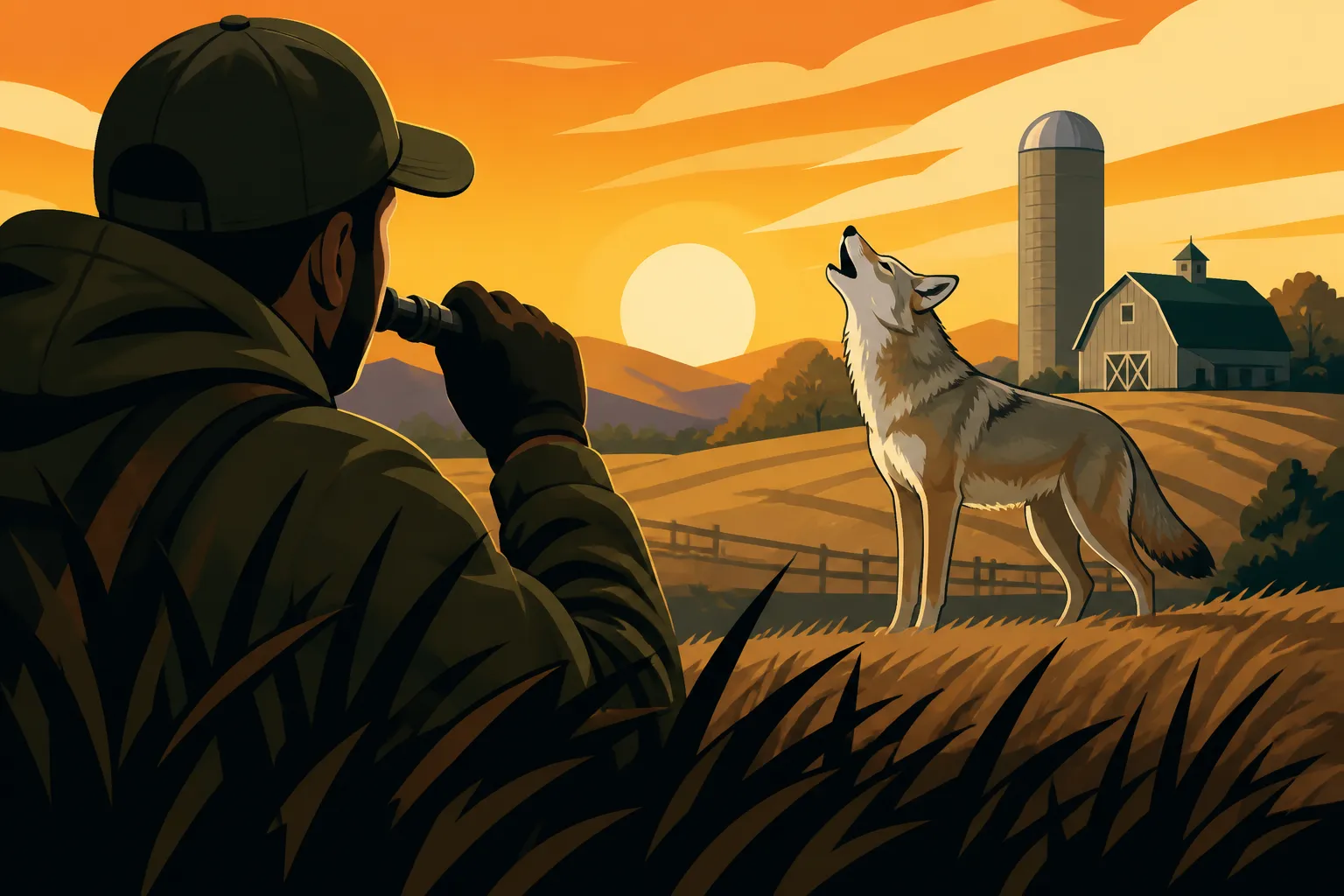
One of the most frustrating things for any New York hunter is trying to outsmart a truly educated coyote, especially in those vast, open farm fields where they seem to appear and vanish like ghosts. You set up, you call, and either nothing shows, or you catch a glimpse of a wary 'yote skirting the absolute edge of your vision, giving you the slip. This guide is all about equipping you with the knowledge and tactics to consistently bring in those wily coyotes right here in New York's agricultural heartlands, turning those frustrations into success stories.
Understanding the Farm Country Coyote's World
Hunting coyotes in New York's farm country isn't quite the same as calling them in deep Adirondack timber. These animals are incredibly adaptable, and they’ve learned to live alongside human activity, making them both predictable in some ways and incredibly cagey in others. To consistently call them in, you need to think like a farm country coyote.
Their Behavior in Agricultural Landscapes
Coyotes in agricultural areas are often more nocturnal than their wilderness counterparts, especially where human presence is high. They learn vehicle patterns, field work schedules, and even where folks tend to walk their dogs. This makes daylight calling a challenge, but certainly not impossible. They use the landscape to their advantage, often traveling along fencerows, old stone walls, creek bottoms, and the edges of woodlots that dissect crop fields. These linear features provide cover, easy navigation, and concealment from both predators (like us) and prey. They’ll also use the folds and undulations of fields themselves, staying low and out of sight as they approach a call. This means a coyote might be much closer than you think, but completely hidden by a small rise. Understanding these travel corridors is paramount to setting up effectively.
Key Food Sources Driving Their Movement
The abundance of food in farm country is precisely why coyotes thrive there, and it dictates much of their behavior. These areas are veritable buffets. Think about it: fields full of voles and mice after harvest, rabbits breeding like crazy in hedgerows and brush piles, and of course, the ever-present whitetail deer. Deer fawns, in particular, represent a huge food source in spring and early summer. Beyond that, coyotes are opportunistic scavengers. They'll readily consume carrion from roadkill, afterbirth from calving cows, and even raid chicken coops or consume fallen fruit in orchards. This consistent food supply means they might not be as desperate for a meal as a coyote in a leaner environment, which can influence their response to distress calls. However, a good distress call can still trigger that primal hunting instinct, especially when they're patrolling their territories.
Typical Travel Corridors and Denning Habits
As mentioned, coyotes are creatures of habit, and their travel routes often follow the paths of least resistance and greatest cover. Fencerows, drainage ditches, brushy creek bottoms, and the fringes of woodlots are like coyote highways. When scouting, pay close attention to where these features intersect or bottleneck. These are prime ambush points for coyotes targeting prey, and therefore, excellent spots for you to set up. Denning typically occurs in secluded spots within these same landscapes – think brushy draws, thickets along creek banks, or even old abandoned farm structures. During denning season (typically spring), coyotes become very territorial and protective, making them potentially more responsive to challenge howls or pup distress calls. Observing these subtle signs, either visually or through sign like scat, tracks, and trail camera photos, can greatly improve your success. Before heading out, I always cross-reference potential spots with my GoHunt maps to identify those hidden gullies or thickets that might serve as a denning site or a prime travel route.
Essential Calling Strategies for New York Farmland
Calling coyotes in farm country requires a nuanced approach. They've heard it all, or so it seems. Blasting calls aimlessly won't cut it. You need a strategy, one that uses calls realistically and leverages the open landscape to your advantage.
Vocalizations and When to Use Them
Coyote vocalizations are complex, but for calling, we typically focus on three main categories: distress calls, howls, and pup sounds. The "when" is just as important as the "what."
- Distress Calls: These mimic injured prey, like rabbits, fawns, or birds. They tap into the coyote's hunting instinct. Use these primarily when you want to draw a coyote in close for a shot. They are highly effective year-round, but particularly during colder months when food is scarcer, or in early spring when deer fawns are vulnerable. A good, varied sequence with pauses is key.
- Howls: Howls serve various purposes: locating other coyotes, proclaiming territory, or challenging intruders.
- Interrogation Howls: A few short, sharp howls, usually used to get a coyote to respond and reveal its position. Often effective at first light or last light.
- Challenge Howls: More aggressive, longer howls that tell other coyotes, "This is my turf!" Use these if you suspect a territorial male or female is in the area, especially during the breeding season (late winter).
- Pup Distress/Locator Howls: High-pitched yelps and whines that mimic young coyotes in trouble. These can be incredibly effective on dominant females or males looking to protect their pack or investigate a potential threat to their young. Best used in late spring and summer.
Remember, less is often more. Start with softer calls, and gradually increase volume if you don't get a response. Keep your sequences short and realistic.
Distress Calls: Rabbit, Fawn, and Bird
These are your bread and butter for bringing in a coyote. The key is variety and realism.
- Rabbit Distress: This is arguably the most popular and effective. Coyotes universally recognize the sound of a dying rabbit. Electronic calls like those from FoxPro or Primos offer a wide range of rabbit sounds, from cottontails to jackrabbits, each with slightly different pitches and cadences. When using a hand call, vary the pitch and intensity, making it sound like a struggling animal, then pausing. Don't just blast one long scream. Think short bursts, then silence, then another burst, mimicking a real struggle.
- Fawn Distress: In areas with high deer populations, fawn distress calls can be deadly. These calls mimic the bleating of a young, lost, or injured deer. Coyotes, especially dominant females, know that a fawn is a relatively easy meal. These are particularly effective in late spring and early summer when fawns are being born, but can work any time of year as coyotes remember this valuable food source.
- Bird Distress: Bird distress calls, like a crow or a woodpecker in trouble, are often overlooked but can be highly effective, especially for coyotes that have become "call shy" to rabbit sounds. These sounds are more common in the woods and woodlots adjacent to fields, and coyotes might investigate them with less caution. It’s a great way to offer something different.
When calling, always consider the wind. Coyotes will almost always circle downwind to scent-check the source of the sound. Position yourself so the wind is blowing away from your approach, but toward an open shooting lane where you expect the coyote to appear.
Challenge Howls and Barks
While distress calls bring out the hunter in a coyote, howls and barks play on their territorial instincts and social structure.
- Challenge Howls: These are powerful calls that can draw in dominant males, especially during the breeding season from January through March. If you think there's a resident coyote pair, a strong, drawn-out challenge howl can sometimes provoke an immediate response. The trick is not to overdo it. A series of three to five howls, followed by silence, can be very effective. It tells the resident 'yotes there's a new predator in town, and they often come to investigate or run off the perceived threat.
- Group Howls: Mimicking a small pack can also work. It signals activity and draws curious coyotes in. Electronic callers excel at this.
- Barks: Coyotes bark for various reasons – alarm, warning, or to signal their presence. A sharp, insistent bark can sometimes trigger a response, particularly from a coyote that's heard your distress calls but is hesitant. It can push them into the open or make them respond.
When you're out there, pay attention to the responses you get. A coyote howling back often tells you exactly where they are, allowing you to reposition if necessary. This kind of nuanced understanding of coyote language, combined with careful scouting, is what separates successful callers from those who just blow on a call randomly. If you’re looking to improve your tactics, especially in specific conditions, articles like "Coyote Calling in a New York Winter" can provide even more tailored advice.
Patience and Set Duration
One of the biggest mistakes novice callers make is not staying put long enough. Coyotes, especially those in farm country, are extremely cautious. They often approach a call slowly, circling downwind, sometimes taking 10, 15, even 20 minutes to commit.
- The 20-Minute Minimum: Aim for a minimum of 20 minutes per stand. I often go for 25-30 minutes if the conditions feel right. That first 5-10 minutes is when the most aggressive coyotes might bolt in. The next 10-15 minutes are for the more cautious ones, or those coming from further away. The final few minutes can still produce results as a coyote finally builds up the courage to investigate.
- Quiet Departure: Just as important as staying put is leaving quietly. If you spook a coyote on your way out, you've taught it a valuable lesson. Always assume a coyote is watching you, even if you don't see one.
- Multiple Sets: Don't be afraid to make multiple stands in an area. If you call one field, then move to another a half-mile away, you might bring in a coyote that was just out of earshot from the first stand. Think about covering different wind directions or angles into promising cover. GoHunt's satellite imagery can help identify hidden gullies and draws that you can quickly move between to cover more ground efficiently.
Gear and Setup for Success
You can have the best calling sequence in the world, but if your gear isn't right or your setup is flawed, those wily coyotes will still get the best of you. From the sounds you make to how you hide, every detail counts in New York's open farm country.
E-Callers vs. Hand Calls
Both electronic callers and hand calls have their place, and many experienced callers use a combination of both.
- Electronic Callers (E-Callers): Brands like FoxPro, Primos, and ICOtec dominate the market. Their biggest advantage is versatility. You can cycle through dozens of sounds—rabbit distress, fawn bleats, howls, pup distress, bird distress—with the push of a button. You can also place the caller away from your position, often 50-100 yards upwind, drawing the coyote's attention away from you. This is crucial in open country, as a coyote focusing on the sound source won't be looking directly at your hiding spot. E-callers also provide consistent sound quality, which can be hard to replicate with hand calls over a long calling sequence. For Predator and Furbearer Hunting in New York, having a diverse sound library can be a huge asset.
- Hand Calls: These require skill and practice, but offer unparalleled realism and responsiveness. You can instantly adjust volume, pitch, and cadence to mimic the exact sounds of an animal in distress or a coyote howling. Open-reed calls are very versatile, allowing for rabbit, bird, and even fawn sounds. Closed-reed calls are often easier for beginners. The downside is that the sound comes from your position, so concealment is even more critical. They are, however, much more portable and don't require batteries. Many New York hunters, myself included, rely on mapping tools like GoHunt to scout potential setup locations where I can maximize the benefits of my e-caller's placement.
Optics for Scanning Open Fields
In farm country, you're often dealing with long sight lines. Good optics aren't a luxury; they're a necessity.
- Binoculars: Essential for scanning those vast fields and woodlot edges. An 8x or 10x power binocular is usually ideal. You need to be able to pick out the subtle movement of a coyote hundreds of yards away, sometimes just a flicker of movement in the tall grass or a dark shape against a treeline. Quality glass makes a huge difference in low light conditions, which are often prime coyote hunting times. Don't skimp here; a cheap pair of binoculars will leave you frustrated and missing opportunities.
- Rifle Scopes: For your rifle, a variable power scope (e.g., 3-9x or 4-12x) with a clear, bright image is vital. Shots in farm country can range from 50 yards to 300+ yards. Being able to dial up the magnification for precision shots on small targets like coyotes, while still having a wide field of view for closer encounters, is key. Ensure your rifle is properly zeroed for those mixed distances. If you're unsure how to optimize your setup, check out guides on "Zeroing a Rifle for Mixed Distances."
Concealment and Wind Management
Coyotes have incredible eyesight and an even better nose. If they see or smell you, the game is over.
- Camo from Head to Toe: Full camouflage is a must. This includes a face mask or face paint and gloves. Your silhouette is your enemy in open country. Break it up by sitting against a hay bale, a thick fencerow, or the base of a large tree. Consider using a portable ground blind for maximum concealment, especially if you're calling from a known hotspot. For more tips on blending into your environment, especially on public ground, take a look at "Using a Ground Blind on New York Public Land."
- Playing the Wind: This is non-negotiable. Always, always, always set up with the wind blowing from the direction you expect the coyote to approach towards your calling location. Coyotes will almost certainly circle downwind to scent-check the source of the sound before committing. Position yourself so that the coyote has to pass through an open shooting lane before it can get downwind of you. This means understanding prevailing winds and using terrain features to your advantage. A little wind can actually be your friend, as it helps carry your calls and can mask some of your sounds. However, too much wind can make it hard for coyotes to hear your calls and for you to hear their approach. The detailed topographical data found in platforms like GoHunt can be invaluable for identifying natural funnels and pinch points where you can anticipate a coyote's approach based on wind direction.
Seasonal Considerations and Best Practices
New York's seasons offer different challenges and opportunities for coyote calling in farm country. Adjusting your tactics to the time of year can significantly increase your success rates.
Winter: Prime Time for Calling
Without a doubt, winter is the absolute prime time for coyote calling in New York. There are several reasons why this season stands head and shoulders above the rest.
- Lack of Cover: With deciduous trees bare and crops harvested, the landscape offers far less concealment for coyotes. This makes spotting them easier, but it also means they have fewer places to hide as they approach. This shifts the advantage slightly towards the hunter who is well-concealed.
- Increased Hunger: Food sources diminish significantly in winter. Rabbits are harder to find, rodents are less active, and deer are tougher targets. This makes coyotes more desperate and therefore more responsive to distress calls. They're actively searching for meals, making them more willing to come in for a "free lunch."
- Breeding Season: Late winter (January through March) is the coyote breeding season. During this time, males are actively seeking females, and both sexes are more territorial. Challenge howls and even female invitation howls can be incredibly effective. Hearing another coyote (or what they perceive as one) can trigger a very aggressive response.
- Tracking in Snow: Fresh snow offers an invaluable tool: tracks. You can scout fresh coyote sign, pinpointing travel routes, feeding areas, and even denning locations, allowing you to set up in areas of high activity. For more in-depth strategies specific to the colder months, be sure to read "Coyote Calling in a New York Winter."
Spring/Summer: Denning and Pups
The warmer months present different dynamics. Coyotes are focused on raising their young, and while they can be called, a different approach is often warranted.
- Denning Season (Spring): In early spring, coyotes are establishing dens and having pups. During this time, they are extremely protective. Pup distress calls can be highly effective, as a dominant female will often rush in to investigate or defend against a perceived threat to her young. However, exercise caution. The goal should be responsible harvest, not disrupting den sites. If you hear a response from a den, consider moving on.
- Abundant Cover and Food (Summer): As spring turns to summer, farm fields become lush with growing crops, providing dense cover for coyotes. This makes spotting them difficult. Additionally, with fawns on the ground and abundant small game, coyotes may not be as desperate for food.
- Pups: By mid-summer, pups are growing and becoming more active. They are often less cautious than adult coyotes and can sometimes be called in easily with pup distress calls. Observing a field at dawn or dusk might reveal a family group, giving you clues about where to set up. Remember that "Coyote Hunting Seasons and Tactics in New York" will give you the specific dates and rules for when you can target them during these warmer months.
Fall: Targeting Dispersing Young
Fall is a transitional period, offering a mix of opportunities. The key here is often targeting the younger, less experienced coyotes.
- Dispersal: As fall progresses, young coyotes born in the spring begin to disperse from their family groups. These "teenagers" are often less wary, more curious, and more prone to making mistakes. They're looking for their own territories and food sources, making them more susceptible to both distress calls and interrogation howls.
- Harvested Fields: As crops are harvested, the cover begins to diminish, much like in winter. This opens up sightlines and makes calling easier. Pay attention to fields that have just been cut, as they often expose rodent populations, which coyotes will actively hunt. This also means you have a better chance of seeing them from a distance, allowing you to react accordingly.
- Deer Hunting Pressure: With deer season in full swing, coyotes are accustomed to human activity and potentially wary. However, they're also keenly aware of the opportunities presented by gut piles or wounded deer. This can make a deer-distress call incredibly potent. When targeting predators in the fall, it's worth reviewing the general information on "New York Small Game and Furbearers" as a lot of the tactics overlap, especially in finding prime habitat.
Table: Common Coyote Calls and Their Best Use Cases
| Call Type | Description | Best Time to Use | Primary Target | Notes |
|---|---|---|---|---|
| Rabbit Distress | Mimics injured rabbit's screams and squeals | Year-round, especially cold months | All Coyotes | Most versatile, high prey drive trigger. Use varied sequences. |
| Fawn Distress | Mimics bleating of a lost or injured deer fawn | Spring (fawning), early summer, late fall | Adults (especially females) | Effective in deer-rich areas. |
| Bird Distress | Mimics injured bird (crow, woodpecker) | Year-round, good for call-shy coyotes | All Coyotes | Less common, can spark curiosity. |
| Interrogation Howl | 1-3 short, sharp howls | Dawn/Dusk, anytime to locate | Coyotes in distance | Get a response, pinpoint location. |
| Challenge Howl | Aggressive, drawn-out howls | Breeding season (Jan-Mar), anytime territorial | Dominant Males | Provokes aggressive investigation. |
| Pup Distress/Yelps | High-pitched yelps or cries of young coyote | Spring/Summer (denning/pup season) | Females, protective males | Taps into parental/territorial instincts. |
Remember, successful coyote calling in New York farm country is about preparation, patience, and adapting your strategy to the specific conditions you face. With the right approach, you can turn those elusive shadows into successful harvests.
Disclaimer
Hunting is a challenging and rewarding pursuit. Always prioritize safety, adhere to all New York State hunting regulations, and respect private land boundaries. Consult the current New York State DEC hunting guide for the most up-to-date rules and seasons. This article is for informational purposes only and should not replace proper hunter education and ethical decision-making.