Hunting the Rut in the Northern Zone
Hunting the rut in New York's Northern Zone can feel like trying to solve a puzzle with half the pieces missing, especially if you're used to the more defined rutting behavior seen in the Southern Zone. The sheer scale of the wilderness, lower deer densities, and the often-brutal weather conditions up north make figuring out when and how to effectively chase rutting whitetails a formidable challenge. Many hunters, even those with years of experience elsewhere, find the Northern Zone's rut a bit of a mystery, but this comprehensive guide aims to shed light on specific strategies and critical considerations for successfully hunting bucks during this pivotal period in New York's wilder regions.
Understanding the Northern Zone Rut Timing
One of the biggest frustrations for hunters heading into the Northern Zone during the rut is the expectation of seeing the same frantic activity as in more populated areas. It’s a different ballgame entirely, and understanding these nuances is your first step toward success.
Why the Northern Zone is Different
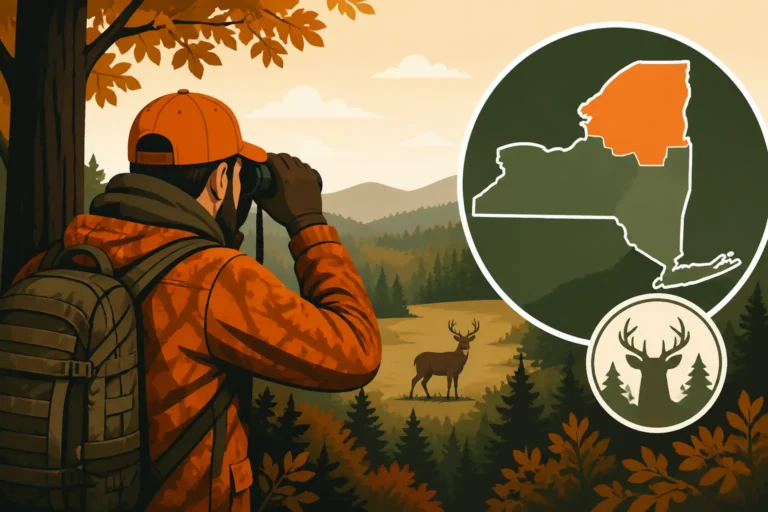
The Northern Zone, encompassing the vast Adirondack Park and much of the Tug Hill Plateau, is characterized by its expansive public lands, severe winters, and significantly lower deer densities compared to the Southern Zone. This isn't your typical farm country hunting. Here, deer often have enormous home ranges, and finding a concentration of deer, let alone rutting activity, can be like finding a needle in a haystack. The rut itself isn't necessarily "later" or "earlier" in terms of biological timing, but its manifestation can feel more spread out and less intense due to fewer deer. A buck might travel miles between doe groups, and you might not witness the same level of overt chasing and fighting that occurs where deer populations are denser. For those accustomed to high-activity ruts, this can be incredibly frustrating, leaving you feeling like you missed it or that the bucks just aren't moving.
Another critical factor is the direct impact of winter severity on deer populations. Regions that experience consistently harsh winters, like much of the Adirondacks, see deer numbers naturally kept in check. Less deer mean fewer interactions, and the "peak" of the rut might simply not be as visually dramatic. While the Southern Zone's rut can involve multiple does per buck, the Northern Zone might see bucks working harder to locate even a single receptive doe across vast timberlands. This means your approach to hunting must shift from intercepting constant movement to diligently searching for any signs of recent activity and understanding subtle deer behavior.
Peak Breeding Windows and Sign
Biologically, the peak breeding window for whitetails across New York generally falls in mid-November. In the Northern Zone, this timing holds true, but the way it presents itself on the ground can be deceptive. Instead of numerous, highly visible scrapes and rub lines along field edges or prominent trails, you're more likely to find sparse, less defined sign. A buck might make a few rubs on saplings in a cedar swamp or scratch out a couple of scrapes near a remote logging road, but these won't necessarily be pounded daily. Hunters often get discouraged by the lack of "hot" sign, thinking they're in the wrong place or that the rut hasn't started.
The key is to look for fresh activity, not just quantity. A single freshly pawed scrape with an overhead licking branch still dripping, or a rub that's bright white and still moist, tells you a buck was just there. Don't overlook subtle indications like fresh tracks following doe trails, or small patches of pawed-up leaves in unexpected places. During the true peak, you might encounter cruising bucks, focused on covering ground rather than lingering. For those hunting during New York's Northern Zone Firearm Season, this usually means that by mid-November, the bucks are on their feet, actively searching. You might not see a buck chasing a doe at breakneck speed, but you'll certainly see evidence of increased buck movement as they tirelessly search for estrous does.
Weather Impact on Rut Activity
Weather is arguably one of the most influential factors when hunting the Northern Zone rut. Unlike the Southern Zone where November can still bring mild, sunny days, the north often sees early snowfalls, bitter cold fronts, and biting winds. These conditions can both hinder and help your hunting efforts, but they always dictate deer movement. A fresh snowfall can be a game-changer, revealing fresh tracks and allowing you to Tracking a Deer in Fresh New York Snow. However, a blizzard can shut down deer movement temporarily, forcing them to seek shelter in dense conifer stands.
Cold, crisp days, particularly after a light snowfall, often translate to increased deer activity as bucks need to keep moving to generate heat and continue their search. Conversely, periods of extreme cold or heavy snow might make deer bed down more, moving only during low-light hours or when absolutely necessary. Hunters must be prepared for anything, from a surprisingly mild autumn day to a full-blown winter storm, sometimes within the same week. Paying close attention to the forecast, and even using advanced mapping tools like GoHunt to understand microclimates and shelter areas, can give you a significant advantage in predicting how deer will react to the elements during this crucial period.
Key Northern Zone Rut Tactics
Hunting the rut in the Northern Zone requires a fundamentally different approach than what many are accustomed to. It’s less about waiting and more about active pursuit, tempered with extreme patience and careful observation.
Still-Hunting and Tracking Strategies
In the vast, unbroken timber of the Northern Zone, still-hunting is not just a tactic; it’s an art form and often the most effective way to find a rutting buck. This involves moving incredibly slowly, taking a few steps, and then pausing for several minutes, scanning every possible angle. Your eyes should be trained on the woods, looking for horizontal lines, flicking ears, or the subtle glint of an antler. Unlike stand hunting over a known food source, still-hunting allows you to cover ground and actively search for deer rather than waiting for them to come to you. This is especially true when deer densities are low.
When snow is on the ground, still-hunting seamlessly transitions into tracking. Finding fresh buck tracks – especially those of a larger deer that are distinct and purposeful – can lead you directly to a cruising rutting buck. It takes patience and dedication to follow a track for miles, often through thick cover and over challenging terrain, but the reward of catching up to that buck is immense. Focus on how the buck is moving. Is it meandering, feeding, or are the tracks straight and purposeful, indicating it's on a mission? Learning to Still-Hunting Catskill Ridges can provide valuable insights, even if you’re in the Adirondacks, as the core principles of quiet movement and reading subtle sign are universal in big woods. When conditions are right for tracking, it's one of the most exhilarating and productive ways to hunt the Northern Zone rut.
Calling and Decoying in Big Woods
While rattling antlers and grunt calls can be highly effective in the Southern Zone, their efficacy in the vastness of the Northern Zone can be more hit-or-miss. The lower deer density means there are fewer bucks to hear your calls, and those that do might be miles away. That doesn't mean you should leave your calls at home, but rather adjust your expectations and techniques. Aggressive rattling sequences might alert every deer in the county, but if no buck is close enough, it won't matter.
Instead, consider more subtle calling. A few soft grunts or doe bleats might pique the curiosity of a nearby buck without broadcasting your presence too widely. Focus on using calls when you've identified fresh sign or when you're set up on a known travel corridor. Decoys are even more challenging. Hauling a life-sized deer decoy deep into the Adirondack backcountry is a huge undertaking, and in areas of low deer density, the chances of a buck spotting it are reduced. If you do use a decoy, consider a lightweight, collapsible model, and place it strategically in open timber where it can be seen from a distance, perhaps near a natural funnel. Remember, a buck in the Northern Zone might be more cautious than his farm-country cousin, so less can often be more when it comes to calling and decoying.
Focusing on Funnels and Crossover Points
In a landscape as vast as the Northern Zone, identifying natural funnels and crossover points becomes absolutely critical. These are the geographical features that naturally constrict deer movement, making it more predictable. Think of saddles between ridges, narrow strips of hardwoods separating two conifer swamps, creek crossings, pinch points along rivers, or even the edges of old clear-cuts or logging roads. Bucks, especially during the rut, will utilize these features as efficient travel corridors while searching for does. Instead of trying to find deer anywhere, you're focusing your efforts where they have to be.
These funnels might not be obvious on a standard topographical map, requiring boots on the ground scouting, or using detailed satellite imagery from tools like GoHunt to pinpoint subtle terrain features. An old logging road that traverses a ridge, or a slight dip in elevation between two major drainages, can act as a natural highway for a cruising buck. Hanging a Stand on an Adirondack Funnel can be incredibly effective if you identify one of these key travel routes. The idea is to intercept bucks as they move between bedding areas and feeding areas, or between different pockets of does. Learning to Find Sign in Big Adirondack Timber in these specific areas will confirm that deer are indeed using them, increasing your chances of a rut encounter exponentially.
Navigating Northern Zone Terrain and Conditions
The physical landscape of the Northern Zone is as much a part of the challenge as the deer themselves. Being prepared for and understanding the terrain and weather is non-negotiable for a successful and safe hunt.
Reading Adirondack and Tug Hill Topography
The Adirondack Park is rugged, characterized by towering mountains, steep ravines, and vast tracts of conifer swamps intermixed with hardwood ridges. The Tug Hill Plateau, while not as mountainous, is known for its heavy snowfalls, dense forests, and countless creek drainages. Each of these unique topographies dictates how deer move and where they prefer to bed. Understanding these patterns is key to predicting buck movement during the rut. For example, bucks in the Adirondacks will often utilize the security of dense conifer thickets for bedding, especially during cold weather, and travel along benches or saddles on hardwood ridges.
Learning Where Adirondack Bucks Bed involves observing the landscape, looking for areas with thick cover and south-facing slopes that offer more warmth. Similarly, on the Tug Hill, deer will often seek refuge in cedar swamps or the lee sides of ridges from the prevailing winds and lake-effect snow. Hunters need to pay attention to elevation changes, understanding how thermals will rise in the morning and fall in the evening, carrying your scent. This knowledge, combined with careful map reading using a physical map and compass, or an advanced GPS app like GoHunt, is your best friend in unraveling the secrets of these challenging landscapes. The more you understand the ground you're walking, the better you can anticipate deer behavior.
Dealing with Early Snow and Cold
The Northern Zone is famous, or infamous, for its early and often heavy snowfalls. While a light dusting can be a tracker's dream, deep snow presents its own set of challenges. Deer will often yard up in dense conifer stands to escape deep snow, and their movement can become severely restricted. During the rut, however, bucks are driven by instinct and will push through conditions that might otherwise keep them bedded. This means understanding how deer navigate snow. They'll often use established trails, logging roads, or the path of least resistance. This is particularly relevant when Hunting Deer in Deep Tug Hill Snow, where conditions can change from manageable to extreme very quickly.
Bitter cold is another constant companion in the Northern Zone rut. Staying warm and dry is paramount, not just for comfort but for safety. Hypothermia is a real risk. Dress in layers, prioritize good insulated footwear, and carry emergency supplies. The cold, however, can also be your ally. On frigid mornings, deer often move more during the daylight hours to feed or simply to stay warm. And a sustained cold snap can intensify rutting activity as bucks push harder to find does before conditions become unbearable. The key is to be prepared to endure the cold longer than the deer are willing to sit still.
Public Land Pressure and Finding Solitude
With vast expanses of state land, the Northern Zone offers incredible opportunities for public land hunting. However, "public land" doesn't always mean "no people." Accessible areas, especially near roads or popular trailheads, can see significant hunting pressure, particularly during New York's Northern Zone Firearm Season. The frustration of walking into a prime area only to find boot tracks or discarded orange ribbon is something many Northern Zone hunters have experienced. The solution is often simple, but requires effort: walk further.
Most hunters won't venture more than a mile or two from the road. By committing to longer hikes, you can often leave the crowds behind and find untouched ground where bucks behave more naturally. Use mapping tools like GoHunt to scout for remote pockets of public land, paying attention to topography that might deter casual hunters. Look for old skidder trails or nearly overgrown paths that lead deeper into the woods. Learning how to identify and get to Hunting Pressure on New York Public Land areas that others overlook is a skill that takes time, but it pays off exponentially in terms of finding undisturbed deer and enjoying a true wilderness hunting experience.
Gear and Preparation for the Northern Zone Rut
Success in the Northern Zone rut is as much about your gear and preparation as it is about your tactics. The wrong equipment or lack of preparation can quickly turn an exciting hunt into a miserable, even dangerous, experience.
Essential Cold Weather Gear
Staying warm and dry is absolutely non-negotiable when hunting the Northern Zone rut. The temperatures can plunge, and unexpected snow or rain can drench you in minutes. Layering is your best friend. Start with a moisture-wicking base layer, add insulating mid-layers like fleece or wool, and top it with a waterproof and windproof outer shell. Wool is often preferred for its warmth retention even when wet, making it a staple for many seasoned Northern Zone hunters. Pay particular attention to your extremities. Good quality insulated boots are critical; consider a pair specifically designed for extreme cold, like those offered by Kenetrek or Schnee's, ensuring they are waterproof for crossing creeks or slogging through wet snow. Your hands and head also lose heat rapidly, so pack warm gloves, mittens, and a sturdy hat.
Don't forget extras. A spare set of gloves, a hat, and even dry socks can make all the difference if your primary gear gets wet. When sitting on a stand, or even while still-hunting, having extra insulation like a puffy jacket or insulated pants that can be easily donned or removed will help regulate your body temperature. Remember, you'll be exerting yourself while hiking in, then sitting still for long periods. Mastering Layering for a New York Deer Stand is key to comfort and stealth. Investing in quality gear is not just about comfort; it's about safety in a challenging environment.
Navigation Tools for Big Woods
The vastness and often featureless nature of the Northern Zone’s deep woods demand robust navigation. Relying solely on your phone's GPS can be a recipe for disaster if batteries die or you lose signal, which is common in remote areas. A dedicated GPS unit, like those from Garmin or OnX Hunt, with pre-loaded topo maps, is essential. Furthermore, always carry a physical map of your hunting area and a compass, and know how to use them. These analog tools don't run out of battery and can be a lifesaver if your electronic devices fail.
Before you even step foot in the woods, spend time studying your maps. Identify landmarks, drainages, ridges, and potential escape routes. Mark your truck, your planned stand locations, and any emergency bail-out points. For those embarking on multi-day backcountry hunts, reliable navigation is even more critical. Having the right GPS Units for Adirondack Backcountry Hunts ensures you can confidently navigate through challenging terrain and get back to camp or your vehicle safely, even in the dark. Always carry extra batteries for your GPS and a portable power bank for your phone.
Scent Control and Stealth
Even in the cold, scent control remains an important consideration, especially during the rut when bucks are actively seeking does and are more sensitive to foreign odors. While the crisp air might disperse scent more quickly than in humid conditions, a wise buck will still pick up human odor. Showering with scent-free soap, washing your hunting clothes in scent-eliminating detergent, and storing them in scent-proof bags are basic but effective steps. Dressing in quiet materials like wool or fleece is also crucial; the last thing you want is noisy clothing rustling as you try to still-hunt through thick cover or draw your bow.
Stealth isn't just about scent; it's about minimizing all disturbances. This includes quiet movements, avoiding snapping twigs underfoot, and moving slowly enough not to be detected by sharp deer ears. When you're carrying a pack for a Packs for a Backcountry Adirondack Hunt, ensure nothing rattles or clangs. Even your boots should be chosen for quiet footing, especially if you’re doing a lot of walking. Remember, bucks during the rut are often focused, but they are still wild animals in a wild environment, and any unnatural sight, sound, or smell will send them bolting.
| Feature | Southern Zone Rut | Northern Zone Rut |
|---|---|---|
| Typical Timing | Mid-October to Mid-November, pronounced peak | Can feel slightly earlier or more drawn out, less intense |
| Deer Density | Generally higher, more visible deer | Lower, deer can be more dispersed, larger home ranges |
| Terrain | Mix of farmland, woodlots, rolling hills, suburban | Vast forests, rugged mountains, dense swamps, conifer stands |
| Hunter Pressure | High in accessible areas, especially opening week | Can be high near roads, but easy to escape with effort |
| Common Tactics | Stand hunting field edges, food plots, rattling | Still-hunting, tracking, focusing on natural funnels |
| Weather Impact | Can be warm early season, colder in November | Early snow, bitter cold, high winds are common |
| Rut Sign | Often concentrated, distinct scrapes/rubs in visible areas | More dispersed, harder to find fresh sign, subtle, less intense |
| Visibility | Often good in open areas, food plots | Limited in dense timber and thickets |
| Required Gear | Standard hunting layers, basic navigation | Extreme cold-weather gear, robust navigation, Insulated Boots for All-Day Sits |
Disclaimer
The information provided in this guide is for general informational purposes only and does not constitute professional advice. Hunting regulations and conditions can change rapidly. Always consult the most current New York State Department of Environmental Conservation (DEC) hunting regulations before heading into the field. Safety should always be your top priority when hunting.