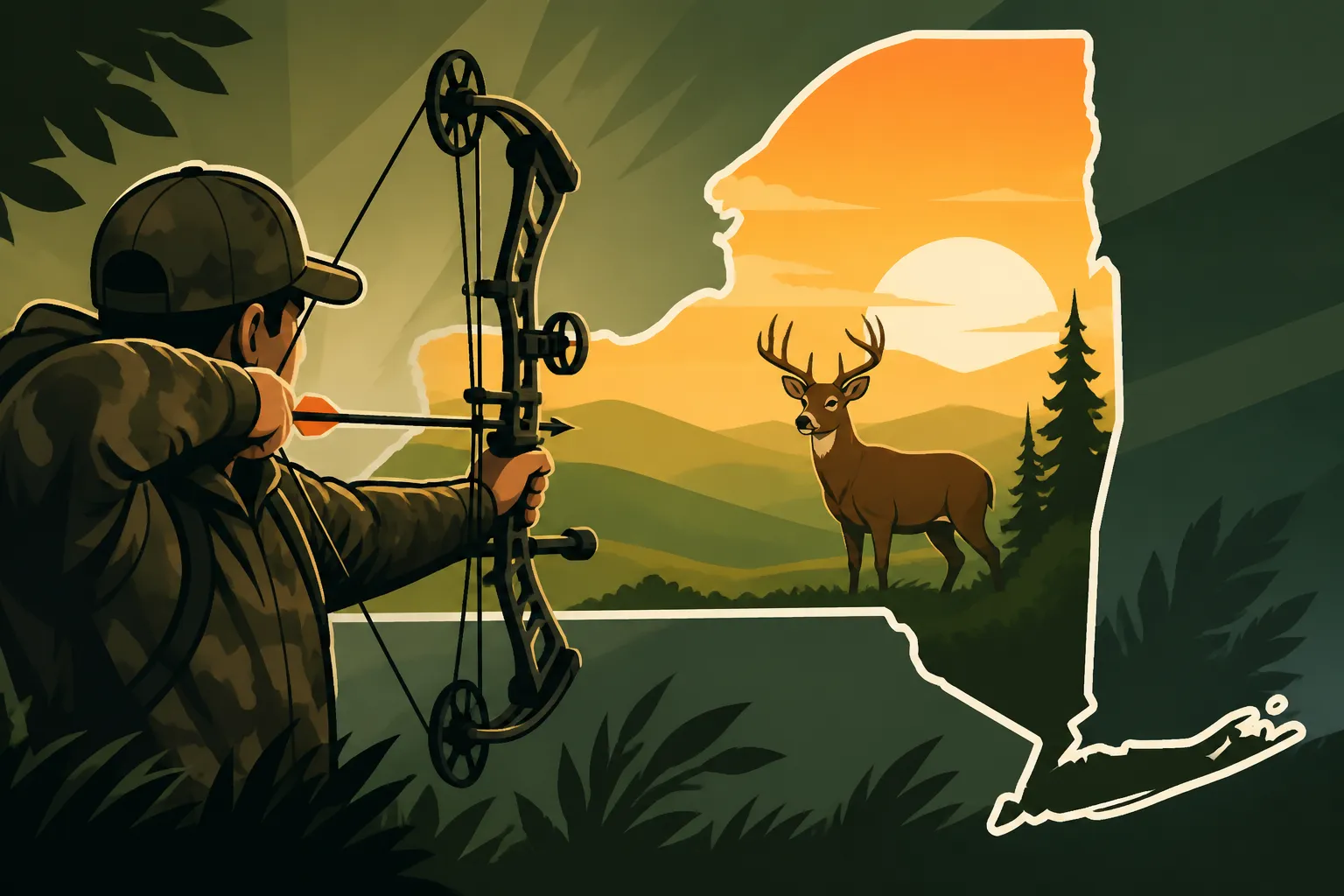
When New York’s Archery Season Opens
For many New York hunters, that crisp September air brings with it an undeniable itch – the desire to get back in the woods with a bow in hand. But figuring out exactly when you can legally start chasing whitetails can sometimes feel like trying to solve a puzzle, especially with the state's distinct hunting zones. This guide is here to clear up that confusion, diving deep into the opening dates for New York's archery season, explaining the nuances, and helping you plan your hunts effectively.
Understanding New York's Deer Zones and How They Impact Archery Season
New York State is divided into two primary deer hunting zones: the Northern Zone and the Southern Zone. These zones are established to account for the significant differences in climate, deer population dynamics, habitat, and hunter pressure across the state. The boundaries, which broadly follow a line running from Lake Ontario eastward to Lake Champlain, dictate not only the start of archery season but also other hunting methods and durations. Understanding these distinctions is fundamental to knowing when you can head afield with your bow.
The Southern Zone Archery Opener
For the vast majority of New York’s deer hunters, especially those in the more populated central, western, and southeastern regions, the Southern Zone is their hunting ground. This zone typically sees its archery season for deer kick off in mid-September. While the exact date might shift by a day or two year-to-year, it reliably falls around the 15th to the 18th of the month. This early start provides an extended period for bowhunters, often lasting a full month and a half, or even longer, before the firearm seasons begin.
The Department of Environmental Conservation (DEC) carefully considers factors like deer biology and hunter opportunity when setting these dates. By opening in mid-September, bowhunters get a crack at deer that are still on relatively predictable summer patterns, often focused on specific food sources like acorns, apples, and agricultural crops. This timing also precedes the peak of the rut, allowing hunters to target deer before they become completely consumed by breeding activities. It's a fantastic time to be in the woods, with generally mild weather, lush foliage, and deer still in their relatively relaxed summer routines.
The Northern Zone Archery Opener
The Northern Zone encompasses the vast expanse of the Adirondack Park and the Tug Hill Plateau, characterized by harsher winters, extensive public land, and lower deer densities compared to much of the Southern Zone. Due to these environmental factors and deer population dynamics, the Northern Zone's archery season typically opens earlier than the Southern Zone. Generally, you can expect the Northern Zone bow season to begin on or around September 27th.
This earlier start in the Northern Zone is a direct response to the ecological realities of the region. Deer in the Adirondacks face more severe winter conditions, which can impact their survival and reproductive rates. Providing an earlier hunting opportunity helps manage the herd while offering hunters a fair chance to fill their tags before heavy snows might arrive, or before deer shift into deep wintering yards. The season here is often shorter overall than in the Southern Zone, reflecting the different management strategies tailored to the unique challenges of hunting in big, wild country. If you're planning a trip up north, always double-check the specific dates, as they can be crucial for maximizing your chances. For a broader look at the entire deer calendar, you might find our guide on New York Deer Seasons by Zone helpful.
Why New York's Archery Season Opens When It Does
The decision-making process behind setting hunting season dates isn't arbitrary; it's a careful balance of wildlife management science, hunter feedback, and historical precedent. The New York State Department of Environmental Conservation (DEC) uses a wealth of data to ensure that seasons are structured to maintain healthy deer populations while offering ample opportunity for hunters.
Wildlife Management Goals and Deer Health
One of the primary drivers for early archery season dates is sound wildlife management. By opening archery season in mid-September (Southern Zone) and late September (Northern Zone), the DEC aims to achieve several objectives. Firstly, it allows for antlerless harvest opportunities before the peak breeding season, which can be critical in managing local deer populations to desired levels. This can help reduce deer-vehicle collisions and agricultural damage, particularly in the Southern Zone where deer densities are often higher. The timing also ensures that bucks have largely completed their antler growth cycles, giving hunters the opportunity to pursue mature animals.
Furthermore, setting the season to open when it does avoids the peak fawning period, protecting newborn fawns and ensuring their survival rates aren't unduly impacted by hunting pressure. The DEC continually monitors deer health, population trends, and habitat conditions, using this biological data to fine-tune season dates. This scientific approach ensures that hunting remains a sustainable and effective tool for managing New York's robust deer herds, which is why we continue to have such fantastic hunting opportunities year after year.
Hunter Opportunity and Experience
Beyond biology, hunter opportunity plays a significant role in scheduling. Early archery season provides a distinct and often preferred hunting experience for many. For dedicated bowhunters, it's a chance to get into the woods well before the general firearm season opens, offering a quieter, less pressured environment. The weather is generally milder, which can be a relief compared to the deep cold of late November or December. The dense foliage of early fall also provides excellent cover for stalking and stand placement, adding to the challenge and reward of bowhunting.
This period allows hunters to take advantage of deer feeding patterns before they drastically change with the onset of the rut or winter. You'll often find deer still hitting predictable food sources, making scouting and pattern recognition paramount. It’s a time to really hone your woodsmanship, observe deer behavior, and enjoy the beauty of the New York wilderness as it transitions from summer to fall. Many hunters cherish the early season for its unique blend of challenge and tranquility, a true test of skill and patience.
Key Dates and What to Expect Season-Long
Knowing the opening date is just the beginning. New York's archery season, particularly in the Southern Zone, is a marathon, not a sprint, offering varied opportunities and challenges as it progresses from early fall into the colder months. Each phase of the season demands different tactics and a keen understanding of deer behavior.
Early Archery Opportunities and Tactics
When the archery season first opens in September, deer are often still in their relatively predictable summer patterns. Their primary focus is on feeding, building up reserves for the upcoming rut and winter. This means targeting food sources is paramount. Look for mature oak stands dropping acorns, apple orchards (both cultivated and wild), and agricultural fields like corn or soybeans. Deer will often be moving between bedding areas and these food sources with regularity, especially in the late afternoons and early mornings.
Scouting is absolutely critical during this phase. Utilize trail cameras to identify specific travel corridors and feeding hotspots. Check out our guide on Scouting New York Public Land Before Season for more in-depth tips. Pay close attention to wind direction, as thermals can be tricky in the morning and evening, especially in hilly terrain. Focus your stand setups on pinch points, funnels, and transition areas between bedding cover and prime feeding zones. A great example might be Hunting a Funnel Between Two Swamps, which can be incredibly productive during this early period. The deer are not yet pressured, making successful close encounters more likely if you're patient and play the wind correctly.
Mid-Season and the Rut Transition
As October progresses, the dynamics of the archery season begin to shift. Temperatures drop, leaves start to fall, and the deer's focus gradually moves from purely feeding to the pre-rut and then the full-blown rut. This is arguably the most exciting time to be an archery hunter. Bucks, previously nocturnal or reclusive, become more visible and begin to seek out does. Scrapes and rubs start appearing, signaling increasing activity.
The pre-rut, usually in late October, sees bucks laying down sign, sparring, and venturing more during daylight hours. This is a fantastic time for calling and rattling, as bucks are responsive and actively seeking out rivals or potential mates. As November arrives, the rut hits its peak, and deer movement can be almost constant throughout the day. Targeting doe bedding areas, travel corridors, and even setting up near freshly worked scrape lines can be incredibly productive. Understanding the timing of this crucial period can make or break your season; our article on Hunting the Rut in the Southern Zone offers detailed strategies for this timeframe. This is when all those hours of preseason scouting truly pay off.
Late Season Archery and Extended Opportunities
After the general firearm season concludes, typically in early to mid-December, New York offers a late archery reopener in the Southern Zone. This often coincides with the special Holiday Deer Hunt in some areas, providing another chance to fill a tag. While challenging, late-season archery can be incredibly rewarding. Deer are often highly pressured, wary, and focused intensely on remaining food sources. Snow cover can also make deer more visible against the landscape and expose trails.
Tactics for late season revolve around finding primary food sources that are still available, such as standing agricultural crops like corn or soybeans, brassicas, or even areas where acorns were abundant and still remain accessible under light snow. Thermal cover, like thick conifer stands or south-facing slopes, also becomes critical as deer seek warmth. This is a time for patience and persistence. Deer movement will often be concentrated during the warmest parts of the day. For specific insights into making the most of this colder, later period, our guide on Hunting the Late Southern Zone Archery Reopener provides excellent strategies.
Essential Gear and Preparations for New York's Archery Season
Stepping into the New York woods with a bow requires more than just knowing the season dates; it demands the right equipment, preparation, and an unwavering commitment to safety. From understanding regulations to optimizing your setup, being well-prepared is the key to a successful and enjoyable archery hunt.
Bow and Crossbow Regulations
New York has specific regulations governing the use of bows and crossbows for deer hunting. For traditional and compound bows, there’s generally a minimum draw weight requirement to ensure a clean, ethical kill. For instance, most regulations specify a minimum draw weight of 35 pounds at 28 inches of draw for bows. Broadheads must also meet certain criteria, typically requiring a minimum width when open. It’s absolutely crucial to ensure your equipment complies with all current DEC regulations before heading afield.
Crossbows have become increasingly popular, and New York has adapted its regulations to allow their use during the regular archery season across both zones, with some specific rules to consider. While they offer certain advantages, they also have minimum draw weight and width requirements. If you're considering a crossbow, make sure you're up to date on all the particulars, as rules can sometimes see minor tweaks year to year. Our detailed article on Crossbow Rules During New York Archery Season is an invaluable resource for understanding these regulations, and if you’re wondering about the specifics of your vertical bow, you might want to check out information on Bow Draw Weight for New York Whitetails.
Scouting and Stand Setup Considerations
Effective scouting is the backbone of any successful archery hunt, especially in New York’s diverse and often challenging terrain. Before the season even opens, spend time in your chosen hunting area identifying bedding areas, food sources, and natural funnels or pinch points that deer use for travel. Look for subtle terrain features, old logging roads, or thick transition lines that might concentrate deer movement. Using mapping applications like GoHunt can give you a significant advantage, helping you analyze topography, identify potential hotspots, and mark property boundaries – an essential tool for public land hunters.
When it comes to stand setup, consider the duration of your hunt and the specific habitat. In dense Adirondack hardwoods, for example, a mobile saddle hunting setup or strategically placed hang-on stands with climbing sticks might be ideal for adapting to deer movement. For tips on setting up in this environment, see Treestand Setups in Adirondack Hardwoods. On private land with more open fields, a well-brushed-in ground blind might be more effective. Always prioritize safety, using a full-body harness every time you leave the ground, and practice shooting from your stand before the season begins to ensure you’re comfortable and accurate at various angles. Remember to always consider the prevailing wind and thermal currents when choosing your final stand location; getting busted by a deer’s nose is the quickest way to end a hunt.
Early Season Comfort and Safety
The early archery season in New York can bring a wide range of weather conditions, from warm, humid September days to surprisingly chilly October mornings. Dressing in layers is paramount, allowing you to adapt to changing temperatures. Lightweight, moisture-wicking base layers are ideal for those warmer days, while a packable outer shell can protect against unexpected rain or a sudden drop in temperature. Don't forget bug spray, as mosquitoes and ticks can still be active during early fall, especially in wooded or marshy areas.
Safety should always be your top priority. Beyond using a safety harness with a lifeline, carry a small first-aid kit, a reliable headlamp (even for daytime hunts, in case you need to track after dark), a fully charged cell phone (though service can be spotty in remote areas), and a whistle. Let someone know your hunting plans and estimated return time. Stay hydrated, particularly if you’re walking long distances in warmer weather. Being prepared for any eventuality means you can focus on the hunt itself, maximizing both enjoyment and safety in the New York woods.
Navigating Licenses, Permits, and Reporting
Beyond knowing when and where to hunt, understanding the administrative side of New York hunting is crucial. From purchasing the correct licenses and permits to legally reporting your harvest, adherence to these rules ensures you're a responsible and ethical hunter.
Acquiring Your New York Hunting License
Before you can even think about setting foot in the woods with your bow, you need to acquire the appropriate New York State hunting license. For residents and non-residents alike, this typically involves purchasing a hunting license and then adding the specific bowhunting privilege. You might also need other stamps or permits depending on what species you plan to pursue. The process is straightforward and can usually be done online through the DEC's HuntFishNY system, over the phone, or in person at a license issuing agent.
It’s important to understand the different license options and their associated costs. For instance, New York offers various license types, including annual licenses, combination licenses, and even lifetime options. Non-residents will generally pay a higher fee. Always ensure you have your hunter education certificate readily available, as it’s a prerequisite for most hunting licenses in the state. For a complete breakdown of what you'll need and what it will cost, our guide on New York Hunting Licenses and What They Cost is an excellent resource, ensuring you're fully legal before your first arrow flies.
Understanding Deer Management Permits (DMPs)
Deer Management Permits, or DMPs (sometimes referred to as antlerless tags), are an integral part of New York’s deer management strategy. These permits allow hunters to take an additional antlerless deer beyond the standard one buck and one antlerless deer allowed by the regular big game license in many Wildlife Management Units (WMUs). DMPs are issued through a lottery system and are crucial for balancing deer populations, especially in WMUs with higher deer densities.
The application period for DMPs typically opens in July and runs through early October. While initial applications are part of a lottery, many WMUs offer an "instant lottery" or bonus DMPs later in the season if quotas haven't been met. This can provide fantastic opportunities for hunters looking to fill their freezer or contribute more significantly to deer management. Hunters should research the specific WMU they plan to hunt to understand their chances and the availability of these permits. All the ins and outs, including how to apply and the selection process, are thoroughly explained in our guide to New York Deer Management Permits Explained. Using tools like GoHunt can help you determine WMU boundaries and track public land access within those units, making your DMP application process more informed.
Mandatory Harvest Reporting
In New York, reporting your deer harvest is not just a suggestion; it's a legal requirement. Every deer taken, whether with a bow, crossbow, muzzleloader, or firearm, must be reported to the DEC within seven days of the kill. This data is absolutely vital for wildlife biologists, providing them with critical information on harvest rates, population trends, and overall herd health. Without accurate reporting, the DEC's ability to make informed management decisions is severely hampered.
The reporting process is designed to be quick and easy. You can report your harvest online through the DEC's website, via the HuntFishNY app, or by calling a toll-free number. You'll need information such as your license number, the WMU where the deer was taken, and details about the animal (e.g., antlered or antlerless, sex, age if known). Failing to report a harvest can result in penalties, so it’s essential to make it a part of your post-hunt routine. For a step-by-step guide on how to comply with this important regulation, refer to Reporting a New York Deer Harvest Online.
Here’s a quick overview of New York’s archery deer season opening dates:
| Zone | Typical Archery Opening Date | Lasts Until | Special Notes |
|---|---|---|---|
| Southern | Mid-September (e.g., Sept 15) | Mid-November | Re-opens for a late archery/muzzleloader season (Holiday Hunt) |
| Northern | Late September (e.g., Sept 27) | Mid-October | No late archery re-opener |
Disclaimer
Always consult the official New York State Department of Environmental Conservation (DEC) hunting regulations guide for the current year before planning any hunting trip. Season dates, bag limits, and specific rules can change, and it is the hunter's responsibility to be aware of and comply with all applicable laws.