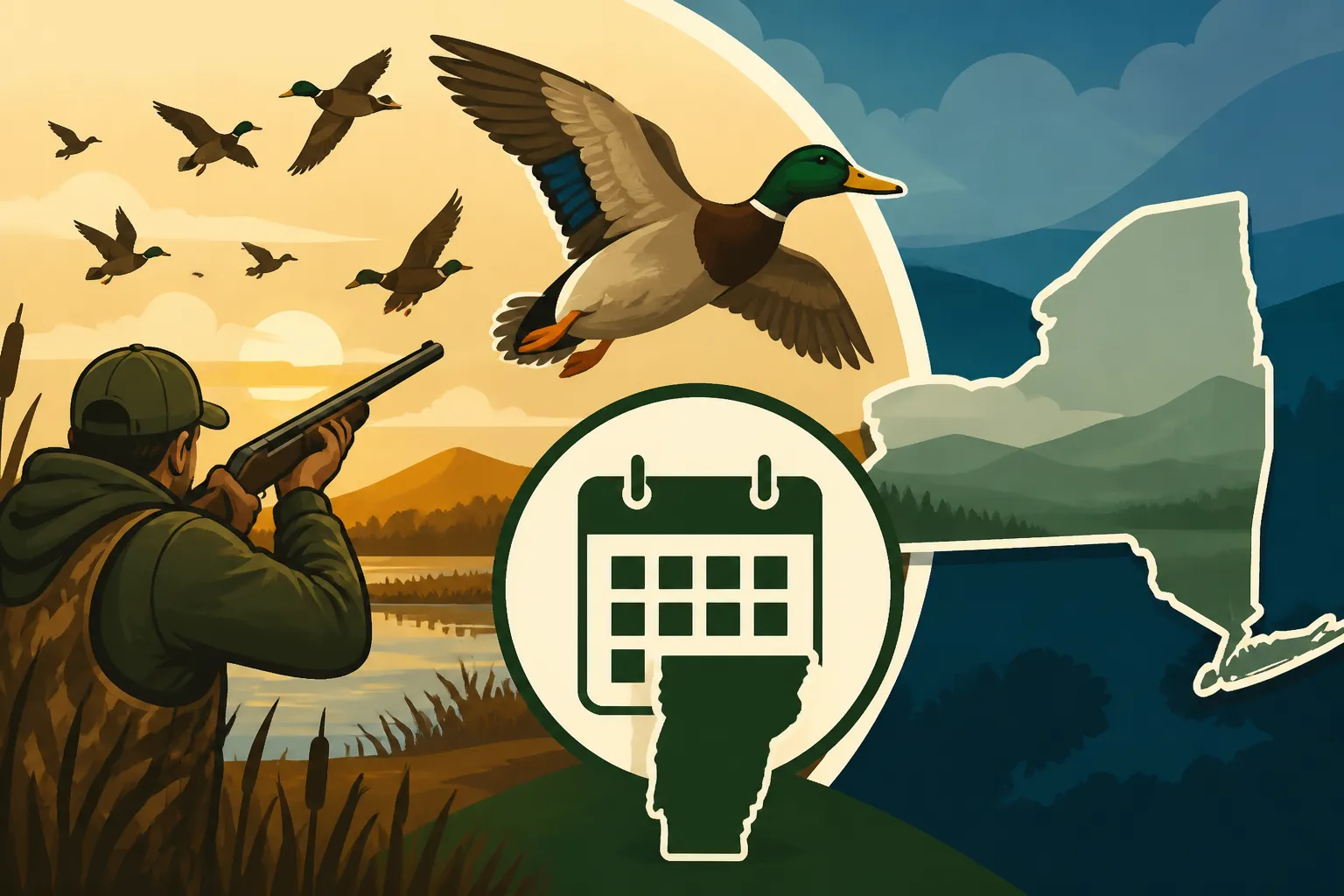
Why Vermont Sets the Champlain Duck Calendar
It’s a head-scratcher, isn’t it? You’re a New York hunter, licensed and ready to hit the water, but when it comes to duck season on Lake Champlain, you find yourself staring at Vermont’s dates. It can feel incredibly counterintuitive, even a little frustrating, to have to consult another state's regulations for hunting within your own state lines. This guide will unravel the unique, federally-mandated reasons behind this arrangement that every New York waterfowler needs to understand to stay legal and successful.
The Unique Administrative Dance for Lake Champlain Waterfowl
The reason Vermont dictates the duck calendar for New York's portion of Lake Champlain stems from a fascinating, albeit sometimes confusing, blend of geography, federal migratory bird law, and interstate agreements. It's not a slight against New York hunters, but rather a practical solution to manage a shared, interstate resource under a broad federal framework. Understanding this framework is crucial for any waterfowl enthusiast hitting the legendary waters of Champlain.
The Federal Framework of Waterfowl Seasons
Migratory birds, including ducks, don't recognize state lines. Their management falls under the umbrella of the U.S. Fish and Wildlife Service (USFWS), guided by the Migratory Bird Treaty Act. This act ensures that migratory bird populations are managed sustainably across North America. The USFWS works closely with various Flyway Councils—groups of state wildlife agencies organized by the four major migratory bird flyways across the continent. New York, like Vermont, is part of the New York Waterfowl on the Atlantic Flyway. These councils propose season dates, bag limits, and other regulations to the USFWS, which then establishes federal frameworks within which states set their specific seasons.
The USFWS provides states with a "framework" of potential dates, season lengths, and bag limits. States then choose their specific seasons within these frameworks. However, when a body of water, like Lake Champlain, is shared between states, a single, unified approach is often necessary to prevent confusion, ensure consistent management, and avoid potential overharvesting or under-harvesting due to differing regulations on the same birds on the same water. This collaborative approach recognizes the biological reality that ducks moving across the lake are part of the same population, regardless of which state's invisible boundary line they happen to cross. It’s a complex system designed to simplify hunting regulations on shared natural resources, even if it adds a layer of complexity for individual hunters.
New York's Lake Champlain Zone and Its Shared Waters
Lake Champlain is a massive body of water, stretching over 120 miles and forming a significant portion of the border between New York and Vermont, with a small section extending into Quebec, Canada. For waterfowl management purposes, the lake and its immediate shoreline areas are designated as a distinct waterfowl hunting zone by both states, typically referred to as the Lake Champlain Zone. This zone covers New York's eastern counties adjacent to the lake and Vermont's western counties.
The inherent challenge here is obvious: how do you manage duck hunting on a continuous body of water when two separate state agencies have jurisdiction? Imagine the chaos if New York's season opened a week earlier than Vermont's. Hunters could simply cross the invisible state line on the water to continue hunting, or conversely, be penalized for unknowingly violating the other state's rules. This shared geography necessitates a shared regulatory approach, and the federal system has empowered one state to take the lead in these specific scenarios to streamline the process. Understanding the New York Duck Zone Boundaries is helpful, but the Champlain zone truly stands apart due to this unique arrangement.
Vermont's Primary Authority and the Atlantic Flyway Council
Given the shared nature of Lake Champlain, the Atlantic Flyway Council, with approval from the USFWS, has designated Vermont as the primary state responsible for setting the waterfowl season dates and regulations for the entire Lake Champlain Zone. This decision is often based on historical precedent, administrative efficiency, and sometimes, the larger proportion of the lake's area or hunter participation falling within one state's jurisdiction. In this case, Vermont has taken the lead.
What this means in practice is that Vermont’s Fish & Wildlife Department proposes the season dates and bag limits for the Lake Champlain Zone to the Atlantic Flyway Council. Once approved by the USFWS, New York's Department of Environmental Conservation (DEC) then adopts these same dates and limits for its portion of the Lake Champlain Zone. This ensures uniformity across the entire lake. It's a way to avoid the logistical nightmare of two different sets of rules applying to the same migratory birds on the same water body. This collaboration simplifies enforcement and biological monitoring, even if it means New York hunters have to adjust to another state's choices. It's a prime example of how states collaborate within the larger framework of New York Waterfowl Zones and Seasons to ensure sustainable wildlife populations.
What This Means for New York Waterfowlers on Lake Champlain
For New York hunters who frequent the waters of Lake Champlain, this arrangement has direct and significant implications. It requires a slightly different approach to planning your hunting trips and staying abreast of the latest regulations. It's not just about knowing New York's rules; it's about understanding which set of rules applies where, especially on shared borders.
Adapting to Vermont's Dates
The most immediate impact is that your duck hunting schedule for Lake Champlain will align with Vermont's chosen dates, not necessarily New York's general statewide or Western/Long Island Zone dates. This means if you typically hunt other parts of New York, like chasing Diver Hunting on Eastern Lake Ontario or other regional ducks, you might find the Champlain season opening or closing at different times. Hunters need to actively consult Vermont's hunting regulations for the Lake Champlain Zone to confirm season openers, closers, and specific bag limits.
This can be a challenge for hunters who crisscross the state, as they might need to juggle different calendars. For instance, Vermont might opt for an earlier opening or a later closing within the federal framework than New York chooses for its other zones. This isn't just about dates; it can also influence specific species bag limits or shooting hours if Vermont makes unique choices within the federal guidelines for the Champlain Zone. It really hammers home the importance of checking every detail specific to that zone before you even think about setting out your decoys on a cold morning on the lake. You can't just assume what applies elsewhere in New York will apply here.
Understanding Shared Regulations
While Vermont sets the calendar, New York hunters still need to comply with specific New York State licensing requirements. This means you need your valid New York State hunting license, along with a federal duck stamp and New York Migratory Bird Certification. However, when it comes to the actual season dates, shooting hours, and daily bag limits for ducks on Lake Champlain, Vermont's published regulations for the Champlain Zone are what you must follow.
This dual compliance can sometimes lead to confusion. Imagine you're hunting ducks near Port Henry, New York, on Lake Champlain. You need your New York license, but you must consult the Vermont regulations for when you can legally hunt ducks and how many you can harvest. If you decide to transition your hunt from ducks to, say, New York Canada Goose Bag Limit or other game on the same day, you’d then revert to New York's state-specific regulations for those species, provided they fall outside the specific Champlain Zone duck rules. This highlights the critical need for meticulous pre-hunt research and perhaps even carrying both states' regulation digests or having them readily accessible via an app like GoHunt. This level of detail also extends to species-specific rules, as even though the general framework is set by Vermont, both states adhere to federal species identification guidelines.
Practical Steps for Hunting Lake Champlain Ducks
Navigating these unique regulations doesn't have to be overwhelming. With a little planning and diligent research, you can ensure your Lake Champlain duck hunting trips are both successful and compliant with all the necessary rules.
Staying Informed on Season Dates and Regulations
The first and most critical step is always to verify the most current season dates and regulations. Do not rely on last year's memories or assumptions. Here's how you can stay informed:
- Vermont Fish & Wildlife Department: This should be your primary resource for Lake Champlain waterfowl season dates. Their official website is the definitive source for the rules governing the entire Lake Champlain Zone. They often release their hunting and trapping guide annually, which will detail everything you need.
- New York State Department of Environmental Conservation (DEC): While Vermont sets the calendar for Champlain ducks, the NYSDEC will also publish these dates in their official New York Waterfowl & Migratory Bird Hunting Guide. It’s always a good idea to cross-reference with both state agencies to ensure you have the most up-to-date and accurate information. The DEC's guide will also contain all the New York-specific licensing information you need.
- Online Resources and Apps: Many hunters find tools like the GoHunt app incredibly useful. These platforms often aggregate official state regulations and can provide map layers showing state boundaries, which is invaluable when you're hunting on shared waters like Lake Champlain. Just make sure the information on any third-party app is current and directly sourced from the official state wildlife agencies. It’s a great way to have critical information at your fingertips, especially when you're out in the field trying to confirm a detail about Hunting the Lake Champlain Marshes.
Licensing and Permitting for Champlain
Before you even think about buying decoys or scouting new spots, ensure your paperwork is in order. For New York residents hunting the New York side of Lake Champlain:
- New York State Hunting License: You must possess a valid New York State hunting license. This is your foundational permit to hunt any game in the state.
- Federal Duck Stamp: This is a federal requirement for anyone 16 years of age or older hunting migratory waterfowl in the United States. You must sign and carry it with you. This stamp is vital for conservation efforts nationwide and is mandatory regardless of which state's calendar you're following. You can learn more about the New York Federal Duck Stamp Requirement.
- New York Migratory Bird Hunting Permit (HIP Certification): This is another crucial permit that registers you with the Harvest Information Program (HIP). It's required annually for all migratory bird hunters in New York, even if the Champlain duck dates are set by Vermont. This helps the USFWS gather data on migratory bird harvest.
- No Vermont License Required for NY Waters: Crucially, if you are strictly hunting the New York side of Lake Champlain, you do not need a Vermont hunting license. However, if your hunt takes you across the actual state line into Vermont waters, even accidentally, you would need a valid Vermont hunting license, along with a Vermont migratory bird endorsement. Always know where you are on the water, perhaps using a GPS-enabled map like those found on GoHunt, to avoid inadvertently breaking the law.
Understanding these requirements prevents unforeseen issues and ensures that your focus can remain on the hunt itself, whether you're trying to figure out Reading a Champlain Marsh for a Morning Flight or simply enjoying a peaceful day on the water.
| Feature / Requirement | New York General Zones (e.g., Western Zone) | New York Lake Champlain Zone (Duck Hunting) | Vermont Lake Champlain Zone (Duck Hunting) |
|---|---|---|---|
| Season Dates Set By | NYSDEC (within federal framework) | Vermont Fish & Wildlife Dept. | Vermont Fish & Wildlife Dept. |
| Daily Bag Limits Set By | NYSDEC (within federal framework) | Vermont Fish & Wildlife Dept. | Vermont Fish & Wildlife Dept. |
| Required State License | New York Hunting License | New York Hunting License | Vermont Hunting License |
| Required Federal Duck Stamp | Yes | Yes | Yes |
| Required HIP Certification | New York HIP | New York HIP | Vermont HIP |
| Primary Regulatory Body | NYSDEC | Vermont Fish & Wildlife Dept. | Vermont Fish & Wildlife Dept. |
Hunting the New York side of Lake Champlain for ducks presents a unique scenario, but one that is entirely manageable with the right knowledge and attention to detail. The arrangement, though peculiar, ensures consistent management of a shared migratory resource. By staying informed through official Vermont and New York channels, and ensuring all your licensing is up to date, you can enjoy some fantastic waterfowl hunting on one of the Northeast's most beautiful lakes. Always prioritize safety and ethical hunting practices, and remember that respecting the regulations of both states is paramount to the future of waterfowl hunting on this incredible waterway.
Disclaimer
The information provided in this article is for general guidance and informational purposes only and does not constitute legal advice. Hunting regulations are subject to change, and it is the hunter's responsibility to verify all current rules, seasons, and licensing requirements with the official New York State Department of Environmental Conservation (NYSDEC) and Vermont Fish & Wildlife Department before engaging in any hunting activities.