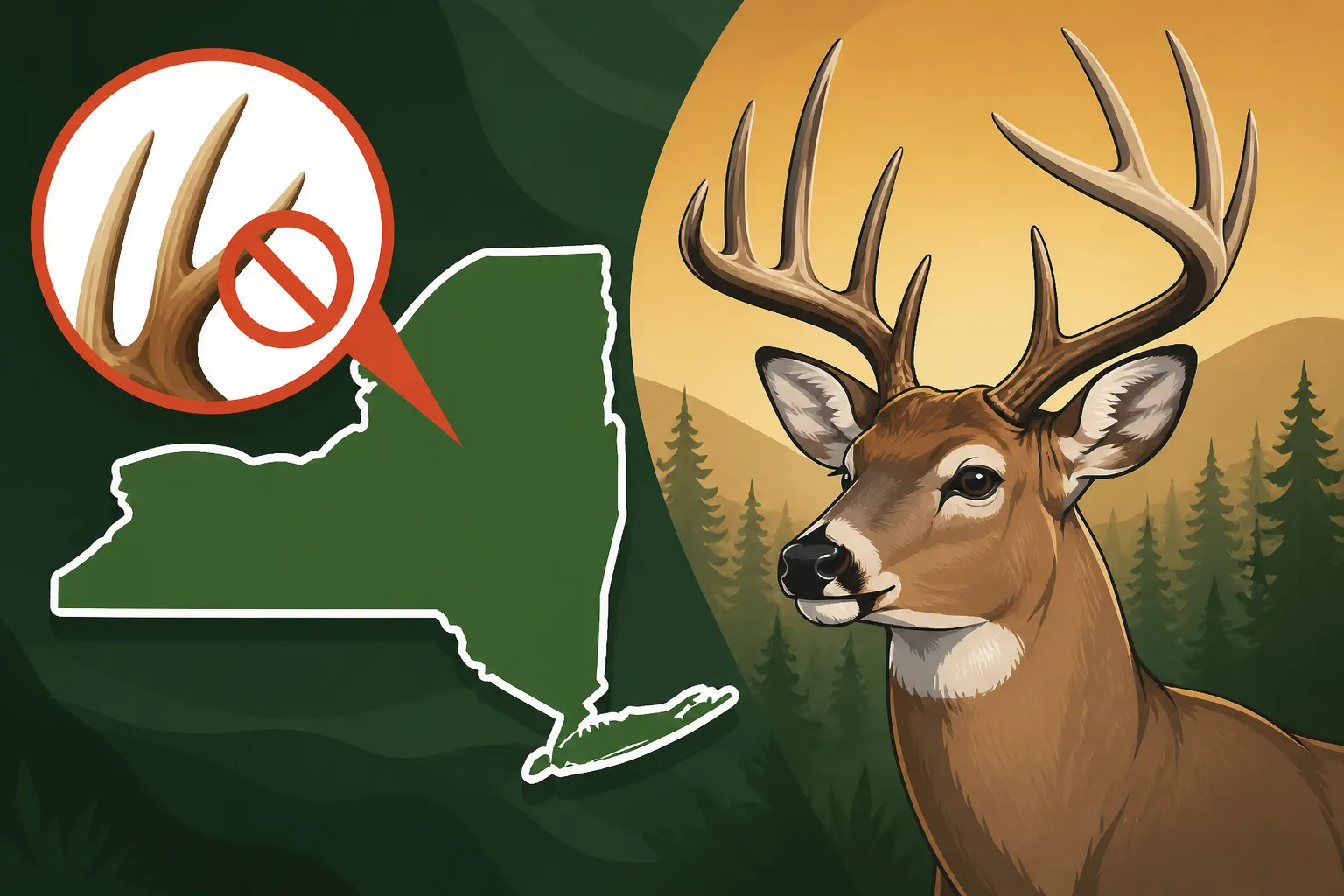
New York Antler Point Restriction Rules
It's incredibly frustrating when you're out in the woods, the air is crisp, and a beautiful buck steps into a shooting lane, but your mind immediately races to regulations. Did that G2 count? Is that brow tine long enough? New York's antler point restriction (APR) rules can add a layer of anxiety to an already high-pressure moment, leaving many hunters second-guessing themselves even after hours of dedicated scouting. This comprehensive guide is here to untangle the complexities of New York's APRs, helping you understand exactly what the rules entail, where they apply, and how to confidently make ethical decisions in the field.
Understanding New York's Antler Point Restriction Rules
Antler point restriction rules, often abbreviated as APRs, are a deer management strategy implemented by the New York State Department of Environmental Conservation (DEC) in specific areas. The primary goal behind these rules isn't just about growing bigger antlers, although that's a welcome side effect for many hunters. Instead, APRs are designed to shift the age structure of the buck population, allowing younger bucks to mature for at least another year or two.
Think about it: in areas with high hunting pressure and no antler restrictions, young, spike-horned or fork-horned bucks are often the first to be harvested. While this is perfectly legal and ethical under general regulations, it can lead to a buck population skewed heavily towards young, inexperienced deer. By requiring a minimum number of antler points on at least one side, the DEC aims to protect those younger bucks from harvest, giving them a chance to develop larger racks and, more importantly, to participate in the breeding cycle. This can lead to a healthier, more balanced deer herd with improved buck-to-doe ratios and a more robust rut. For many of us who hunt public land, the thought of more mature deer in the woods is a welcome one. It makes the pursuit more challenging and rewarding.
These regulations aren't arbitrary; they're based on scientific data and population studies. The DEC monitors deer harvest data, age structures, and fawn recruitment rates to determine where APRs might be beneficial. They consider factors like habitat quality, carrying capacity, and local hunting pressure. While some hunters might initially find APRs restrictive, the long-term benefits to the deer herd, and subsequently to the hunting experience, are often quite significant. It encourages hunters to pass on those yearling bucks, even if they present an easy shot, and hold out for a more mature animal. This requires patience and discipline, but it can truly change the landscape of your hunting season.
Where Antler Point Restrictions Are in Effect Across New York
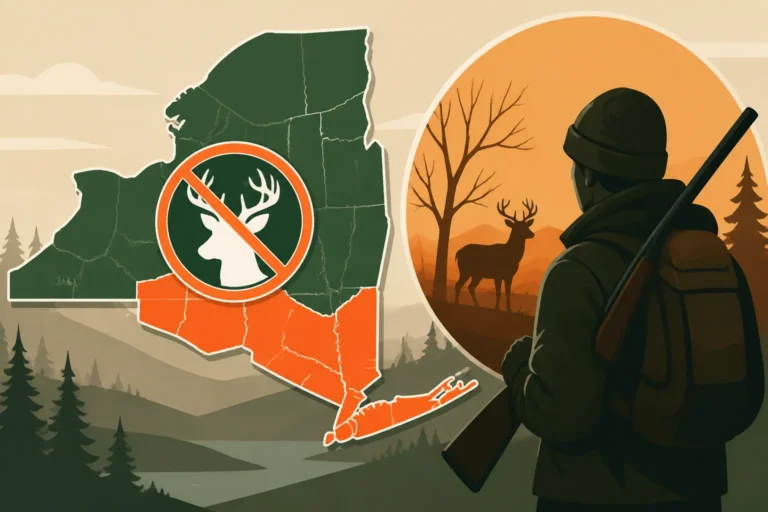
It's crucial to understand that antler point restrictions aren't a statewide rule in New York. They are very specific to certain Wildlife Management Units (WMUs), primarily concentrated in the Southern Zone. This localized approach allows the DEC to tailor management strategies to the unique conditions of different regions within the state, where deer populations, habitat, and hunting pressure can vary dramatically. You wouldn't manage the dense deer herds of the Southern Tier the same way you manage the sparse, big woods deer of the Adirondacks, for example.
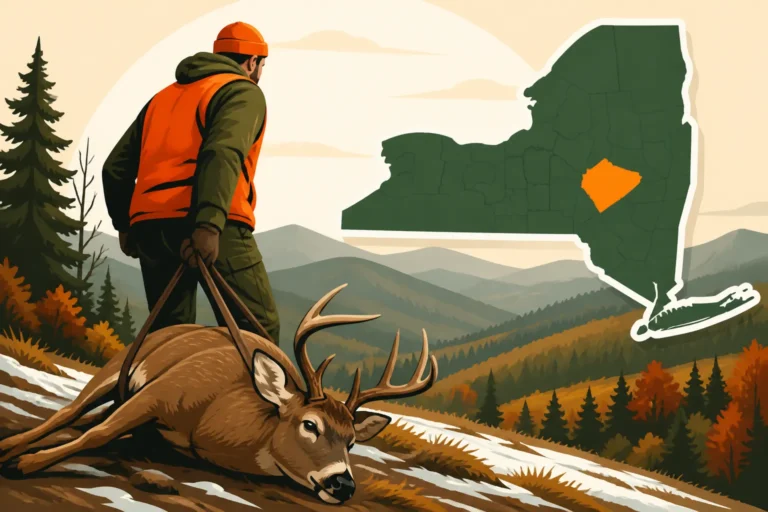
Currently, the WMUs that have Antler Point Restrictions in place are: 3A, 4G, 4O, 4P, 4R, 4S, 8R, 8T, 8W, 8X, 9A, 9F, and 9G. If you plan on hunting in any of these areas, knowing the specific rules is non-negotiable. Many hunters find tools like the New York HuntFishNY App invaluable for checking WMU boundaries, especially when they're hunting near a line where regulations might change. These apps, or even a detailed physical map, can be a game-changer for staying compliant.
For those of us who primarily hunt the Northern Zone, typically encompassing the Adirondack Mountains and surrounding areas, APRs generally do not apply. The deer densities in these vast, often remote regions are naturally lower, and the challenges of severe winters often act as a significant limiting factor on the deer population. Therefore, protecting yearling bucks with APRs isn't typically seen as necessary for herd health in the same way it is in parts of the Southern Zone. However, always double-check the latest regulations for your specific WMU each year, as rules can occasionally be updated. For instance, if you're planning a hunt in the Southern Tier, APRs are a definite consideration, whereas a trip deep into the Adirondack Forest Preserve would likely focus more on basic buck rules.
Understanding Your Specific WMU
Each WMU is a distinct management area, and while most APRs follow a general guideline, it’s always best practice to confirm the precise regulations for the WMU you intend to hunt. For example, some WMUs might have a "3 points on one side" rule, while others could potentially have a different minimum. It’s also important to remember that these rules are dynamic; the DEC regularly reviews and adjusts them based on herd health and management goals. Using resources like the official DEC website or a reliable hunting app can help you identify your specific WMU and its associated rules. Companies like GoHunt provide excellent mapping resources that can help pinpoint these boundaries with precision, ensuring you’re always aware of the regulations for your exact location. This attention to detail will help you avoid any unfortunate misunderstandings in the field.
Here's a simplified look at APR rules for some illustrative WMUs in New York:
| WMU | Antler Point Restriction Rule (Antlered Buck) | General Buck Rule (outside APR zones) | Applies To |
|---|---|---|---|
| 3A | At least 3 points on one side | At least one antler 3 inches long | Southern Zone |
| 4G | At least 3 points on one side | At least one antler 3 inches long | Southern Zone |
| 4O | At least 3 points on one side | At least one antler 3 inches long | Southern Zone |
| 8T | At least 3 points on one side | At least one antler 3 inches long | Southern Zone |
| 9A | At least 3 points on one side | At least one antler 3 inches long | Southern Zone |
| Northern Zone (most WMUs) | None (General buck rule applies) | At least one antler 3 inches long | Northern Zone |
Note: This table provides examples. Always consult the current New York State DEC Hunting & Trapping Regulations Guide for the most up-to-date and complete information for your specific WMU.
Decoding What Counts as a Legal Antler Point
The "three points on one side" rule is the most common antler point restriction you'll encounter in New York. But what exactly constitutes a "point"? This is where many hunters get hung up, especially when trying to make a split-second decision in the field. The New York DEC has a clear definition, and it's essential to commit it to memory to avoid a violation.
According to New York regulations, an antler point must be at least one inch long and project from the main beam or another point. This "one inch" rule is critical. It's not just about what looks like a point; it has to meet that minimum length requirement. This means those little nubs, bumps, or "non-typicals" that don't reach a full inch won't count towards your three-point minimum. It takes some practice, but with time, you'll get better at field judging.
Imagine a young buck with a small brow tine, a G2, and then a tiny half-inch nub on its main beam. Even though it has three projections, that last nub might not count if it's under one inch. In that scenario, the buck would only legally have two points on that side, making it an illegal harvest in an APR WMU. This is why patience and careful observation are so important. Always err on the side of caution. If you're not absolutely sure, it's always better to pass and wait for another opportunity.
This focus on antler development directly impacts the New York buck age structure. By protecting younger bucks, APRs allow them to reach maturity, potentially resulting in larger antlers and more robust breeding activity in subsequent years. Many veteran hunters will tell you that after APRs were implemented in their areas, they started seeing a noticeable increase in the quality of bucks over time. Sometimes, even what appears to be a big spike can actually be a legal buck if its other side has three points, but you have to be absolutely sure. This level of detail in antler identification is a skill that comes with experience, careful observation, and sometimes, a good pair of binoculars.
Field Judging Challenges and Tips
Field judging antlers in the heat of the moment can be incredibly challenging, especially with factors like distance, cover, light conditions, and the buck's movement. A common mistake is to quickly count "points" without adequately assessing their length. A G3 that looks like a point from 80 yards away might only be a half-inch nub when you get closer.
Here are a few tips to help you in the field:
- Use Your Optics: Always use binoculars or a spotting scope to carefully examine the antlers. Don't rely solely on your naked eye, especially if the deer is at a distance or in thick cover. Quality optics can help you verify point length.
- Look for Clear Separation: Points should clearly project from the main beam or another point, not just be a bumpy extension of the beam itself.
- Establish a "Known" Length: If you can, try to mentally compare the suspected point's length to something you know is an inch long, like the length of your broadhead or a segment of your finger (if the buck is very close and you're not shooting yet!). This is more of a mental exercise for practice than a practical field tip for a moving deer.
- Be Patient: Don't rush the shot. If you have time, watch the buck move, turn its head, and try to get multiple angles. Wait for it to present a clear view of its antlers.
- When in Doubt, Pass: This is the golden rule of hunting. If you can't definitively confirm that the buck meets the APR requirements, let it walk. There will always be another deer, and it's far better to walk away empty-handed than to make an illegal harvest.
Scouting is also key. Before the season, spend time in your WMU, studying sheds if possible, or observing deer with binoculars. This helps you get a feel for the typical antler growth patterns in that specific area. Utilizing mapping tools like those offered by GoHunt can help you mark areas where you've observed mature bucks or found sheds, giving you a better understanding of the local genetics and antler potential. Knowing the terrain and potential travel corridors also helps you anticipate where and when you might encounter a buck, giving you more time to prepare for that crucial moment of judgment.
Navigating Exceptions and Using Your Deer Management Permit (DMP)
While the antler point restriction rules are straightforward in their application, there are specific circumstances and permits that can modify or even exempt a hunter from the standard APRs. This is where it gets a little nuanced, and understanding these exceptions is vital for full compliance and maximizing your hunting opportunities in New York.
The most significant exception involves the use of a Deer Management Permit (DMP), also known as an antlerless permit. In WMUs where APRs are in effect (WMUs 3A, 4G, 4O, 4P, 4R, 4S, 8R, 8T, 8W, 8X, 9A, 9F, and 9G), a hunter who has a valid DMP for that specific WMU and during the firearm season can, in fact, take any buck that has at least one antler three inches or longer. This is a crucial distinction. Normally, if you're hunting with your regular Big Game tag in an APR zone, you need the "three points on one side" buck. However, if you are also holding a valid DMP, that permit allows you to harvest a buck that might not meet the APR, as long as it meets the general definition of a legal buck (at least one antler three inches long).
This provision for DMPs adds flexibility, particularly for hunters focused on reducing deer populations in certain areas or those looking to fill their freezer with any legal deer. It’s important to remember that this DMP exception only applies during the firearm season and if the DMP is valid for that specific WMU. It does not typically apply to bowhunting or muzzleloader seasons unless specified otherwise in the regulations guide for that particular year. Always check the annual New York Deer Management Permits Explained guide to confirm the most current rules.
Special Circumstances and Clarifications
Beyond DMPs, there are a couple of other scenarios that often raise questions:
- Youth Hunters: During the annual Youth Deer Hunt weekend, junior hunters (ages 12-15) are generally exempt from antler point restrictions. This means they can take any antlered buck with at least one antler three inches or longer, regardless of the WMU's APR status. This is a fantastic program designed to get young hunters involved and give them a simpler experience without the added pressure of complex antler judging. You can find more details in the Hunting the New York Youth Deer Weekend guide.
- Spike Bucks vs. Fork Horns: Let's clarify the "one antler three inches long" rule. Outside of APR zones, this is the standard definition of a legal buck. In an APR zone, if a buck has, for instance, a 5-inch spike on one side and no antlers on the other, it would not be legal under the "three points on one side" rule, unless you are using a valid DMP during the firearm season as described above. The APR rules override the general "one antler three inches long" rule unless a specific exception (like the DMP one) is met. This is why hunters sometimes get confused; the rules can seem contradictory if you don't understand the hierarchy.
- Asymmetrical Antlers: What if a buck has three points on its left side, but only two points on its right side? As long as one side meets the "at least three points" requirement, it is a legal buck in an APR zone (assuming you are hunting with your regular big game tag). The rule doesn't require both sides to have three points, only "three points on one side." This is a common situation, and understanding this distinction can save you from passing on a perfectly legal buck.
Staying informed about these regulations is a year-round commitment. The New York DEC updates its hunting guide annually, and it's always the definitive source of information. Before each season, take the time to read through the sections relevant to your chosen WMU, especially regarding deer seasons by zone and any specific antler restrictions. Utilizing powerful mapping and regulatory platforms, such as those provided by GoHunt, can also help keep you informed about any last-minute changes to antler point restriction rules or season dates. This diligence ensures you're always hunting legally and ethically, contributing to the healthy management of New York's deer herd.
Disclaimer
Please be advised that hunting regulations can change frequently. While this guide provides a comprehensive overview of New York's antler point restriction rules based on available information, it is not a substitute for the official New York State Department of Environmental Conservation (DEC) Hunting & Trapping Regulations Guide. Always consult the most current official DEC regulations before heading into the field to ensure full compliance. It is the hunter's responsibility to know and abide by all applicable laws and regulations.