New York Bear Season by Zone
Hunting black bear in New York State can feel like navigating a maze, especially with the state's diverse geography and regulations that shift depending on whether you're up north in the Adirondacks or down south in the Catskills and Southern Tier. It's easy to get overwhelmed trying to understand which season is open when, what permits you need, and the specific rules that apply to your chosen hunting ground. This guide is here to untangle all those complexities, breaking down New York's bear hunting seasons by zone to help you plan a successful and compliant hunt.
Understanding New York's Bear Zones
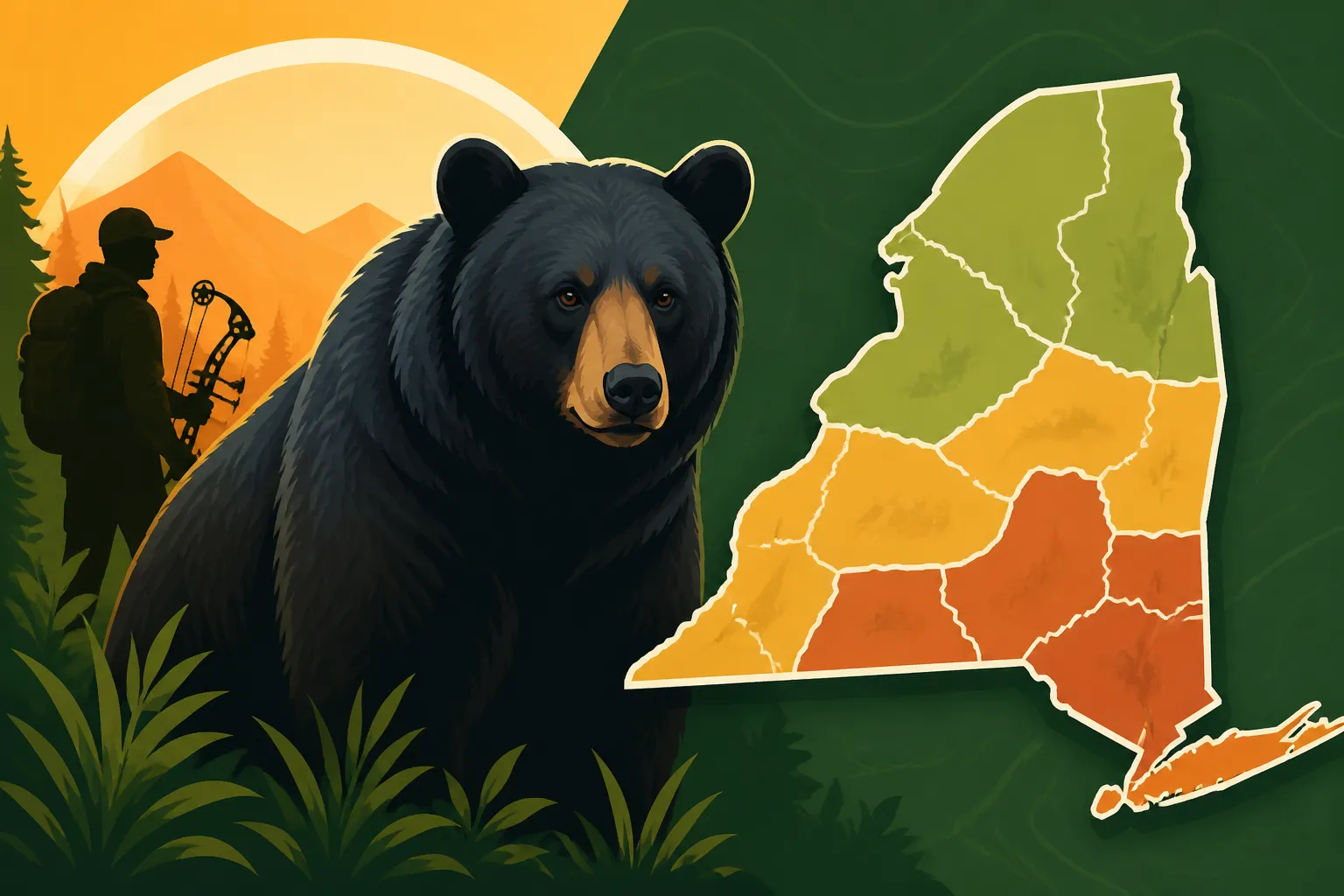
New York State is a big place, and its black bear population reflects that diversity, with healthy numbers in different regions. The Department of Environmental Conservation (DEC) manages bear hunting through a system of distinct zones, primarily the Northern Zone and the Southern Zone. This isn't just a geographical split; it fundamentally dictates when and how you can hunt bears, and failing to understand these distinctions can lead to frustration or even violations.
Geographical Demarcation of Zones
When we talk about the Northern and Southern Zones for bear hunting, we're not just referring to general "upstate" and "downstate" areas. These are specifically defined regions with clear boundaries that often follow major highways, rivers, or county lines. The Northern Zone generally encompasses the Adirondack Park and surrounding areas, characterized by vast forests, rugged terrain, and a lower human population density. This is big woods country, where a bear hunt can feel like a true wilderness experience. Think of counties like Hamilton, Franklin, and Essex, where the wildness truly reigns.
The Southern Zone, on the other hand, covers the rest of the state, including the Catskill Mountains, the Southern Tier, and even parts of the Hudson Valley and Western New York. This zone is a mosaic of public and private lands, often interspersed with agricultural fields, woodlots, and more developed areas. While you might still find vast tracts of public land, particularly in the Catskills Forest Preserve or numerous State Forests, the hunting experience here often involves more varied landscapes and closer proximity to human activity. The nuances of these zones are critical for anyone looking to hunt bear, as the season dates and specific rules can vary dramatically. Knowing which side of a highway or river you're on can literally determine if you're hunting legally or not.
Why Separate Zones Exist for Bear Management
The reason for these distinct Northern and Southern Zones isn't arbitrary; it's a reflection of sound wildlife management principles tailored to local conditions. New York's black bear population has seen remarkable growth and expansion over the last few decades, thriving in both the wilder northern reaches and the more fragmented, yet still abundant, habitats of the south. However, the habitat characteristics, bear densities, food availability, and human interactions differ significantly between these regions.
For example, the Northern Zone's vast, unbroken forests provide extensive habitat, but also tend to have harsher winters, which can affect bear reproduction and survival. The Southern Zone, with its mix of agriculture and woodlands, can offer more consistent food sources, leading to higher bear densities and potential for more human-bear conflicts in certain areas. To effectively manage the population, minimize conflicts, and offer optimal hunting opportunities, the DEC implements different season structures. This allows them to adjust harvest quotas and timing to meet specific management goals for each distinct bear population segment. These zones also account for different hunting traditions and pressures, ensuring a sustainable future for New York's black bears across the state.
Northern Zone Bear Season Details
Hunting bears in New York's Northern Zone is a unique challenge, defined by its expansive wilderness and shorter, colder seasons. It's a place where bears are truly wild, and hunters often spend days, sometimes weeks, deep in the Adirondack Forest Preserve or surrounding state lands. The seasons here are designed to coincide with critical periods of bear activity before denning, providing opportunities for hunters employing various methods.
Archery and Crossbow Opportunities in the North
For those who prefer the silent pursuit of a bow or crossbow, the Northern Zone offers a dedicated season. This season typically kicks off in mid-September, a time when the leaves are just beginning to turn, and bears are actively feeding to pack on fat reserves before winter. The archery and crossbow season provides a significant head start on the firearm season, allowing hunters to capitalize on warmer weather and more predictable bear movements around natural food sources like beechnuts and acorns.
Archery and crossbow hunters must ensure they have the proper licenses and privileges. A valid New York State hunting license and a bowhunting or muzzleloading privilege are required. While crossbows have become more widely accepted, it's always wise to double-check the current New York Crossbow and Bow Regulations to ensure compliance, as rules can sometimes see adjustments. This early season, often extending into late October, is a prime opportunity to be in the woods when deer season is also open, offering a chance at a true big woods combo hunt. Remember, bears are driven by food this time of year, so extensive scouting for mast crops is paramount.
Muzzleloader Season in the Northern Zone
The muzzleloader season in the Northern Zone follows the archery season, often running concurrently with parts of the regular firearm deer season. This gives muzzleloader enthusiasts a chance to hunt bears during what can be a truly picturesque — and often chilly — time of year. Historically, muzzleloaders evoke a sense of tradition and require a different level of precision and patience than modern firearms.
Hunters participating in the muzzleloader season need to possess a valid New York hunting license with a muzzleloader privilege. Keeping your powder dry in the often damp and cold conditions of a Northern Zone November is a skill in itself! This period often sees bears making their final pushes for calories before hunkering down for the winter. Success during muzzleloader season often hinges on being in areas with late-season food availability, or where bears are known to travel between bedding and feeding areas. Understanding Muzzleloader Deer Hunting in New York tactics can often cross over effectively for bear, especially concerning cold weather preparation and tracking.
Regular Firearm Season in the Northern Zone
The regular firearm season is typically the most popular time for bear hunting in the Northern Zone, often overlapping with the peak of the deer rut in November. This season provides the longest window for many hunters to be in the woods and the opportunity to use a wider range of legal firearms. The Adirondack Mountains, with their vast public lands, are a draw for many seeking to fill a bear tag.
The Northern Zone firearm season runs from late October through early December, encompassing a period when bears might still be active, though increasingly preparing for denning as temperatures drop and snow becomes more common. The sheer size of the Northern Zone means hunters often need to focus on specific areas where bear sign is prevalent, whether it's around persistent mast crops, traditional travel corridors, or remote basins. Due to the expansive nature of the terrain, proper navigation and safety gear are paramount. Utilizing mapping applications like GoHunt, which can provide detailed topographic maps and public land boundaries, is invaluable for hunters venturing into these vast areas. While many focus on deer, being prepared for a bear encounter during New York's Northern Zone Firearm Season is always a good idea.
Southern Zone Bear Season Specifics
The Southern Zone presents a different set of opportunities and challenges for bear hunters. With a mix of mature hardwood forests, agricultural lands, and more varied topography like the Catskills and the Southern Tier, bears here have adapted to a different environment. The season structure reflects these differences, often providing more staggered opportunities, especially with early and late-season options.
Early Archery and Muzzleloader in the Southern Zone
The Southern Zone boasts an exciting early bear season for both archery and muzzleloader hunters, typically opening in mid-September. This is a fantastic opportunity to hunt bears when they are highly active, often still on predictable feeding patterns before the pressure of the firearm deer season sets in. It’s a chance to be in the woods during prime weather, with bears focused on acorns, beechnuts, and soft mast like wild apples and berries.
These early seasons run concurrently with the early archery and muzzleloader deer seasons, so hunters need to be diligent about checking specific dates for bear. The Southern Zone’s early start allows hunters to capitalize on bears that haven't yet shifted into their more elusive post-hunting pressure patterns. For archery hunters, especially, this early window can be highly productive. It's often when you might find bears frequenting the edges of cornfields or working hardwood ridges, making for exciting encounters. Remember, possessing the correct New York Bowhunting and Muzzleloading Privileges is non-negotiable for these early starts.
Regular Firearm Season in the Southern Zone
The regular firearm season in the Southern Zone typically kicks off in mid-November, coinciding with the immensely popular firearm deer season. This is when the majority of bear harvest occurs in the Southern Zone, as deer hunters also have the opportunity to take a bear if one presents itself. The Catskill Mountains, in particular, are renowned for their bear population and offer fantastic public land opportunities.
This season runs for three weeks, usually wrapping up in early December. During this period, bears are in a critical phase of hyperphagia, intensely feeding to prepare for denning. Hunters should focus their efforts around persistent food sources, which can include unharvested corn, oak ridges dropping acorns, or even fruit orchards. The Southern Zone can see significant hunting pressure, especially on public lands, so finding less-pressured areas or being willing to walk deeper into state forests or the Catskill Forest Preserve can pay dividends. Being aware of New York's Southern Zone Firearm Season dates and bag limits is crucial for a successful hunt.
Late Archery/Muzzleloader Reopener in the Southern Zone
One of the unique aspects of bear hunting in the Southern Zone is the late archery and muzzleloader reopener. This season typically starts in mid-December, following the regular firearm season closure, and can run until the end of the month or even into early January in certain Wildlife Management Units (WMUs). This is truly a late-season opportunity, often characterized by cold temperatures and potential snow cover.
This reopener is a golden chance for dedicated hunters to tag a bear when many other seasons are closed. Bears at this time are either on the cusp of denning or have already entered their dens, but some might still be actively foraging, especially in milder winters or areas with available food. Tracking bears in fresh snow can be a highly effective tactic during this period. For those looking for a challenging, late-season hunt, understanding the specific WMUs that participate in this reopener and the exact dates is essential. It's a fantastic way to extend your time in the woods and experience the quiet beauty of a New York winter hunt.
Special Regulations and Requirements for Bear Hunters
Navigating the legalities of bear hunting in New York involves more than just knowing season dates. There are specific licenses, rules about hunting methods, and critical safety considerations that every hunter must understand. These regulations are designed to ensure public safety, manage the bear population responsibly, and maintain ethical hunting practices.
Licensing and Permits for Bear Hunting
Before you even step foot in the woods with a bear tag in mind, you need to ensure all your paperwork is in order. To hunt black bear in New York, you must possess a valid New York State hunting license. This isn't just any license; it needs to be a big game license, which covers both deer and bear. Beyond the base hunting license, depending on your chosen method, you'll also need the appropriate privileges:
- Bowhunting Privilege: Required for hunting bear with a vertical bow or crossbow during designated archery seasons.
- Muzzleloading Privilege: Required for hunting bear with a muzzleloader during designated muzzleloader seasons.
These privileges are usually purchased in conjunction with your base hunting license and are essential for compliance. It's a common oversight, but hunting without the correct privilege, even if you have a general hunting license, is a violation. The cost of these licenses and privileges can vary for residents and non-residents, and it's always best to check the current New York Hunting Licenses and What They Cost on the DEC website or through the HuntFishNY app. Also, remember to carry proof of your license and privileges with you while hunting, whether it's a physical copy or stored digitally on your phone via the app.
Understanding New York's No-Bait Rule
One of the most important regulations for New York bear hunters to grasp, and one that often causes confusion for those familiar with bear hunting in other states, is the absolute prohibition on baiting. New York State law explicitly forbids the use of bait to attract bears for hunting purposes. This means no doughnuts, no dog food, no sweet treats, no corn piles – nothing that intentionally lures a bear to a specific spot. This regulation helps maintain the wild nature of the hunt and reduces potential conflicts between bears and humans that can arise when bears become accustomed to finding food in specific, human-supplied locations.
This rule changes the game for many, emphasizing the importance of scouting for natural food sources and understanding bear behavior. Hunters must focus on areas where bears are naturally feeding or traveling. This might mean patiently waiting near a productive oak flat dropping acorns, setting up overlooking a patch of wild berries, or observing travel corridors between known feeding and bedding areas. It truly makes for a fair chase hunt, where your knowledge of bear habitat and movement patterns is your most valuable asset. The Why New York Bear Hunters Cannot Use Bait article delves deeper into the reasoning behind this critical regulation.
Blaze Orange Requirements and Safety
Safety is paramount in any hunting endeavor, and bear hunting in New York is no exception. While some states have blanket blaze orange requirements for all hunting seasons, New York's rules are specific. During the regular firearm seasons for deer and bear, all hunters are required to wear a minimum of 250 square inches of solid or patterned fluorescent orange or fluorescent pink material, visible from all directions. This material must be worn above the waist, usually as a vest, hat, or jacket.
However, it's crucial to note that this blaze orange/pink requirement typically does not apply during archery-only or muzzleloader-only seasons unless those seasons overlap with a regular firearm season where other hunters are present. Even then, many archery and muzzleloader hunters choose to wear some blaze orange while walking to and from their stands for added visibility. It's a smart practice. Beyond blaze orange, bear hunting, especially in the rugged terrain of the Northern Zone or Catskills, demands attention to other safety considerations: letting someone know your hunt plan, carrying a first-aid kit, and being aware of your surroundings. Understanding the full scope of New York Blaze Orange Requirements is essential for a safe hunt for yourself and others in the woods.
Tactics for Hunting Bears in New York Without Bait
Since baiting is off the table in New York, successful bear hunting hinges entirely on your ability to understand bear behavior, locate natural food sources, and employ effective hunting tactics. This is where the challenge and the immense satisfaction of a New York bear hunt truly come into their own. It requires patience, keen observation, and often, a willingness to cover ground.
Scouting for Natural Food Sources
Without bait, natural food sources become your most critical scouting target. Bears are opportunistic omnivores, and their movements are heavily dictated by where the food is. In New York, this often means focusing on mast crops, particularly acorns and beechnuts.
- Acorns: Hardwood ridges dominated by oak trees are prime locations. Different oak species drop acorns at different times, so scouting early and often is key. Look for fresh droppings, chewed acorn caps, and disturbed leaves under oak trees.
- Beechnuts: American beech trees produce small, triangular nuts that bears absolutely crave. Finding a productive beech stand can be like striking gold, especially in the Adirondacks. Bears will spend significant time feeding here, often leaving tell-tale claw marks on the bark as they climb for nuts.
- Soft Mast: Wild apples, berries (blackberries, raspberries, blueberries), and chokecherries can be magnets for bears, particularly in the early archery season. Look for old orchards, power lines, or clear-cuts where these plants thrive.
- Agricultural Fields: In the Southern Zone, bears will readily hit standing cornfields or unharvested bean fields. Scouting the edges of these fields for tracks and trails can be highly productive, especially in the evening.
Scouting should begin well before the season, utilizing tools like detailed topographic maps and aerial imagery, perhaps with a mapping app like GoHunt to mark potential food sources and travel corridors. Then, closer to the season, boots on the ground confirm active feeding. The article on Hunting Bears Over Natural Food Sources provides even more detailed strategies for this vital aspect of bear hunting.
Still-Hunting and Spot-and-Stalk Approaches
These active hunting methods are incredibly effective for New York's no-bait bear hunting. They require stealth, patience, and a deep understanding of the terrain.
- Still-Hunting: This involves moving very slowly and deliberately through promising habitat, pausing frequently to observe, listen, and scan. You're not sitting in one spot, nor are you busting through the woods. Think of it as hunting at a snail's pace, taking one or two steps, then stopping for several minutes to scan. Focus on areas with fresh bear sign, along ridges, through dense thickets, or near creek bottoms. Pay close attention to wind direction to avoid having your scent carried to a bear. This method is particularly effective in varied terrain where visibility might be limited but bear density is good, like the Catskills.
- Spot-and-Stalk: More common in areas with better visibility or varied topography, such as open hardwood ridges or the edges of clear-cuts. This involves finding a vantage point, typically overlooking a large area of potential bear activity, and spending time glassing with binoculars. Once a bear is spotted, the stalking begins. This requires careful planning of your approach, utilizing terrain features for cover, managing wind direction, and moving silently to get within range. This can be exhilarating but also incredibly challenging, demanding excellent woodsmanship. The article Spot-and-Stalk Tactics for Catskill Bears offers excellent insights into this method in a New York context.
Using Calls and Scents Effectively
While baiting is illegal, certain calls and scents are permitted and can be quite effective if used correctly. These tools are designed to exploit a bear's natural curiosity or feeding instincts, rather than providing an artificial food source.
- Distress Calls: Predator calls, particularly those mimicking a wounded fawn or rabbit, can sometimes attract a curious bear looking for an easy meal. This isn't a guaranteed tactic, but in areas with good bear populations, it can occasionally bring one in. Use these sparingly and be prepared for a fast approach.
- Bear Decoys (Limited Use): While not explicitly calls or scents, some hunters use small, realistic bear decoys to draw in a dominant bear or a curious young one. These are typically used with caution, as other hunters might mistake them for a real animal.
- Scent Dispensers/Lures (Non-Food Based): Certain non-food-based curiosity scents, like anise or glandular lures, can sometimes draw a bear into an area. These are usually deployed subtly, not in large quantities, and are intended to pique a bear's interest rather than act as a direct food source. Always ensure any scent used is not considered bait under New York's regulations. If it's something a bear would eat or consume, it's generally considered bait.
Ultimately, regardless of the tools you use, understanding the bear's daily patterns, wind direction, and cover is far more important than any gadget. The more you immerse yourself in their natural world, the better your chances of success.
Post-Harvest Rules and Bear Management
Successfully harvesting a bear is just the first step; New York has a clear set of post-harvest requirements designed to gather vital data for wildlife management and ensure the safe handling of game. These rules are non-negotiable and every bear hunter must be familiar with them.
Mandatory Bear Reporting Procedures
This is perhaps the most critical step after a successful bear harvest. In New York, it is mandatory to report your bear harvest to the DEC within seven days of taking the animal. This isn't just a suggestion; it's a legal requirement and crucial for the DEC's ability to monitor bear populations, assess management strategies, and set future season frameworks.
Reporting is usually done online through the DEC's HuntFishNY system or by calling a toll-free harvest reporting hotline. When you report, you'll need details about your license, the date and time of harvest, the Wildlife Management Unit (WMU) where the bear was taken, and information about the bear itself (e.g., sex). Accurate reporting allows the DEC to gather data on harvest rates, distribution, and population health, which directly influences future hunting opportunities. Neglecting to report a harvest can lead to penalties, so make it a priority once you’ve got your bear out of the woods and cared for. You can find detailed instructions on Reporting a New York Deer Harvest Online, and the process for bear is very similar.
Submitting a Bear Tooth for Research
Another vital part of New York's bear management program involves the mandatory submission of a tooth from your harvested bear. This requirement applies to all harvested bears. The DEC uses a small premolar tooth to determine the bear's age, which is incredibly valuable information for understanding population demographics, reproductive rates, and overall health of the bear population.
After reporting your harvest, the DEC will typically send you a specialized envelope and instructions for extracting and submitting the tooth. It's a relatively simple process that involves carefully removing one of the small premolar teeth (not a canine!) from the lower jaw. Follow the instructions precisely to ensure the sample is viable for analysis. This data, combined with harvest reports, helps the DEC ensure a sustainable bear population for future generations of hunters and wildlife enthusiasts. The more information they collect, the better they can manage the resource. More specific details can be found in Submitting a Bear Tooth for New York's Study.
Carcass Handling and Transport Regulations
Proper carcass handling immediately after the shot is essential for meat quality and legal compliance. Field dressing your bear promptly helps cool the meat and prevents spoilage, especially in warmer early-season temperatures. Make sure you have a plan for getting the bear out of the woods, as black bears can be heavy, often weighing several hundred pounds. Sleds, game carts, or multiple strong individuals can be invaluable.
When it comes to transporting your bear, there are specific rules, particularly concerning the head and hide. Generally, the head must remain attached to the carcass until it reaches its final destination (e.g., your home, a butcher, or taxidermist). This allows wildlife enforcement officers to confirm the species and sex if necessary. However, if you are quartering or boning out a bear in the field due to extreme conditions or distance, you need to ensure you retain sufficient evidence of species and sex (e.g., keeping the hide with natural markings or a sex-identifying organ) as per DEC guidelines. Additionally, if you are hunting near the New York's Chronic Wasting Disease Containment Area in Herkimer County, be aware of specific carcass transport restrictions that may apply to deer and bear to prevent the spread of CWD. Always check the most current regulations to avoid any issues.
Planning Your New York Bear Hunt by Zone
Effective planning is the cornerstone of any successful hunting trip, and bear hunting in New York is no exception. Given the state's diverse geography and zone-specific rules, a well-thought-out plan can make all the difference between a frustrating trip and a rewarding one.
Researching Wildlife Management Units (WMUs)
New York is divided into numerous Wildlife Management Units (WMUs), and while the primary bear hunting zones are Northern and Southern, specific regulations or harvest data can sometimes vary by WMU. Before you commit to a hunting location, dive into the DEC's resources to research the WMUs within your chosen zone.
- Bear Population Density: The DEC provides estimates and harvest statistics broken down by WMU. Some WMUs consistently have higher bear harvest numbers, indicating a healthy local population. Looking at these trends can help you narrow down your search for productive areas.
- Public vs. Private Land Mix: WMUs vary significantly in the amount of public land available. In some Catskill WMUs, you'll find vast expanses of Catskill Forest Preserve, while others in the Southern Tier might be predominantly private land with scattered State Forests. Knowing this ratio helps you determine access strategies.
- Specific Regulations: Occasionally, a particular WMU might have special regulations or extended seasons. Always double-check the current hunting guide for any WMU-specific rules that might impact your hunt.
- Food Source Availability: While not an official DEC statistic, researching the dominant forest types within a WMU can give you clues about potential natural food sources. For example, WMUs with extensive oak and beech forests are often excellent for bears.
Utilizing resources like the DEC's website and detailed maps, including those found on platforms like GoHunt, which often layer WMU boundaries with land ownership, can give you a significant advantage in identifying prime bear habitat.
Accessing Public Lands for Bear Hunting
New York offers an impressive amount of public land accessible to hunters, but knowing how to access it and what rules apply is crucial.
- Adirondack Forest Preserve: In the Northern Zone, the Adirondack Forest Preserve is a massive wilderness offering unparalleled opportunities. This "Forever Wild" land is rugged and remote, demanding self-sufficiency and excellent navigation skills. Understanding The Adirondack Forest Preserve and its camping regulations is vital for multi-day hunts. Hunters should be prepared for long walks and consider packing light.
- Catskill Forest Preserve: In the Southern Zone, the Catskill Forest Preserve provides extensive, steep, and challenging terrain. Bears thrive in these mountains, and finding unpressured areas often means putting in the miles. Similar to the Adirondacks, self-reliance is key. Learning about Still-Hunting Catskill Ridges can be a great starting point for tactics in this region.
- State Forests and Wildlife Management Areas (WMAs): Across both zones, New York State Forests and WMAs provide additional hunting opportunities. State Forests are managed for multiple uses, including timber, recreation, and hunting, and often have designated access roads and parking areas. WMAs are specifically managed for wildlife and public recreation, often with specific rules regarding access, vehicle use, and permitted activities. Always check specific WMA regulations before hunting.
- Navigation Tools: For any public land hunt, a reliable GPS unit or a smartphone app with downloaded offline maps (like GoHunt) is indispensable. Cell service is often nonexistent in remote areas, so relying solely on streaming maps is a recipe for getting lost. Mark your vehicle, proposed stand locations, and any significant bear sign.
Considering Guided Hunt Options
While many New York hunters prefer to go it alone or with friends, a guided bear hunt can be an excellent option, especially for those new to bear hunting, unfamiliar with the local terrain, or simply seeking a higher chance of success.
- Local Expertise: Reputable guides possess intimate knowledge of the area, including bear patterns, reliable food sources, and access points. They can put you in prime locations and offer invaluable insights into bear behavior without bait.
- Reduced Learning Curve: A guide can significantly shorten your learning curve, teaching you effective scouting techniques, still-hunting strategies, and how to identify fresh sign. This is particularly helpful in the vast, dense forests of New York where a beginner could spend days without seeing much.
- Logistics and Safety: Guides handle many of the logistical challenges, from camp setup (if applicable) to game retrieval. They are also typically well-versed in local safety protocols and emergency procedures, which is critical when hunting in remote areas.
- Cost vs. Reward: Guided hunts are an investment, but for many, the educational experience and increased odds of success make it worthwhile. When researching guides, ask for references, inquire about their experience hunting bears specifically in New York's no-bait environment, and understand what’s included in the package.
Future Outlook and Conservation Efforts
New York's black bear population is a conservation success story, having rebounded significantly from historical lows. The DEC's ongoing management efforts, supported by hunter participation, aim to maintain healthy populations while balancing ecological needs and human interests. Understanding these dynamics is key for any responsible bear hunter.
New York's Bear Population Trends
New York's black bear population has been on a strong upward trend for decades. Historically confined primarily to the Adirondacks and Catskills, bears have successfully expanded their range across much of the state, including the Southern Tier, Hudson Valley, and even into Western New York. The DEC estimates the statewide population to be robust, with significant numbers in the core ranges and increasing presence in newer areas.
This expansion is a testament to effective conservation efforts, including habitat protection and regulated hunting seasons. The black bear is an incredibly adaptable species, capable of thriving in both remote wilderness and areas closer to human habitation, so long as adequate food and cover are available. The growth and expansion mean more hunting opportunities in more areas, but also require careful management to prevent overpopulation in some locales and manage human-bear conflicts. The New York Bear Population Estimate provides further data and insights into these positive trends.
DEC Management Strategies and Hunter Impact
The New York State Department of Environmental Conservation employs a multi-faceted approach to black bear management. Hunting is a cornerstone of this strategy, serving as the primary tool to regulate bear numbers and distribution.
- Regulated Seasons and Bag Limits: By setting specific season dates, defining hunting zones, and limiting hunters to one bear per year (a one-bear-per-person bag limit is standard, but always verify current regulations), the DEC can control the annual harvest. This ensures that enough bears survive to maintain a healthy breeding population.
- Data Collection: Mandatory harvest reporting and tooth submission provide crucial data on population size, age structure, and health. This information allows wildlife biologists to make informed decisions about future management plans, including adjusting season lengths or opening new areas.
- Public Education: The DEC also plays a vital role in educating the public about living with bears, promoting coexistence, and reducing human-bear conflicts, especially in areas where bears are expanding their range.
Hunters play a direct and indispensable role in these management efforts. Every reported harvest and submitted tooth contributes directly to the scientific data that guides conservation. Without hunter participation, the DEC's ability to effectively manage the bear population would be severely hampered.
Chronic Wasting Disease and Other Concerns
While CWD is primarily a concern for deer, its potential impact on cervid populations warrants constant vigilance. For bear hunters, the main concern related to CWD is adhering to any carcass transport restrictions that might be implemented in or around CWD containment areas. While there hasn't been a direct link between CWD and black bears, the close ecological relationship between bears and deer means that measures to prevent CWD spread are often broad-reaching.
Beyond CWD, the DEC monitors other potential threats to bear health, such as habitat loss and disease. However, overall, New York's black bear population is healthy and thriving. Hunters must continue to stay informed about any emerging wildlife health issues and follow all regulations to ensure the long-term sustainability of this incredible resource. Your role as a New York hunter extends beyond the harvest; it includes being a steward of the land and its wildlife.
| Bear Hunting Zone | Primary Season Dates (General) | Hunting Methods Allowed | Typical Habitat | Key Challenges |
|---|---|---|---|---|
| Northern Zone | Mid-Sept (Archery/Crossbow) | Archery, Crossbow, | Vast forests, | Remote access, |
| Early Nov (Muzzleloader) | Muzzleloader, Firearm | rugged terrain, | dense timber, | |
| Late Oct – Early Dec (Firearm) | low human | cold weather, | ||
| population | finding bears | |||
| in big woods | ||||
| Southern Zone | Mid-Sept (Early Archery/ML) | Archery, Crossbow, | Mixed forests, | Higher human |
| Mid-Nov (Firearm) | Muzzleloader, Firearm | farmland, | pressure, | |
| Mid-Dec – Jan (Late Archery/ML) | Catskill Mtns | fragmented | ||
| habitat, | ||||
| varied food | ||||
| sources |
Disclaimer
Please remember that hunting regulations, including season dates, bag limits, and licensing requirements, are subject to change. While every effort has been made to provide accurate and up-to-date information, it is your responsibility as a hunter to consult the most current official New York State Department of Environmental Conservation (DEC) Hunting and Trapping Regulations Guide before heading into the field. This guide is for informational purposes only and should not be considered a substitute for the official DEC regulations.