New York Ruffed Grouse Numbers Today
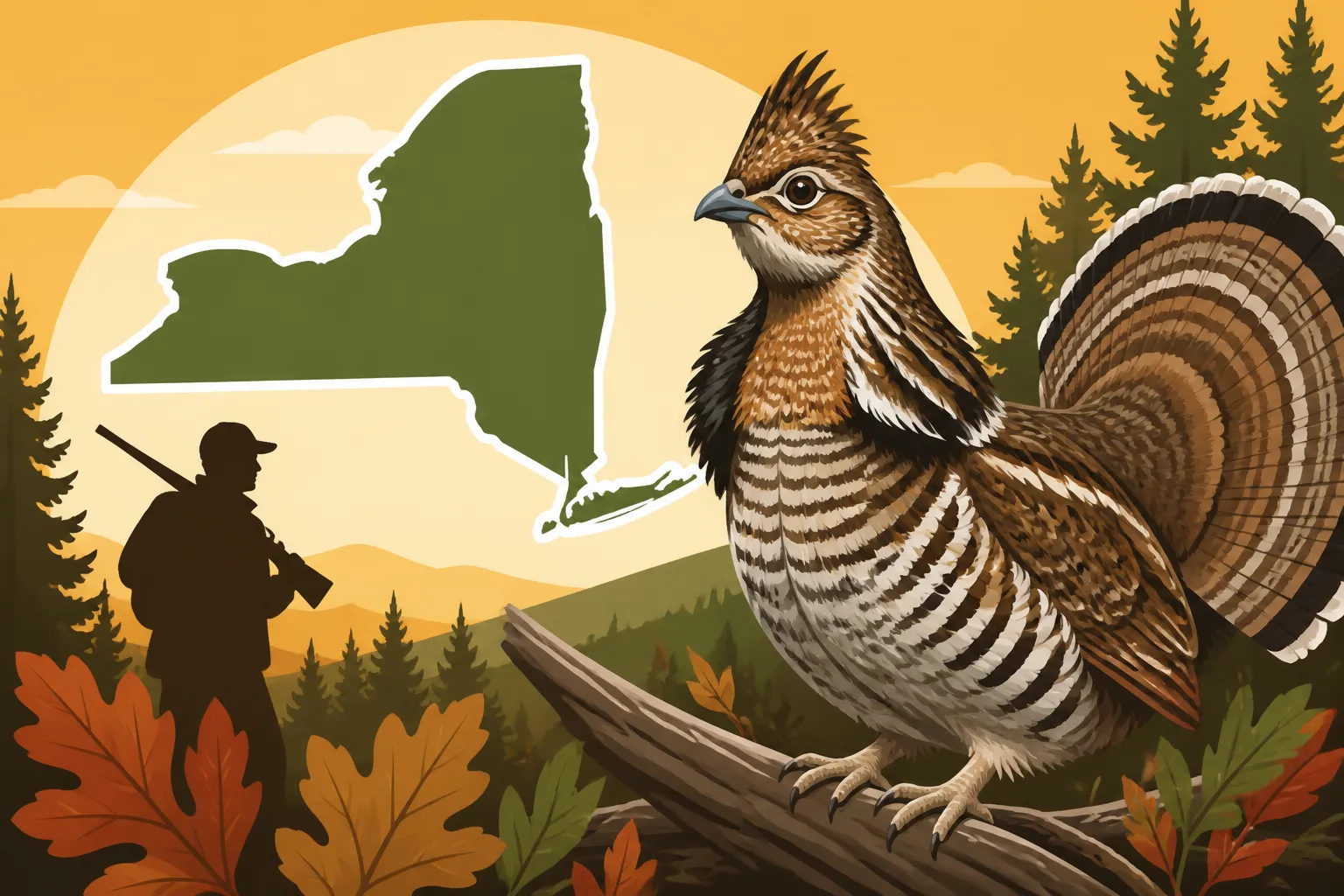
If you've been chasing ruffed grouse in New York for more than a few years, you've likely felt it: that disheartening quiet in coverts that used to be bursting with thunderous flushes. It’s not just your imagination; the drumming of the ruffed grouse is becoming less common across much of our beautiful state. This guide will walk you through the current status of New York's ruffed grouse population, explore the complex reasons behind their decline, and discuss what these trends mean for us as hunters who cherish this iconic upland bird.
The Current State of Ruffed Grouse in New York
For many of us, the sound of a grouse flushing from underfoot or the distinctive drumming from a log signaled the true start of fall. But these days, that classic New York hunting experience can feel more like a treasure hunt than a reliable annual tradition. The plain truth is, ruffed grouse numbers in New York are not what they used to be, and the trend has been a consistent concern for decades.
Decades of Decline: A Hard Reality for Hunters
The decline in ruffed grouse populations isn't a sudden phenomenon; it's a long-term trend that wildlife biologists and seasoned hunters have observed for many years. Back in the mid-20th century, grouse were abundant across suitable habitat, providing fantastic hunting opportunities. However, as the decades passed, the annual surveys and anecdotal reports from hunters started painting a clear picture: fewer birds in the bags, fewer flushes per day, and quieter woods. This isn't unique to New York; many states in the Northeast and Midwest have seen similar downturns. It’s a hard reality to face for those of us who grew up with a different expectation of grouse hunting. The feeling of walking through a prime aspen cut, expecting a barrage of flushes, only to hear nothing but the crunch of leaves underfoot, can be incredibly disheartening.
It's a stark contrast to stories from our grandparents' generation, where limits were often filled by noon, and the woods rang with the whirring wings of grouse. Today, success is often measured in flushes, not necessarily birds in the vest, and any grouse brought to hand feels like a hard-earned trophy. Understanding this historical context helps us appreciate the severity of the current situation and why conservation efforts are more critical than ever. The population has been steadily shrinking, leading to calls for more active habitat management and continued research into the various factors contributing to this downward spiral.
Regional Differences: Where Birds Still Hold On
While the statewide trend points to a general decline, it’s important to remember that New York is a vast and ecologically diverse state. The experience of grouse hunting in the Catskills can be vastly different from hunting the Tug Hill Plateau or the Adirondack foothills. Some regions, particularly those with more intact early successional habitat and less human development, tend to hold better numbers of grouse.
Areas with active logging, particularly those creating younger stands of aspen and birch, can still offer pockets of decent hunting. For instance, parts of the Tug Hill region or specific state forests in the Southern Tier with ongoing forest management might provide better opportunities than heavily fragmented landscapes closer to urban centers. Hunters willing to put in the miles and explore remote areas of public land or secure access to actively managed private timberland often find more success. It’s about seeking out those specific habitat types that grouse rely on, which are becoming increasingly scarce. New York Ruffed Grouse Numbers Today can feel pretty low in many spots, but dedicated scouting can sometimes reveal localized strongholds.
For example, the deep woods of the Adirondacks, while beautiful, often consist of mature hardwood forests that aren't ideal grouse habitat. However, areas around recent timber harvests or old burns might provide a temporary haven. In contrast, certain counties in the Southern Tier with a mix of agriculture and regenerating woodlots might offer more consistent, though still challenging, hunting. Using mapping tools like those found on GoHunt can be invaluable for identifying these potential hotspots, looking for clear-cuts, young forests, and dense thickets that might still hold birds.
Here's a generalized look at how grouse populations might vary across New York:
| Region | General Trend | Habitat Characteristics (Ideal vs. Reality) | Hunting Opportunity |
|---|---|---|---|
| Adirondacks | Localized pockets, general decline | Vast mature forests, limited early successional growth; some clear-cuts. | Low density overall, challenging; better near new timber activity. |
| Catskills | Moderate decline | Mix of mature hardwoods, some regenerating forests; fragmented by development. | Fair to challenging; focus on regenerating cuts and thickets. |
| Southern Tier | Significant decline | Mix of agriculture, mature woodlots, some state forest management. | Challenging; seek out active logging or dense cover. |
| Tug Hill Plateau | Better localized numbers | More continuous forest, some active logging/habitat management. | Better than average in prime habitat; still requires effort. |
| Western NY | Significant decline | Heavily fragmented, agriculture-dominated; small, isolated woodlots. | Very challenging; limited to small, managed coverts. |
Understanding the Causes of the Grouse Decline
It’s easy to point fingers, but the truth is, the decline of ruffed grouse is a multi-faceted issue, driven by several interconnected factors. It's not usually one single thing, but a "perfect storm" of changes in our landscape and environment that have made it harder for these birds to thrive. Understanding these causes is the first step toward potential solutions and helps us temper our expectations in the field.
Habitat Loss and Maturation: The Biggest Culprit
Hands down, the most significant factor contributing to the long-term decline of ruffed grouse in New York, and indeed much of their range, is habitat loss and the maturation of existing forests. Grouse are an "early successional" species, meaning they thrive in young, regenerating forests — the kind that grows up after a major disturbance like a timber harvest, fire, or severe storm. They need dense, thick cover from saplings and shrubs to hide from predators, find food, and raise their broods. New York Ruffed Grouse Decline is intimately tied to the changing age structure of our woodlands.
Think about it: after widespread logging in the late 19th and early 20th centuries, much of New York’s landscape was a patchwork of clear-cuts and regenerating woods. This created a boom for grouse. But over the last 80-100 years, many of those forests have grown up and matured into large, open stands of timber with little undergrowth. While beautiful and important for other species, these mature forests lack the dense cover grouse need to survive. It's like building a city without homes – even if there's plenty of space, it's not suitable for residency.
The problem is compounded by a lack of active forest management that mimics natural disturbances. Modern forestry practices, or a lack thereof in some areas, simply aren't producing enough of this critical young forest habitat. On public lands, budget constraints and public sentiment can make large-scale timber harvests challenging. On private lands, smaller parcel sizes and economic considerations mean less active management for wildlife. This consistent loss of crucial habitat, where the forest canopy closes and the understory thins, leaves grouse vulnerable to predators and makes it difficult for them to successfully nest and raise their young. Why New York Grouse Numbers Keep Falling really boils down to having fewer places where they can live safely and effectively.
West Nile Virus: An Emerging Threat
As if habitat issues weren't enough, another significant and relatively newer threat has emerged: West Nile Virus (WNV). This mosquito-borne illness, while widely known for its impact on humans and other bird species, has been identified as a major factor in grouse mortality. Studies have shown that ruffed grouse are particularly susceptible to WNV, and even birds that survive can suffer long-term health impacts, affecting their ability to reproduce or evade predators.
The impact of WNV is especially concerning because it can hit grouse populations even in areas with seemingly good habitat. A healthy patch of young forest might still see its grouse numbers depressed if WNV is prevalent in the mosquito population. This makes it a difficult challenge to combat directly, as managing mosquito populations on a large scale in forested areas is impractical. For hunters, this means that even when we find good cover, the birds might simply not be there due to disease. It's a silent killer that we can't see but has a very real impact on the birds we pursue.
The seasonality of WNV, typically peaking in late summer and early fall when young birds are most vulnerable, is particularly devastating. This is the critical period when broods are maturing, and a significant die-off then can dramatically reduce the number of birds available for the hunting season. Researchers are still learning the full extent of WNV's impact, but it's clear it adds another layer of pressure to an already struggling population, contributing to the overall downward trend observed in New York Ruffed Grouse Decline.
Predator Dynamics and Other Factors
While habitat and disease are primary drivers, other factors also play a role in the complex equation of grouse survival. Predator dynamics, for instance, are often debated among hunters. With fewer prey animals in ideal habitat, predators like coyotes, foxes, and raptors may exert greater pressure on remaining grouse populations. Predator and Furbearer Hunting in New York might help manage some populations, but the overall impact on grouse is subtle and intertwined with habitat quality.
When grouse are forced into less ideal, more open habitat, they become easier targets for predators. A dense thicket provides cover that a mature forest simply cannot. So, while predator numbers might not be the root cause of the decline, they certainly exacerbate the problem when grouse habitat is compromised. Think of it this way: if a deer has plenty of good cover to hide in, it's safer. If it's forced into an open field, it's much more vulnerable. The same applies to grouse.
Other potential, though often localized, factors include harsh winter weather, which can be particularly tough on birds in areas with thin thermal cover, and inconsistent food sources if specific mast crops fail. Human disturbance, lead shot ingestion (though less of an issue now with non-toxic shot requirements in many areas), and even certain agricultural practices can also contribute locally. It’s a mosaic of challenges, each chipping away at the resilience of the ruffed grouse population.
What This Means for the New York Grouse Hunter
So, what does this all mean for those of us who still love the thrill of a flushing grouse and the challenge of hunting these elusive birds? It means we need to adjust our expectations, our strategies, and perhaps most importantly, become advocates for the habitat these birds desperately need.
Adapting Your Hunting Strategy
Gone are the days when you could simply wander into any woodlot and expect to find grouse. Today, successful grouse hunting in New York requires a much more targeted and informed approach. It means getting out there and scouting before the season, using all the tools at your disposal to locate those precious pockets of prime habitat.
First, focus your efforts on areas known for active forest management or natural regeneration. Look for recent clear-cuts, young aspen stands, dense alder bottoms, or areas recovering from severe storms. These are the places where the thick cover grouse crave can be found. Mapping applications like GoHunt can be incredibly useful for this, allowing you to identify forest types, recent logging activity, and even elevation changes that might create unique micro-habitats. Pay attention to how old a cut should be for grouse; typically, 5-20 year old cuts are prime.
You'll also need to adjust your walking speed and pattern. Instead of fast, wide-ranging hunts, slow down, be methodical, and work through the densest cover. These birds are often holding tight, and you might need to literally step on them to get them to flush. Consider hunting with a good bird dog, as a well-trained dog can cover ground more efficiently and pinpoint birds you might walk right past. If hunting without a dog, work along edges, thick creek bottoms, and where different cover types meet. Flushing Grouse Without a Dog requires sharp eyes and a deliberate pace. Understanding Grouse Hunting New York Aspen Cover is key, as is targeting Woodcock Hunting New York Alder Runs where you might find both species.
| Strategy Component | Traditional Approach (Past) | Modern Approach (Today) |
|---|---|---|
| Scouting | Minimal; assumed birds were widespread | Extensive; use aerial maps (e.g., GoHunt) to find specific habitat. |
| Habitat Focus | Any woodlot or mixed forest | Target young, regenerating forests; aspen/alder thickets. |
| Pace | Brisk, covering lots of ground | Slow, methodical, thorough; "kicking every bush." |
| Gear | General upland gear | Lightweight shotgun (e.g., Shotguns for New York Grouse Cover), protective brush pants, GPS/mapping. |
| Expectations | High bag limits, many flushes | Value every flush; cherish a single bird in the vest. |
| Dog Use | Optional, but helpful | Increasingly valuable for finding and flushing tight-holding birds. |
The Importance of Habitat Management and Conservation
Perhaps the most critical takeaway for New York grouse hunters is the understanding that we play a vital role in the future of this species. Hunting is inherently tied to conservation, and for grouse, that means advocating for and participating in habitat management efforts. The vast majority of New York Ruffed Grouse Decline stems from a lack of suitable habitat, and addressing that requires action.
Support organizations that focus on early successional habitat creation and maintenance. This could involve wildlife groups, conservation funds, or even local land trusts. Learn about sustainable forestry practices and encourage landowners (both public and private) to implement management plans that benefit grouse. This doesn't necessarily mean widespread clear-cutting everywhere; it means strategic, well-planned timber harvests that create a mosaic of forest ages, providing benefits for a variety of wildlife. Aspen Management and New York Grouse is a prime example of targeted habitat work that directly benefits these birds.
You can also get involved more directly. Volunteer for habitat projects on public lands, or if you own private land, consider managing a portion of it for early successional growth. Even small-scale efforts can contribute to the larger picture. Educating others about the needs of ruffed grouse and the importance of young forest ecosystems is another powerful way to contribute. By becoming informed and active stewards of the land, we can hope to reverse some of the negative trends and ensure that future generations of New York hunters can still experience the magic of a ruffed grouse thundering out of the cover. It’s a long game, but one worth playing for the sake of these magnificent birds.
Disclaimer
This article is for general informational purposes only and does not constitute professional advice. Laws, prices and regulations vary by location and change over time. Consult a qualified professional for guidance on your specific situation.