Mange in New York Coyotes and Foxes
It’s a sight that can stop any hunter in their tracks: a coyote or fox, thin and patchy, its fur ragged and eyes sunken. This is often the visual evidence of mange, a debilitating parasitic skin disease that impacts many of New York’s wild canids. Seeing an animal in such distress can raise a lot of questions for hunters about the health of local populations, what it means for the hunt, and what steps, if any, they should take. This guide aims to demystify mange, explaining what it is, how to identify it, and what hunters should know and do when encountering affected animals in our beautiful New York landscapes.
What is Mange and How Does It Affect New York's Coyotes and Foxes?
Mange, particularly sarcoptic mange, is a persistent and often tragic issue for many wild animals, and our New York coyotes and foxes are no exception. It’s caused by microscopic mites that burrow into the animal's skin, leading to intense itching, hair loss, and secondary infections. When you spot an animal suffering from mange, it's usually the visual symptoms of this relentless infestation that catch your eye.
The Sarcoptic Mite and Its Cycle
The culprit behind sarcoptic mange is a tiny mite, Sarcoptes scabiei, which is barely visible to the naked eye. These mites are true parasites, living their entire lives on or within the skin of their host. Once they burrow, they lay eggs, and these eggs hatch into larvae, which mature into nymphs and then adults, all within the animal's skin. This cycle is continuous, and as the mite population grows, so does the animal's suffering.
The mites cause an allergic reaction in the host, leading to severe itching. This itching, in turn, causes the animal to scratch, bite, and rub excessively, which is what leads to the characteristic hair loss and skin damage. It's a vicious cycle where the scratching provides temporary relief but exacerbates the skin's condition, making it prone to open wounds and bacterial infections. For a wild animal, this constant irritation is a huge energy drain, impacting their ability to hunt, find food, and evade predators, especially during the harsh New York winters when insulation is critical.
Symptoms and Progression of the Disease
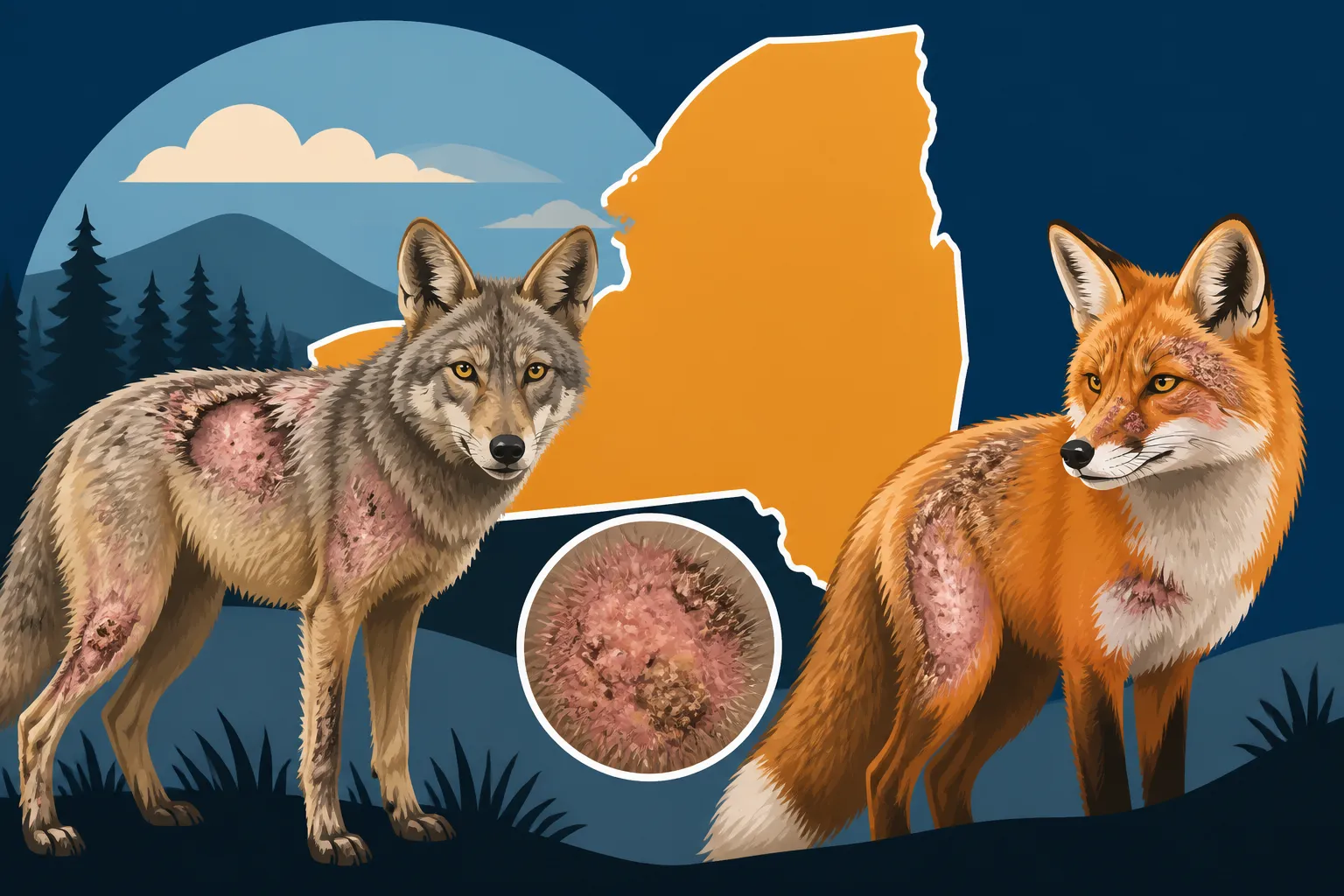
Early signs of mange might be subtle: a bit of patchy hair loss, perhaps some redness or scabbing around the muzzle, ears, or elbows. But as the disease progresses, it becomes far more obvious and devastating. You'll see widespread hair loss, often starting on the belly and legs and spreading across the body. The skin beneath the lost fur will appear thickened, crusty, and wrinkled, sometimes with open sores from constant scratching. The animal might have a strong, unpleasant odor due to secondary bacterial infections.
A severely mangy animal will look emaciated, its ribs and hip bones often visible beneath the inflamed skin. Their behavior might also change; they could appear lethargic, less wary of humans, or even stumble as if disoriented due to their weakened state. In advanced cases, the animal can become blind from crusted eyelids or suffer from severe dehydration and hypothermia, ultimately leading to death, especially during the cold months of hunting season across the Southern Tier or the deep snow of the Adirondacks. It's a truly heartbreaking progression to witness in the wild.
Identifying Mange in the Field and Its Impact on Hunting
As hunters, we spend a lot of time observing wildlife. Whether you're in a treestand overlooking a Southern Tier Farmland Deer field edge or still-hunting through Catskill ridges, developing an eye for healthy versus unhealthy animals is an important part of understanding the ecosystem. Spotting a mangy coyote or fox is a clear indicator that something is amiss in their individual health, and possibly within the local population.
Visual Cues and Behavioral Changes to Watch For
The primary indicator of mange is, without a doubt, the condition of an animal's coat. A healthy coyote or fox in New York should have a dense, full coat, especially as the seasons turn colder. If you see patches of hair missing, particularly around the flanks, tail, ears, or eyes, that's your first red flag. The exposed skin might look gray, thickened, scaly, or crusty. Think of an old, neglected dog with severe allergies – that's often the appearance.
Beyond the coat, pay attention to their overall body condition. Mangy animals are often noticeably thin, even gaunt, as the energy expenditure from fighting the mites and secondary infections takes its toll. They may appear to shiver or seem constantly uncomfortable. Their behavior might also be off. A healthy coyote is typically wary and quick to bolt at the first sign of human presence. A mangy one, however, might seem less alert, move slowly, or even appear to ignore your presence entirely, a sign of their severely compromised state. You might also see them incessantly scratching or biting at themselves. Tools like the GoHunt app can help you understand normal animal behavior in different habitats, making it easier to spot these deviations.
Here's a quick comparison of what you might observe:
| Feature | Healthy Coyote/Fox | Mangy Coyote/Fox |
|---|---|---|
| Coat Condition | Dense, shiny, full; even color. | Patchy hair loss (especially tail, flanks, face); dull, brittle hair. |
| Skin Appearance | Smooth, pliable, light in color. | Thickened, crusty, wrinkled, scaly; often red or gray, may have open sores. |
| Body Condition | Well-muscled, alert, good weight for season. | Emaciated, ribs and hip bones visible; lethargic, weak. |
| Behavior | Wary, alert, quick movements, avoids humans. | Dull, less alert, slow-moving, may not flee humans; excessive scratching/biting. |
| Eyes | Clear, bright, responsive. | Sunken, dull, often crusted with discharge. |
Ethical Considerations and Hunting Decisions
Encountering a mangy animal while hunting presents an ethical dilemma for many. On one hand, you might feel a pang of sympathy for its suffering. On the other, you're out to hunt. Some hunters believe that dispatching a severely mangy animal is an act of mercy, removing a suffering creature from the population and potentially slowing the spread of the mites to other canids.
From a hunting perspective, a mangy animal is typically not ideal for harvest. Their meat quality will be severely compromised, and it's generally not recommended for consumption due to the animal's weakened state and potential secondary infections, even though sarcoptic mange itself doesn't directly transmit to humans as a severe disease, it's best to err on the side of caution. If you are pursuing predators like coyotes for their fur, a mangy animal's hide will be worthless. So, if your goal is a healthy fur or a clean harvest, a mangy animal is not what you're looking for.
When you're out Predator and Furbearer Hunting in New York, especially in a specific area you know, seeing multiple mangy animals could indicate a localized outbreak. This information, combined with scouting data you might collect with tools like GoHunt, can help you make informed decisions about where and how to focus your efforts. It's a challenging situation, but one that demands a thoughtful and ethical response from responsible hunters.
What Hunters Should Do When Encountering a Mangy Animal
It's one thing to spot a mangy animal, and another to know what to do next. While it might feel natural to want to intervene, direct intervention with wild animals can be dangerous for you and often does more harm than good to the animal. There are, however, responsible steps you can take to contribute to wildlife health in New York.
Reporting Sightings to the DEC
The most important action you can take when you observe a sick or visibly diseased animal, including one with advanced mange, is to report it to the New York State Department of Environmental Conservation (DEC). The DEC monitors wildlife health across the state, and your report contributes valuable data to their efforts to track diseases like mange. When you report, try to be as specific as possible:
- Location: Pinpoint the exact location where you saw the animal, ideally with GPS coordinates. Scouting With the New York HuntFishNY App can help you get precise locations.
- Date and Time: When did you see it?
- Animal Species: Was it a coyote, red fox, gray fox, or another animal?
- Description of Symptoms: Detail the extent of hair loss, skin condition, and any unusual behavior. Photos or videos, if taken safely and from a distance, can also be incredibly helpful.
The DEC uses this information to understand disease prevalence, identify potential hotspots, and assess impacts on local populations. While they typically won't intervene for individual animals with mange due to the challenges of treating wild animals and the vastness of our state, your reports are crucial for broader wildlife management strategies. If you're wondering how to report, a quick search for "New York DEC wildlife disease reporting" will usually lead you to the right contact information.
Handling Carcasses and Safety Precautions
If you harvest an animal that appears to have mange, or if you find a deceased mangy animal, proper handling is essential for your safety and to prevent further spread of the mites.
- Do not consume the meat: As mentioned earlier, it's best to avoid consuming meat from any diseased animal. The stress and secondary infections associated with severe mange can render the meat unsuitable.
- Wear gloves: When handling the carcass, always wear disposable gloves. While sarcoptic mange mites primarily affect canids and typically cause only a temporary, minor rash in humans, it's always wise to take precautions when dealing with wild animal diseases.
- Bury or bag the carcass: If you've harvested a mangy animal, or if you find a deceased one and can safely do so, bury it deeply or double-bag it and dispose of it with household waste (if local regulations allow). This helps prevent scavengers from potentially spreading the mites and other pathogens.
- Clean equipment: Thoroughly clean and disinfect any tools, clothing, or vehicle surfaces that came into contact with the animal. Hot, soapy water and a disinfectant will go a long way. This is particularly important if you've been Blood Trailing After Dark in New York and handled the animal directly.
It's important to understand that diseases like mange are a natural part of wildlife populations. While it’s tough to witness, it's often a form of natural selection, impacting weaker individuals and helping to keep the overall population robust over time.
Mange, Wildlife Health, and the Role of New York Hunters
Understanding diseases like mange is part of being a well-informed and responsible hunter in New York. Our observations in the field offer invaluable insight into the health of the wildlife populations we cherish. The presence of mange, whether in Coyotes Across New York State or the smaller fox species, reminds us of the constant struggles wild animals face.
Population Impacts and Disease Monitoring
Mange can have a significant impact on local coyote and fox populations, especially in areas where it becomes widespread. While these predators are often abundant, severe outbreaks can lead to localized declines. For example, a harsh winter coupled with a high incidence of mange can devastate an otherwise healthy coyote population in a given wildlife management unit. The mites compromise the animal's ability to regulate its body temperature, making survival in freezing conditions incredibly difficult.
The DEC works tirelessly on New York Wildlife Disease Monitoring, and hunters are on the front lines of this effort. Every report you make, even if it feels like a small thing, contributes to a larger dataset that wildlife biologists use to understand population dynamics and disease trends. This information helps them make informed management decisions, such as adjusting harvest quotas or focusing research efforts on specific areas or species.
It's a continuous balancing act for wildlife managers to maintain healthy populations while also considering the impact of various diseases. By being observant and reporting what you see, you become an active participant in this critical aspect of conservation.
How Hunters Contribute to Overall Wildlife Health
Beyond reporting, hunters play a crucial, albeit often indirect, role in maintaining wildlife health. By focusing on ethical hunting practices, adhering to regulations, and being selective in the animals we harvest, we contribute to a stronger, more resilient wildlife community. For example, if you choose not to harvest a severely mangy coyote, you're not just making an ethical choice; you're also leaving potentially healthier individuals to reproduce.
Furthermore, hunters often provide crucial feedback on habitat conditions, game populations, and emerging issues in the field that might otherwise go unnoticed. Your deep knowledge of specific areas, perhaps gleaned from years of chasing deer or calling coyotes, makes you an essential partner in wildlife conservation. Whether you're tracking game through the Tug Hill Plateau or observing wildlife on private land you scouted with GoHunt, your eyes and ears are invaluable.
It’s about more than just the hunt itself; it’s about being part of the larger picture of wildlife stewardship. When we see an animal suffering from mange, it's a stark reminder of the wildness and the challenges inherent in nature. By understanding and reacting responsibly, we uphold our role as ethical stewards of New York's incredible natural resources.
Disclaimer
This article is for general informational purposes only and does not constitute professional advice. Laws, prices and regulations vary by location and change over time. Consult a qualified professional for guidance on your specific situation.