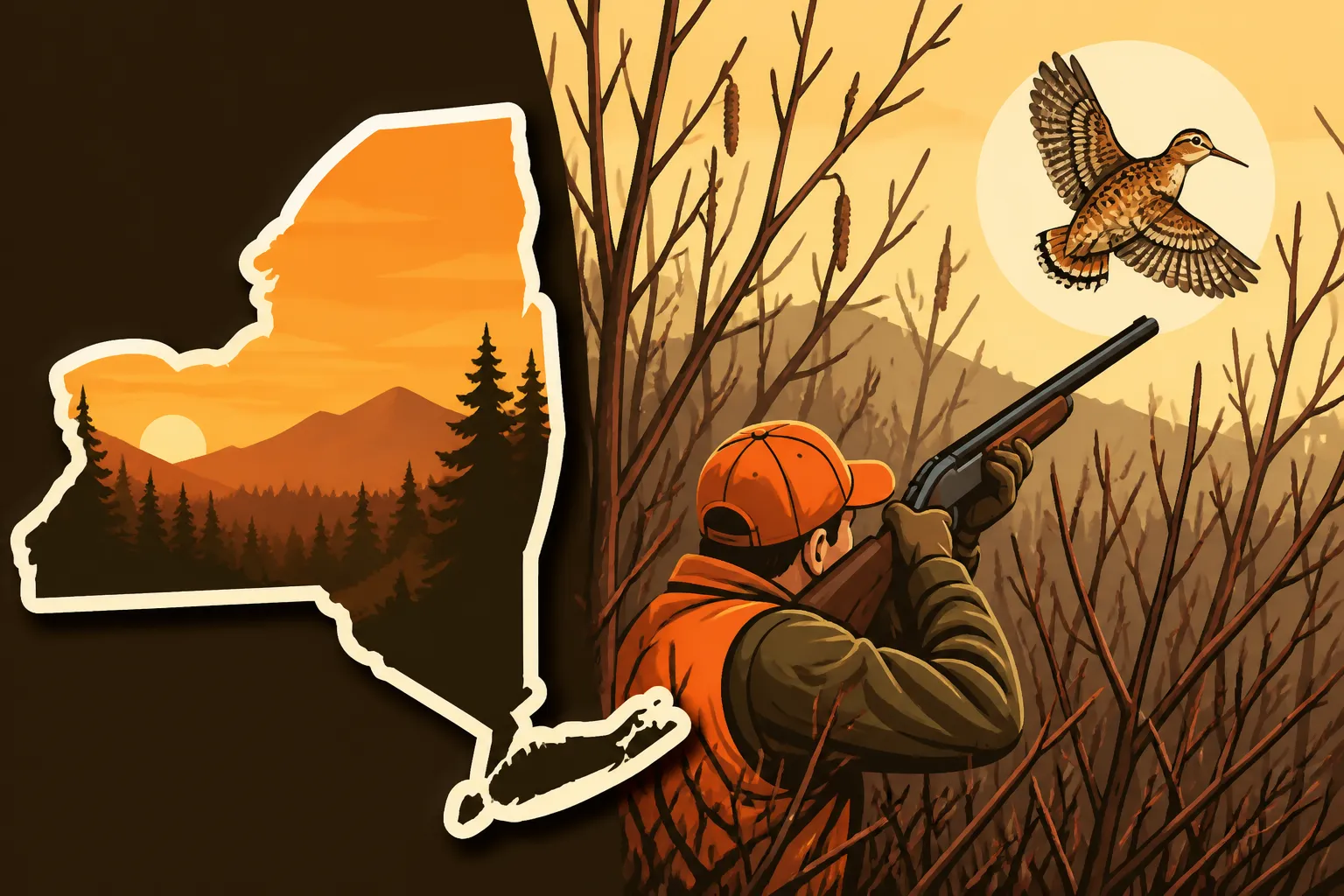
Woodcock Hunting New York Alder Runs
There’s a unique thrill, and often a fair bit of frustration, that comes with pursuing the American woodcock, affectionately known as the timber doodle, in the dense, wet alder runs of New York. These secretive, migratory birds can vanish into thin air, leaving hunters and their dogs perplexed by their cryptic ways. If you've ever felt like you're just wandering through thick brush hoping for a miracle, you're not alone. This guide aims to pull back the curtain on woodcock behavior and offer proven strategies to help you find more birds and make your hunts in these challenging environments more successful.
Understanding New York Woodcock and Their Preferred Habitat
Hunting woodcock is a different ballgame than chasing upland birds like grouse or pheasants. These birds have their own unique charm, and equally unique challenges, that make them a truly special pursuit for many New York hunters.
The Elusive American Woodcock
The American woodcock is a fascinating creature, perfectly adapted to its moist, brushy habitats. They're often called "timber doodles" because of their long bills, which they use to probe soft earth for earthworms, their primary food source. Unlike the explosive flush of a ruffed grouse, a woodcock often slips away quietly or flushes with a soft, whirring flight, making them incredibly difficult to pinpoint without a keen-nosed dog. They're masters of camouflage, blending seamlessly into the fallen leaves and tangled branches of their preferred cover.
These birds are migratory, traveling along the Atlantic Flyway, and New York State sits right in the middle of a crucial staging and feeding area for them. We see both resident birds that nest here and waves of migrants pouring down from Canada and the northern New England states as the weather turns colder. Understanding their migratory patterns is key to hitting the peak of the flight, which often feels like trying to catch lightning in a bottle.
Woodcock behavior is largely dictated by their need for soft, moist soil. They feed primarily at night or in low light, probing the ground for worms in areas like alder runs, young aspen thickets, and even damp hayfields. During the day, they seek dense cover for protection, resting and digesting in areas with a thick overhead canopy and soft ground underneath. In spring, males put on an impressive aerial display on "singing grounds" to attract mates, but during hunting season, they're much more subdued.
The Allure of Alder Runs
When we talk about woodcock habitat in New York, alder runs are almost always at the top of the list. These dense, often linear thickets typically grow along streams, beaver ponds, or in low-lying, poorly drained areas. Alders thrive in wet conditions, creating a perfect environment for earthworms to flourish, which in turn draws in the woodcock. The tangled network of branches, often interwoven with briars and dogwood, provides incredible cover from predators and hunters alike.
Identifying a productive alder run isn't just about spotting green brush next to water. You're looking for dense, young alders, perhaps a mix of speckled alder or tag alder, often no more than 10-15 feet tall. The key is the underlying soil: it needs to be moist, but not standing water, and soft enough for a woodcock to easily probe with its long bill. Creek bottoms, the edges of swamps, and even old, overgrown farm ditches can hold excellent alder habitat.
Hunting these areas is undeniably a tough slog. Visibility is often measured in feet, not yards, and navigating the tangled branches can be exhausting for both hunter and dog. The sheer density of the cover means woodcock often flush close, but disappear just as quickly behind a curtain of branches. It’s a challenge that tests your patience, your dog’s nose, and your shooting reflexes, but the rewards of a successful retrieve from such a place are immense.
Scouting and Locating Productive Alder Runs
Finding woodcock isn't always about stumbling upon them; it often requires a bit of homework before you even step foot in the woods. Modern tools and a keen eye for subtle signs can drastically improve your odds.
Pre-Season Reconnaissance
Before the season even opens, or on days you can't get out with a gun, aerial maps and mapping apps like GoHunt or the New York State DEC's HuntFishNY app are your best friends. Look for low-lying areas, especially those with visible water features like streams, small ponds, or beaver flows. Alders typically appear as very dense, uniform green patches, often distinct from the taller, more open canopy of surrounding hardwoods. Creek bottoms, especially where multiple smaller creeks converge, are prime candidates. Often, these areas will show up as darker green on satellite imagery due to their wetness and dense foliage.
Once you’ve identified potential spots on the map, it's time for some ground scouting. Woodcock leave very distinct "sign" that can tell you if birds are using an area, even if you don't flush one. Look for their characteristic "splats" – white, chalky droppings with a dark center, often found in small clusters on the ground. You'll also see small, pencil-sized probe marks in the soft soil where they've been feeding. Sometimes, you might even find dusting bowls, small depressions in the dirt where the birds have taken dust baths.
It’s important to learn to differentiate woodcock sign from that of other birds. Grouse droppings, for instance, are usually larger and often found near coniferous trees or in thicker, drier cover. Woodcock sign is almost always associated with moist, soft earth. Knowing these subtle differences can save you a lot of wasted time in unproductive cover. Many hunters also combine their woodcock efforts with other upland pursuits, and knowing the distinct signs helps focus your efforts. For those interested in this dual pursuit, check out our guide on Hunting Grouse and Woodcock Together.
Timing Your Hunt
The timing of your woodcock hunt is paramount, perhaps even more so than with other game birds. New York experiences two main phases of woodcock hunting: the early season with resident birds, and the later season, which targets the migratory push. Missing the "flight" can mean the difference between seeing dozens of birds and seeing none at all. There's a certain ebb and flow to it, and hitting it just right often feels like pure luck.
Resident birds are typically present from the season opener in October, found in the areas where they bred throughout the summer. These birds can be anywhere that has suitable moist cover. However, the real excitement often starts in late October and early November when the main migration begins. Cold fronts to our north, particularly in Canada and northern New England, will push waves of new birds down into New York. Keep a close eye on weather patterns; a sustained cold snap is often a signal that new birds are on the way.
Weather also plays a critical role on a daily basis. Woodcock prefer cool, moist conditions. Dry, windy days can make them hunker down, or even push them out of an area if the ground becomes too hard for probing. Overcast days with a light drizzle can be fantastic. As for daily timing, while they are crepuscular (most active at dawn and dusk), in dense alder runs, you can often find them throughout the day. The thick cover provides enough shade and security to keep them comfortable even during midday.
Essential Gear and Dog Work for Alder Runs
Hunting alder runs for woodcock is as much about the right equipment and a well-trained dog as it is about knowing where to go. The wrong gear can make an already challenging hunt downright miserable.
Shotgun and Ammunition Choices
When you’re hunting in thick alder runs, you’re rarely going to get a long shot. Most flushes are tight, often within 15-20 yards, and the birds are darting through a maze of branches. This environment calls for a fast-handling, light shotgun with very open chokes. Forget your tight-choked waterfowl gun. An Improved Cylinder or Skeet choke is ideal, allowing the shot pattern to open quickly for those close-range, snap shots. Many experienced woodcock hunters favor sub-gauges like a 20 or even a 28 gauge because they are lighter to carry and swing quickly, which is crucial when a bird zips out from underfoot.
For ammunition, small shot sizes are your friend. Woodcock are small, delicate birds, and larger shot simply isn't necessary. #7.5, #8, or even #9 shot will provide a dense pattern at close range, maximizing your chances of connecting. When choosing your loads, always be mindful of New York’s regulations regarding non-toxic shot, especially if you’re hunting near wetlands or areas where it might be required for waterfowl. It’s always a good idea to check local rules before heading out.
One piece of "gear" that’s often overlooked but absolutely vital in dense cover is proper eye protection. Branches can snap back, and twigs are constantly poking at you. A good pair of shooting glasses will protect your eyes and also reduce glare, helping you spot a fleeting bird. Hearing protection is also a must, especially if you're hunting with a partner or have multiple shots in quick succession. The reverberation in thick cover can be surprisingly loud. For more insights on optimizing your shotgun for these conditions, consider looking into Choke Choice for Fast Flushes and Barrel Length for Walking Thick Cover.
Dog Training and Handling in Thick Cover
A well-trained dog is not just an asset for woodcock hunting; for many, it’s an absolute necessity and a huge part of the joy. Woodcock hold incredibly tight, and their camouflage is superb. Without a dog to sniff them out, you’ll walk past far more birds than you ever flush. Whether you prefer a pointing dog that locks up solid, allowing you to move into position, or a flushing dog that systematically works the cover, both can be incredibly effective. The key is a dog that works close and listens well.
Handling a dog in alder runs presents its own set of challenges. Visibility can be so limited that you might lose sight of your dog within a few yards. A good bell or a GPS collar with tracking capabilities is essential for keeping tabs on their location. You'll need to work closely with your dog, encouraging them to stay in range, especially in the thickest stuff. Retrieving downed birds in dense tangles can also be tough. A dog that is trained to mark the fall and retrieve reliably will save you countless lost birds and frustrated searches.
Training a young dog for woodcock in alder runs requires patience and consistent exposure. Start by simply exposing them to the scent and letting them work through the cover. Encourage them to stay close and reinforce their natural hunting instincts. For pointing breeds, emphasize holding point and honoring the flush. For flushers, encourage thorough, systematic quartering. If you're looking to gear up your canine companion, don't miss our guide on Bird Dog Gear for New York Cover, which covers everything from protective vests to training collars.
Tactics for Flushing and Shooting Woodcock in Alders
Even with the perfect dog and the right gear, actually getting a shot at a woodcock in an alder run can feel like a game of chance. But with a few proven tactics, you can tilt the odds in your favor.
Walking Strategies for Maximizing Flushes
The key to effectively hunting an alder run is a slow, methodical approach. Resist the urge to crash through the cover. Woodcock are masters of holding tight, and if you move too fast, they'll simply let you walk right past them, flushing silently behind you. Work the wind, if possible, allowing your dog to pick up scent more easily. Quartering through the terrain, zig-zagging rather than walking in a straight line, helps cover more ground thoroughly and gives your dog different angles on scent.
When you hit those truly dense tangles – the kind where you have to literally push through with your shoulder – slow down even more. Pause for a few seconds. Woodcock will often flush when they think the immediate threat has passed, or when they feel cornered. That momentary stop can sometimes be just the trigger they need to flush, giving you a chance to react. Pay attention to any small openings or "leads" within the thicket; these are often where birds will choose to escape, offering you a brief, clear shot.
Hunting with multiple people adds another layer of strategy, and safety. If you have two or more hunters, spread out to cover a wider swath of the run, maintaining visual contact and constant communication. This helps prevent birds from slipping out the sides, and also creates a safer environment by ensuring everyone knows where others are. Safety is paramount when working in such close quarters, so always be mindful of your shooting lanes and what's beyond your target.
The Quick Shot in Tight Quarters
The woodcock flush is famous for being fast and often frustratingly erratic. They might flutter straight up, zip horizontally through a gap, or duck immediately back into the thickest cover. There’s rarely time for a long, deliberate aim. Your gun needs to be mounted smoothly and quickly, and you need to be ready to pull the trigger the instant the bird is visible and clear of your dog.
Shooting in these thick environments is a lesson in instinct and precision. You often get only a split second to assess, swing, and shoot. The window for a clean shot might be just a small opening between branches. This means you need to practice quick mounts and target acquisition. It's not about perfect form; it's about putting the shot pattern where the bird is going to be, quickly. Overthinking it will usually lead to a miss.
The best way to get better at this kind of shooting is practice. Skeet and sporting clays can help, but nothing truly replicates the snap shot in the alder. Focus on bringing the gun to your shoulder smoothly, pointing rather than aiming, and letting your natural hand-eye coordination take over. Some hunters even remove their front bead entirely, relying on instinctively pointing the barrel. Remember, it's a close shot, so you don't need to lead by much; just get on the bird and pull.
Retrieving Birds in Dense Alders
Successfully shooting a woodcock is only half the battle; retrieving it from the depths of an alder run can be just as challenging, if not more so. Woodcock are small birds, and they can disappear completely into the leaf litter and tangled branches the moment they hit the ground. Marking the fall with a visual landmark – a specific tree, a rock, or a distinctive clump of brush – is absolutely critical. Without a clear mental marker, even a dog can struggle.
If you’re hunting with a dog, a good retriever is invaluable here. Train your dog to watch the fall closely and go directly to the bird. Encourage them to use their nose extensively once they get to the general area. If you’re hunting without a dog, you’ll need to be incredibly systematic. Walk slowly to the exact spot you marked, then begin a grid search, expanding your search pattern outward from that point. Look for any disturbance in the leaves, any tell-tale feather, or the shape of the bird itself.
Losing a downed bird is one of the most disheartening experiences for any hunter, and it’s especially easy with woodcock in thick cover. Emphasize ethical retrieval by taking your time and being thorough. Don't give up too quickly. Sometimes, getting down on your hands and knees and literally sifting through the leaves and branches is what it takes. If you’re hunting in a group, everyone should pitch in to help mark the fall and search.
Seasonal Considerations and Public Access
Maximizing your woodcock hunting success in New York involves understanding how the seasons progress and knowing where you can legally access quality habitat. These factors often determine whether you're finding birds or just getting a good workout.
Early vs. Late Season Adjustments
New York offers a unique opportunity to hunt woodcock in both the early and late migratory windows. The early season, typically beginning in mid-October in many parts of the state, focuses on the resident woodcock populations. These birds hatched and spent their summer in New York, and they tend to be found in slightly drier alder patches or young forest clearings, especially if the ground is still relatively soft. You might find them closer to small woodlots and brushy fields, not always in the deepest, wettest alder runs.
As October progresses into early November, the dynamics shift dramatically. This is when the significant migratory flights start pushing through. These "new" birds are often concentrated in the classic, wet alder bottomlands and swamp edges where food is abundant and they can rest during their journey south. These are the peak weeks when you might encounter multiple flushes in a single cover. The key here is monitoring weather patterns; a series of cold fronts pushing down from the north is your best indicator that the main flight is on.
One of the most important things to remember about woodcock hunting in New York is that their season is limited by temperature. Woodcock need soft ground to feed. As soon as the ground freezes hard, they'll pack up and move further south. Your window to hunt these migratory birds is relatively short, often just a few prime weeks in late fall. A hard frost can significantly reduce bird numbers overnight, so be ready to hit the woods when conditions are right.
Finding Public Access for Woodcock Hunting
New York State boasts a vast amount of public land that can hold excellent woodcock habitat. Your best bets are typically New York State Forests and Wildlife Management Areas (WMAs). These lands are actively managed, and many contain the mix of young, dense cover and moist soil that woodcock crave. Before heading out, always check the specific regulations for any WMA you plan to hunt, as some may have unique rules regarding access or hunting methods. Our detailed guides on New York State Forest Hunting and New York Wildlife Management Areas are great resources to get started.
Utilizing mapping tools is, again, paramount here. Apps like GoHunt or the official New York HuntFishNY app allow you to overlay public land boundaries with satellite imagery, making it incredibly easy to identify potential alder runs along stream corridors or in low-lying areas within these public tracts. Look for areas marked as "wetlands," "forested wetlands," or areas adjacent to designated streams and rivers. You can often see the distinct linear patterns of alders on these maps.
While public land offers abundant opportunities, never forget the importance of respecting private property. Always be aware of your surroundings and look for "Posted" signs. If a bird falls onto private land, New York law requires you to have permission to retrieve it. It’s always best to be absolutely sure of property lines, and if you're unsure, or find yourself near a posted boundary, err on the side of caution. For more on navigating these situations, refer to our article on Do You Need Written Permission in New York?.
Woodcock Hunting Quick Reference Guide
| Category | Recommendation | Details |
|---|---|---|
| Habitat | Dense alder runs, moist creek bottoms, young aspen | Look for soft, probe-able soil. |
| Timing | Mid-Oct to Early Nov (peak migration) | Follow cold fronts. Hunt cool, moist days. Ground freeze ends season. |
| Shotgun | Light, fast-handling 20 or 28 gauge | Open chokes (IC, Skeet). |
| Ammunition | #7.5, #8, or #9 shot | Non-toxic shot may be required in some areas. |
| Dog | Close-working pointer or flusher, reliable retriever | Bell or GPS collar for tracking. |
| Walking Style | Slow, methodical, quartering | Pause often. Scan for small openings. |
| Shooting | Snap shooting, quick mount, point-and-shoot | Practice quick target acquisition. |
| Retrieval | Mark the fall carefully, systematic search | Utilize dog. Be thorough to avoid losing birds. |
| Safety | Eye and ear protection, communicate in groups | Always know where your partners and dog are. |
| Scouting | Aerial maps (GoHunt, HuntFishNY), look for "splats" | Identify low, wet areas and dense, shrubby cover. |
Disclaimer
Hunting is an inherently dangerous activity. Always prioritize safety by adhering to all New York State Department of Environmental Conservation (DEC) regulations, wearing appropriate safety gear, and understanding the capabilities and limitations of your equipment. This guide provides general information and should not replace official hunting education courses or legal advice. Always consult the most current DEC hunting regulations before heading afield.