Shotguns for New York Grouse Cover
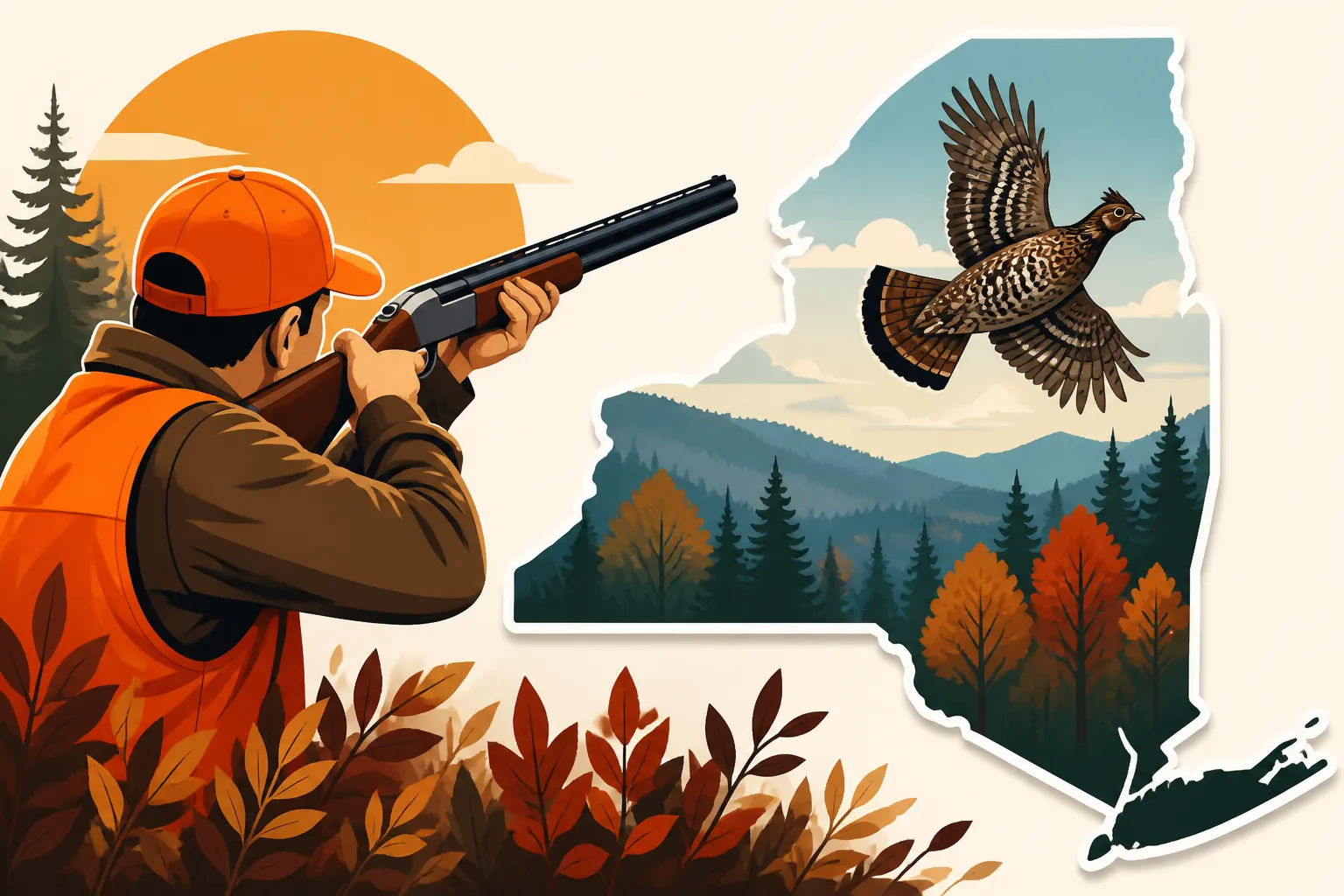
There's a special kind of frustration that comes with hunting ruffed grouse in New York. You've hiked for miles through thick cover, navigated tangled briars and downed timber, your heart is pounding, and then, BAM! A thunderous explosion of wings erupts just yards away. Before your brain can even register what's happening, the bird has vanished into the dense foliage, leaving you with an empty swing and a feeling of "if only." This guide is all about making those "if only" moments fewer and farther between by helping you choose the perfect shotgun to tackle New York's challenging grouse habitat.
The Unique Challenges of New York Grouse Hunting
Hunting ruffed grouse in New York isn't like shooting clays at the local club. It's an immersive, often grueling experience that demands both physical stamina and mental quickness. The environment itself dictates much of what you need from your equipment, especially your shotgun.
The Dense Cover of Adirondack and Catskill Forests
If you've spent any time chasing grouse in New York, you know exactly what I'm talking about. We're not talking about open fields or sparse woods; we're talking about prime grouse habitat: thick aspen cuts, alder swamps, dense conifer stands, and tangled briar patches. These are places where you're often pushing through cover so thick you can barely see your feet, let alone a bird flushing at high speed. The shooting windows are incredibly tight, often measured in fractions of a second and mere yards. You might catch a glimpse of a bird weaving through branches for a moment, or hear it before you see it, and then it's gone.
This density means your shotgun needs to be an extension of your body, quick to shoulder and point. A long, heavy barrel that might be perfect for pass shooting ducks on a marsh will be a nightmare when you're trying to swing on a grouse that just busted out of a hemlock thicket. Every inch of barrel length and every ounce of weight becomes critical when you're trying to pivot quickly in a tight spot. Getting snagged on a branch or having your barrel tip hit the ground during a fast swing can ruin your shot entirely, not to mention dinging up your beloved firearm.
Weather Variability and Gun Performance
New York's weather during grouse season is, to put it mildly, unpredictable. From crisp, sunny October days to frigid, wet November mornings, your gear needs to stand up to it all. Rain, snow, sleet, or freezing fog are all par for the course, and they can wreak havoc on a poorly maintained or designed shotgun. Moisture can seep into actions, causing rust or sluggish performance. Freezing temperatures can make trigger fingers numb and mechanisms stiff.
You need a shotgun that's not just reliable in fair weather, but one that you can trust when the conditions turn nasty. Imagine busting a bird in a driving rainstorm, only to have your action seize up because water has gotten into the mechanism. It's a frustrating scenario that can often be avoided by choosing a gun known for its robust design and by practicing diligent field maintenance. This is where the choice of stock material and the internal workings of the shotgun truly come into play, influencing how well it sheds water and resists corrosion.
The Elusive Nature of the Ruffed Grouse
Ruffed grouse are often called the "king of game birds" for a reason. They're smart, fast, and masters of camouflage. They'll hold tight, letting you walk right past them, only to explode into flight when you're least prepared. Their flight path is rarely a straight line; it's a zig-zagging, branch-dodging blur designed to put obstacles between them and you. Combine their speed with their ability to vanish into the background, and you realize that every advantage you can get from your shotgun is crucial.
This requires a gun that patterns well at close range, delivering a dense cloud of shot that can catch a bird darting through the trees. Over-choking your gun, for example, might result in a pattern too tight for the typical 15-25 yard shots you'll get on grouse, leading to missed birds or, worse, birds that are too mangled to eat. The quickness of the grouse also emphasizes the need for a shotgun that swings effortlessly and points intuitively. You don't have time to think; you need to react.
Understanding Shotgun Gauges for Grouse
When you start thinking about a shotgun for grouse, the first question on many hunters' minds is, "What gauge should I use?" It’s a foundational decision that impacts everything from the gun’s weight and recoil to ammunition availability and the type of shot pattern you’ll achieve.
The Enduring Appeal of the 12 Gauge
The 12 gauge shotgun is, without a doubt, the most common and versatile shotgun in America, and many grouse hunters still carry one into the New York woods. Its popularity stems from its incredible adaptability – you can find 12 gauge ammunition for virtually any hunting scenario, from tiny birdshot for quail to heavy slugs for deer. This means if you already own a 12 gauge for New York Waterfowl Hunting by Zone or New York's Southern Zone Firearm Season, you might be tempted to use it for grouse as well.
The advantage of a 12 gauge for grouse lies in its ability to throw a large, dense pattern, which can be reassuring when a bird explodes from thick cover. You often feel like you have a wider margin for error with more pellets in the air. However, this versatility comes with a trade-off. A typical 12 gauge is often heavier and generates more recoil than smaller gauges. In a full day of upland hunting, where you might be carrying your gun for miles, that extra weight can become a burden. Furthermore, the sheer power of a 12 gauge can sometimes lead to over-killing a small bird like a grouse, especially at close range, potentially damaging the meat. For some, the bigger bang and heavier gun detract from the graceful experience of grouse hunting.
The Nimble 20 Gauge for Fast Action
For many dedicated upland hunters, especially those pursuing grouse and woodcock, the 20 gauge is the sweet spot. It offers a significant reduction in weight and recoil compared to a 12 gauge, making it much more comfortable to carry all day and quicker to shoulder and swing. When a grouse flushes, every fraction of a second counts, and a lighter gun can make all the difference in getting on target. You'll find yourself able to react faster, and the reduced recoil means quicker follow-up shots, if needed, and less fatigue over a long day.
Despite its lighter payload, a 20 gauge with the right load and choke can still throw a perfectly adequate pattern to effectively take down ruffed grouse. In fact, many argue that the improved handling and reduced fatigue from a 20 gauge result in more accurate shooting and, ultimately, more birds in the vest. Ammunition for the 20 gauge is also widely available and comes in a good variety of shot sizes and velocities, so you won't struggle to find appropriate loads. If you're looking for a balance of power, maneuverability, and comfort for New York's thick cover, the 20 gauge is an excellent contender.
Exploring Smaller Gauges: 28 Gauge and .410
Stepping down even further, we find the 28 gauge and the .410 bore. These are often considered the "gentleman's gauges" or specialist tools, favored by those who cherish the challenge and elegance of upland hunting. A 28 gauge is incredibly light, carries almost no recoil, and can be a joy to carry through dense cover. With modern loads and appropriate chokes, it can deliver surprisingly effective patterns for grouse at typical shooting distances. The experience of hunting with a 28 gauge is often described as refined, making you feel more connected to the hunt and requiring a higher degree of shooting skill. Best Shotgun Gauge for New York Grouse often points to the 20 or 28 for these reasons.
The .410, on the other hand, is generally considered the ultimate challenge for grouse. Its extremely small shot charge and tight pattern require pinpoint accuracy, making it unforgiving of even slight errors. While certainly capable in the hands of a highly skilled shooter, it's not typically recommended for beginners or those looking to maximize their odds. However, for the seasoned hunter seeking the pinnacle of challenge and a feather-light gun, a .410 can provide immense satisfaction. Both the 28 gauge and .410 have less common ammunition availability compared to 12 or 20 gauge, and the shells can sometimes be more expensive. Choosing one of these smaller gauges often reflects a commitment to the art of upland hunting as much as it does a practical decision.
Action Types: Finding Your Rhythm in the Woods
Beyond gauge, the action type of your shotgun significantly influences its handling, reliability, and how quickly you can get a second shot off. Each action has its proponents and detractors, especially when it comes to the specific demands of grouse hunting.
Break-Action Shotguns: O/U and Side-by-Side
Break-action shotguns, encompassing both over/unders (O/U) and side-by-sides (SxS), are the quintessential upland guns. Their primary advantage for grouse hunting lies in their simplicity, reliability, and the ability to instantly choose between two chokes. A typical O/U or SxS will have a more open choke in the first barrel (e.g., improved cylinder) and a tighter one in the second (e.g., modified or full). This allows you to take a close-range flushing bird with a wide pattern, and then, if it continues to fly or you miss and need a follow-up, you have a tighter pattern ready for a longer shot. This dual-choke capability is invaluable in dynamic grouse cover.
Side-by-sides, with their wider barrels, often have a classic, nostalgic feel and are renowned for their quick-pointing characteristics. Their balance tends to be between the hands, making them very agile. Over/unders, while perhaps less traditional than a side-by-side for some upland purists, offer a narrower sighting plane and often a slightly more modern feel. Both types are incredibly reliable, as their mechanisms are simple and less prone to jamming from dirt or debris compared to semi-automatics. They are also easy to check for safety by simply breaking the action open, making them ideal for walking through thick cover or crossing fences. Many hunters cherish their 20 Gauge Doubles for Aspen Cover for this traditional feel and reliable performance.
Pump-Action for Durability and Value
Pump-action shotguns are the workhorses of the hunting world. They are known for their rugged durability, mechanical simplicity, and exceptional value. For a hunter on a budget, or one who needs a gun that can take a beating and still perform, a pump-action is a fantastic choice. Brands like Remington and Mossberg have built their reputations on reliable pump guns that cycle almost any ammunition and stand up to the harshest conditions. This makes them a strong contender for the often-abusive environment of New York grouse cover, where a fall or a scrape against a rock isn't out of the question.
While they don't offer the instantaneous second-shot choke selection of a break-action, or the recoil reduction of a semi-auto, a skilled shooter can cycle a pump-action remarkably fast for a follow-up shot. The main drawback for grouse hunting is that the manual cycling action can interrupt your swing and potentially slow down your reaction time on a second bird. However, for many, the trade-off is worth it for the sheer reliability and lower cost. They are also relatively easy to clean and maintain, which is a big plus when you're hunting in wet or muddy conditions day after day.
Semi-Automatics: Speed and Reduced Recoil
Semi-automatic shotguns offer perhaps the fastest follow-up shots of any action type, and often significantly reduced felt recoil due to their gas-operated mechanisms. This can be a huge advantage when you're facing multiple flushing birds or need to quickly correct a missed shot. The softer recoil also translates to less shooter fatigue, which can be a real benefit on long days of walking through heavy cover, allowing you to maintain focus and accuracy throughout the hunt.
However, semi-autos can sometimes be more sensitive to dirt, grime, and cold weather than break-actions or pumps. The intricate gas systems can get fouled, leading to cycling issues, especially if not meticulously cleaned. They might also be particular about the types of loads they cycle reliably; some lighter target loads might not generate enough gas pressure to cycle heavier field loads. While modern semi-autos from companies like Benelli and Beretta have made huge strides in reliability, it’s still something to consider. The length of some semi-auto receivers can also make them feel a bit longer overall, which might slightly hinder maneuverability in extremely dense cover, though many upland-specific models are designed with shorter overall lengths to counteract this.
Barrel Length and Choke Selection for New York Cover
Once you've settled on a gauge and action type, the next critical considerations for grouse hunting are barrel length and choke constriction. These two factors directly influence how your shotgun handles and how your shot pattern behaves, which are paramount in the close-quarters, fast-action world of New York's grouse woods.
Why Shorter Barrels Rule in Thick Brush
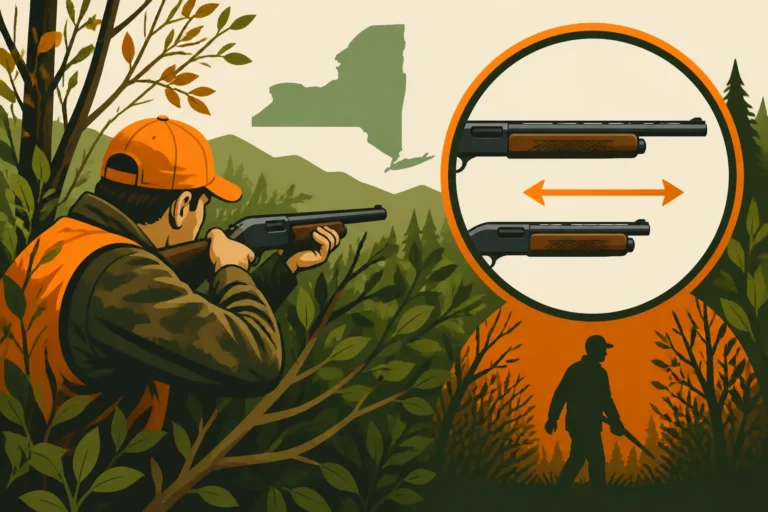
For grouse hunting in New York's dense cover, shorter barrels are almost universally preferred. While longer barrels (28-30 inches) provide a longer sighting plane and a smoother swing for target shooting or waterfowl, they become a liability when you're navigating tangled woods. Trying to swing a long barrel on a grouse that flushes from under your feet in a thicket of young aspens or alder can feel like trying to maneuver a telephone pole. You'll constantly snag on branches, struggle to pivot quickly, and often find your swing impeded, leading to missed opportunities.
A barrel length in the 24-26 inch range is typically ideal for grouse. This length offers a significant advantage in maneuverability, allowing you to react quickly and fluidly to those explosive, close-range flushes. The gun feels lighter and faster in your hands, making it easier to get on target before the bird disappears. While some might argue that a shorter barrel sacrifices a bit of swing smoothness, for grouse hunting, where shots are almost always instinctive point-and-shoot affairs at short distances, quickness trumps a long, deliberate swing. It's about getting the shot off now, not smoothly following a target at a distance. Barrel Length for Walking Thick Cover is a vital discussion for any serious New York upland hunter.
Open Chokes for Close-Range Flushes
Choke selection is arguably one of the most critical aspects for successful grouse hunting. Given that most grouse shots occur between 15 and 25 yards, a wide, spreading pattern is what you need. A tight choke like Full or even Modified, which keeps the shot pattern very concentrated, is generally too tight for grouse. Using a tight choke at close range often results in a "blown up" bird (too much shot in too small an area, damaging the meat) or, more commonly, a clean miss because the pattern simply wasn't wide enough to connect with the fast-moving bird.
Therefore, you'll want to lean heavily towards more open chokes. Improved Cylinder (IC) is a fantastic all-around choice for grouse, delivering a good balance of pattern density and spread at typical ranges. Skeet (SKT) or even Cylinder (CYL) chokes are also excellent, offering an even wider pattern that is incredibly forgiving for those incredibly close, surprise flushes. If you have a shotgun with interchangeable choke tubes, experimenting with different open chokes at the patterning board is crucial. You want to see how your specific gun and ammunition combination performs, ensuring a dense enough pattern to dispatch the bird cleanly without being overly tight. Most seasoned grouse hunters would recommend starting with an Improved Cylinder and moving to Skeet if you find your shots are consistently very close.
The Art of Double-Triggering Side-by-Sides
For those who opt for a classic side-by-side with its two barrels, the traditional double-trigger setup offers a unique and highly advantageous feature for grouse hunting: instant choke selection. Unlike a single-trigger shotgun where you select your choke before the hunt (or manually change tubes in the field), a double-trigger side-by-side typically has one trigger for the more open choked barrel and a second trigger for the tighter choked barrel. The front trigger usually fires the right barrel (often more open choked), and the rear trigger fires the left barrel (often tighter choked).
This allows you to react dynamically to the situation. When a bird flushes close, you can instinctively pull the front trigger, sending out a wide pattern from your open-choked barrel. If the bird flies further out, or if you need a follow-up shot, you can immediately shift your finger to the rear trigger, deploying a tighter pattern for more reach. This ability to choose your choke in the moment, without any mechanical adjustment, is a significant advantage in the unpredictable world of grouse hunting. It adds a layer of versatility and responsiveness that single-trigger guns simply cannot match, making the double-trigger side-by-side a cherished tool among traditional upland hunters who appreciate its elegant functionality.
Stock Materials, Fit, and Finish for the Upland Hunter
The stock of your shotgun is more than just a handle; it's a critical component that affects balance, feel, durability, and ultimately, your shooting performance. Choosing the right material and ensuring a proper fit are key to comfortable and effective grouse hunting.
The Classic Beauty and Feel of Wood Stocks
There's an undeniable allure to a shotgun with a beautifully figured walnut stock. It speaks to tradition, craftsmanship, and the heritage of upland hunting. Wood stocks, particularly good quality walnut, offer a classic aesthetic and a warm, natural feel in the hand. Many hunters find that a wood stock contributes to the overall balance and "liveliness" of a shotgun, making it feel more responsive and agile. The dense, natural material can also help absorb some recoil, offering a slightly softer shooting experience. For some, a wood-stocked shotgun is an extension of the hunting experience itself – a piece of art as much as a tool.
However, the beauty of wood comes with responsibilities, especially in the rugged New York woods. Wood is susceptible to scratches, dings, and water damage. A day spent chasing grouse in pouring rain or wading through an alder swamp can test the finish of even the most well-sealed wood stock. Without proper care and regular maintenance, wood can swell, warp, or crack, affecting the gun's fit and function. If you choose a wood-stocked shotgun, be prepared to give it a little extra love and attention after each outing, drying it thoroughly and perhaps applying a protective wax or oil. Despite the extra care, for many, the timeless appeal and tactile satisfaction of wood stocks are well worth the effort.
Synthetic Stocks for Rugged Durability
In stark contrast to wood, synthetic stocks – typically made from fiberglass, carbon fiber, or various polymers – prioritize rugged durability and practicality above all else. These stocks are virtually impervious to the elements. Rain, snow, mud, and extreme temperatures have little to no effect on synthetic materials, making them an excellent choice for the demanding conditions of New York grouse hunting. They won't warp, crack, or swell, and scratches or dings are far less noticeable and don't compromise the integrity of the stock.
Synthetic stocks are also typically lighter than their wooden counterparts, which can be a significant advantage when you're carrying your shotgun for hours through dense cover. This reduction in weight contributes to a faster-handling gun, quicker to shoulder and swing on those elusive flushing birds. While some hunters might find synthetic stocks less aesthetically pleasing or lacking the "soul" of wood, their no-nonsense, high-performance nature makes them a top choice for those who demand maximum reliability and minimal maintenance from their gear. Many modern upland shotguns, like those from Benelli or certain Browning models, offer excellent synthetic stock options that are built to withstand whatever the woods throw at them. GoHunt offers great resources for comparing different shotgun features, including stock materials, so you can make an informed decision based on your hunting style.
Gun Fit: Why It Matters More Than You Think
Perhaps more important than the material of the stock is how well the shotgun fits you. Gun fit is paramount for instinctive shooting, which is precisely what grouse hunting demands. You don't have time to consciously adjust your head or shoulder; the gun needs to come to your shoulder naturally, and your eye needs to align perfectly with the rib and bead. A shotgun that doesn't fit properly will lead to inconsistent shooting, missed birds, and unnecessary frustration.
Key elements of gun fit include:
- Length of Pull (LOP): The distance from the middle of the trigger to the center of the buttstock. If it's too long, you'll struggle to shoulder the gun quickly. Too short, and you'll crane your neck or take more recoil.
- Drop at Comb and Heel: How much the stock drops from the line of the barrel. This affects where your eye naturally aligns. Too much drop, and you'll shoot high; too little, and you'll shoot low.
- Cast: Whether the stock is angled slightly to the left or right, allowing for proper eye alignment for right- or left-handed shooters.
A well-fitting shotgun will feel like an extension of your body. When you mount it quickly, your eye should naturally fall right down the rib, ready to acquire the target. If you find yourself consistently shooting high, low, or struggling to get on target, poor gun fit is often the culprit. While custom fitting can be expensive, many modern shotguns offer adjustable shims or come with different recoil pads to help tailor the fit. Even small adjustments can make a world of difference in your ability to shoot instinctively and confidently, which is invaluable when a grouse erupts from the cover.
Ammunition Considerations for Ruffed Grouse
Choosing the right shotgun is only half the battle; filling it with the appropriate ammunition is just as crucial for success in the grouse woods. The right shot size and load can make all the difference between a clean kill and a frustrating miss or a damaged bird.
Shot Size Selection for Grouse and Woodcock
For ruffed grouse and their close cousins, woodcock, you're generally looking for smaller shot sizes. The goal is to create a dense pattern that maximizes the chance of hitting a small, fast-moving target without carrying so much energy that it mangles the bird. In New York, where most shots are taken at relatively close range (15-30 yards), you want a pattern that spreads quickly but still delivers enough pellets to ensure a clean kill.
Commonly recommended shot sizes for grouse and woodcock are #7.5, #8, and even #9 shot.
- #7.5 Shot: A good all-around choice. It has slightly more individual pellet energy than #8 or #9, which can be beneficial if you occasionally get a slightly longer shot, but still offers excellent pattern density for close work.
- #8 Shot: This is arguably the most popular and versatile choice for upland birds like grouse and woodcock. It provides a fantastic balance of pattern density and pellet energy for the typical ranges encountered in thick cover. Most hunters find #8 shot to be ideal for consistent performance.
- #9 Shot: While less common for grouse, #9 shot creates the densest pattern of all. It's particularly effective for very close-range flushes, especially on woodcock, where you need maximum pellet count to connect with a small target. However, the individual pellets carry less energy, so it's best reserved for truly close shots to ensure clean kills.
Always match your shot size to your expected shooting distance and choke. An open choke with #8 or #9 shot will provide a wide, dense pattern perfect for New York's tight cover. Shot Size for Grouse and Woodcock is a topic many hunters debate, but the consensus usually settles around #8 for most situations.
Lead vs. Non-Toxic Shot Requirements
Historically, lead shot has been the standard for upland bird hunting due to its density and effectiveness. However, regulations regarding non-toxic shot are expanding, primarily driven by environmental concerns in waterfowl habitats. In New York, for upland hunting, lead shot is generally permissible. You can safely use your favorite lead upland loads for grouse and woodcock in most areas.
However, there's a crucial caveat: if you are hunting in areas that are designated as waterfowl production areas, certain wetlands, or specific public lands that border or encompass water bodies, non-toxic shot may be required, even if you are ostensibly hunting upland birds. This is because non-toxic shot is mandated for all hunting of migratory birds, and in some sensitive ecosystems, the restriction extends to any hunting within that area. For instance, if you're hunting grouse in a WMA that also has significant wetland components or migratory bird activity, always double-check the specific regulations for that location. The safest approach, especially if you hunt diverse habitats, is to be aware of the rules. If there's any doubt, using non-toxic shot eliminates the worry.
Understanding Load Velocity and Pattern Density
Load velocity refers to how fast the shot leaves the barrel. For grouse hunting, you generally don't need super high-velocity loads. Standard velocity loads (around 1200-1300 fps) are usually more than sufficient. In fact, some hunters prefer slightly lower velocity loads because they can sometimes produce more consistent and desirable patterns at close ranges, with less recoil. High-velocity loads, while offering a marginal increase in speed, might deform pellets more, potentially leading to less uniform patterns, especially with softer lead shot.
Pattern density, which is directly influenced by shot size, choke, and load velocity, is key. You want a pattern that is evenly distributed across your target area at your anticipated shooting distance. A sparse pattern, even if it has larger pellets, might allow a bird to escape through gaps. A "donut" pattern (dense on the edges, sparse in the center) is also undesirable. The best way to understand your load's pattern density is to pattern your shotgun at various distances (e.g., 20 and 30 yards) using different chokes and ammunition combinations. GoHunt and other hunting resources emphasize patterning as a crucial step. Use a large piece of paper or cardboard and count the pellet strikes within a 30-inch circle. This empirical data will tell you exactly how your chosen load and choke perform, helping you make informed decisions for maximum effectiveness in the field.
Essential Accessories and Maintenance for Your Grouse Gun
Even the best shotgun won't perform optimally without the right accessories and diligent maintenance. For the New York grouse hunter, these elements are critical for comfort, safety, and ensuring your firearm remains reliable season after season.
Slings, Vests, and Carrying Comfort
Grouse hunting involves a lot of walking, often through demanding terrain. Carrying your shotgun in hand for hours on end can become tiring, leading to arm fatigue and potentially making you slower to react when a bird flushes. This is where a good sling becomes invaluable. A comfortable, adjustable sling allows you to carry your shotgun over your shoulder, freeing up your hands for navigating difficult cover, using binoculars, or simply giving your arms a rest. Look for slings that are durable, quiet, and have some grip to prevent slipping off your shoulder.
Beyond the sling, a well-designed upland vest is an absolute game-changer. It's not just about carrying birds; it's about comfort and organization. A good vest distributes the weight of your gear, water, and harvested birds evenly across your shoulders and back, rather than concentrating it in one spot. Key features to look for include:
- Large Game Bag: Easily accessible for storing grouse, and ideally with a blood-proof or washable liner.
- Ample Shell Pockets: Conveniently located for quick reloading.
- Hydration Pockets/System: Essential for long days in the woods.
- Comfortable Shoulder Straps: Padded and adjustable.
- Blaze Orange/Pink Panels: Many vests integrate the required safety coloring, ensuring you meet How Much Blaze Orange New York Requires regulations without needing an additional garment.
Brands like Filson, Orvis, and even some Cabela's and Bass Pro Shops house brands offer excellent upland vests. Trying them on with your typical hunting layers is essential to ensure a comfortable fit that doesn't impede your movement or gun mount.
Cleaning and Weatherproofing Your Shotgun
New York's grouse season can throw everything from crisp, dry autumn days to sleet, freezing rain, and even early snow at you. Your shotgun will be exposed to moisture, dirt, and debris, and without proper care, it can quickly develop rust or suffer mechanical malfunctions. Consistent cleaning and weatherproofing are non-negotiable.
Regular Cleaning: After every outing, especially in wet or muddy conditions, your shotgun needs attention.
- Field Strip: Disassemble your gun to its basic components as per the manufacturer's instructions.
- Clean Bore and Chamber: Use a bore snake or cleaning rod with appropriate brushes and patches to remove powder residue and lead/plastic fouling.
- Clean Action: Use a soft brush and gun solvent to clean out dirt, carbon, and old grease from the action parts. Pay extra attention to semi-automatic gas systems, which can get particularly dirty.
- Lubricate: Apply a thin layer of quality gun oil or grease to all moving parts, following the manufacturer's recommendations. Avoid over-lubricating, as it can attract more dirt.
- Wipe Down Exterior: Wipe all exterior metal surfaces with an oily cloth to protect them from rust.
Weatherproofing: For wood stocks, a good quality stock wax or oil can help repel water. For all guns, consider using moisture-displacing lubricants in the action before particularly wet hunts. If your gun gets soaking wet, dry it thoroughly as soon as possible, ideally by disassembling it and letting parts air dry before cleaning and re-lubricating. A little preventive maintenance goes a long way in ensuring your shotgun is always ready for that next flush.
Gun Cases and Safe Transport in New York
Protecting your investment and complying with New York's transportation laws means having the right gun cases. Whether you're driving to a local WMA or heading up to Grouse Hunting New York Aspen Cover for a weekend trip, safe and legal transport is crucial.
Soft Cases: Excellent for everyday use and short trips to the range or local hunting spots. They offer good protection against scratches and minor bumps, and often have exterior pockets for choke tubes, ear protection, and cleaning supplies. They're lightweight and easy to carry. Just remember that soft cases offer limited protection against crushing or major impacts.
Hard Cases: Indispensable for longer journeys, air travel (if you ever take your gun out of state), or if you need maximum protection for your shotgun. Hard cases, especially those with custom foam inserts, secure your gun tightly, preventing movement and absorbing impacts. Many are also lockable, providing an extra layer of security and meeting legal requirements for secure transport.
Legal Transport: In New York, when transporting a shotgun in a vehicle, it must be unloaded. While not always legally mandated to be cased, it's always best practice to have it in a case for safety and to protect your firearm. Some areas or specific types of transport (e.g., public transit, school zones) may have stricter casing and locking requirements. Always check current New York regulations regarding firearm transport to ensure full compliance. A secure, unloaded, and cased shotgun is the best way to travel to and from your hunting grounds responsibly.
Making Your Final Choice: A Personal Decision
Ultimately, choosing the "best" shotgun for New York grouse cover isn't about finding a universally perfect firearm; it's about finding the perfect shotgun for you. It's a deeply personal decision influenced by your hunting style, physical build, budget, and even your aesthetic preferences.
Balancing Tradition with Practicality
Many hunters find themselves torn between the classic allure of traditional upland shotguns and the no-nonsense performance of modern designs. There's a certain romance to carrying a beautifully blued and walnut-stocked side-by-side through the autumn woods, embodying decades of hunting heritage. For some, this connection to tradition enhances the entire experience. They value the feel of the wood, the simplicity of the break action, and the elegant lines of a classic gun.
However, practicality often means considering what performs best in demanding conditions. A synthetic-stocked semi-automatic or a rugged pump-action might not have the same old-world charm, but its imperviousness to weather, light weight, and reliable performance can make your hunt more comfortable and successful. It’s about weighing how much you value tradition against the tangible benefits of modern materials and engineering. Do you prefer a gun that looks and feels like a classic, even if it requires a bit more care? Or do you lean towards a tool designed for maximum utility and minimal fuss in the field? Many manufacturers offer models that blend both, such as an over/under with a synthetic stock option.
Trying Before You Buy: Range Time and Feel
This is perhaps the most critical step in making your final decision. You can read all the reviews, watch all the videos, and listen to all the advice, but nothing substitutes for actually holding and shooting a shotgun. Visit a well-stocked gun store where you can shoulder various models. Pay attention to how the gun feels in your hands, its balance, and how naturally it points. Does your eye align with the rib without conscious effort? Does it feel too heavy or too light? Can you easily reach the safety and trigger?
Even better, if possible, spend some time at a range or with a friend's gun that you're considering. Shoot some clays or throw a few practice targets. Pay attention to the recoil, how quickly you can get a second shot off, and if you feel comfortable and confident with it. A shotgun that feels awkward or unwieldy will only hinder your performance in the field, no matter how good it looks on paper. This hands-on experience is invaluable. Remember, a shotgun that fits you well will become an extension of your body, allowing for instinctive shooting, which is paramount for grouse.
Investing in Training and Practice
Even the most expensive, perfectly fitted shotgun is only as good as the shooter behind it. Investing in training and regular practice will do more to improve your grouse hunting success than any single piece of gear. Grouse hunting shots are almost always instinctive, quick, and at moving targets. This isn't precision rifle shooting; it's about fluid movement, quick reactions, and consistent point shooting.
Consider taking a clay shooting lesson, especially a sporting clays or skeet lesson, which mimics upland scenarios more closely than trap. Focus on techniques for mounting the gun quickly, swinging smoothly (or snapping quickly, depending on your style), and maintaining your focus on the bird. Practice shooting from various positions, simulating the awkward angles and quick turns you'll encounter in the woods. Repetition builds muscle memory, making those lightning-fast reactions second nature. Regularly patterning your shotgun with your chosen loads will also build confidence in your equipment. GoHunt regularly features articles and videos on improving shooting skills for various game birds, and it's always time well spent to sharpen those reflexes. Remember, grouse are tough birds, and a clean, quick kill is always the ethical goal, which comes from practice, practice, practice.
Disclaimer
This article is for general informational purposes only and does not constitute professional advice. Laws, prices and regulations vary by location and change over time. Consult a qualified professional for guidance on your specific situation.