Snowshoe Hare Numbers in the Adirondacks
The deep woods of the Adirondacks offer some incredible hunting opportunities, but for many, the elusive snowshoe hare remains a challenge. If you've spent hours trudging through thick spruce and alder swamps only to find sparse tracks, you're not alone. It can feel like these ghost-like creatures are constantly moving or simply not there in the numbers you remember. This guide will dive deep into understanding snowshoe hare populations in the Adirondacks, shedding light on their cycles, preferred habitat, and how these factors impact your chances of finding them, helping you unlock more successful hare hunts.
Understanding Snowshoe Hare Populations in the Adirondacks
Snowshoe hares, with their incredible seasonal camouflage and burst of speed, are truly fascinating creatures of the northern forests. But trying to pin down their exact numbers or predict where they'll be abundant can feel like a guessing game. It's not just luck; there are some very real, underlying ecological dynamics at play that dictate their presence and density in the vast Adirondack landscape.
The Cyclical Nature of Hare Numbers
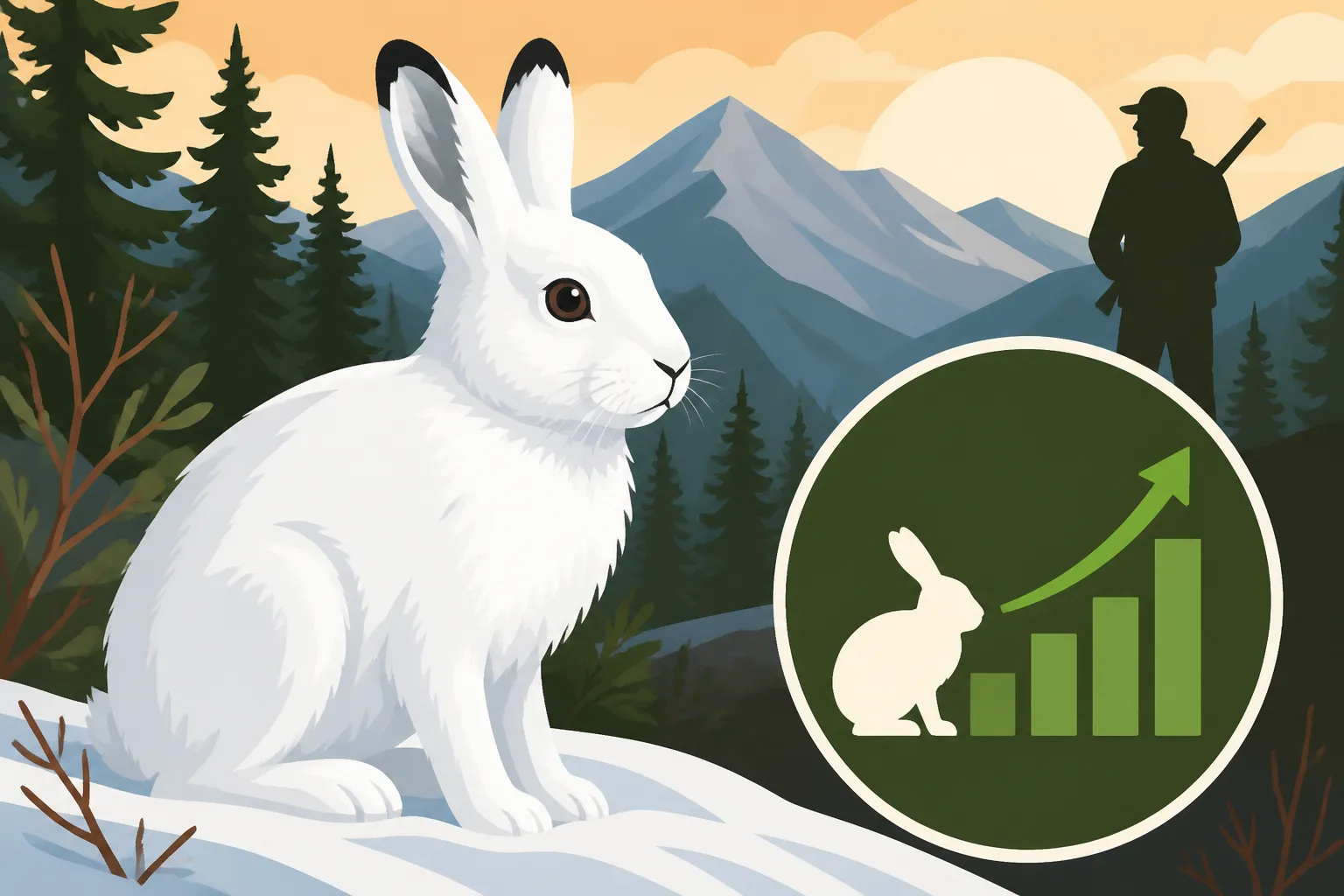
One of the most defining characteristics of snowshoe hare populations, not just in the Adirondacks but across their range, is their famously cyclical nature. Unlike deer, whose populations tend to fluctuate more in response to severe winters or human hunting pressure, hares often experience dramatic boom-and-bust cycles that can last anywhere from 7 to 10 years. During a "boom" phase, you might see hares everywhere, their tracks crisscrossing the snow in countless directions, and hunting can be incredibly productive. Then, almost as quickly, their numbers can crash, making them feel incredibly scarce for several years.
These cycles are largely driven by a complex interplay of factors, with predation being a primary driver, but also influenced by food availability and disease. When hare numbers are high, predator populations like bobcats, coyotes, and especially lynx (though lynx are rare or non-existent in New York today, the historical predator-prey dynamic holds true for other species) will naturally increase in response. As predators become more numerous, they exert greater pressure on the hare population, eventually leading to a decline. Once hare numbers drop significantly, the predator populations, facing a scarcity of food, will also decline. This allows the hare population to slowly recover and begin its ascent toward the next peak. For a hunter, this means that some years you'll find plenty of action, while others you'll be working much harder for fewer opportunities. It's a natural rhythm of the wild that we, as hunters, need to understand and respect.
Habitat as a Key Indicator
While cycles dictate the overall abundance, where you find hares within the Adirondacks is almost entirely dependent on habitat. Snowshoe hares are specialists when it comes to cover. They absolutely thrive in dense, young conifer stands, particularly spruce and balsam fir thickets, but also hemlock and cedar swamps. These dense evergreen covers provide crucial protection from aerial predators like owls and hawks, and also from ground predators like coyotes and bobcats. The thick branches, often extending nearly to the ground, create a labyrinth of tunnels and escape routes that larger predators struggle to navigate.
Beyond conifers, you'll also find hares in other forms of extremely dense, early successional growth, such as alder runs along streams and beaver flowages, or thickets of regenerating hardwoods and brushy areas following clear-cuts or major blowdowns. These areas, often referred to as "ugly" cover by deer hunters, are exactly what a hare hunter should be seeking out. Look for areas with a high stem count – meaning lots of small trees and shrubs packed tightly together. Mature, open hardwood forests, while beautiful, typically won't hold many hares unless there's a dense conifer understory or a thick brushy pocket nearby. Using mapping tools like GoHunt, you can often identify these types of thick cover by looking for dark green areas that indicate conifer, or areas that show signs of recent logging activity. Understanding these specific habitat needs is paramount to finding even a few hares during a down cycle.
Factors Influencing Current Hare Abundance
Even within their natural cycles, snowshoe hare populations in the Adirondacks are susceptible to various external pressures. These factors can either amplify the highs of a boom year or deepen the lows of a bust, making a noticeable difference to anyone out in the field trying to locate them.
Predation Pressure and Its Role
We touched on predation as a driving force behind the hare cycle, but it's worth a deeper dive into how it influences current abundance. The Adirondacks are home to a robust population of hare predators, including bobcats, coyotes, foxes, fishers, and various birds of prey. When hare numbers are high, these predators flourish. However, during a low point in the hare cycle, the remaining hares face intense pressure from these numerous predators. Imagine being one of the last few hares in an area where coyotes, bobcats, and owls are still relatively abundant; your chances of survival become significantly lower.
Fishers, in particular, are incredibly efficient predators of hares, and their populations have seen a resurgence in many parts of New York, including the Adirondacks. Their ability to navigate dense cover and even climb trees makes them formidable hunters for hares. You might find evidence of these predators in the form of tracks or scat while Scouting New York Public Land Before Season. Understanding that a strong predator base can prolong a low hare cycle or hasten a decline is key to setting realistic expectations for your hunt. If you're consistently seeing fresh fisher or coyote tracks in your favorite hare cover, it might be an indicator that the hare population in that specific spot is currently struggling.
The Impact of Climate Change and Snowfall
Perhaps one of the most concerning and increasingly impactful factors affecting snowshoe hare numbers is the subtle, yet profound, influence of changing climate patterns, particularly concerning snowfall. Snowshoe hares are named for their large, fur-covered hind feet that act like natural snowshoes, allowing them to move efficiently over deep snow. More critically, their famous seasonal color change, from brown in summer to brilliant white in winter, is their primary defense mechanism. This camouflage makes them almost invisible against a snowy backdrop.
However, in recent years, many parts of the Adirondacks have experienced less consistent snow cover, later-arriving snows, or earlier thaws. When hares turn white in preparation for winter, but the ground remains brown, they become incredibly vulnerable. This mismatch in camouflage makes them easy targets for predators for extended periods. A late-season thaw, where snow disappears but hares haven't yet molted back to their brown summer coats, creates a similar deadly scenario. These climatic shifts can lead to higher mortality rates, especially for young hares, and can directly impact the overall population size and reproductive success. For hunters, this means that even if a cyclical peak is expected, poor snow conditions can depress local numbers, making for tough hunting. Knowing how to read the landscape for subtle temperature shifts and microclimates can sometimes help in finding residual snowpack that might offer hares better cover.
Scouting and Hunting Strategies for Adirondack Hares
Successfully hunting snowshoe hares in the Adirondacks is less about brute force and more about finesse, observation, and understanding their environment. It’s about being patient, reading the subtle clues the forest provides, and knowing how to approach their incredibly dense hideouts.
Reading Sign and Identifying Prime Areas
When you're out looking for snowshoe hares, especially if you're not using dogs, it all starts with sign. Fresh snow is your best friend here. Look for their distinctive tracks: large, rounded hind feet that often land ahead of their smaller front feet, creating a tell-tale pattern in the snow. They move in bounds, so you’ll see groups of four prints, often in a zigzag pattern through thick cover. Unlike cottontails, which often leave tracks in more open areas or along field edges, snowshoe hare tracks will lead you right into the densest, most impenetrable thickets you can imagine.
Beyond tracks, keep an eye out for clipped twigs. Hares are browsers, and they’ll clip off small branches of young conifers, alders, or other browse plants, often at a neat 45-degree angle. You might find piles of their droppings, which are small, round, and fibrous, especially under favored feeding or resting spots. Look for areas where the vegetation looks "nibbled." Using a sturdy pair of Boots for New York Swamps and Snow is critical because these prime hare areas are often wet and challenging to navigate. The GoHunt app can be a great resource for identifying areas with dense cover, especially in winter, and mapping out potential travel corridors between thickets. Always remember to focus your efforts around the edges of swamps, recent clear-cuts that are regenerating with thick growth, and any areas where young evergreens are growing tightly together.
Here’s a quick comparison of snowshoe hare sign versus other common small game:
| Sign Type | Snowshoe Hare | Cottontail Rabbit | White-Tailed Deer Fawn/Doe | Ruffed Grouse |
|---|---|---|---|---|
| Tracks | Large hind feet, small front. Often land ahead. Zigzag bounds. In very thick cover. | Smaller, rounder tracks. More linear hopping. Often in open edges, fields. | More elongated, paired hoof prints. Much larger. | Small, three-toed bird tracks. Often with wing prints. |
| Droppings | Small, round, fibrous pellets. Often in clusters. | Small, round, often shiny, in clusters. | Larger, oblong pellets. Sometimes clumped. | Small, seed/berry filled, often in roosting areas. |
| Feeding Sign | Clipped twigs (conifers, alder, brush) at 45-degree angle. | Cleanly cut herbaceous stems, bark gnawing. | Stripped leaves, bark rub, antler rub. | Buds and catkins nipped from trees. |
| Habitat | Dense spruce/fir thickets, alder swamps, brushy clear-cuts. | Hedgerows, briar patches, field edges, suburban woods. | Diverse forests, fields, swamps. | Aspen stands, alder runs, dense conifer. |
Effective Hunting Tactics for Hares
Once you've located some promising sign and identified prime cover, the real fun begins. The most classic and often most effective method for hunting snowshoe hares, especially when numbers are decent, is to walk them up with beagles. A good pack of hounds can navigate the dense cover much better than a human, and their persistent barking will eventually push a hare out of its hiding spot, often circling back to where it was jumped. If you're fortunate enough to have access to a good pack, be sure to position standers on known hare crossings or along the edges of the thickets where the hares are likely to try and escape. This is a truly social and exciting way to hunt and one of the best for a consistent take. Running Beagles on New York Cottontails tactics can often apply to hares, though hares prefer much denser, more remote cover.
If you're hunting without dogs, which many of us do, it becomes more of a still-hunting or methodical pushing game. The key is to move slowly and deliberately through the thickest cover you can find. Stop frequently, stand still for several minutes, and scan every tangle and shadow. Hares will often sit incredibly tight, relying on their camouflage to avoid detection. Sometimes, they'll bolt only when you're practically stepping on them. Pay close attention to anything that looks out of place—a slight twitch of an ear, a dark eye in a sea of white. Two hunters working together can be very effective: one person pushing through a thicket, and the other walking just outside the edge, ready for a hare that breaks cover. Ideal weather conditions include fresh, deep snow, which makes tracking easier and movement for the hares more challenging, and overcast days, which can make it harder for them to spot you.
Conservation and Future Outlook
As hunters, we're not just consumers of wildlife; we're also its most dedicated conservationists. Understanding the challenges faced by snowshoe hares in the Adirondacks, and the efforts being made to support them, is part of responsible hunting.
Management Efforts for Hare Habitat
While snowshoe hare populations naturally fluctuate, sound habitat management can help mitigate the lows and support strong populations during the highs. Hares need early successional habitat – young, dense forests that often result from logging, fires, or other disturbances. This is where active forest management comes into play. Practices like selective logging or clear-cutting (when done responsibly and with ecological goals in mind) can create the patchwork of dense young growth that hares, and many other species like ruffed grouse, depend on. The Adirondack Park, with its mix of private timberlands and state "Forever Wild" lands, presents a unique challenge for consistent habitat creation.
On state forests and Wildlife Management Areas, the New York Department of Environmental Conservation (DEC) often implements management plans that include creating and maintaining early successional habitat. This might involve timber stand improvement or specific cuts designed to promote dense regeneration. Supporting these efforts, whether through your license fees or by advocating for science-based forest management, indirectly benefits hare populations. It’s a similar story to the habitat work that's often discussed for species like ruffed grouse; healthy New York Grouse Habitat Loss Causes are often intertwined with hare habitat health.
Hunter's Role in Sustainable Populations
Hunters play a crucial role in ensuring the long-term health of snowshoe hare populations, even for a species not typically managed with strict quotas like deer or bear. First and foremost, responsible harvest is key. While hares are prolific breeders, taking only what you need and adhering to bag limits helps ensure there are always breeding animals left. We're not seeing widespread concern about overharvest for hares in New York, but good ethics are always important.
Beyond harvest, hunters are often the eyes and ears on the ground. When you're out there, whether you're chasing hares or Bear Hunting Without Bait in New York, you're observing wildlife. Reporting unusual sightings, significant declines in numbers in a specific area, or signs of disease to the DEC helps them monitor populations more effectively. Your observations contribute to a larger dataset that informs management decisions. The snowshoe hare is a vital component of the Adirondack ecosystem, serving as a critical food source for many predators. Their presence is an indicator of healthy, diverse forest habitats. By being mindful hunters and engaged conservationists, we help ensure that future generations will also have the opportunity to chase these fascinating "ghosts of the snow" through the wild places of New York. You can often glean insights into population trends and harvest numbers by Reading a New York Harvest Report published by the DEC.
Disclaimer
This article is for general informational purposes only and does not constitute professional advice. Laws, prices and regulations vary by location and change over time. Consult a qualified professional for guidance on your specific situation.