New York Deer Vehicle Collisions
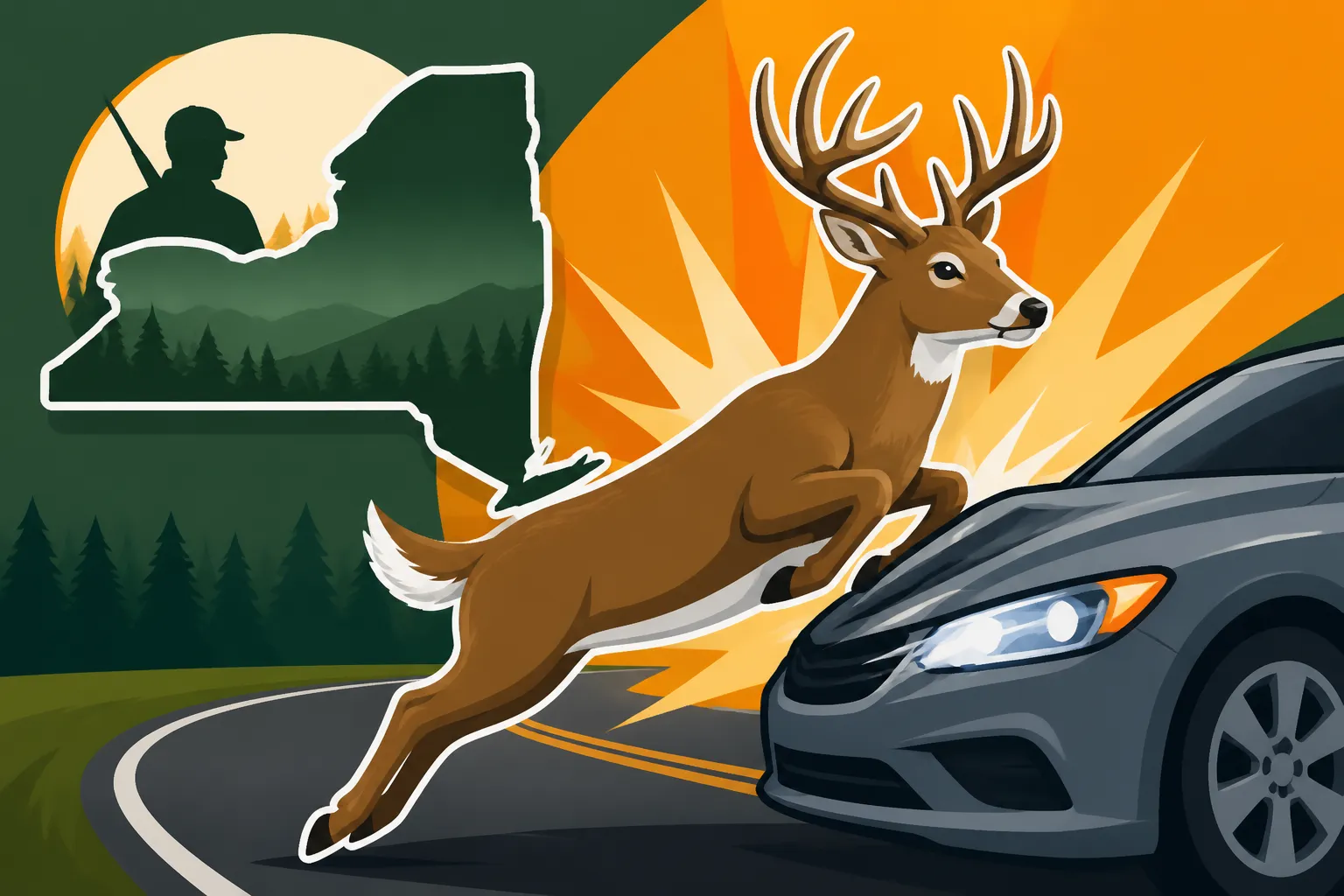
There's nothing quite like the sudden, heart-stopping thud of hitting a deer with your vehicle. It's a terrifying experience, often resulting in serious damage to your car, potential injury to occupants, and, sadly, the loss of a beautiful animal. Many New Yorkers drive our winding roads and bustling highways, constantly on edge, wondering when and where they might encounter one of these majestic creatures unexpectedly crossing their path. This guide will delve into the realities of deer vehicle collisions in New York, helping you understand the factors that increase risk, where these incidents are most likely to occur, and how you can better prepare for and prevent them.
Understanding the Scope of Deer Vehicle Collisions in New York
Deer vehicle collisions (DVCs) are a significant issue across New York State, impacting countless drivers, costing millions in repairs, and tragically, leading to deer mortality. While we often think of these incidents as isolated accidents, they follow discernible patterns rooted in deer biology, habitat, and human infrastructure. It's not just about one deer in the wrong place at the wrong time; it's about a complex interplay of factors that make some areas and times much riskier than others.
Why Deer and Cars Collide
At its heart, the collision issue stems from habitat overlap. New York's landscape, particularly in the Southern Tier and parts of the Hudson Valley, offers an ideal mix of agriculture, wooded cover, and suburban development that whitetail deer thrive in. As human development expands, roads increasingly cut through or border prime deer habitat, creating unavoidable intersections. Deer are creatures of habit, often using the same travel corridors for generations, and these ancient trails frequently cross modern roadways.
Consider a mature buck moving from a bedding area in a dense woodlot to a prime feeding field across the road. This isn't a random wander; it's often a purposeful journey. Factors like food availability, rutting activity, and hunting pressure can all influence these movements. For instance, after a particularly harsh winter or a poor acorn year, deer might be more desperate, venturing further or at unusual times to find sustenance, increasing their exposure to traffic. Understanding the overall New York Deer Herd Size gives us a sense of the sheer number of animals that are constantly navigating our shared landscape.
The Economic and Safety Impact
Beyond the immediate scare, DVCs carry substantial consequences. Vehicle damage can range from a broken headlight to a completely totaled car, leading to costly insurance claims, deductibles, and the inconvenience of being without a vehicle. More seriously, occupants can suffer significant injuries, especially in smaller vehicles or if the deer comes through the windshield. Swerving to avoid a deer can be even more dangerous, potentially leading to head-on collisions with oncoming traffic or hitting stationary objects like trees.
It's a problem that touches nearly every community in the state. From rural backroads in Allegany County to major thoroughfares bordering suburban developments in Westchester, the risk is ever-present. These incidents place a strain on emergency services, tow companies, and insurance providers, highlighting the broad ripple effect of these seemingly individual accidents.
Seasonal and Time-of-Day Patterns of Deer Collisions
Deer aren't just out and about randomly; their activity is highly seasonal and dictated by daily rhythms. Understanding these patterns is your best defense against becoming another statistic on New York's roads.
The Rut: New York's Peak Collision Season
Without a doubt, late fall is the most dangerous time for deer vehicle collisions in New York. Why? Because it's the peak of the whitetail rut. Beginning in late October and extending well into November, and sometimes even early December, bucks are actively seeking does, and does are often trying to avoid persistent bucks. This intense reproductive drive throws caution to the wind for many deer, making them far less aware of their surroundings and more prone to crossing roads at any given moment.
During this period, deer are moving more, often covering significant distances in search of mates. A young buck might be pushed out of his familiar territory by a larger, more dominant male, forcing him into unfamiliar areas near busy roads. Does, too, are highly active, often crossing multiple fields and woodlots. Hunters keenly aware of When the New York Rut Peaks will tell you that deer behavior becomes almost erratic during this time, and it's this unpredictability that makes them such a hazard on the road.
| Factor | Description | Peak Risk Period |
|---|---|---|
| Rutting Season | Deer, especially bucks, are highly mobile and less cautious seeking mates. | Late October – November |
| Feeding Habits | Increased movement between bedding and feeding areas. | Dusk and Dawn |
| Dawn & Dusk | Low light conditions combined with peak deer activity. | 5 AM – 8 AM, 5 PM – 8 PM |
| Hunting Pressure | Can displace deer into unfamiliar areas, including near roads. | Fall hunting seasons |
| Agricultural Harvest | Removal of cover in fields pushes deer to seek new shelter. | Late Summer – Fall |
| Winter Stress | Deer seeking new food sources, especially after heavy snow. | January – March |
Dawn and Dusk: The Riskiest Hours
Just as critical as the season is the time of day. Deer are crepuscular animals, meaning they are most active during dawn and dusk. These are the hours when they typically move from their daytime bedding areas to nighttime feeding grounds, and vice-versa. Coincidentally, these are also the times when many New Yorkers are commuting to and from work or school.
Driving during these periods presents a double challenge: deer are most active, and visibility is significantly reduced. The low angle of the sun, shadows, fog, or rain can make it incredibly difficult to spot a deer, especially a fawn or a deer standing motionless, until it's too late. The brief moments of twilight are when you need to be most vigilant, dropping your speed and scanning the roadsides constantly. If you're using a mapping tool like GoHunt to scout an area, pay attention to dense cover and agricultural fields that could indicate common deer travel paths during these critical hours.
Other Contributing Factors
While the rut and crepuscular hours are primary drivers, other elements can influence DVC rates:
- Hunting Seasons: Increased human activity in the woods during archery, muzzleloader, and firearm seasons can temporarily displace deer, sometimes pushing them towards roads they might otherwise avoid. This is particularly true during the chaotic first few days of New York's Southern Zone Firearm Season or New York's Northern Zone Firearm Season.
- Harvested Fields: In agricultural areas, once corn or soybean fields are cut, deer lose a significant amount of cover and food. This forces them to move more, often across open fields and roads, to find new shelter and sustenance.
- Weather: Heavy fog, rain, or snow can reduce visibility, making it harder for drivers to see deer and for deer to perceive approaching vehicles. Deep snow can also restrict deer movement, sometimes funneling them along ploughed roadsides.
Geographic Hotspots for Collisions in New York
New York is a diverse state, and deer density and habitat vary dramatically from one region to another. This means certain geographic areas are inherently riskier for deer vehicle collisions. It’s not just about how many deer there are, but how their habitat interacts with human infrastructure.
The Southern Tier and Finger Lakes Region
Without a doubt, the Southern Tier and Finger Lakes regions are often identified as prime DVC hotspots. These areas boast an abundance of prime deer habitat: a patchwork of mixed hardwoods, agricultural fields (corn, soybeans, hay), and small woodlots. Deer thrive in this "edge habitat" where forest meets field, providing both cover and food. Unfortunately, this also means numerous roads traverse these ideal environments.
In counties like Steuben, Allegany, Chautauqua, and even parts of Tompkins and Tioga, the landscape lends itself to high deer populations. The deer in these areas frequently move between woodlots and fields, crossing local roads and even major highways like the Southern Tier Expressway. Understanding Deer Density by New York Wildlife Unit can give you a clearer picture of where these populations are highest. Drivers in these areas should be hyper-aware, particularly during peak movement times. When I'm planning a hunting trip in the Hunting Southern Tier Farmland Deer region, I'm always reminded of how frequently I see deer crossing or standing near roads, even in daylight.
Hudson Valley and Suburban Sprawl
The Hudson Valley, especially the counties north of New York City like Westchester, Putnam, Dutchess, and Orange, presents a different kind of challenge. Here, growing suburban populations mean extensive road networks are carved directly through what used to be continuous woodlands. Large tracts of undeveloped land – state parks, nature preserves, and large private estates – exist alongside residential areas, creating perfect pockets of deer habitat interspersed with high-traffic zones.
Deer have adapted incredibly well to suburban environments, often becoming quite bold. They graze in backyards, use green corridors, and generally navigate human-dominated spaces. This close proximity to human dwellings and the sheer volume of roads increase collision potential. A tool like GoHunt can be invaluable here, not just for hunters, but for general drivers looking to identify areas of dense cover or known deer trails near their daily commute routes.
Adirondacks and Catskills: Unique Challenges
While the Southern Zone typically sees higher overall numbers, the vastness of the Adirondack and Catskill Forest Preserves also presents unique DVC risks. Although overall deer density might be lower in the deep woods compared to farmland, the long stretches of isolated roads through dense forest create dangerous conditions. Deer are crossing these roads to access different feeding areas or even to move between different elevation zones.
In the Catskills, steep terrain means deer often funnel through specific valleys or saddles, and roads frequently follow these natural contours. In the Adirondacks, deer yards – areas where deer congregate in winter – can be near major roads, leading to increased risk if deer are forced to cross. When tracking deer movement, even hunters considering Treestand Setups in Adirondack Hardwoods or Still-Hunting Catskill Ridges understand that deer, particularly during dispersal or seeking wintering grounds, might cross major roadways without much warning.
Prevention Strategies and What To Do After a Collision
While you can't eliminate the risk entirely, there are concrete steps you can take to significantly reduce your chances of a deer vehicle collision and know how to react if the worst happens.
Defensive Driving Techniques
The most effective prevention strategy is good, old-fashioned defensive driving, with a focus on deer-specific hazards:
- Slow Down: This is paramount, especially during dawn, dusk, and the rut. Reducing your speed gives you more time to react, and significantly lessens the impact if a collision is unavoidable. Many DVCs happen because drivers simply can't stop in time.
- Scan the Roadside: Don't just look at the vehicle in front of you. Actively scan both sides of the road, particularly in areas with dense cover, fields, or deer crossing signs. Deer often freeze in headlights, or might bolt out from the shoulder.
- Use High Beams Wisely: On dark, rural roads, use your high beams whenever there's no oncoming traffic. This dramatically increases your visibility and can help you spot deer further away. Be ready to dim them instantly for other drivers.
- Be Aware of "One Deer, More Deer": Deer rarely travel alone. If you see one deer cross the road, assume there are more nearby, likely following close behind. Slow down and watch for additional animals.
- Honk Your Horn: A quick blast of your horn might startle a deer and make it move off the road. However, avoid swerving, as this can lead to far more dangerous accidents. It's often safer to hit the deer than to swerve into another lane or off the road.
- Stay Alert: Avoid distractions like cell phones. Your full attention is needed, especially during peak deer activity times and in known hotspots.
What to Do If You Hit a Deer
Even with the best precautions, collisions can happen. Knowing what to do in the immediate aftermath can ensure your safety and address the situation properly.
- Pull Over Safely: If possible, move your vehicle to the side of the road, out of traffic. Turn on your hazard lights.
- Assess Injuries: First, check yourself and any passengers for injuries. If anyone is injured, call 911 immediately.
- Do Not Approach the Deer: A wounded deer can be dangerous and unpredictable. Even if it appears dead, it could still kick or struggle. Keep a safe distance.
- Call the Authorities: Report the collision to local law enforcement or the New York State Police. They will document the incident, manage traffic, and, if necessary, dispatch an officer to deal with the injured or deceased animal. This isn't just for insurance; it helps with data collection on DVC hotspots.
- Document the Damage: Take photos of your vehicle's damage and the scene for insurance purposes.
- Report the Incident: While not always required for roadkill, reporting deer interactions helps the state track populations and collision trends. For hunters, knowing Reporting a New York Deer Harvest Online is critical, and similar principles apply to reporting other deer interactions.
- Salvaging the Deer: In New York, if you hit and kill a deer, you may be able to legally possess the carcass for consumption, but you must report the incident to law enforcement (or the DEC) within 24 hours to obtain a tag or confirmation number. Never just take a deer without reporting it. The rules can be specific, so always verify with the authorities at the time of the incident. This is important to note, particularly if you're thinking about the Deer Meat Yield From a New York Buck after an accidental collision.
- Contact Insurance: Notify your insurance company as soon as possible to start the claims process.
By staying informed about deer behavior, being extra vigilant during high-risk times, and knowing how to react if an incident occurs, you can navigate New York's roads more safely.
Disclaimer
This article is for general informational purposes only and does not constitute professional advice. Laws, prices and regulations vary by location and change over time. Consult a qualified professional for guidance on your specific situation.