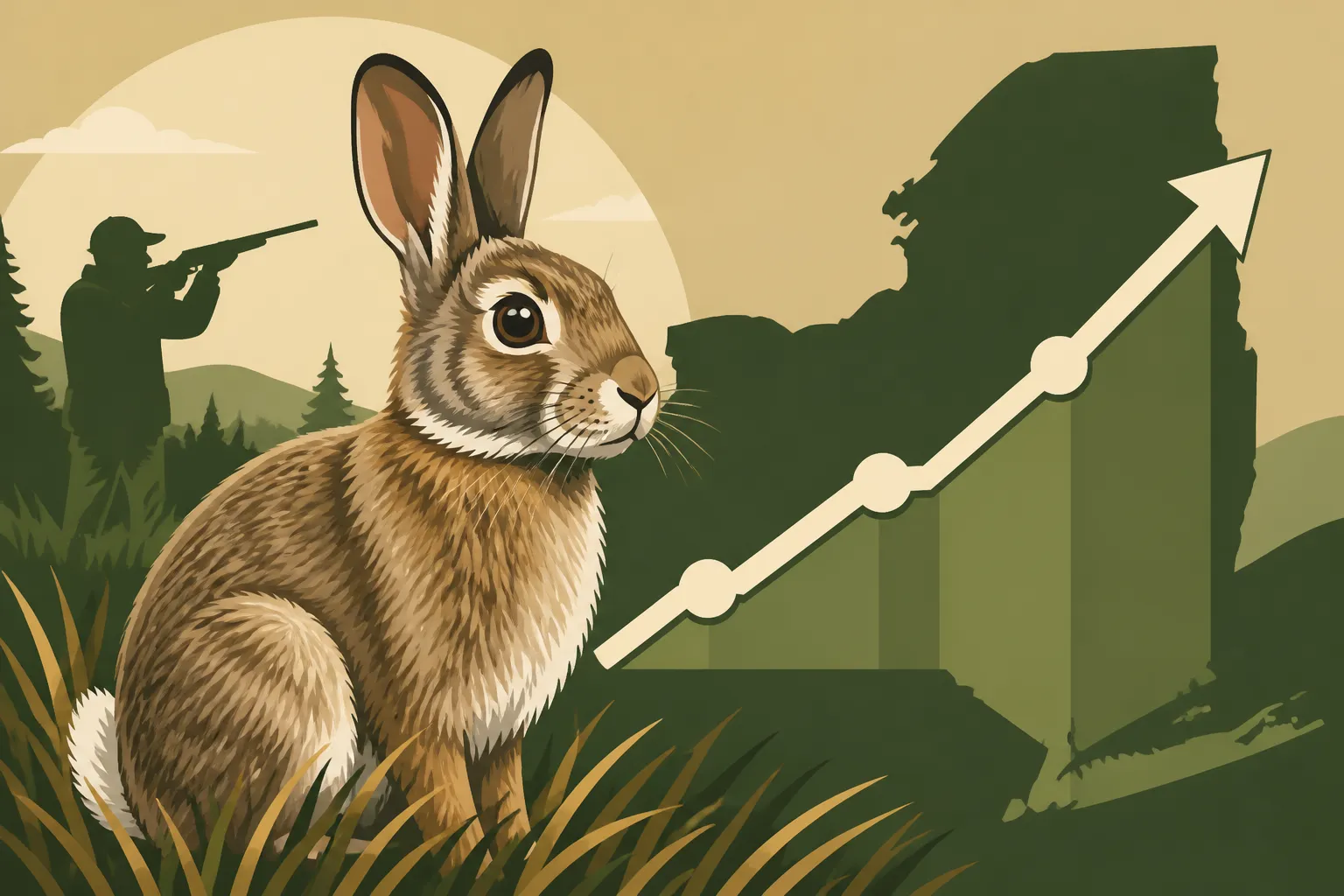
New York Cottontail Population Trend
For many of us, the thrill of rabbit hunting, with beagles baying through thick briar patches, is a cherished tradition. But lately, you might find yourself wondering if those cottontail numbers are quite what they used to be, or if you're just hitting the wrong spots. This guide is here to unravel the current New York cottontail population trend, exploring the factors that influence these resilient little game animals across the Empire State.
Understanding the New York Cottontail: More Than Just a Cute Face
Before we dive into population trends, it's helpful to remember that the Eastern cottontail ( Sylvilagus floridanus) isn't just a fluffy backyard visitor; it's a vital part of New York's ecosystem and a fantastic small game species. They're prolific breeders, which you might think would make their populations impervious to decline. However, their reliance on specific habitat types and their position low on the food chain make them quite sensitive to environmental changes. We often think of them as simple creatures, but their daily lives are a constant dance of finding food, avoiding predators, and navigating a landscape that's always shifting.
What Constitutes a "Healthy" Cottontail Population?
A "healthy" cottontail population isn't just about sheer numbers; it's about stability and distribution. In an ideal world, you'd see a robust, well-distributed population that can withstand seasonal pressures like harsh winters or increased predation. This means good reproductive success (those big litters surviving to adulthood), adequate food sources year-round, and, most critically, plenty of escape cover. Without dense brush, briar thickets, and overgrown fence rows, cottontails simply can't thrive, no matter how many kits they produce. When you’re out scouting, pay attention to the quality of this cover, because that's often your first clue to a healthy rabbit population.
We often judge health by how easy it is to flush rabbits, but that's a subjective measure. Wildlife biologists look at harvest data, disease prevalence, predator-prey ratios, and habitat surveys. It's a complex picture, and what looks healthy in one corner of the state might be struggling elsewhere. For hunters, a good indicator might be consistent opportunities year after year in familiar haunts, while a noticeable drop-off often signals a deeper issue at play.
The Eastern Cottontail's Range in New York
The Eastern cottontail is pretty widespread across New York, generally favoring the lower elevations and areas with a mix of fields, brush, and woodlands. You'll find them almost everywhere except for the highest, most rugged elevations of the Adirondacks, where snowshoe hares tend to dominate. Their habitat flexibility allows them to adapt to diverse landscapes, from suburban fringes to sprawling farm country, but they always need that dense cover. Think about those neglected corners of fields, old apple orchards grown wild, or the edges where timber meets overgrown pasture – that's prime cottontail country.
Knowing their preferred range helps us understand why population trends might vary regionally. Urbanization in the Hudson Valley might squeeze them out, while agricultural practices in the Southern Tier could either help or hinder them depending on the intensity. If you're looking for where these quick little critters might be, remember their need for security, and you'll be well on your way. You can find more detail on their geographical spread in our guide to Cottontail and Snowshoe Hare Range in New York.
Key Factors Influencing New York's Cottontail Trends
The story of the cottontail population in New York isn't a simple straight line; it's a dynamic ebb and flow influenced by a host of environmental and human-driven factors. From the subtle shifts in climate to the broad strokes of land use, everything plays a part in whether those briar patches are hopping with rabbits or eerily quiet. For hunters and wildlife enthusiasts alike, understanding these influences is crucial to appreciating the challenges facing these small game champions.
Habitat Loss and Fragmentation
Perhaps the most significant challenge facing New York's cottontails is the ongoing loss and fragmentation of their preferred habitat. Cottontails thrive in what many people might consider "edge habitat" or "scrubland" – areas where agricultural fields meet forest, where old pastures are reverting to brush, or where human development leaves pockets of tangled vegetation. This often means thick, thorny hedgerows, dense briar patches, shrubby old fields, and the undergrowth along forest borders. Unfortunately, these are often the first areas to be cleared for new housing developments, expanded agriculture, or even "tidied up" for aesthetic reasons.
When these critical patches are removed or broken up into isolated islands, cottontails can't move between them easily, making them more vulnerable to predators and limiting their genetic diversity. Think about a long, brushy fence row that once connected two woodlots. If that fence row gets cleared for a larger field, the rabbits living there are suddenly exposed, and their path to other populations is severed. This kind of habitat degradation is particularly impactful because cottontails don't travel vast distances, relying on localized cover. Understanding this makes tools like GoHunt's satellite imagery invaluable for identifying remaining habitat and potential corridors.
Predation Pressure and Disease
Cottontails are a fundamental food source for many predators, from coyotes and foxes to hawks, owls, and even house cats. While a certain level of predation is natural and healthy for an ecosystem, an imbalance can put significant pressure on rabbit populations. For instance, if an area sees a boom in coyote numbers, or if suitable rabbit cover declines (making them easier targets), the predation rate can become unsustainable. New York Coyote Hunting Season Rules are often in place to help manage these predator populations, which can indirectly benefit cottontails.
Beyond direct predation, diseases can also sweep through cottontail populations, especially when densities are high or environmental stresses are present. Conditions like tularemia or fibromatosis, while often localized, can reduce numbers significantly. These factors often interact: a rabbit weakened by disease might be more susceptible to predation, and a lack of adequate cover can concentrate populations, making disease transmission more efficient. It's a constant balancing act in the wild.
Climatic Influences and Weather Patterns
New York's climate, with its distinct seasons, naturally impacts cottontails. Harsh winters with deep, persistent snow cover can be particularly challenging. While rabbits are adapted to snow, very deep snow can limit access to food sources, make travel difficult, and expose them to aerial predators more easily, especially if their preferred browse is buried. Conversely, mild winters might allow for better survival rates. Heavy rainfall or prolonged wet periods during nesting season can also negatively affect young rabbits, leading to lower recruitment into the population.
On the other hand, a string of mild winters combined with good summer growing seasons can allow populations to rebound quickly, thanks to their high reproductive potential. It's a yearly gamble with Mother Nature. As we observe longer-term climate shifts, understanding how these patterns might increasingly stress or favor cottontail populations becomes an important part of conservation strategy.
Regional Differences in Cottontail Abundance Across the State
New York is a vast and varied state, from the farmlands of the west to the dense forests of the Adirondacks, and everything in between. It's no surprise, then, that the story of the cottontail population trend isn't uniform across these diverse landscapes. What you see happening to rabbit numbers in the Finger Lakes region might be quite different from the situation on Long Island, and understanding these regional nuances is key for any hunter or conservationist.
Western and Central New York Farmland
The expansive farmlands of Western and Central New York, including areas in the Southern Tier, have historically been prime cottontail habitat. Here, the mosaic of agricultural fields, hedgerows, woodlots, and old pastures creates abundant edge habitat that rabbits love. However, modern agricultural practices can sometimes be a double-edged sword. While corn and soybean fields provide seasonal food, the trend toward larger fields, fewer fencerows, and more intense cultivation can reduce permanent cover.
When you're Hunting Southern Tier Farmland Deer, you often stumble upon excellent rabbit cover along those same field edges and brushy creek bottoms. Areas with a good mix of small-scale farming, fallow fields, and plenty of brushy draws tend to hold the most robust cottontail numbers. For hunters, these regions often offer the best opportunities for rabbit hunting, especially if you can get permission on private land or find unmanaged state forest parcels that haven't been "cleaned up." Tools like GoHunt can help you analyze satellite imagery to pinpoint those crucial, brushy areas before you even leave home.
Catskills and Lower Hudson Valley
The Catskill region, with its steeper, more forested terrain, naturally has different challenges and opportunities for cottontails. While the valley floors and old farmsteads will hold rabbits, the dense, mature forests don't offer the same widespread habitat as the open farmlands. Here, cottontails are more concentrated in regenerating clear-cuts, power line easements, and along the edges of small private holdings. The Catskill Forest Preserve Deer Ground might hold some rabbits, but they'll likely be found in specific pockets of disturbed habitat rather than spread throughout.
In the Lower Hudson Valley, increasing suburban development puts immense pressure on rabbit habitat. As natural areas are converted to housing and commercial spaces, the remaining pockets of brush become smaller and more isolated. However, urban and suburban environments can also create unique niches, with rabbits thriving in parks, greenbelts, and large backyards where adequate cover exists. The challenge here is access for hunters and managing populations safely within human-dominated landscapes.
Long Island and Coastal Areas
Long Island presents a particularly interesting and often challenging scenario for cottontails. With its high population density and extensive development, remaining natural habitats are precious. You'll find cottontails in patches of pine barrens, state parks, and on some remaining agricultural lands, particularly on the East End. These populations face intense pressure from habitat loss and fragmentation, as well as a high density of predators that can thrive near human habitation, such as foxes and feral cats.
Hunting opportunities for Long Island Farmland Deer often coincide with decent rabbit habitat, particularly in Suffolk County. However, the limited public access and specific regulations mean that rabbit hunting often requires careful scouting and sometimes private land permissions. Despite the challenges, these resilient rabbits continue to persist in surprisingly robust numbers in specific, well-protected pockets, a testament to their adaptability when given even a sliver of suitable environment.
Here's a quick overview of generalized cottontail status by region:
| New York Region | General Cottontail Status | Key Habitat Characteristics | Hunting Potential (Relative) | Primary Challenges |
|---|---|---|---|---|
| Western/Central Farmland | Generally Stable to Good | Agricultural edges, hedgerows, brushy creek bottoms | High | Intensive farming, habitat fragmentation |
| Catskills/Lower Hudson Valley | Localized Pockets, Moderate | Regenerating cuts, power lines, suburban greenbelts | Moderate | Forest maturation, development pressure |
| Adirondacks | Scarce (Snowshoe Hare more common) | Low elevation fringes, clear-cuts (limited) | Low | Deep snow, harsh winters, dense forest |
| Long Island/Coastal | Localized, Vulnerable | Pine barrens, parks, remaining farmland | Moderate | High development, habitat fragmentation |
| Tug Hill Plateau | Moderate to Good | Mixed forest, regenerating cuts, old farmsteads | Good | Harsh winters, deep snow, forest cover |
The Hunter's Role and Conservation Efforts for Cottontails
When we talk about wildlife populations, especially small game like cottontails, it's easy to focus on the numbers alone. But as hunters, we play a unique and often overlooked role in both observing these trends firsthand and actively contributing to their conservation. Our boots on the ground, our shared knowledge, and our direct engagement are vital pieces of the puzzle for the future of rabbit hunting in New York.
How Hunters Contribute to Data and Management
Every time you head out for Rabbit and Hare Hunting in New York and fill your bag, or even if you come home empty-handed, you're gathering valuable information. Harvest data collected by state agencies, often through mandatory reporting or voluntary surveys, gives biologists critical insight into population health. Changes in hunter success rates, the age and sex ratios of harvested animals, and even anecdotal observations from dedicated hunters are all data points. If you consistently find fewer rabbits in a familiar covert, or notice a new disease affecting them, sharing that information with the New York Department of Environmental Conservation (DEC) can make a real difference.
Many platforms, including GoHunt, are designed to help hunters track their own success and scouting observations, which, when aggregated, can provide valuable localized insights. By simply being observant and reporting what you see, whether it's abundant rabbits or signs of decline, you become an integral part of the larger wildlife management effort. Your direct experience in the field complements the scientific studies, creating a more comprehensive picture of the cottontail population trend.
Habitat Improvement for Cottontails
The most impactful thing we can do for cottontails is to improve and protect their habitat. This often means embracing what might look like "messy" land management. Instead of manicured edges, think brush piles, un-mowed field borders, and allowing old fields to revert to brushy cover. On private land, creating brush piles from felled trees, planting shrubby species like dogwood or hawthorn, and establishing dense, thorny cover can be game-changers for local rabbit populations. Even small actions, like leaving a corner of your property un-mowed or creating a few dense coverts, can provide a vital refuge.
For those who hunt public lands, advocating for habitat diversity and early successional habitat management is crucial. This means supporting timber sales that create young, regenerating forest stands, or pushing for projects that maintain brushy edges along existing fields and clearings within areas like New York State Forest Hunting properties. Rabbits, unlike deer, often don't need huge tracts of land; they need concentrated, protective cover within their smaller home ranges.
The Future of New York Cottontail Hunting
Despite the challenges, the future of cottontail hunting in New York holds promise, largely because of the species' adaptability and high reproductive rates. While localized declines due to habitat loss will continue in some areas, targeted habitat work and sound management can ensure healthy populations elsewhere. It's a reminder that conservation isn't just about protecting endangered species; it's also about maintaining the health and abundance of common game animals that provide so much enjoyment.
As hunters, our commitment to ethical hunting, responsible land stewardship, and active participation in wildlife management efforts will be key. Keep those beagles baying, keep those brush piles growing, and keep an eye on those vital habitat components. With collective effort, the rapid dash of a cottontail through a New York briar patch will remain a thrilling sight for generations to come.
Disclaimer
This article is for general informational purposes only and does not constitute professional advice. Laws, prices and regulations vary by location and change over time. Consult a qualified professional for guidance on your specific situation.