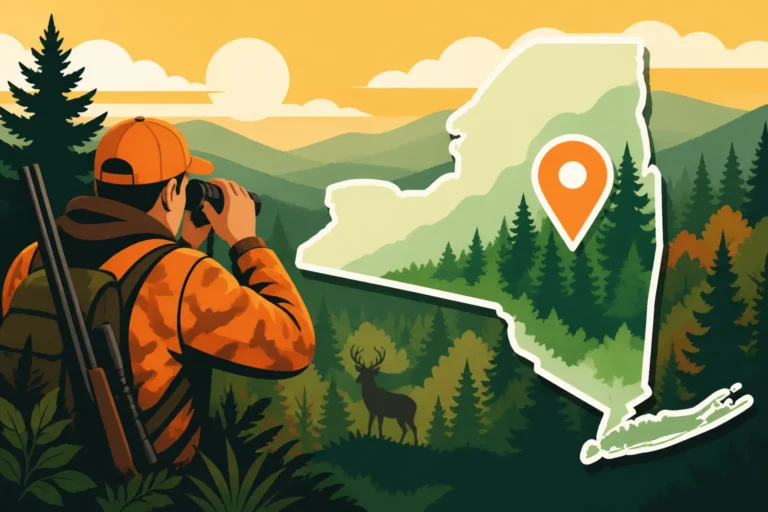
Catskill Forest Preserve Deer Ground
Hunting the Catskill Forest Preserve can feel like stepping back in time, a rugged experience far removed from manicured food plots and easy access. It's a place where you often earn every deer you see, let alone harvest, but the rewards are immense. This guide will walk you through understanding the unique challenges and incredible opportunities for deer hunting in New York's Catskill Mountains, helping you decipher its ancient forests and steep terrain to find success.
Understanding the Catskill Forest Preserve for Deer Hunting
The Catskill Forest Preserve is a true gem, offering vast tracts of public land for hunters. Unlike the often-flat farmlands of the Southern Tier, this is mountain hunting, pure and simple, and it comes with its own set of rules and rewards. It’s a place where whitetails adapt to steep slopes, dense undergrowth, and significant elevation changes. For many, it's the closest thing we have to true wilderness hunting in the state, making it a highly sought-after destination for those looking to test their skills against nature.
Rules and Regulations in the Preserve
Before you even think about lacing up your boots, it's crucial to understand the specific regulations that govern hunting within the Catskill Forest Preserve. While general New York hunting laws apply, the "Forever Wild" designation brings some particular nuances. For instance, permanent tree stands are often prohibited, meaning you'll need portable setups that are removed daily, or you'll be hunting from the ground. Camping regulations, especially in wilderness areas, can also differ from state forests or WMAs. You can carry your legal New York Hunting Licenses and What They Cost and your appropriate big game tags, but always double-check the local rules for the specific area you plan to hunt. These aren't just suggestions; they're in place to protect the preserve's unique character and ensure sustainable hunting for everyone.
It's not uncommon to encounter signs that outline specific rules at trailheads or parking areas, so always take a moment to read them. These might cover everything from fire restrictions to parking limitations. Knowing these ahead of time prevents unwanted surprises or, worse, unintended violations that could ruin your hunt and incur penalties. Being a responsible hunter in the preserve means respecting not only the wildlife but also the land and its designated uses, which often include hikers, campers, and other outdoor enthusiasts.
Unique Characteristics of Catskill Deer Ground
The Catskills present a unique environment for deer. The mature hardwood forests, dominated by oak, maple, and beech, provide abundant mast crops in good years. However, the deer populations here are generally lower in density compared to agricultural areas, and they tend to be highly spread out. You're less likely to see large herds and more likely to encounter solitary deer or small family groups. The sheer ruggedness of the terrain means deer often utilize benches, saddles, and thick ravines for bedding and travel, seeking protection from both predators and human disturbance. This requires a different approach than hunting open fields or brushy creek bottoms.
The elevation changes are significant, with many peaks soaring over 3,000 feet, creating distinct microclimates and vegetation zones. This can influence where deer feed and bed throughout the season. Early season might see deer higher up, benefiting from cooler temperatures and varied browse, while later in the season, they might concentrate in lower, more sheltered valleys with consistent food sources. Understanding these elevation-based shifts is key to consistent success. Also, don't forget that these mountains are shared with a healthy population of New York's Black Bear Population, so be bear-aware, especially when packing out a deer.
Navigating the Unique Terrain of the Catskills
The Catskills are notorious for their steep, broken terrain, thick cover, and vast stretches of unbroken forest. This isn't flatland hunting where you might spot a deer a quarter-mile away. Here, visibility can be limited to mere dozens of yards, and every step often feels like a climb. Success hinges on your ability to navigate effectively, both physically and with the aid of modern tools.
Topography and Access Points
The Catskill Forest Preserve is characterized by a series of parallel ridges and deep valleys. These ridges, often covered in mature timber, create natural funnels, saddles, and benches that deer use for travel and bedding. Ravines and drainages dissect these features, providing escape routes and sheltered bedding areas. Identifying these topographical features on a map is crucial for predicting deer movement. Many of the designated public access points, such as parking lots for hiking trails or access roads, are typically at lower elevations. This means that to get into prime deer country, you're usually going to be doing some serious climbing.
Think about how deer utilize these features. A saddle between two peaks might be a major travel corridor, especially during the rut. A bench halfway up a steep slope could be a bedding area offering both security and a thermal advantage. Understanding how to use elevation to your advantage, whether it's for thermals or just staying out of sight, is paramount. Often, the best hunting isn't directly off the beaten path but a mile or two in, past where most casual hikers or hunters venture. This ruggedness can be a deterrent to many, but for the determined hunter, it's where the opportunities truly lie.
Using Maps and Technology for Navigation
Effective navigation in the Catskills is non-negotiable. Traditional topographic maps are invaluable for understanding elevation changes and identifying key features like saddles, ridges, and drainages. However, combining these with modern digital tools takes your scouting and hunting to another level. Applications like onX Hunt provide satellite imagery overlayed with property boundaries, public land designations, and landowner information, which is incredibly helpful when you're on the edge of the preserve or near private inholdings. This ensures you always know exactly where you are and what the land status is.
Before heading into the field, spend time "e-scouting" using these digital tools. Identify potential bedding areas on south-facing slopes, likely travel corridors along ridge lines, and hidden pockets of diverse forage. You can even drop pins for potential stand sites or points of interest. Remember that cell service can be spotty, if not entirely absent, in many parts of the preserve, so download offline maps before you go. Having a GPS unit or using your phone's GPS with downloaded maps for navigation, even without a signal, is critical for safety and efficiency. This is where Scouting With the New York HuntFishNY App can also come in handy, offering another layer of data for public land.
Key Deer Habitat and Sign in the Preserve
Finding deer in the vastness of the Catskills isn't about luck; it's about understanding their needs and how they interact with the specific habitat. This means knowing what to look for beyond just a fresh track. It’s about interpreting the landscape like a deer would.
Food Sources and Forage
Deer in the Catskills rely heavily on natural food sources. Unlike agricultural areas, food plots are virtually nonexistent on public preserve land. During the early archery season, deer will browse on a variety of green vegetation, soft mast like apples (if you can find an old, forgotten orchard), and acorns if they've started dropping. As the season progresses into late fall, hard mast, primarily acorns from oak trees and beechnuts, becomes a critical food source. Identifying areas with high concentrations of productive mast trees is a game-changer. These areas can change year to year based on mast crop variability, so pre-season scouting is vital.
Beyond mast, deer will browse on twigs, buds, and residual green plants. Look for areas with diverse understory vegetation, especially near the edges of different timber types or older logging roads where new growth has emerged. Don't overlook hemlock stands, which provide not only thermal cover but also some browse during harsh winters. A good year for acorns can concentrate deer in specific areas, making your scouting efforts much more productive. On the flip side, Hunting After a Poor Acorn Year will require shifting your focus to other, perhaps less obvious, food sources.
Bedding Areas and Escape Cover
In the Catskills, bedding areas are typically found in dense, security-rich cover, often on ridges or benches that offer good visibility and a quick escape route. Steep, south-facing slopes are often preferred bedding areas, especially on cold, sunny days, as they offer thermal advantages. North-facing slopes, conversely, can hold deer during warmer periods or as midday bedding. Look for thick stands of regenerating timber, dense hemlock thickets, or blown-down areas that provide visual obstruction and protection from the elements.
Deer will also bed in the deep ravines and pockets that are often overlooked by hunters. These areas provide excellent thermal cover and can be challenging for predators to navigate. When scouting, pay close attention to the wind patterns in these potential bedding areas. Deer will almost always bed with the wind at their back, allowing them to scent anything approaching from behind, while their eyes and ears cover their downwind approach. This is why understanding Wind and Thermals on a Catskill Ridge is so critical.
Water Sources and Travel Corridors
While water is generally abundant in the Catskills through numerous springs, streams, and seasonal seeps, knowing where deer consistently drink can provide clues to their travel patterns. Deer often use these water sources as part of their daily routine, moving from bedding to feeding and then to water. Look for well-worn trails leading to small streams or seeps, especially in dry periods.
Travel corridors are the highways deer use to move between bedding and feeding areas, or simply across the landscape. In the Catskills, these are frequently along ridge lines, natural saddles, old logging roads, or the edges of dense cover. Look for distinct trails, rubs, and scrapes, particularly in thicker sections where deer feel secure. A well-used travel corridor will have multiple signs of deer activity, not just one or two random tracks. These corridors are prime locations for setting up a stand or planning a still-hunt. Remember, the steeper the terrain, the more likely deer are to stick to the paths of least resistance, which become natural travel routes. Reading a Ridge for Catskill Deer Movement can tell you a lot about these patterns.
Strategic Hunting Approaches for Catskill Deer
Hunting the Catskill Forest Preserve demands a strategic and often physically demanding approach. This isn't a place for casual strolls. You need to be prepared to hike, observe, and adapt to the unpredictable nature of mountain deer.
Still-Hunting and Scouting
Still-hunting is arguably one of the most effective strategies for Catskill deer. Given the dense cover and broken topography, seeing deer from a stationary stand can be challenging. Still-hunting involves moving slowly and deliberately through the woods, pausing frequently to observe your surroundings for extended periods. It's about blending in, moving like a predator, and using the wind and terrain to your advantage. This technique allows you to cover more ground, actively seeking out deer in their bedding or feeding areas, rather than waiting for them to come to you.
When still-hunting, pay meticulous attention to the wind. Always try to move into the wind or with a crosswind. Use the terrain to break up your silhouette and muffle your footsteps. Move at a snail's pace, taking only a few steps before stopping for several minutes to scan for movement, horizontal lines, or flicking ears. Binoculars are incredibly useful, even in thick timber, for picking apart shadows and identifying parts of a deer. This method requires patience and discipline, but it often yields close-range encounters with unsuspecting deer. For more specific tactics, check out Still-Hunting Catskill Ridges.
Stand Placement and Wind Considerations
While still-hunting is excellent, there are certainly times when a stand can be highly effective, especially around pinch points, saddles, or concentrated food sources. Given the rules of the preserve, you'll be using portable tree stands or ground blinds. For tree stands, focus on areas with consistent deer sign, like heavily used trails, scrape lines, or rub lines, particularly during the pre-rut and rut phases. Entry Routes on Steep Catskill Ground are crucial here; consider how deer will approach your stand and ensure your scent is not blowing into their approach path.
Wind is perhaps the most critical factor in stand placement. In mountainous terrain, wind can be notoriously fickle, often influenced by thermals—the rising warm air during the day and falling cool air in the evening. Always set up to keep your scent out of the primary deer approach. During morning hunts, cool air often flows downhill, so setting up higher may be beneficial. In the afternoon, warm air rises, so a lower stand might be better. Observing wind socks or carrying a small bottle of powder to check shifting air currents throughout the day can be invaluable. Consider using the GoHunt app to help track real-time wind conditions and even predict thermal shifts in specific terrain.
Deer Drives in Steep Terrain
Deer drives, while less common in the vastness of the preserve compared to smaller woodlots, can still be an effective tactic, especially with a small, disciplined group. The key here is understanding the terrain and how deer will react. Instead of pushing deer across open fields, Catskill drives often involve pushing deer along ridge lines, through saddles, or towards natural funnels where standers are positioned. This is where Deer Drives With Three or Four Hunters can really pay off, allowing you to cover key escape routes.
The challenge is the steepness and thick cover, which can make it physically demanding for the drivers and difficult for standers to see approaching deer. Communication is paramount. Drivers need to move slowly and deliberately, keeping good spacing, while standers must be aware of their surroundings and safe lanes of fire. Safety is the absolute priority, so ensure everyone involved is clear on the plan, knows where others are, and understands their shooting lanes. Positioning standers on benches or points overlooking ravines that deer might use as escape routes can be very productive.
Challenges and Considerations for Preserve Hunters
Hunting the Catskill Forest Preserve is not without its difficulties. The same wildness that makes it appealing also presents significant challenges, from dealing with other hunters to navigating unpredictable weather.
Hunting Pressure and Isolation
While the Catskills offer vast public land, certain accessible areas, especially those near popular trailheads or easier terrain, can experience significant hunting pressure, particularly during opening days and peak rut. It can be disheartening to spend hours hiking only to find someone else's stand already set up. However, the good news is that the deeper you're willing to go, the more the crowds thin out. Deer also learn to avoid these high-pressure areas, often retreating to the most rugged and remote parts of the preserve.
The isolation, while great for finding undisturbed game, also means you're largely on your own. There's often no one else around to help if you get lost, injured, or harvest a deer far from a road. This underscores the importance of being self-sufficient: carrying a reliable compass and map (and knowing how to use them), a fully charged phone with downloaded offline maps (like those onX Hunt offers), a first-aid kit, and sufficient water and food. Always let someone know your hunting plan, including where you'll be and when you expect to return. This is especially true when venturing into areas like Finding Ground That Sees Fewer Hunters.
Weather Variability and Essential Gear
New York weather, especially in the Catskills, can be highly unpredictable. A warm, sunny October day can quickly turn into a cold, wet, or even snowy November afternoon. You need to be prepared for everything. Early season archery hunts can see temperatures ranging from warm and humid to crisp and chilly, making proper layering crucial to avoid sweating and then getting cold. As the firearms season progresses into November, cold, rain, and snow become common. Clothing for a New York November is not just a suggestion; it’s a necessity.
Your gear needs to be robust and adaptable. Quality waterproof and insulated boots are essential for traversing wet leaves, snow, and stream crossings. Layered clothing, including a good base layer, insulating mid-layers, and a waterproof/windproof outer shell, will allow you to adjust to changing conditions. A comfortable, well-fitting pack is also critical for carrying all your essentials, including water, snacks, emergency gear, and potentially game meat. Given the rugged terrain and potential for long carries, a pack designed for backcountry hunting, like those featured in Packs for a Backcountry Adirondack Hunt, can make a huge difference in comfort and capability.
Planning Your Catskill Deer Hunt
A successful hunt in the Catskill Forest Preserve isn't just about showing up with a rifle; it's about meticulous preparation, both mentally and physically. This planning starts long before the season opener and can significantly impact your experience.
Essential Gear Checklist for the Preserve
Going into the Catskills means being prepared for a demanding environment. Your gear needs to be up to the task, reliable, and able to handle changing conditions and unexpected situations.
| Category | Essential Items | Notes |
|---|---|---|
| Navigation | Topographic map, compass | Know how to use them; primary backup to electronics. |
| GPS unit or smartphone with offline mapping app (onX Hunt, GoHunt) | Download maps for no-service areas. | |
| Safety | First-aid kit | For minor injuries, blisters, cuts. |
| Headlamp or flashlight with extra batteries | Essential for early morning starts or late evening exits. | |
| Fire starter (waterproof matches, lighter) | For emergency warmth or signaling. | |
| Whistle | For signaling in emergencies. | |
| Water filter/purification tabs and ample water | Catskills have water, but filtration is wise. | |
| Hunting | Hunting license, tags, hunter education proof | Always carry physical or digital copies. |
| Rifle/bow/muzzleloader and ammunition | Ensure it's sighted in and legal for the season. | |
| Binoculars and rangefinder | Optics for Adirondack and Catskill Timber are key. | |
| Portable tree stand/climbing sticks or ground blind | Must be removed daily per preserve rules. | |
| Safety harness and lifeline | Non-negotiable for elevated hunting. | |
| Clothing | Layered clothing (base, mid, outer shell) | Adaptable to temperature and activity levels. |
| Waterproof/windproof outer shell | Critical for unpredictable mountain weather. | |
| Insulated, waterproof hunting boots | Keep feet dry and warm; good ankle support. | |
| Blaze orange or pink | Meets How Much Blaze Orange New York Requires and visibility requirements. | |
| Game Care | Field dressing knife, game bags | For proper meat handling after a harvest. |
| Deer drag or frame pack | For Dragging a Deer Off a Catskill Ridge. | |
| Miscellaneous | Snacks, energy bars | Sustenance for long days. |
| Small repair kit (duct tape, cordage) | For quick fixes in the field. | |
| Power bank for phone | Extend battery life in the backcountry. |
Pre-Season Scouting and E-Scouting
The work for a successful Catskill hunt really begins weeks, if not months, before opening day. Pre-season scouting, both from your computer and on foot, is invaluable. Start with digital maps, like those offered by onX Hunt or even Google Earth, to identify potential access points, ridge lines, saddles, drainages, and areas with different timber types. Look for sections of the preserve that are harder to access, as these often hold less pressured deer. Mark these areas as points of interest.
Once you have a few promising spots identified, hit the woods. Focus on walking those ridge lines, checking saddles for travel, and exploring dense cover for bedding sign. Look for old rubs and scrapes from previous years, as deer often use the same travel patterns year after year. Pay attention to mast crop production, noting which oak trees are dropping acorns or which beech trees have nuts. This real-time information can be combined with your e-scouting to build a comprehensive picture of deer activity. Remember, the more information you gather pre-season, the less "cold" hunting you'll do when the season officially opens, and the more confident you'll be in your stand or still-hunting routes.
Disclaimer
This article is for general informational purposes only and does not constitute professional advice. Laws, prices and regulations vary by location and change over time. Consult a qualified professional for guidance on your specific situation.