Canvasbacks on Eastern Lake Ontario
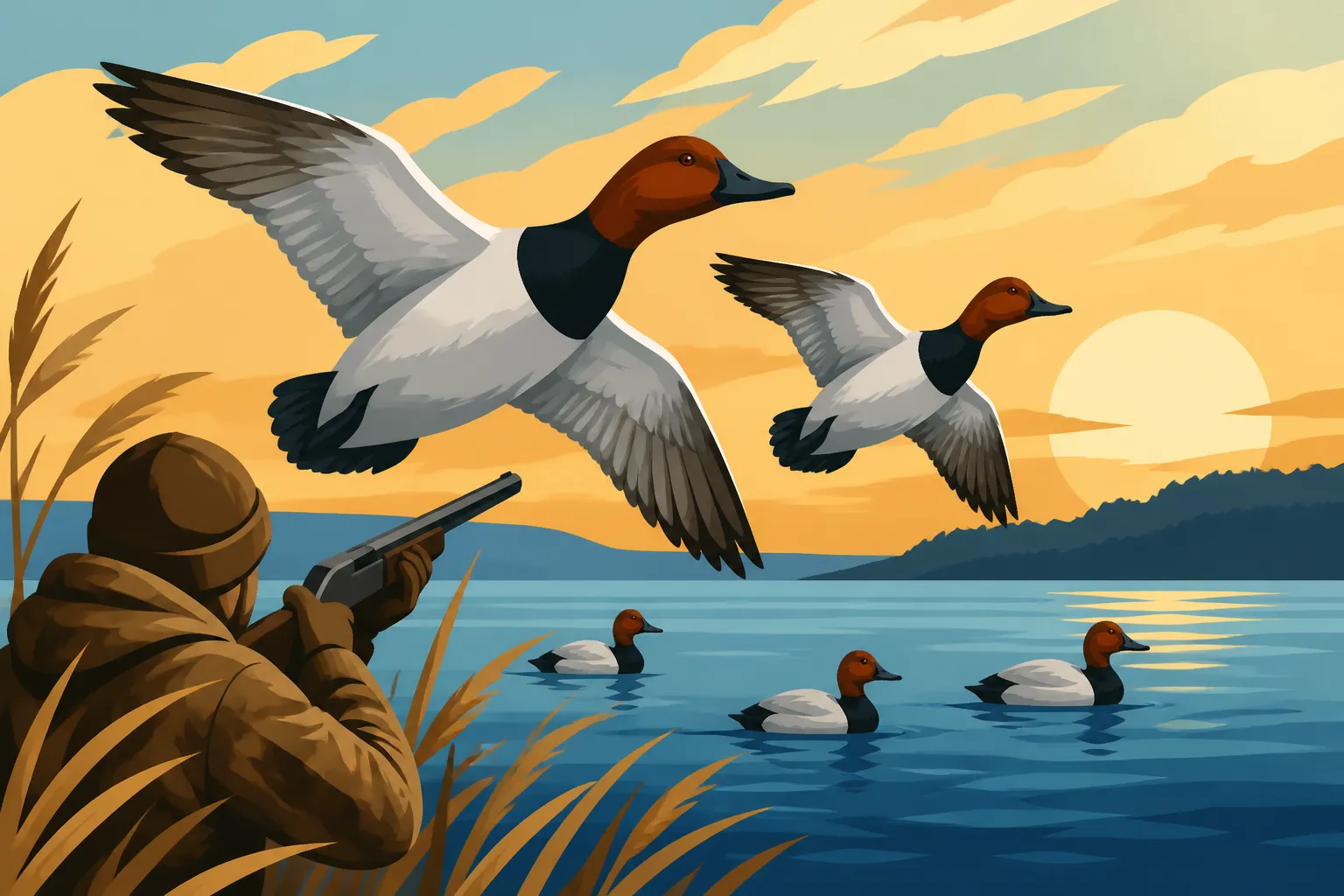
There's nothing quite like the sight of a flock of canvasbacks, those regal "kings of ducks," diving and working their way into a decoy spread. For many New York waterfowlers, the challenge and reward of pursuing these magnificent birds on the vast waters of Eastern Lake Ontario is a pinnacle experience. This guide will walk you through the nuances of hunting canvasbacks in this iconic region, from understanding their movements to setting up for success and doing your part for conservation.
Understanding Canvasback Behavior on Eastern Lake Ontario
Canvasbacks are truly a unique species among waterfowl, known for their distinctive sloped profile and swift, powerful flight. Their presence on Eastern Lake Ontario isn't a coincidence; it's driven by specific biological needs and the rich aquatic environment this massive body of water provides.
Migration Patterns and Timing
Canvasbacks are among the earliest migrants to push south in the fall, often appearing on larger waters like Lake Ontario well before many other duck species are in full swing. Their arrival is heavily dictated by weather fronts further north, particularly the first significant cold snaps that start freezing up inland marshes and smaller lakes in Canada and the Great Lakes region. You'll typically see the vanguard arriving in late October, with peak numbers often building through November.
These birds aren't just passing through quickly; many will stage on Eastern Lake Ontario for extended periods, sometimes weeks, especially if food resources are abundant and hunting pressure remains manageable in their preferred staging areas. They're often among the last ducks to depart when the lake finally starts to lock up with ice, frequently moving to open water areas that remain ice-free due to currents or depth. Understanding these patterns is crucial for timing your hunts. A solid scouting effort, perhaps using tools like the Scouting With the New York HuntFishNY App, can help you determine current concentrations.
Preferred Habitats and Food Sources
What draws canvasbacks to Eastern Lake Ontario, specifically? It's all about food, and for canvasbacks, that often means submerged aquatic vegetation (SAV). Unlike dabbling ducks that feed in shallow marshes, canvasbacks are deep divers, and they relish plants like wild celery (Vallisneria americana), pondweeds, and sago. Eastern Lake Ontario, with its expansive shallow bays, protected coves, and fertile shoals, provides vast underwater meadows of these vital food sources.
Areas with a sandy or silty bottom that supports dense beds of wild celery are absolute magnets for canvasbacks. They'll spend their days diving repeatedly, often in water 5 to 15 feet deep, extracting tubers and rhizomes from the lakebed. They'll raft up in large groups, sometimes thousands strong, often in specific areas where these food sources are particularly rich. These rafts can be impressive, and knowing how to approach them effectively without spooking the entire flock is key. They also appreciate sheltered areas that offer refuge from strong winds and heavy waves, which are common on a body of water the size of Lake Ontario. This means looking for areas that offer natural protection or that are positioned strategically to break the wind.
Key Areas and Access Points for Canvasback Hunting
Eastern Lake Ontario is a vast landscape, and knowing where to focus your efforts for canvasbacks can make all the difference. It's not just about getting on the water; it's about getting on the right water.
Identifying Productive Waters
When hunting canvasbacks on Eastern Lake Ontario, certain geographic features consistently hold birds. The large, shallow bays that dot the eastern shoreline are prime real estate. Think about places like Henderson Bay, Black River Bay, and Chaumont Bay. These bays often feature the extensive beds of submerged aquatic vegetation that canvasbacks crave. They also offer a degree of shelter from the main lake's fury during strong winds, providing resting and feeding areas.
Beyond the major bays, don't overlook offshore shoals and points that create current breaks or areas where food might concentrate. Canvasbacks are powerful fliers and will travel to feed, so even spots a bit further from shore can be highly productive if they offer what the birds are looking for. Using detailed bathymetric maps or a good GPS with quality mapping like GoHunt can help you pinpoint these underwater features. Remember that conditions change, and a spot that was hot last week might be barren today if the birds have moved on to new feeding grounds due to pressure or weather. This is where diligent Scouting New York Public Land Before Season really pays off.
Public Access and Launch Points
Accessing Eastern Lake Ontario requires a boat capable of handling big water. Fortunately, there are several public launch points that provide excellent access to prime canvasback hunting grounds. Many state boat launches are strategically located within or near these productive bays.
For example, launches around Henderson Harbor provide direct access to Henderson Bay and nearby waters. Launches further north or south can also get you into the general vicinity. It's crucial to check local regulations for specific launches, as some might have seasonal restrictions or specific hours of operation. Additionally, some wildlife management areas (WMAs) in the region might offer specialized access points or opportunities, though large-water duck hunting often relies on more robust boat launches. Always remember to consider safety on such a large body of water; even on calmer days, Lake Ontario can turn rough quickly. Having the right boat and safety gear is paramount. You'll often find yourself driving some distance to get to these prime spots, so factoring in travel time to places like those found by consulting Eastern Lake Ontario Public Access guides is important.
Effective Tactics and Gear for Canvasback Hunters
Hunting canvasbacks effectively on Eastern Lake Ontario involves a combination of strategy, patience, and the right equipment to stand up to the elements and the birds themselves.
Decoy Spreads and Calling Strategies
Canvasbacks are often seen in large rafts, and to truly draw them in, your decoy spread usually needs to mimic that. We're talking large spreads here, often 50 to 100 decoys or more, primarily diver decoys. Canvasback decoys themselves are essential, but mixing in redhead, bluebill, and even goldeneye decoys can add to the realism and attraction. Think about creating a "feeding raft" effect, with a wide, open landing zone (the "hole") directly in front of your blind.
Motion is another critical factor. A jerk string or a few motion decoys can make a static spread come alive, especially on calmer days when the decoys aren't moving naturally. Canvasbacks are notoriously wary, so realism is key. Placement also matters; consider prevailing winds and currents to ensure your spread looks natural and presents an inviting landing zone.
As for calling, canvasbacks aren't typically "chatterboxes" like mallards. Their primary call is a low, guttural croak or grunt. A simple single reed duck call or a specialized diver call can mimic these sounds. The goal isn't to carry on a lengthy conversation, but rather to make soft, reassuring calls that indicate safety and contentment. Sometimes, less is more, especially when birds are already looking at the spread. Combining visual appeal with subtle auditory cues is often the most effective approach. For serious hunters, tracking harvest numbers can be valuable, and resources like New York Duck Harvest Numbers provide insights into past seasons.
Boat and Blind Considerations
Given the nature of Lake Ontario, your choice of boat is paramount. A layout boat can be incredibly effective for hunting canvasbacks, especially on open water or large bays where you can tuck into the decoys and virtually disappear. These low-profile boats are designed to be hidden among a large spread. However, operating a layout boat requires a tender boat – a larger vessel that transports the layout boat, decoys, and hunters to the hunting location and provides a safe haven during the hunt.
If a layout boat isn't in your arsenal, a larger, stable Jon boat or V-hull boat can work, particularly if you're hunting closer to shore or in shallower bays where you can set up a sturdy blind. Permanent or semi-permanent blinds might be an option on private land along the shore, but for public access, you're looking at more portable solutions. Layout Blind Hunting a Cut Cornfield might offer some transferable tips, even if the habitat differs. Regardless of your boat type, safety should be your absolute priority. Always wear life jackets, carry all required safety gear, monitor weather forecasts diligently, and tell someone your hunting plan. Lake Ontario demands respect.
Essential Gear for Big Water Hunting
Beyond the boat and decoys, specific gear is essential for a successful and safe canvasback hunt on Eastern Lake Ontario. First, quality GoHunt waterproof and insulated clothing is non-negotiable. Lake Ontario in the fall and winter can be brutally cold and wet. Layering is key, with a good base layer, insulating mid-layers, and a waterproof, windproof outer shell. Waders, particularly chest waders, are also a must for setting decoys and retrieving birds, as you'll often be working in cold, deep water. Opt for insulated waders to stay comfortable.
A reliable shotgun, typically a 12-gauge, capable of handling non-toxic shot (which is required for all waterfowl hunting) is necessary. Ensure you have the right choke to effectively pattern your chosen load at the typical ranges you'll be shooting. Steel shot is common, but bismuth or tungsten-matrix alternatives offer superior performance. Don't forget a sturdy retrieving dog, if you have one, or a good long-handled decoy retrieval tool, as downed birds can drift quickly on open water. A powerful spotlight or headlamp is also crucial for early morning setups and late evening pickups.
Conservation and Regulations for Canvasbacks in New York
As hunters, we are the frontline conservationists, and understanding the regulations and responsible practices is vital to ensuring the future of species like the canvasback.
Bag Limits and Season Dates
Canvasbacks are often managed with more conservative bag limits due to their lower population numbers compared to more abundant species like mallards or Canada geese. New York's waterfowl seasons are divided into zones, and Eastern Lake Ontario falls within the Western Zone for duck hunting. It's absolutely crucial to consult the official New York State Department of Environmental Conservation (DEC) hunting regulations guide each year for the most current and specific season dates and bag limits. These can change annually based on population surveys and federal frameworks.
Generally, canvasbacks will have a reduced daily bag limit, sometimes as low as one or two birds per hunter per day. Correctly identifying your target species before you shoot is paramount. Misidentification leading to an illegal harvest can result in penalties and, more importantly, undermines conservation efforts. Familiarize yourself with the distinctive features of a canvasback in flight and on the water. A good resource for understanding these zone structures is New York Duck Zone Boundaries.
Responsible Hunting Practices
Beyond adhering to bag limits and seasons, responsible hunting practices are essential for preserving the hunting tradition and ensuring healthy waterfowl populations. This includes ethical shooting within your effective range, ensuring clean kills and minimal crippling. Always strive to recover every bird you shoot. On large water like Lake Ontario, a strong current or high winds can quickly carry a downed bird away, making a swift retrieve critical. This is where a well-trained retriever or a fast boat with an alert crew really shines.
Another key aspect is minimizing disturbance. While large decoy spreads are effective, excessive boat traffic or prolonged high-pressure hunting in a specific area can push birds out. Try to spread out your hunting efforts, allowing birds to rest in certain areas. Participate in conservation efforts, whether it's supporting organizations like Ducks Unlimited or simply being an advocate for wetland preservation. Every action contributes to the health of the Atlantic Flyway. Also, be sure to complete your New York Migratory Bird Certification annually.
Contributing to Canvasback Management
As hunters, our participation in surveys and reporting systems is invaluable to wildlife managers. When you harvest a duck, paying attention to the leg bands (if present) and reporting them provides critical data on migration patterns, survival rates, and harvest pressure. The DEC and federal agencies rely on this information to make informed decisions about future hunting seasons and conservation strategies. By taking part, you become an active partner in the ongoing management of this incredible resource.
Disclaimer
This article is for general informational purposes only and does not constitute professional advice. Laws, prices and regulations vary by location and change over time. Consult a qualified professional for guidance on your specific situation.