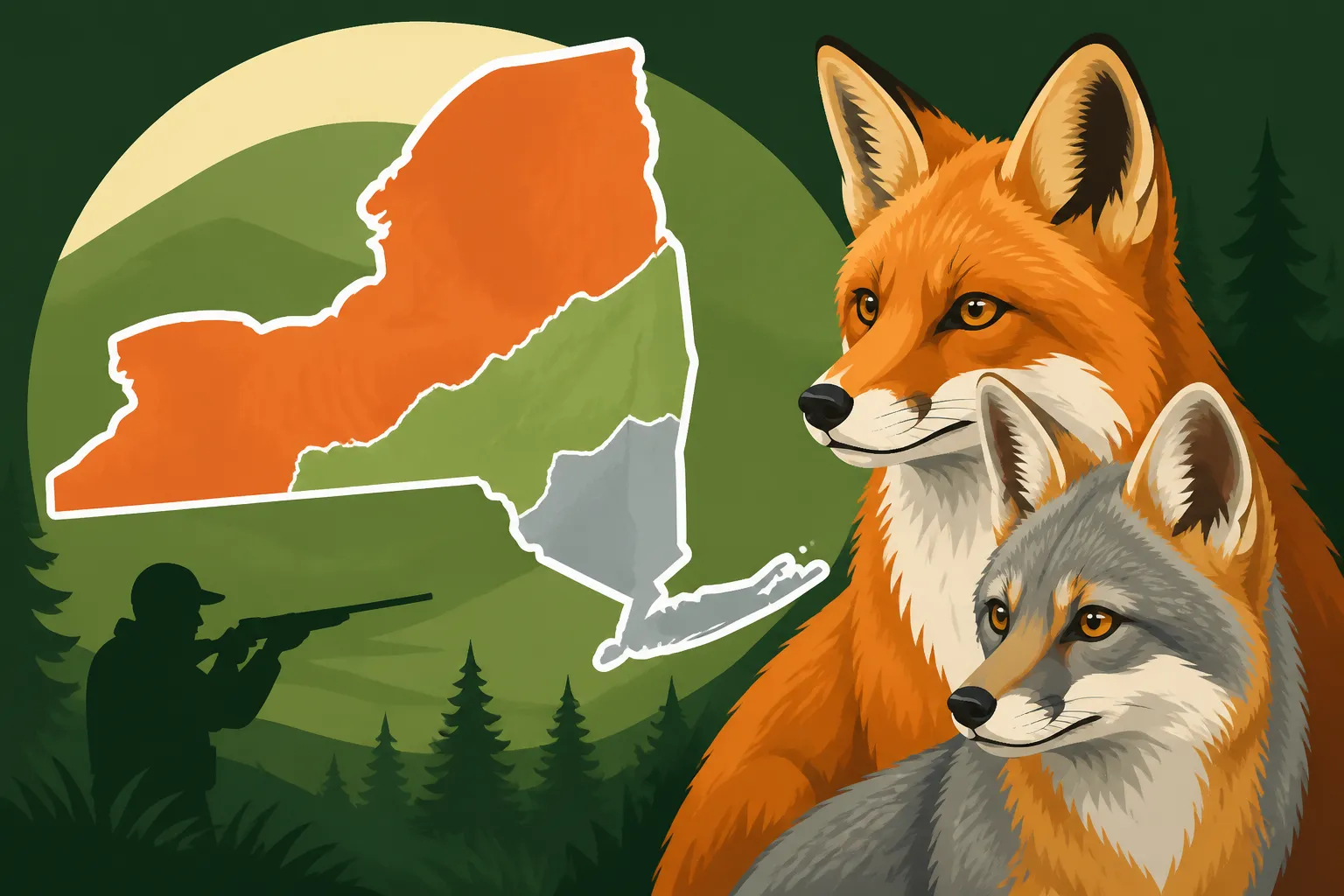
New York Red Fox and Gray Fox Range
Understanding where New York's red and gray foxes roam can make all the difference for a hunter or trapper. It's not just about knowing they exist; it's about recognizing the subtle habitat preferences that dictate where you're most likely to encounter each species, saving you precious time and effort in the field. This guide will delve into the distinct ranges and characteristics of these fascinating furbearers across our diverse New York landscape, helping you refine your approach.
Understanding New York's Fox Species
Before we dive into their specific haunts, it's crucial to understand the fundamental differences between the red and gray fox that call New York home. While both are canids, their behaviors, physical traits, and preferred habitats are quite distinct, making them unique targets for furbearer enthusiasts.
The Widespread Red Fox
The red fox ( Vulpes vulpes ) is likely the image that comes to mind for most New Yorkers when they hear the word "fox." These animals are remarkably adaptable and have successfully colonized almost every corner of the state, from remote wilderness to the fringes of suburbia. Their fur, as the name suggests, is typically a rusty red, often with black "stockings" on their legs and a distinctive white tip on their bushy tail. This white tail-tip is a key identifier, even at a distance.
Red foxes thrive in what we often call "edge habitat" – those transitional zones where forests meet fields, where brushy areas abut agricultural land, or where open woods give way to meadows. They're opportunistic hunters, preying on a wide variety of small mammals like voles, mice, and rabbits, as well as birds, insects, and even fruits and berries. Their adaptability to human presence is impressive; they've learned to navigate farm country, suburban woodlots, and even urban parks. This wide-ranging diet and flexible habitat use contribute to their prevalence across most of New York's landscape, making them a common sight and a popular target for Predator and Furbearer Hunting in New York.
The Elusive Gray Fox
The gray fox ( Urocyon cinereoargenteus ), while also present across much of New York, has a generally more restricted and specific range, preferring different types of cover than its red cousin. Physically, they're smaller and stockier than red foxes. Their fur is a grizzled salt-and-pepper gray on the back and sides, with reddish-brown patches on the neck, flanks, and legs. A distinctive black stripe runs down the top of their tail, ending in a black tip – a stark contrast to the red fox's white tip.
What truly sets the gray fox apart is its strong association with dense, brushy woodlands, rocky terrain, and swamps. Unlike the red fox that prefers open country for hunting, the gray fox excels in thicker cover. They are also unique among North American canids for their semi-arboreal nature; they can and do climb trees, using this ability to escape predators, forage for food (like nuts or birds' nests), or simply to rest in a safe perch. This climbing ability is a significant adaptation that influences their preferred habitat, drawing them to areas with mature trees and dense undergrowth.
Geographic Range and Distribution in New York
While both fox species have a statewide presence, their population densities and preferred strongholds differ significantly, reflecting their unique adaptations and ecological niches. Understanding these nuances is key to successful hunting or trapping.
Red Fox Strongholds
Red foxes are truly generalists, and you'll find them almost everywhere in New York. However, certain regions stand out as true strongholds where their populations are robust. The agricultural landscapes of the Southern Tier, the rolling hills and farmlands of the Finger Lakes region, and the expansive Lake Plains of western and central New York are prime red fox territory. Here, the mosaic of open fields, hedgerows, small woodlots, and brushy creek bottoms provides an ideal mix of hunting grounds and cover. They thrive along field edges, old fencerows, and the margins of woodlots, where they can easily hunt rodents and rabbits that also frequent these areas.
You'll also find healthy red fox populations throughout the St. Lawrence Valley and even infiltrating the lower elevation areas of the Adirondack Foothills and Catskill periphery, particularly where human activity has created fragmented habitats. Even in the more rugged, forested parts of the state, red foxes will seek out openings, power lines, and beaver meadows. A hunter looking for red foxes would do well to scout areas with diverse habitat, using tools like GoHunt to identify properties with a good mix of agricultural fields, brushy transitions, and accessible travel corridors. While they can be found in big timber, their numbers will generally be lower there compared to areas with more open country.
Gray Fox Habitats
The gray fox's range, while statewide, is concentrated in areas offering the dense cover and rugged topography they favor. Their populations are notably stronger in the heavily forested and mountainous regions. The Catskill Mountains are a classic gray fox haven, with their steep, rocky slopes, mature hardwood forests, and dense laurel thickets providing ample climbing opportunities and secure denning sites. The Hudson Valley, particularly its more wooded and less developed western stretches, also hosts significant gray fox numbers, especially along river corridors and in mixed forest stands.
Parts of the Southern Tier with extensive, unbroken tracts of deciduous forest and brushy ravines are also good places to look for gray foxes. You might even find them in the Adirondack Park, but generally in the less severe, lower elevation mixed forests rather than the true high peaks wilderness. When thinking about gray fox habitat, envision deep woods, rocky bluffs, and swampy areas with thick undergrowth. They're often found near streams or wetlands, which provide both water and dense cover. Using a mapping application like GoHunt can help you pinpoint areas with dense forest cover, rocky features, and proximity to water, which are all indicators of potential gray fox presence. When setting up for Coyote Calling in a New York Winter, being aware of a gray fox's presence means you might call in a bonus animal in these thick cover spots.
Factors Influencing Fox Distribution
The distribution of red and gray foxes in New York isn't arbitrary; it's a dynamic interplay of habitat, food, and competition. Understanding these underlying factors helps paint a clearer picture of why each species occupies its specific niche.
Habitat Preferences and Food Sources
At the heart of fox distribution are their differing habitat needs. Red foxes are the quintessential "edge" species. They thrive where different habitat types meet, creating a diverse buffet of food sources and cover options. A classic red fox territory might include a patchwork of cornfields, hayfields, brushy fencerows, and small woodlots. These areas provide an abundance of small rodents, which are a primary food source, as well as rabbits and ground-nesting birds. The open nature of these habitats allows red foxes to utilize their keen eyesight and speed for hunting. Their dens are often dug in open fields, under old barns, or in brush piles along field edges, allowing easy access to hunting grounds.
Gray foxes, on the other hand, are the masters of dense cover. Their ideal habitat is characterized by thick, mature woodlands, rocky outcroppings, and extensive brush, particularly near water sources or in steep, broken terrain. Their ability to climb trees gives them a unique advantage in these environments, allowing them to escape danger or forage for arboreal prey and plant matter that red foxes can't easily reach. Their diet is more varied and often includes nuts, fruits, and insects, in addition to small mammals and birds. They often den in rock crevices, hollow logs, or dense brush piles, blending seamlessly into their rugged surroundings. If you're Finding Sign in Big Adirondack Timber, especially near rocky areas, you might be in gray fox country.
Competition and Predator Dynamics
The ranges of red and gray foxes also influence each other through direct and indirect competition. Generally, red foxes are considered the more dominant canid in open or semi-open habitats. They are larger, often more aggressive, and more efficient hunters in these environments. Where red foxes are abundant, gray fox populations tend to be lower or pushed into more marginal, denser habitats. This is a form of competitive exclusion, where the more adaptable and successful species in a given habitat type will limit the presence of the other.
Furthermore, the presence of larger predators plays a significant role in shaping fox distribution. Coyotes are now well-established across New York, and their populations have a profound impact on smaller predators like foxes. Coyotes Across New York State are known to prey on foxes, particularly pups, or simply outcompete them for food resources. In areas with high coyote densities, fox populations, especially red foxes which hunt in similar open terrain, can be suppressed. Gray foxes, with their ability to retreat to dense cover and climb trees, might have a slight advantage in avoiding coyote encounters, enabling them to persist in areas where red fox numbers decline due to coyote pressure. Similarly, while not as prevalent, Bobcat Range and Numbers in New York could also exert some predatory pressure, further influencing where foxes choose to establish their territories.
Hunting and Trapping Implications
Knowing the distinct ranges and behaviors of New York's red and gray foxes is crucial for anyone looking to hunt or trap these intelligent furbearers. Your tactics will vary significantly depending on which species you're primarily targeting.
Targeting Red Foxes
If you're aiming for red foxes, your best bet is to focus on areas that offer that classic mix of open country and edge habitat. This means scouting agricultural fields, pastures, old orchards, and the transitions where these open areas meet woodlots or brushy creek bottoms. Red foxes are often visible at dawn and dusk, moving along fencerows or cutting across fields. For hunting, calling methods are highly effective. Using distress calls like rabbit or rodent squeals can bring a curious red fox in from a surprising distance. Coyote Calling in a New York Winter techniques can often be adapted for red foxes, just be ready for a quicker, more cautious approach from a fox.
When trapping, consider sets along natural travel corridors that parallel fields and hedgerows, or at the entrances to den sites in open areas. Foothold traps or snaring (where legal) can be very productive. Always prioritize discreet sets and scent control, as red foxes have an incredibly keen sense of smell. Pay attention to fresh tracks in the snow or mud, scat, and active dens, especially during the colder months when their pelts are prime. Keep in mind that a good hunting map, like those found on GoHunt, can highlight the ideal combination of open fields, brush lines, and woodlots that scream "red fox country."
Pursuing Gray Foxes
Hunting and trapping gray foxes present a different set of challenges due to their preference for thick cover. Forget wide-open fields; think dense forests, steep ravines, rocky ridges, and impenetrable swamps. Still-hunting through these types of environments, moving slowly and observing constantly, can be effective, but it requires patience and a good understanding of fox movement through tangled terrain. Using dogs, particularly a good pack of foxhounds, is a traditional and highly effective method for pursuing gray foxes, as their ability to climb trees means they can often escape ground-based predators by taking to a branch.
For trapping gray foxes, your sets need to be placed within their preferred dense habitats. Look for natural funnels through thick brush, game trails along rocky ledges, or trails leading into swampy areas. Dirt hole sets and flat sets near fallen logs or rock piles can be productive. Since they're less likely to be cruising open fields, you'll want to place traps closer to their suspected dens or heavy cover. Again, mapping tools from GoHunt can be invaluable in identifying these specific types of terrain—rocky, heavily wooded, or swampy areas—that are less attractive to red foxes but ideal for their gray cousins. Trapping New York Furbearers for gray foxes often means getting into some truly rugged country, so be prepared with the right gear and a solid understanding of the terrain.
| Feature | Red Fox | Gray Fox |
|---|---|---|
| Primary Color | Reddish-orange with black legs | Grizzled gray with reddish accents |
| Tail Tip | White | Black |
| Size | Larger, lankier (often 8-15 lbs) | Smaller, stockier (often 7-12 lbs) |
| Main Habitat | Farmland, fields, open woods, suburban edges | Dense woodlands, rocky areas, swamps, thickets |
| Key Behavior | Often hunts in open; digs own dens | Climbs trees; dens in rock crevices/hollow logs |
| Dominant in | Open/agricultural landscapes | Dense, rugged, forested terrain |
| New York Range | Statewide, highest in agricultural regions | Statewide, strongest in Catskills, Hudson Valley |
Disclaimer
This article is for general informational purposes only and does not constitute professional advice. Laws, prices and regulations vary by location and change over time. Consult a qualified professional for guidance on your specific situation.