Coyotes Across New York State
For many New York hunters, the coyote is a creature of mystery, often heard but rarely seen, and frequently debated. Whether you’re concerned about their impact on deer numbers, dealing with nuisance issues, or just looking to put some fur in the truck, understanding these adaptable predators is key. This guide dives deep into the world of New York's coyotes, unraveling their history, habits, and the best ways to hunt and manage them across our diverse landscapes.
The Rise and Range of New York's Coyotes
It’s almost impossible to talk about New York’s wildlife today without mentioning coyotes. These intelligent canids have become an integral part of our ecosystem, from the dense Adirondack forests to the rolling farmlands of the Southern Tier, and even surprisingly close to our suburban fringes. Their journey into and across New York is a fascinating tale of adaptation and resilience.
Eastern Coyotes: A Hybrid Success Story
Unlike the coyotes of the western plains, New York’s coyotes, often called Eastern Coyotes or "Coywolves," aren't purebred western coyotes. Genetic studies have revealed a unique lineage, showing evidence of interbreeding with wolves (likely eastern wolves or red wolves) and domestic dogs as they expanded eastward from the Great Plains into regions previously occupied by wolves. This genetic blending gave them an edge, allowing them to fill the niche left by extirpated wolves. They became larger and more adaptable than their western cousins, capable of taking down larger prey and thriving in diverse habitats, making them perfectly suited for New York's varied terrain.
This hybridization has resulted in a cunning and robust predator, often larger and darker than western coyotes, sometimes sporting reddish or black coats. They exhibit a fascinating blend of coyote intelligence and wolf-like physical prowess, making them formidable hunters and survivors in our state. Their ability to adapt their diet, social structure, and hunting strategies has been key to their success in establishing widespread populations throughout New York, often leading to strong opinions among local landowners and hunters.
Where Coyotes Call Home Across New York
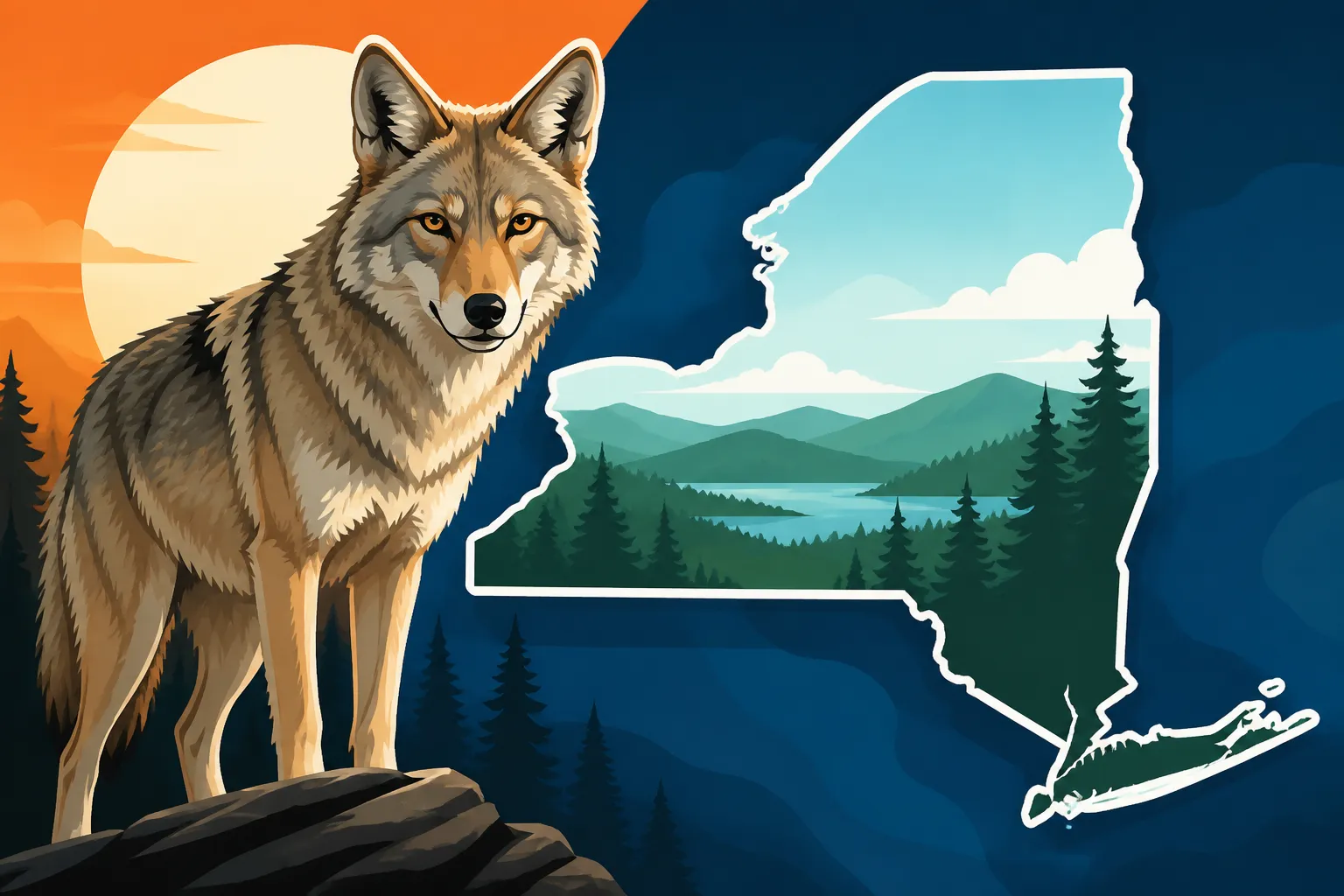
Coyotes are found in every single county across New York State, from the bustling suburbs of Long Island and the Hudson Valley to the remote wilderness of the Adirondack Forest Preserve and the Catskill Forest Preserve. While their presence is widespread, their densities vary considerably depending on habitat, prey availability, and human activity. You might not always see them, but they’re almost certainly there.
In agricultural areas like the Finger Lakes Region and Western New York Farmland, coyotes thrive on abundant small game, deer, and even crop residues. The mix of open fields, woodlots, and thick fencerows provides ideal hunting grounds and cover. In the more rugged, forested regions like the Southern Tier and the Tug Hill Plateau, they rely more heavily on deer, especially fawns and sick or injured adults. Even urban green spaces and parklands provide enough cover and food sources for transient individuals or small packs. Knowing where to focus your efforts for Coyote Calling in a New York Winter or during other seasons often comes down to understanding the local habitat and available prey.
Population Trends and Current Distribution
For decades, the coyote population in New York has shown a steady increase and expansion, though it's likely plateaued in many areas. They are incredibly resilient and have successfully established breeding populations across all but the most heavily developed urban centers. While exact population numbers are challenging to ascertain for any elusive predator, harvest data and field observations indicate a healthy and widespread population.
The distribution is relatively uniform, meaning you’re just as likely to encounter sign in a state forest in Allegany County as you are in a woodlot in Dutchess County. Their ability to live in close proximity to humans without being detected is truly remarkable. However, areas with high deer densities and ample cover, like many of our State Forest Hunting lands, tend to support higher coyote populations. Understanding these trends helps hunters appreciate the scale of the challenge and opportunity when pursuing these clever animals.
Understanding Coyote Behavior and Ecology
To effectively hunt or manage coyotes, you first have to understand them. These aren't just random animals roaming the woods; they operate with intricate social structures and display impressive hunting prowess. Deciphering their habits is like unlocking a secret code of the wild, and it’s a constant learning process.
Diet and Hunting Habits
New York coyotes are opportunistic predators, meaning they'll eat just about anything they can get their paws on. Their diet shifts with the seasons and prey availability. In spring and summer, fawns are a significant food source, which can impact New York Deer Population Estimate. They'll also consume rabbits, squirrels, wild turkeys, and a variety of rodents. As fall and winter arrive, they focus more on deer, whether through direct predation on weakened individuals, scavenging carcasses, or utilizing deer drives. They'll readily consume berries, fruits, and even insects when available.
Coyotes typically hunt alone or in small family groups. While larger packs might coalesce during winter to take down bigger prey, their primary social unit is usually a mated pair and their offspring. They employ a variety of hunting techniques, from patient stalking and ambushing to cooperative drives where one coyote pushes prey towards another. Their incredible senses of smell and hearing, combined with their sharp eyesight, make them exceptionally efficient predators, especially during low-light hours or under the cover of darkness.
Social Structure and Pack Dynamics
Despite their reputation as solitary animals, coyotes are surprisingly social, especially the Eastern varieties. The core of their social structure is the alpha pair, a breeding male and female who typically mate for life. They are territorial and defend their home range from other coyotes. Their offspring, born in spring, will stay with the parents throughout the summer and often into the fall, learning crucial survival and hunting skills. Some young coyotes may disperse in late fall or winter to seek their own territories, while others might remain with the pack for another year or two, acting as "aunts" or "uncles" to new litters.
This family unit functions as a cohesive hunting and territorial defense force. How many coyotes you see together depends on the season and the local population density. A mature pair might patrol many square miles, especially in areas with lower prey density, while in richer habitats, territories might be smaller and packs more frequently encountered. Understanding this dynamic is crucial for hunters, as a single coyote might be a lone disperser, or it could be a scout from a larger, nearby pack. Tools like the GoHunt app can help visualize larger properties to understand how such territories might be laid out, aiding in planning your approach.
Reproduction and Denning Seasons
The breeding season for New York coyotes typically occurs in late winter, from January through March, with a peak in February. During this time, you might hear more vocalizations as pairs communicate and defend territories. After a gestation period of about 60-63 days, pups are born in April or early May. A typical litter ranges from 4 to 8 pups, but can be larger in areas with abundant food or when populations are rebounding from heavy pressure.
Dens are usually located in secluded spots, such as abandoned woodchuck or fox burrows, hollow logs, rock crevices, or dense brush piles. The female will stay with the pups in the den, while the male brings her food. As the pups grow, both parents will participate in hunting and teaching their offspring. By late summer, the pups are nearly full-grown and begin to accompany the adults on hunts, learning the ropes. This period of high activity, from pup rearing through their initial hunting lessons, often makes summer a challenging time to target adult coyotes as they are focused on survival and teaching.
Coyote Hunting Seasons and Regulations in New York
Hunting coyotes in New York offers a unique challenge and a way to extend your time afield, often into months when deer seasons are closed. It's a great opportunity to practice your skills, learn about local wildlife, and contribute to local wildlife management by helping to manage populations that can sometimes impact other game species.
Year-Round Opportunity and Specific Rules
One of the great aspects of coyote hunting in New York is that it's generally a year-round pursuit. This flexibility is a huge draw for hunters looking to get out after deer season wraps up. However, there are some specific nuances you need to be aware of, particularly regarding local ordinances, firearm restrictions, and state land rules. Always double-check the current regulations, as they can sometimes change or have specific conditions in certain Wildlife Management Areas. For general information on New York Coyote Hunting Season Rules, the DEC's official guides are invaluable.
While many game species have strict open and closed dates, the continuous coyote season allows you to pursue them when conditions are best, whether it's frozen ground for tracking in winter or long summer evenings for calling. This continuous opportunity also makes them a prime target for new hunters to gain experience, as well as seasoned hunters looking for a year-round challenge. Just remember that if you're hunting within the deer season, you still need to abide by all the blaze orange requirements if hunting during the regular firearms seasons.
Legal Firearms and Methods
New York offers a wide range of legal methods and firearms for coyote hunting, giving hunters plenty of options to match their preferences and the local terrain. Rifles, shotguns, handguns, and even archery equipment are generally permitted. For rifle hunting, common calibers like .223, .243, or .308 are popular choices, offering accuracy and sufficient power for coyotes. Shotguns loaded with buckshot are effective in denser cover or at closer ranges, especially when calling.
Electronic calls are legal and incredibly effective for drawing coyotes in. You can also use mouth calls, which give you more control over the sound and direction. There's no baiting allowed for coyotes in New York, which aligns with the state's broader prohibition on baiting for predators. Dogs can be used for hunting coyotes, but ensure you understand and follow all specific rules regarding their use, especially on public lands. When planning your hunting trip, consulting resources like GoHunt for mapping public lands can help you identify areas suitable for your chosen method, whether it's long-range rifle shots or close-quarters shotgun work.
Night Hunting Considerations
Night hunting for coyotes is permitted in New York, which is a game-changer for many predator hunters. Coyotes are often more active and less wary after dark, making night hunting an incredibly effective strategy. However, night hunting comes with its own set of very strict rules and safety considerations. You'll need specific permits or privileges in some areas, and there are often restrictions on the use of artificial lights. For a detailed breakdown, you'll want to review Night Hunting Rules for New York Coyotes.
Typically, the use of a light source attached to a firearm is regulated. While certain types of lights might be allowed, thermal imaging and night vision devices for targeting are usually prohibited unless specific exceptions are made for nuisance control by licensed professionals. Always ensure positive identification of your target before taking a shot at night. Safety is paramount, and knowing your backdrop is even more critical in the dark. A good, bright headlamp for walking in and out, and a powerful spotlight for scanning (if allowed in your hunting area) are essential tools for anyone considering hunting coyotes after legal daylight hours.
Effective Coyote Hunting Strategies
Hunting coyotes is not like hunting deer or turkeys; it requires a different mindset, different tactics, and an unwavering commitment to details. These animals are incredibly intelligent and have an uncanny ability to detect threats, making a successful hunt a true testament to your skill.
Calling Tactics for Success
Calling is, without a doubt, the most popular and often most effective method for hunting coyotes in New York. The goal is to mimic prey animals in distress or other coyotes, piquing their curiosity or territorial aggression to draw them within shooting range. There are several categories of calls:
- Distress Calls: Rabbit, fawn, or bird distress sounds are often the most common and effective, appealing to a coyote's hunger instinct. Start softly and increase volume.
- Howls and Barks: These calls can be used to locate coyotes, challenge a dominant male, or simulate a pack gathering. Often used in conjunction with distress calls.
- Pup Distress Calls: Effective during late spring and summer when adults are protective of their young.
The setup is just as important as the call. Position yourself with the wind in your face or crosswind, ensuring your scent isn't carried to an incoming coyote. Have good cover, but also a clear shooting lane. Be patient; a stand might last 20-30 minutes, or even longer, especially for wary animals. Many hunters find that varying their calling sequence, alternating between distress and howls, can keep coyotes interested. Knowing when to be aggressive with the call and when to be subtle is an art form.
Scouting and Setup for Pressured Coyotes
Just like with deer, thorough scouting is absolutely critical for coyote hunting, especially when dealing with pressured animals often found on public lands. Look for fresh tracks, scat, and active travel corridors such as logging roads, field edges, or creek bottoms. Understanding local food sources is also key; if deer are yarding up in a certain area, coyotes won't be far. Using apps like GoHunt can help you scout aerial photos for potential ambush points, dense cover, and natural funnels where coyotes might travel.
Once you’ve identified a promising area, your setup is paramount. Always approach your stand with stealth, minimizing noise and scent. Choose an elevated position if possible, like a knoll or treestand, to give you a better view and help disperse your scent. Concealment is key; whether using a ground blind or natural cover, you want to blend into your surroundings completely. Think about where the coyote will likely approach from based on wind, terrain, and prevailing cover. Often, a good strategy is to set up 100-200 yards from where you expect them to appear, allowing for an ethical shot once they commit to the call. For insights into finding less-pressured areas, you might find tips in Finding Ground Others Walk Past.
Gear Essentials for New York Coyote Hunters
Having the right gear can make or break a coyote hunt, especially when you're dealing with varied New York weather conditions and the need for precision.
- Weapon and Ammunition: A reliable rifle sighted in for various distances is common. Shotguns with appropriate loads are excellent for close-in work. Carry enough ammunition.
- Optics: Good binoculars are crucial for scanning distant terrain and confirming identification. A quality scope on your rifle is non-negotiable for accurate shots.
- Calls: Both electronic and mouth calls are valuable. Electronic calls offer a wider variety of sounds and hands-free operation, while mouth calls provide nuance.
- Camouflage and Scent Control: Full camouflage, including face mask and gloves, is essential. Scent elimination sprays and scent-reducing clothing can help minimize your odor.
- Weather-Appropriate Clothing: New York weather can be unpredictable. Layering is critical, especially during cold winter hunts or wet spring evenings. Warm boots, gloves, and a hat are a must. For a deep dive into cold weather gear, check out Cold-Weather Sitting Strategy in New York.
- Lighting: If night hunting, a good headlamp and, if legal, a powerful scan light are necessary.
- Navigation: A GPS unit or a mapping app like GoHunt on your phone is vital, especially on unfamiliar public land or when navigating in the dark. This is often more reliable than simply relying on your phone alone, as discussed in GPS Units Versus Phone Apps.
- Seat/Pad: Sitting still for long periods can be uncomfortable. A small, portable hunting chair or a cushion can make a huge difference.
- First-Aid Kit: Always carry a basic first-aid kit, especially when hunting in remote areas.
Managing Coyotes: Balancing Wildlife and Community Concerns
Coyotes, like any successful predator, bring both ecological benefits and challenges. Understanding their role in the ecosystem and addressing specific conflicts is crucial for effective management. This often involves a delicate balance between preserving healthy wildlife populations and mitigating negative impacts on livestock and other game species.
Impact on Deer and Other Game Populations
The presence of coyotes undoubtedly impacts other wildlife species in New York, particularly white-tailed deer. Coyotes are effective fawn predators, and in some areas, especially during harsh winters, they can also take down adult deer, particularly those weakened by disease or injury. This can lead to concerns among deer hunters and wildlife managers about reduced deer recruitment and overall population health, especially in regions with a low New York Deer Herd Size or high coyote density.
However, it's a complex interaction. Coyotes often target sick or weak animals, potentially playing a role in maintaining a healthier, more robust deer herd by removing less fit individuals. Their predation can also help prevent overpopulation in areas where deer numbers are high, reducing habitat degradation and the spread of disease. Beyond deer, coyotes prey on small game like rabbits and squirrels, and ground-nesting birds such as turkeys and ruffed grouse. While their impact is measurable, it’s rarely the sole factor in population declines, which are often influenced more by habitat loss, severe weather, and human hunting pressure.
Livestock Protection and Nuisance Coyotes
For farmers and rural landowners, coyotes can become a significant nuisance, primarily due to predation on livestock such as sheep, goats, poultry, and sometimes even calves. These incidents can cause considerable financial losses and emotional distress. Preventing these conflicts requires a multi-faceted approach, as simply removing a few coyotes rarely solves the underlying problem if protective measures aren't also in place.
Effective strategies for protecting livestock include:
- Fencing: Installing strong, coyote-proof fencing, especially electric fencing, around pastures or pens.
- Guard Animals: Using livestock guardian dogs (LGDs) like Great Pyrenees or Anatolian Shepherds, which are specifically bred to protect livestock. Llamas or donkeys can also be effective deterrents.
- Night Penning: Bringing vulnerable livestock into secure pens at night.
- Eliminating Attractants: Removing pet food, garbage, and open compost piles that might attract coyotes to human-occupied areas.
- Strategic Removal: In cases of confirmed predation, targeted hunting or trapping by licensed individuals can be an effective, though temporary, solution for specific problem coyotes. Local nuisance wildlife control operators can often assist.
Coexistence with Coyotes in Rural and Suburban Areas
As coyotes continue to thrive across New York, living in proximity to them, even in suburban and exurban areas, is becoming more common. The key to coexistence is understanding their behavior and taking proactive steps to minimize conflicts. Coyotes are naturally wary of humans, but they can become habituated if constantly fed or if they associate human presence with easy food sources.
Educating ourselves and our communities is paramount. This means never intentionally feeding coyotes, securing garbage cans, keeping pet food indoors, and supervising pets, especially small dogs and cats, when they are outside. If you encounter a coyote that seems unafraid, hazing techniques like yelling, clapping, or throwing small objects can help reinforce their natural fear of humans. For those concerned about general wildlife populations or managing specific areas, the DEC offers guidance, and resources like GoHunt can help identify local wildlife patterns and appropriate response strategies. By respecting their space and removing attractants, we can largely avoid negative interactions and learn to share our diverse landscapes with these intelligent predators.
Are New York Coyotes Part Wolf? Exploring the Eastern Coyote's Genetics
The question of whether New York's coyotes are "part wolf" is a common one, sparking curiosity and debate among hunters, scientists, and the general public. It's a key part of understanding why our coyotes can be so much larger and more formidable than their western counterparts.
The Hybrid Ancestry Debate
The scientific consensus largely supports the idea that New York's Eastern Coyotes are indeed a hybrid species, a result of interbreeding between western coyotes, eastern wolves (or possibly red wolves), and domestic dogs. As coyotes expanded eastward from the Great Plains, they encountered fragmented populations of wolves. The theory is that as these larger predators' populations dwindled due to human persecution, coyotes moved into their vacant territories and began to interbreed. This genetic mixing, sometimes referred to as "hybrid vigor," allowed them to rapidly adapt to new environments, particularly the forested landscapes of the Northeast.
This hybridization wasn't a one-time event; it likely occurred over many generations as coyotes migrated, picked up wolf genes, then continued their journey, picking up more. The resulting animal is uniquely adapted to thrive in New York's mixed forests, farmlands, and even suburban environments, displaying a mix of traits from all three ancestral species. This complex genetic background contributes significantly to their success and makes them a truly fascinating study in evolutionary adaptation. The question, "Are New York Coyotes Part Wolf?", is therefore answered with a resounding yes, making them a distinct and formidable subspecies.
Physical Characteristics and Size
One of the most noticeable differences between Eastern Coyotes and their western relatives is their size and appearance. New York's coyotes are generally larger, often weighing between 30 and 50 pounds, with some individuals tipping the scales at over 60 pounds. This is considerably heavier than the typical 20-30 pound western coyote. They also tend to have longer legs, larger heads, and broader snouts, giving them a more wolf-like appearance. Their coats can vary widely, but they are often grizzled gray, reddish-brown, or even black, making them sometimes mistaken for small wolves or large stray dogs.
| Characteristic | Western Coyote | Eastern Coyote (New York) |
|---|---|---|
| Weight | 20-30 lbs | 30-50+ lbs |
| Height | 20-22 inches | 24-28 inches |
| Build | Slender | More robust, wolf-like |
| Snout | Narrower | Broader |
| Coat Color | Tan, gray | Gray, reddish-brown, black |
This increased size and robust build are directly attributable to their wolf ancestry, providing them with advantages in hunting larger prey like deer and competing with other predators. It also impacts how hunters approach them, as a larger animal requires more careful shot placement and a heavier caliber than might be used for smaller coyotes out West. Understanding these physical traits helps hunters correctly identify and appreciate the unique nature of our New York coyotes.
Behavioral Implications of Hybridization
The genetic legacy of wolves also influences the behavior of Eastern Coyotes, making them somewhat different from their purely coyote cousins. While western coyotes are typically more solitary or form loose family units, Eastern Coyotes often exhibit more cohesive pack structures, resembling wolves in their cooperative hunting efforts. This can allow them to take down larger prey more efficiently, which is a significant factor in their impact on White-Tailed Deer Across New York.
Their territorial behavior can also be more pronounced, and their vocalizations, while distinct from wolves, often carry a deeper, more resonant quality than the higher-pitched yips and yaps of western coyotes. They also seem to be more adaptable to diverse habitats, a trait that allowed them to successfully colonize the varied landscapes of the Northeast. This behavioral flexibility, combined with their physical prowess, explains why they've been so successful in establishing themselves as the dominant mid-sized predator across New York State, filling a vital ecological role that once belonged to wolves.
Disclaimer
This article is for general informational purposes only and does not constitute professional advice. Laws, prices and regulations vary by location and change over time. Consult a qualified professional for guidance on your specific situation.