Are There Breeding Cougars in New York?
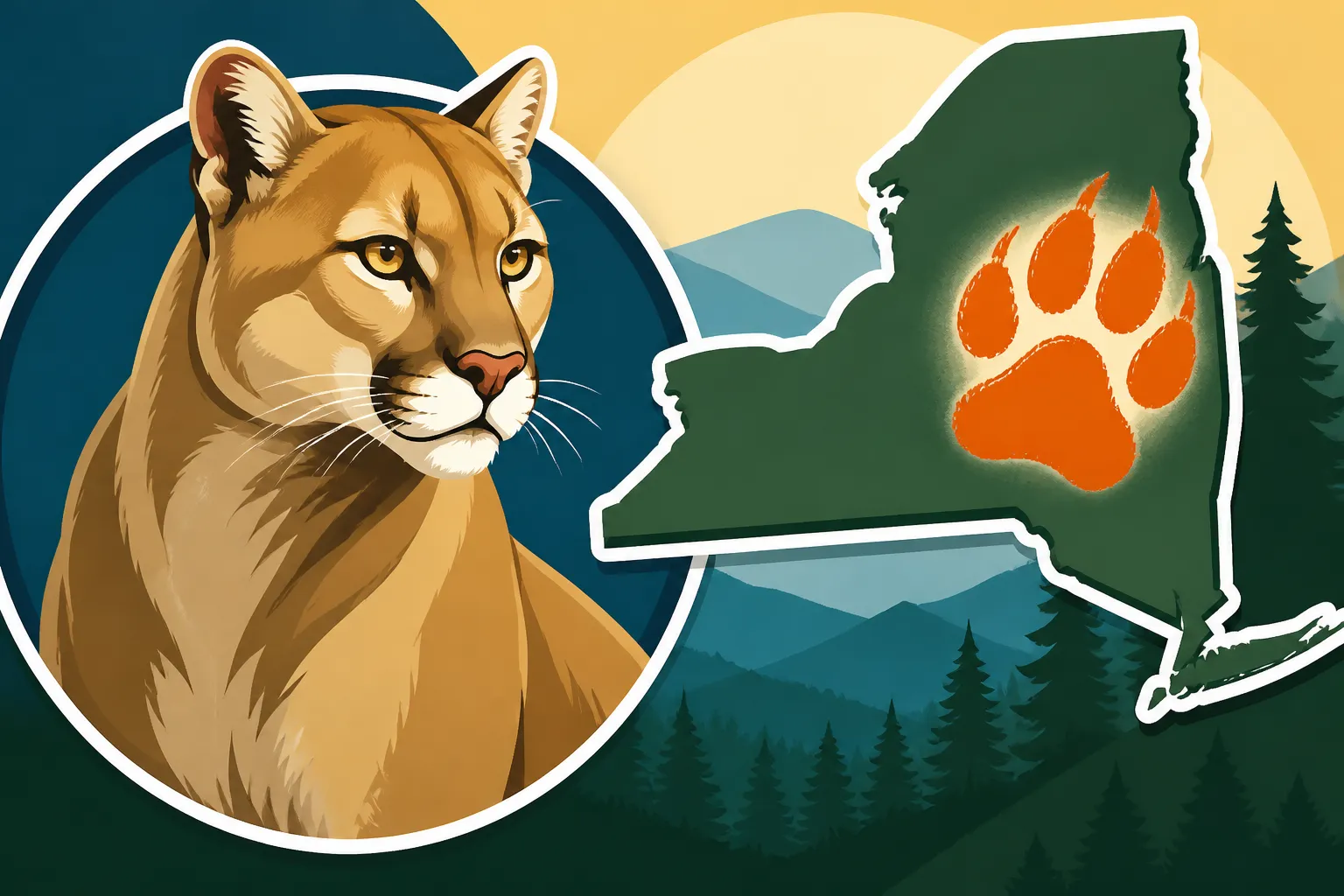
For years, hunters, hikers, and even casual observers across New York State have swapped stories of seeing a large, tawny cat disappearing into the dense timber or slipping across a remote field. These sightings ignite both excitement and skepticism, leaving many to wonder if the rumors are true: are cougars, also known as mountain lions, pumas, or catamounts, once again making a home and, more importantly, breeding in our beloved New York landscape? This guide aims to tackle that lingering question head-on, exploring the evidence, the science, and the persistent mystery surrounding these magnificent animals in the Empire State.
The Persistent Mystery: Are Cougars Truly Roaming New York's Wilds?
There’s something about a large, elusive predator that captures the imagination, and the cougar certainly fits that bill. For generations, tales of “panthers” have circulated around New York campfires, often dismissed by official wildlife agencies, leading to a natural frustration among those who are convinced they've seen one. It’s hard to shake the feeling that you’ve witnessed something extraordinary, only to have it officially categorized as a misidentification.
Historical Presence and Extirpation: A Look Back
To understand the current situation, we need to glance back at history. The Eastern Cougar, a distinct subspecies, once roamed much of eastern North America, including New York. These apex predators were an integral part of the ecosystem, preying on deer and other wildlife. However, with European settlement came significant habitat loss, direct persecution due to fears for livestock and human safety, and unregulated hunting. By the late 19th and early 20th centuries, the Eastern Cougar was considered extirpated from New York, meaning it was no longer present as a wild, breeding population. The last officially accepted wild cougar in New York was believed to have been killed in the Adirondacks around the 1890s. The U.S. Fish and Wildlife Service even declared the Eastern Cougar extinct in 2011, though this specifically referred to the distinct Eastern subspecies, not western populations.
This historical context is important because it establishes a baseline: if cougars are here now, they are either descendants of unconfirmed, remnant populations, or more likely, dispersers from established populations elsewhere. The idea of a lost, hidden population is tantalizing, but science generally points to the latter.
Why the Reports Persist: Misidentification and Hope
The sheer volume of cougar sightings reported annually in New York is remarkable. From the rugged terrain of the Catskills to the expansive woods of the Adirondacks, and even occasionally in more suburban areas, people report seeing these large cats. So, if there are no breeding cougars, what are people seeing? Often, these sightings are genuine encounters with other wildlife. A large, healthy bobcat can appear much bigger and more powerful than expected, especially in fleeting glimpses or at dusk. Coyotes, particularly the larger Eastern coyotes, can also be mistaken for cougars, especially when seen from a distance or silhouetted. Even domestic dogs, particularly those with a lean, athletic build and tawny coat, can trick the eye.
The human mind is also a powerful thing; when you want to see something, or you're already keyed into the possibility, it's easy for an ambiguous sighting to resolve into the most exciting option. This isn't to say people are making things up, but rather that our perceptions can be influenced. The hope that cougars have returned is strong, fueled by stories and the wildness of New York's landscapes. Many hunters, especially those spending countless hours deep in the woods, feel a deep connection to the wildlife and would certainly know a cougar if they saw one, which adds to the frustration when their credible accounts aren't officially confirmed.
Separating Fact from Fiction: Evidence of Breeding Populations
When it comes to proving the presence of a breeding population, wildlife biologists rely on specific, verifiable evidence. Eyewitness accounts, while valuable for generating leads, are rarely sufficient on their own. The bar for scientific confirmation is necessarily high, especially for a species that has been extirpated for over a century.
What Constitutes Proof: The Scientific Standard
For wildlife agencies to declare a breeding population of cougars exists in New York, they would need irrefutable proof, not just individual sightings. This proof typically includes:
- Physical Evidence: This is key. We're talking about DNA from scat, hair, or blood found at kill sites. Clear, verifiable tracks with distinct clawless prints (unlike canine tracks) are also crucial.
- Photographic or Video Evidence: High-quality trail camera footage or clear photographs that show unambiguous identification of a cougar. More importantly, repeated photos of the same animal or, even better, photos of a female with kittens, would be considered incredibly strong evidence.
- Confirmed Den Sites: The discovery of a den containing cougar kittens would be the ultimate proof of breeding. This is extremely rare and incredibly difficult to find for such secretive animals.
- Regular, Sustained Presence: Not just one-off sightings, but a pattern of multiple, verifiable observations within a specific geographic area over an extended period. This indicates an animal has established a home range, not just passed through.
Without this kind of evidence, it's impossible to confirm that a self-sustaining population, capable of reproduction, has re-established itself. The New York Department of Environmental Conservation (DEC) investigates credible reports, but very few ever yield this level of definitive proof. If you are scouting using tools like GoHunt to analyze terrain or plan your movements, keep your eyes open for these types of definitive signs, as they are far more valuable than a fleeting glimpse.
Transient Visitors: The Realities of Confirmed Sightings
While a breeding population remains unconfirmed, New York has had a handful of confirmed cougar sightings over the years. The crucial distinction here is "transient." These are typically individual animals that have dispersed long distances from established populations, primarily in the Midwest (like South Dakota or other western states). These magnificent wanderers can cover hundreds or even thousands of miles in search of new territory or mates.
One notable instance involved a cougar confirmed by DNA evidence in the Town of Greenwich, Washington County, in 2011. This animal was later struck and killed by a vehicle in Connecticut and DNA analysis confirmed it was indeed a Western cougar that had traveled an incredible distance. Another confirmed case involved a cougar sighted in northern New York, also determined to be a disperser from western populations. These rare events confirm that individual cougars can and do make their way to New York, but they do not, by themselves, constitute evidence of a local, breeding population. Think of them as extreme adventurers, not residents setting up permanent homes. For more on these occasional visitors, check out Cougar Reports in New York.
Here’s a quick overview comparing confirmed cougar evidence with other common New York wildlife that often gets mistaken for big cats:
| Trait / Feature | Confirmed Cougar (Transient) | Bobcat (Common) | Coyote (Very Common) |
|---|---|---|---|
| Size (Adult) | Large (4-8 ft long, 100-200 lbs) | Medium (2-4 ft long, 15-35 lbs) | Medium (4-5 ft long, 30-50 lbs) |
| Tail | Long, thick, muscular, often with black tip | Short, "bobbed" (4-7 inches) | Bushy, typically held low |
| Coloration | Tawny, tan, reddish-brown | Brownish-yellow to reddish-brown, spotted | Grayish-brown, sometimes reddish-tinged |
| Track Characteristics | Large (2.5-4 inches), round, no claw marks visible (retractable claws), asymmetrical toe pattern | Smaller (1.5-2 inches), round, no claw marks visible | Oval (2-3 inches), distinct claw marks visible, symmetrical toe pattern |
| Vocalizations | Roars, screams, purrs, growls (rarely heard) | Growls, hisses, snarls, often silent | Howls, yips, barks |
| Evidence of Breeding | None confirmed in NY (e.g., dens, kittens, multiple individuals in one area) | Common, widespread across NY | Common, widespread across NY |
Identifying the Elusive Big Cat: What to Look For
Given the strong possibility of misidentification, it's helpful for anyone spending time outdoors, particularly hunters scouting new ground or checking their trail cameras, to know the key differences between a cougar and other large predators found in New York. Knowing what to look for can help you accurately assess a sighting and, if truly warranted, report it with specific details that could lead to verification.
Differentiating from Other New York Predators
When you see something large and cat-like, it's easy for adrenaline to take over. However, taking a moment to observe key features can make all the difference.
- Bobcats: These are our native wild cats in New York. They are significantly smaller than cougars, typically weighing less than 40 pounds. The most distinguishing feature is their very short, "bobbed" tail, which gives them their name. They also have prominent ear tufts and often a ruff of fur around their cheeks. Their coats are typically spotted, though the spots can be faded. If you’re seeing a long, thick tail, it’s not a bobcat. For comparisons with other local wildlife, read up on Bobcat Range and Numbers in New York.
- Coyotes: These can be surprisingly large, especially the Eastern coyotes that have hybridized with wolves, leading to bigger body sizes. They have a lean, dog-like build, pointed ears, and a long, bushy tail that usually hangs low. Crucially, their tracks will almost always show claw marks, unlike any wild cat in New York. If you see a loping gait with a tail held low and prominent claws in the tracks, you're almost certainly looking at a coyote. Their calls are also very distinct, characterized by howls and yips, which is quite different from a silent, stalking cat. Learn more about their behavior in Coyotes Across New York State.
- Black Bears: While not typically mistaken for a cat, their dark, shaggy coats and occasionally swift movements might, in very poor light or distant viewing, confuse someone. However, their bulky build, short tail, and distinct track shape (five toes in front, heel pad in back) are clearly bear-like. New York's Black Bear Population provides more detail on these powerful animals.
It’s crucial to remember that cougars are incredibly stealthy. Their primary mode of hunting is ambush, and they are masters of disappearing quickly. A fleeting glimpse of a long, tawny body is usually all most people get. Using a good mapping application, such as the New York HuntFishNY App or even advanced layers in GoHunt, can help you note down the exact location, time, and environmental conditions of your sighting, which is very helpful for any follow-up investigation.
Reporting a Sighting: Contributing to the Data
If you genuinely believe you've seen a cougar in New York, don't just dismiss it. While many reports turn out to be misidentifications, every bit of potential data is useful. Here’s how you can make your report most effective:
- Document Everything:
- Date and Time: Be as precise as possible.
- Location: Use GPS coordinates if possible, or very specific landmarks (e.g., "1.5 miles north of the intersection of Route X and County Road Y, near the old logging road"). Even using GoHunt to mark the exact spot on a satellite map can be incredibly helpful.
- Description of the Animal: Note size, color, tail length and thickness, ear shape, and any markings.
- Behavior: What was it doing? Walking, running, crossing a road, stalking?
- Any Other Evidence: Did you see tracks? Scat? A kill site? Take photos or video if it is safe and possible, even if they're not perfect.
- Contact the DEC: The New York State Department of Environmental Conservation is the official agency responsible for wildlife management. They have a system for reporting cougar sightings. Provide them with all your documented information. They will likely ask follow-up questions and may send a biologist to investigate if the report is compelling enough to warrant it.
- Avoid Spreading Rumors Without Verification: While exciting, unverified reports can cause unnecessary alarm. Share your observations with the DEC first, and let the scientific process work.
While the dream of a self-sustaining, breeding cougar population returning to New York is certainly captivating for many outdoor enthusiasts, especially those who appreciate the complete spectrum of wild nature, the current scientific consensus is clear: there is no evidence of breeding cougars in New York State. The confirmed sightings have all been transient individuals, likely from Western populations, demonstrating their incredible ability to travel vast distances. Our dense woods and wild places continue to hold mysteries, but for now, the breeding cougar remains a creature of legend and hope in the Empire State.
Disclaimer
This article is for general informational purposes only and does not constitute professional advice. Laws, prices and regulations vary by location and change over time. Consult a qualified professional for guidance on your specific situation.