Muzzleloaders for a New York December
The chill of December in New York often marks the end of many hunting seasons, but for those of us who embrace the challenge, it opens up a unique and incredibly rewarding opportunity: muzzleloader season. It’s a time when the woods are quieter, the snow often paints the landscape, and deer behavior shifts dramatically. But hunting with a muzzleloader in these frigid, often damp conditions comes with its own set of frustrations and unique demands. This comprehensive guide is here to walk you through everything you need to know, from the legalities to the specific gear and tactics that will help you succeed when the mercury drops and the snowflakes fly.
Understanding New York's December Muzzleloader Season
December in New York offers a distinct hunting experience, especially for those venturing out with a muzzleloader. It's a period of deep winter, often characterized by persistent cold, potential snowfall, and a palpable quiet in the woods. This is when the hardier hunters shine, and understanding the nuances of this season is crucial for both success and safety.
The Legal Framework and Key Dates
New York State has specific frameworks governing when and where you can hunt with a muzzleloader, and these often extend beyond the general firearm season. Typically, after the regular firearms season closes, there's a dedicated muzzleloader period in both the Southern and Northern Zones. These dates can shift slightly year to year, so it's absolutely vital to check the current regulations issued by the New York State Department of Environmental Conservation (DEC) before you even think about loading up. This late season often provides an excellent opportunity to fill remaining Deer Management Permits (DMPs) or target a late-season buck.
What often surprises new muzzleloader hunters is the extended window this season provides. While gun season might have been a whirlwind of orange vests and active deer drives, the muzzleloader season tends to be a more solitary, contemplative hunt. It’s important to remember that during this period, you’re still bound by all other general hunting regulations regarding licensing, blaze orange requirements (unless archery-only in specific areas), and deer reporting. For a deep dive into the broader muzzleloader season, you might want to read Muzzleloader Deer Hunting in New York, as it covers the foundational rules for this method.
The Challenges of Late-Season Conditions
Let's be real, hunting in December is not for the faint of heart. The conditions alone present significant hurdles. We're talking freezing temperatures that make fingers numb and equipment brittle, often accompanied by snow, sleet, or freezing rain. Picture yourself trying to prime your muzzleloader with gloved hands, only to find the powder damp from condensation, or trying to load a sabot when your fingers can barely grip. These aren’t just minor inconveniences; they can be hunt-ending or even dangerous if not properly anticipated.
The cold impacts everything: battery life in your electronics, the flexibility of your clothing, and even your own mental fortitude. Snow can be both a blessing and a curse. While fresh snow offers excellent tracking opportunities, it can also dampen sounds, make walking treacherous, and coat your firearm in moisture. Dealing with these elements requires preparation, the right gear, and a solid understanding of how they affect both you and your equipment. The frustration of a misfire on a frosty morning is a feeling every muzzleloader hunter hopes to avoid, and it all starts with understanding these environmental challenges.
Why Hunters Choose Muzzleloaders in December
Despite the challenges, there’s a special allure to hunting with a muzzleloader in December. For many, it's a chance to extend their time in the woods after the general firearm season closes. The pressure from other hunters tends to drop off dramatically, leading to a quieter, more intimate hunting experience. Deer, too, have settled into a post-rut pattern, often focusing intensely on available food sources, which can make their movements more predictable once you locate those critical areas.
There’s also a profound sense of tradition and satisfaction that comes with muzzleloading. It harks back to an earlier era of hunting, requiring a different level of skill, patience, and attention to detail. The single-shot nature of the firearm forces you to make that first shot count, elevating the stakes and the reward. Plus, the limited range of many muzzleloaders means you're often getting closer to the animal, engaging in a more primal form of hunting. It’s a time to truly appreciate the quiet beauty of a New York winter forest and the unique connection to the hunt that a muzzleloader provides.
Selecting Your Muzzleloader: Types and Features for Winter
Choosing the right muzzleloader for New York's December conditions is paramount. Not all muzzleloaders are created equal, especially when you factor in freezing temperatures, moisture, and the need for absolute reliability. Your choice will significantly impact your hunting experience and your chances of success.
In-line Muzzleloaders: The Modern Workhorse
For most hunters venturing into the New York December woods, an in-line muzzleloader is the go-to choice, and for good reason. These modern marvels are designed for maximum reliability and ease of use, even in less-than-ideal conditions. The "in-line" designation refers to the primer, powder, and bullet all being in a straight line, which promotes more consistent ignition. Unlike traditional side-hammer designs, many in-lines feature enclosed or semi-enclosed breeches, which do an excellent job of protecting the primer from rain, snow, and general dampness – a huge advantage when you're facing lake-effect snow or freezing drizzle.
When considering an in-line, look for models with robust synthetic stocks that won't warp or swell in moisture, and stainless steel barrels that resist rust. The break-action design, common on many in-lines, makes loading and unloading simple, even with cold, gloved hands. Brands like CVA and Thompson/Center have perfected these designs, offering reliable platforms that can withstand the rigors of a New York winter. While a modern in-line may lack some of the historical charm of a traditional rifle, its practical advantages in a December cold make it an incredibly sensible choice. If you're looking for guidance on specific models, you'll find more insights in Choosing a Muzzleloader for December Cold.
Traditional Percussion and Flintlock Options (and their December Quirks)
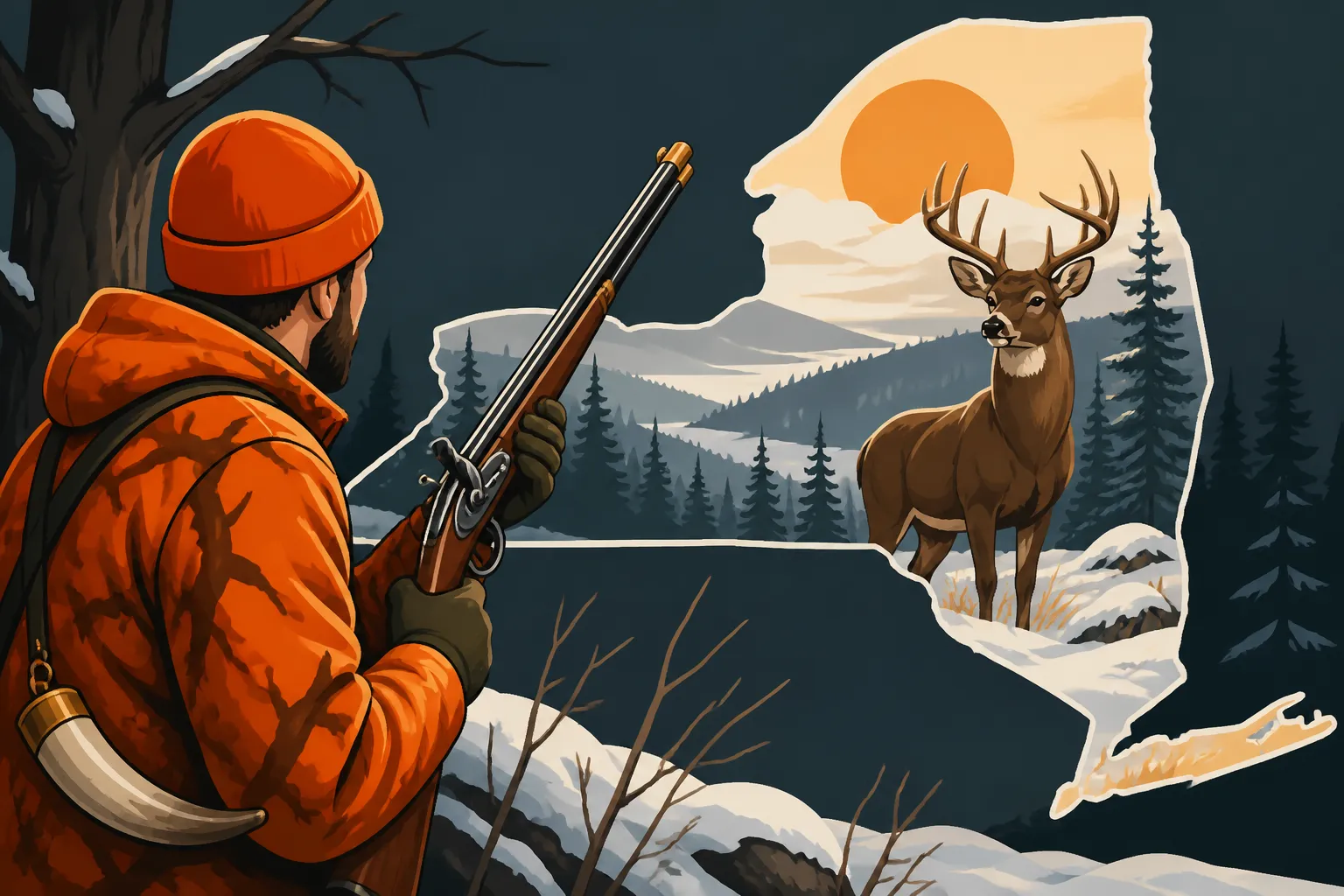
Now, if you're a purist, or simply enjoy the added challenge and historical connection, hunting with a traditional percussion or flintlock muzzleloader in December can be incredibly rewarding. However, it also demands an entirely different level of preparation and vigilance. These firearms are far more susceptible to moisture, as their exposed ignition systems (percussion cap on a nipple, or flint striking frizzen) are directly open to the elements. A single snowflake or drop of freezing rain in the wrong spot can lead to a dreaded "fizzle" or a complete misfire.
The romance of a flintlock throwing sparks and bellowing smoke is undeniable, but the practicalities of a damp, cold New York morning can quickly dampen that romance. Hunters who choose this route often go to extreme lengths to protect their powder and priming charge, using waterproof covers for the lock, carrying extra flints, and meticulously wiping down every exposed metal surface. It's a testament to skill and dedication, but it's crucial to understand that the margin for error is significantly smaller. If you're just starting out in muzzleloading, especially in December, an in-line will generally offer a much more forgiving learning curve.
Key Features for Cold, Wet Weather Performance
Regardless of whether you choose an in-line or a traditional muzzleloader, certain features become critical when hunting in December. A synthetic stock is almost a must, as wood can absorb moisture, swell, and potentially affect accuracy, not to mention become uncomfortably cold to the touch. Stainless steel or treated barrels are highly recommended for their corrosion resistance. Even a short period of exposure to moisture can lead to rust on blued steel, especially if not meticulously cleaned immediately after the hunt.
An easily accessible and protected primer system is perhaps the most important feature. Many in-lines now feature sealed primer systems that greatly reduce the chance of moisture ingress, ensuring a reliable spark when you need it most. Look for a trigger guard that's large enough to accommodate gloved fingers, as fumbling with a small trigger guard can be a frustrating and potentially dangerous experience. Simple, robust sights or a durable, fog-proof scope are also vital, as delicate optics can struggle in freezing conditions. Your muzzleloader isn't just a tool; it's a lifeline in the winter woods, and it needs to be built to endure.
| Feature | In-line Muzzleloader | Traditional Muzzleloader | Importance in December (1-5, 5=high) |
|---|---|---|---|
| Ignition Protection | Excellent (enclosed primer systems) | Poor (exposed pan/nipple) | 5 |
| Rust Resistance | Often High (stainless/treated barrels) | Moderate (blued steel common) | 4 |
| Stock Material | Synthetic (common) | Wood (common) | 4 |
| Loading Ease | High (break-action, modern projectiles) | Moderate (ramrod, patched round ball) | 3 |
| Cleaning Ease | High (removable breech plug) | Moderate (more complex barrel cleaning) | 3 |
| Reliability in Wet | Very High | Low to Moderate | 5 |
Ammunition and Propellant for Reliable Winter Performance
The heart of any muzzleloader's performance lies in its ammunition and propellant. In December's cold and often damp New York environment, selecting the right components isn't just about accuracy; it's about ignition reliability and consistent power. A perfect shot means nothing if your gun won't fire.
Powder and Pellet Choices in the Cold
When it comes to powder, you generally have two main choices for modern muzzleloaders: granular loose powder or pre-formed pellets. Each has its pros and cons, particularly when the temperatures plummet. Loose powder, such as Hodgdon Triple Seven FFFG or Blackhorn 209, offers precision in charge weight, allowing you to fine-tune your load for accuracy. However, measuring loose powder with cold, gloved hands, or in damp conditions, can be a real pain. It's also more susceptible to moisture, so keeping your powder flask absolutely dry is paramount.
Pellets, like those from Pyrodex or Triple Seven, offer convenience and consistency. They are pre-measured, making loading faster and simpler in the field, even when your fingers are stiff. However, some pellets can be more temperature-sensitive than loose powder, potentially leading to slight variations in velocity in extreme cold. One of the biggest advantages of Blackhorn 209, whether loose or pelletized, is its non-corrosive nature and resistance to moisture compared to traditional black powder substitutes. It also tends to perform more consistently across a wider temperature range. Regardless of your choice, store your powder in a cool, dry place, and consider carrying a small, sealed container with a few extra charges in your pack for reloads, just in case. Don't underestimate how quickly cold and humidity can affect something as crucial as your powder.
Primers: The Spark of Success
The primer is the ignition source, and in cold, wet conditions, its reliability is absolutely critical. For most modern in-line muzzleloaders, you'll be using 209 shotgun primers. These primers are designed to produce a powerful spark to ignite the powder charge consistently. However, not all 209 primers are created equal. Some are "magnum" primers, designed for larger powder charges and offer a hotter spark, which can be beneficial in colder temperatures or with harder-to-ignite powders like Blackhorn 209.
Always use fresh, high-quality primers. Old or improperly stored primers can absorb moisture or degrade, leading to misfires. When loading, ensure the primer is fully seated and protected. Many in-line designs have a recessed or covered primer pocket specifically for this reason. If your primer is exposed, even slightly, to rain or snow, it can fail. Some hunters even apply a dab of sealant, like clear nail polish or a specialized primer sealant, around the base of the primer for extra moisture protection, especially if they anticipate truly miserable weather. This small step can make a huge difference between a successful hunt and a frustrating click.
Bullet Selection for December Deer
Your choice of bullet is just as important as your powder and primer, particularly for the type of deer you might encounter in New York's late season. Deer in December are often larger-bodied and wearing a thicker winter coat, requiring a bullet that can penetrate effectively and deliver reliable expansion. Saboted bullets, which feature a plastic sleeve around a smaller-diameter projectile, are incredibly popular for their accuracy and velocity. Common options include Hornady SST-ML, Barnes Expander MZ, and Thompson/Center Shockwave bullets. These are designed to expand reliably upon impact, creating a devastating wound channel.
When considering bullet weight, heavier projectiles typically offer better energy retention and deeper penetration, which can be advantageous on larger, late-season deer. Weights between 250 and 300 grains are a common and effective choice. For advice on bullet types, you might find Sabot Versus Conical for Deer helpful in understanding the options. Also, consider the ballistic coefficient; while not as critical in a muzzleloader's typical range, a more aerodynamic bullet will drift less in the strong December winds you might encounter on an exposed ridge in the Catskills or Adirondacks. Practice with your chosen bullet and powder combination extensively before the season to ensure accuracy and confidence in your setup.
Mastering Moisture Control: Keeping Your Muzzleloader Dry
Moisture is the muzzleloader hunter's arch-nemesis, especially when hunting New York in December. A damp muzzleloader is an unreliable muzzleloader, and a misfire in freezing conditions can be a truly disheartening experience. Preventing moisture intrusion isn't just a good idea; it's essential for a safe and successful hunt.
Pre-Hunt Preparation: Sealing and Protecting
Before you even step foot into the December woods, meticulously prepare your muzzleloader for the elements. Start by thoroughly cleaning and oiling your barrel, then apply a thin layer of protective oil or wax to all external metal surfaces. This creates a barrier against moisture. Pay special attention to the breech plug, ensuring it's properly torqued and that any O-rings are in good condition to prevent moisture from creeping into the powder chamber. Some hunters even apply a small amount of non-hardening sealant around the breech plug threads for extra insurance.
The primer pocket or nipple area is the most vulnerable spot. For in-lines, ensure your chosen primer fits snugly and is fully seated. For traditional guns, a well-fitting percussion cap is key, and many hunters use a small piece of electrical tape or a specialized nipple protector to cover the cap. For flintlocks, a leather or rubber "cow's knee" cover can shield the pan from precipitation. Carrying a few pieces of tape or spare covers in your pack is a smart move. When you're dealing with freezing rain or heavy, wet snow, these small steps in Keeping a Muzzleloader Dry in Lake-Effect Snow can be the difference between a successful shot and a frustrating click.
Field Tactics for Inclement Weather
Once you're in the field, actively manage your muzzleloader's exposure to moisture. If it's raining or snowing, keep the muzzle pointed down as much as possible to prevent water from running down the barrel. Many hunters use a piece of electrical tape over the muzzle or a specialized muzzle cover to keep snow, rain, and debris out. This simple addition won't affect the shot and is easily removed by the force of the projectile. Just remember to apply it after you've loaded the rifle, not before.
When sitting in a stand, try to position yourself under some natural cover, like a thick pine or hemlock, if available. Keep your muzzleloader tucked under your arm or inside your jacket when not actively scanning for game. If you're walking, a waterproof gun sock or case can protect it during transport. When conditions are truly abysmal, consider wrapping crucial areas like the breech and trigger assembly in stretch-wrap or camouflage tape. The goal is to create as many barriers as possible between your powder and primer and the ambient moisture. This vigilance is what separates the prepared from the perpetually frustrated.
The Importance of a Desiccant
Even with the best external protection, internal moisture can still be an issue, especially with temperature fluctuations. When you bring a cold muzzleloader into a warm vehicle or cabin, condensation will form inside and out. To combat this, a desiccant can be a secret weapon. A desiccant packet, like those little silica gel packs you find in new products, or a reusable moisture absorber, can be placed in your gun case or even a sealed plastic bag with your muzzleloader overnight.
Before hunting, make sure your bore is absolutely dry. Run a dry patch down the barrel several times, especially if your gun has been exposed to significant temperature changes. Some hunters even carry a small, sealed container of clean cotton balls or patches for this purpose. The idea is to remove every last trace of moisture that could hinder ignition. Remember, the goal is not just to keep the outside dry, but the inside as well. A consistently dry firing channel ensures reliable ignition, no matter how cold or damp the New York December morning.
Essential Gear and Optics for Your December Muzzleloader Hunt
Hunting with a muzzleloader in December means you're not just contending with the deer, but also with Mother Nature at her most unforgiving. Beyond the firearm itself, having the right supporting gear and optics can make or break your hunt. Every piece of equipment needs to perform flawlessly when you're battling numb fingers and freezing winds.
Optics That Perform in Low Light and Snow
December days are short, and the sun hangs low, meaning low-light conditions are the norm, especially in the thick New York timber. Your choice of optics, particularly your rifle scope, needs to be up to the task. Look for scopes with large objective lenses (40mm or larger) to gather maximum light, and high-quality multi-coated glass for clarity and brightness. Variable power scopes in the 3-9x or 4-12x range are versatile for the varying shot distances you might encounter with a muzzleloader, from a quick close-range shot to a longer poke across a clearing.
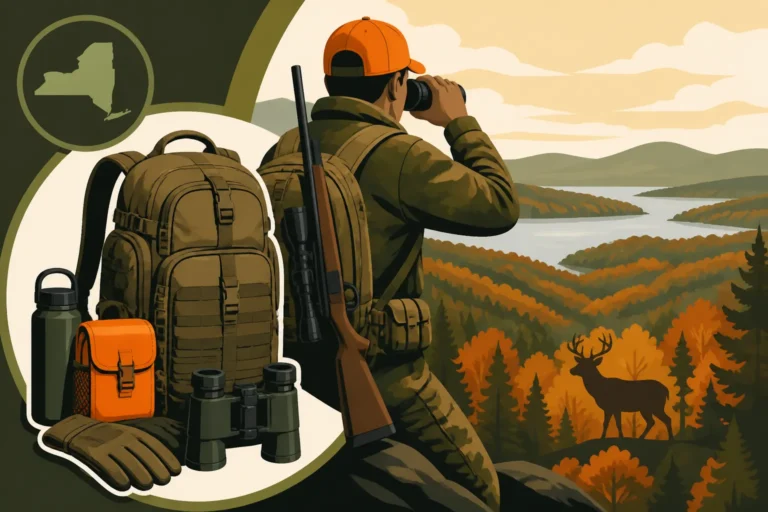
Beyond light-gathering, durability and fog-proof performance are critical. Ensure your scope is O-ring sealed and nitrogen-purged to prevent internal fogging when moving from cold outdoor air to warmer breaths or vehicle interiors. Consider scopes with an illuminated reticle, which can make target acquisition much faster and more precise in dim light or against a snow-covered background. Don't forget a good pair of binoculars (8×42 or 10×42 are excellent choices) for scanning those distant stands of pines or field edges. When glassing, an ergonomic pair of binoculars that won't strain your hands is invaluable. A brand like GoHunt offers excellent resources for choosing optics tailored to various hunting conditions, providing detailed reviews and comparisons that can help you find a suitable model within your budget. For more general advice on glassing, check out Optics for Adirondack and Catskill Timber.
Clothing and Footwear for Prolonged Cold Exposure
Staying warm and dry is arguably as important as a functioning muzzleloader in December. Layering is your best friend. Start with a moisture-wicking base layer (merino wool or synthetic, never cotton) to pull sweat away from your skin. Add an insulating mid-layer, like a fleece or puffy jacket, and top it off with a waterproof and windproof outer shell. Choose materials that are quiet; crunchy fabrics will scare off wary deer. Your outermost layer should also incorporate blaze orange as required by New York law, ensuring you are visible to other hunters. You can find more comprehensive advice on dressing for the cold in Cold-Weather Sitting Strategy in New York and Clothing for a New York November.
Footwear must be insulated, waterproof, and provide excellent traction on potentially icy or snowy ground. Many hunters prefer rubber boots for their scent-blocking properties and waterproof capabilities in wet snow or swampy areas. Look for boots with at least 800-1200 grams of Thinsulate or similar insulation. Don't forget thick, moisture-wicking wool socks, and perhaps a thin liner sock to prevent blisters. Keeping your feet warm is vital for comfort and endurance during long, cold stands. A good hat that covers your ears, warm gloves (mitten-style with a trigger finger flap are excellent), and a neck gaiter or balaclava will complete your cold-weather ensemble, protecting those critical areas where heat is lost.
Must-Have Accessories for the Muzzleloader Hunter
Beyond the main components, several accessories are non-negotiable for a December muzzleloader hunt. First and foremost, a speed loader is essential. Trying to fumble with individual powder pellets, primers, and bullets with frozen fingers when a second shot might be needed is a recipe for disaster. Speed loaders pre-package a powder charge, sabot, and bullet, allowing for quick, efficient reloading. Carry at least two or three.
A reliable ramrod is also crucial. While most muzzleloaders come with one, a heavier, more durable aftermarket ramrod can make loading easier and prevent bending or breaking in cold conditions. A waterproof pouch for extra primers and powder (if using loose powder) is also vital, perhaps with a small desiccant packet inside. Don't forget a small multi-tool for minor field adjustments, a headlamp for walking in and out in the dark, and a small, high-quality knife. Finally, consider a GPS unit or a hunting app like GoHunt on your phone with downloaded maps, especially when venturing into vast public lands, to ensure you can navigate safely, mark deer sign, and locate yourself quickly.
Effective Muzzleloader Hunting Tactics for December Deer
Hunting deer in New York during December with a muzzleloader requires a distinct set of tactics. The deer have faced significant pressure, the rut is mostly over, and their priorities have shifted dramatically. Understanding these changes in deer behavior and adapting your approach is key to success.
Focusing on Late-Season Food Sources
By December, the abundant food sources of early fall, like acorns and lush greens, are often depleted or buried under snow. Deer become intensely focused on finding reliable, high-energy food sources to survive the cold. This makes locating these areas your number one priority. In agricultural areas, standing cornfields or unpicked soybean fields are absolute magnets. Even cut fields can still offer residual waste grain. When deer know they can find a meal there, they will often travel significant distances, especially under the cover of darkness. Hunting a Standing Cornfield in Farm Country is a perfect resource for this scenario.
In big timber, look for areas with browse species that retain their leaves or buds, like multiflora rose, honeysuckle, or various evergreens. Regenerating clearcuts or recent timber harvests often provide a buffet of new growth that deer will frequent. Also, consider persistent mast crops like beechnuts, which can still be found under snow if the trees are present. Often, these food sources are limited, which means deer movement patterns around them can be highly predictable. Use your scouting tools, including aerial maps and on-the-ground checks, to pinpoint these critical feeding zones.
Tracking and Still-Hunting in Snow
A fresh blanket of snow in December is a muzzleloader hunter's dream come true, offering unparalleled opportunities for tracking and still-hunting. Snow acts as a giant chalkboard, revealing every step a deer takes, where it pauses, and even where it beds. This is particularly effective in quieter muzzleloader seasons when fewer hunters are disturbing the woods. Instead of passively sitting, embrace the active pursuit.
Start by finding fresh tracks, paying attention to their size and stride length to determine if it's a deer of interest. Follow slowly and deliberately, stopping frequently to glass ahead. Look for "crossover" areas where tracks from several deer converge, indicating a travel corridor. In deep snow, deer will often take the path of least resistance, using old logging roads, power lines, or natural benches on hillsides. When following tracks, always be aware of the wind direction and use terrain features to your advantage to conceal your approach. Tracking a Deer in Fresh New York Snow provides excellent guidance on interpreting deer sign. When you find a thicket or bedding area, slow down even further, moving just a few steps at a time, looking for horizontal lines in the vertical timber – a sure sign of a deer lying down.
Understanding Deer Behavior in Winter
December deer behavior is largely driven by two things: food and security. After the intensity of the rut, bucks are often depleted and seeking to regain lost weight, making them more focused on feeding. Both bucks and does will seek out thermal cover – dense stands of conifers like hemlock or pine that offer protection from wind and snow, helping them conserve energy. These "deer yards" or thick bedding areas near food sources are prime locations to focus your efforts.
During cold snaps, deer activity may be reduced during the daylight hours, with deer becoming more active in the late morning and late afternoon as temperatures slightly moderate. They often move between bedding and feeding areas during these times. On truly bitter, windy days, deer may remain bedded down in dense cover for longer periods. Your best bet is to position yourself between a preferred bedding area and a prime food source. Pay close attention to wind direction, as deer will almost always approach a food source with the wind in their favor, allowing them to smell any threats. Patience, quiet movement, and an understanding of these fundamental winter survival instincts are essential for a successful December muzzleloader hunt in New York. The unique pace of muzzleloading often aligns perfectly with this more deliberate, quiet style of hunting.
Safety and Maintenance Beyond the Hunt
The responsibility of a muzzleloader hunter extends far beyond the shot. Proper safety practices and diligent maintenance are critical, especially when dealing with the unique demands of cold-weather hunting in New York. A muzzleloader is a powerful tool, and treating it with respect ensures both your safety and its long-term reliability.
Safe Handling and Storage in Cold Conditions
First and foremost, treat every muzzleloader as if it's loaded, even if you know it's not. This basic firearm safety rule becomes even more critical when operating in cold, potentially slippery conditions where dexterity might be compromised. When loading, ensure the muzzle is pointed in a safe direction. Never load a muzzleloader indoors or in a vehicle. If you're going to be carrying a loaded muzzleloader for an extended period, ensure the safety is engaged and that the primer is protected from accidental discharge or environmental contamination.
When transporting a loaded muzzleloader, always do so with the utmost care, preferably in a secure case or scabbard that protects the ignition system. Never store a loaded muzzleloader in your home or camp. If you're done hunting for the day and need to unload, do so safely away from camp or other people, firing it into a safe backstop or using a CO2 discharger specifically designed for muzzleloaders. Unloading by removing the breech plug (only if your manufacturer allows and it's safe to do so) can also be an option, but always consult your rifle's manual first. For any firearm, ensure it's unloaded before placing it in a vehicle or carrying it into a non-hunting zone. Remember that New York's legal shooting hours for muzzleloaders often align with general big game hours, so plan your entry and exit accordingly.
Post-Hunt Cleaning: A Critical Step
Muzzleloaders, particularly those using black powder or black powder substitutes, are notorious for producing corrosive fouling. This means that immediate and thorough cleaning after every use, especially in December's damp conditions, is non-negotiable. Don't put it off until tomorrow; moisture in the air combined with corrosive residue can start the rusting process almost immediately.
Begin by removing the breech plug. Use a quality black powder solvent to clean the barrel. A bronze bore brush followed by numerous patches until they come out clean is essential. Pay special attention to the breech plug, nipple, and primer pocket areas, as these are where residue tends to accumulate most heavily. Many hunters find an ultrasonic cleaner invaluable for breech plugs. Once thoroughly cleaned, dry all components completely and apply a thin layer of protective oil to all metal surfaces, inside and out. For a more detailed guide on muzzleloader care, refer to Cleaning a Rifle After a Wet Sit. Proper cleaning prevents rust, preserves accuracy, and ensures your muzzleloader will be ready for many more December hunts.
Troubleshooting Common Cold-Weather Muzzleloader Issues
Even with the best preparation, cold-weather muzzleloader hunting can present unique challenges. The most common issue is a misfire or hangfire. If your muzzleloader clicks but doesn't fire, keep it pointed in a safe direction for at least 30-60 seconds (a "hangfire" can occur where ignition is delayed). If it still doesn't fire, check your primer. Is it fully seated? Is it visibly wet? Replace it with a fresh, dry primer. If it still doesn't fire, you likely have a damp powder charge. At this point, safely unload the rifle using a CO2 discharger or by carefully removing the breech plug (if your model allows and you are trained to do so) and cleaning out the damp powder.
Another issue can be a frozen ramrod or bullet that's difficult to seat due to expanding plastic sabots in the cold. Ensure your ramrod is clean and free of rust, and your sabots are in good condition. Keeping your speed loaders in an inner pocket can help keep them slightly warmer and prevent plastic parts from stiffening too much. Cold can also affect your scope's performance, leading to fogging. If this happens, try to let it equilibrate to the ambient temperature, or use a lens cloth to wipe away external moisture. Being prepared for these small hiccups and knowing how to safely troubleshoot them will help you maintain your composure and continue your hunt in New York's challenging December environment.
Disclaimer
This article is for general informational purposes only and does not constitute professional advice. Laws, prices and regulations vary by location and change over time. Consult a qualified professional for guidance on your specific situation.