Sabot Versus Conical for Deer
For many muzzleloader hunters across New York, staring at the shelf filled with various projectiles can feel a bit like trying to solve a complicated puzzle. You’ve got sabots, you’ve got conicals, and each seems to promise something different. It’s a genuine head-scratcher, especially when you’re planning a hunt in the varied terrain from the wide-open Southern Tier fields to the thick Adirondack timber. This guide is here to untangle that confusion, breaking down the pros and cons of sabot versus conical projectiles so you can confidently choose the best option for your upcoming deer hunt.
Understanding Sabot Projectiles for New York Deer Hunting
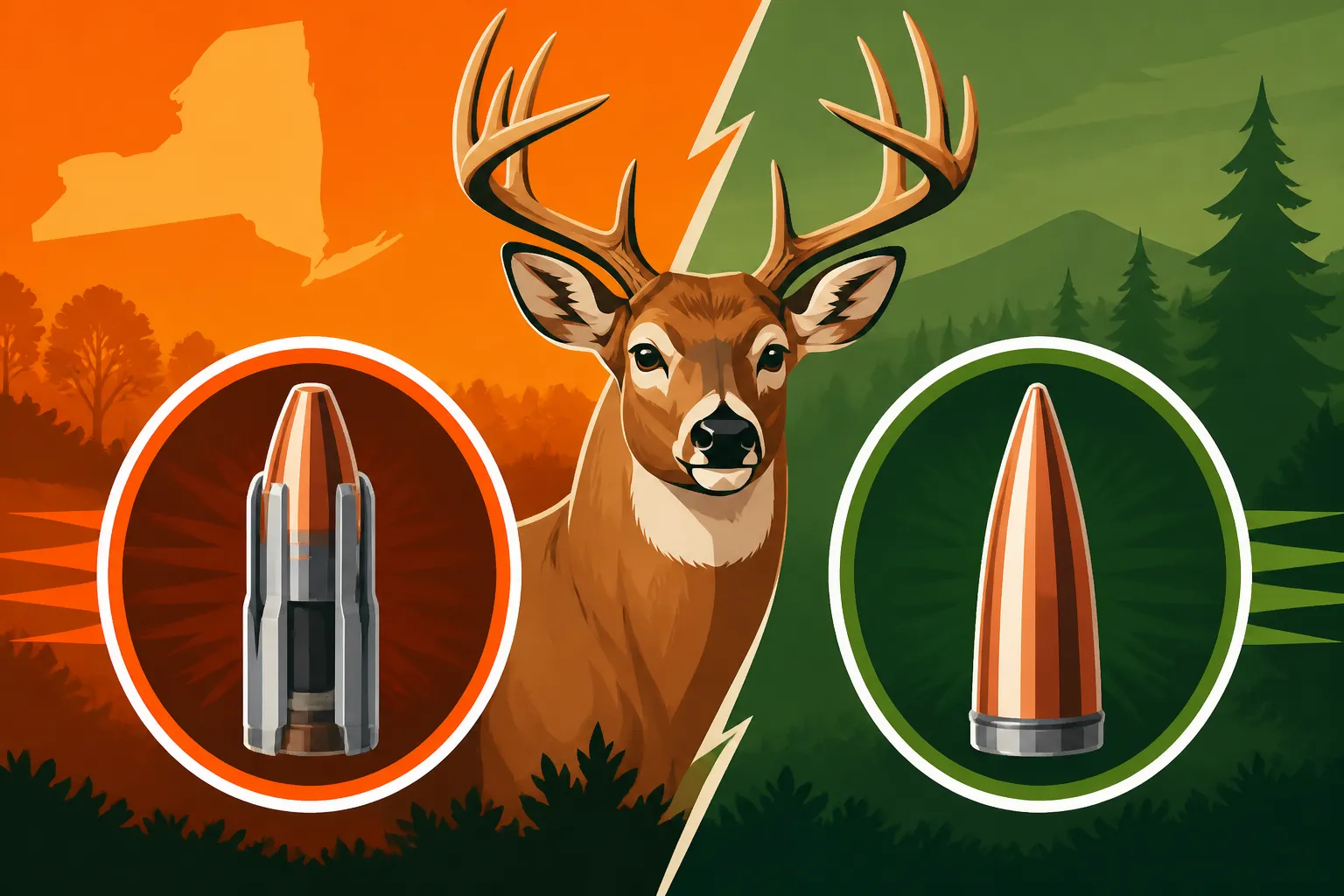
Let's dive into sabots first, because they represent a more modern approach to muzzleloader ballistics, designed to mimic the performance of centerfire rifle bullets. When you pull a sabot out of the box, you’ll notice it’s essentially two parts: a smaller, typically jacketed bullet, encased in a plastic sleeve. That plastic sleeve, the sabot itself, is designed to engage your rifle’s rifling, spinning the bullet and allowing it to achieve greater accuracy. Once the projectile leaves the barrel, the sabot peels away, leaving the bullet to fly true to the target.
The Design and Function of a Sabot
The ingenious design of a sabot allows a smaller-diameter bullet to be shot through a larger-bore muzzleloader. Think of it like a perfectly tailored suit for the bullet. For example, a .45 caliber muzzleloader can shoot a .40 or .429 caliber bullet when that bullet is wrapped in a plastic sabot. This tightly fitting plastic sleeve creates a gas seal, ensuring maximum pressure and velocity are transferred to the bullet. This is crucial for consistent performance downrange.
The plastic material of the sabot is engineered to be soft enough to engage the rifling without stripping, yet durable enough to withstand the immense pressures of ignition. After the bullet exits the muzzle, air resistance and centrifugal force cause the sabot to separate from the bullet, usually within a few yards of the barrel. The bullet then continues on its path with the stability imparted by the rifling, often resulting in a flatter trajectory and better accuracy, especially at longer ranges. This is particularly appealing if you find yourself hunting deer on more open tracts of public land in the Southern Tier or on larger private farm fields.
Advantages and Disadvantages of Sabots in New York Conditions
Sabots come with a compelling list of benefits, particularly for hunters who appreciate precision and extended range. Their primary advantage is superior accuracy. Because the bullet itself doesn’t directly contact the rifling, there’s less deformation, which contributes to better flight characteristics. This translates to tighter groups on paper and more confidence when that trophy buck steps out at 150 yards. Furthermore, sabots generally offer a flatter trajectory than their conical counterparts. This means less guesswork on holdover at various distances, a significant plus if you're not constantly laser-ranging every shot on a New York Muzzleloader Season Tactics hunt. The higher ballistic coefficient of the sleek, jacketed bullets used in sabots means they retain more energy downrange, leading to better terminal performance and a cleaner kill.
However, sabots aren’t without their drawbacks. One of the most common complaints is the effort required for loading. That tight plastic fit that contributes to accuracy also means you’ll often need more force to seat the bullet. After a few shots, especially on a cold morning, your barrel can foul, making subsequent loading even more difficult. This can be a real issue if you need a quick follow-up shot or if you’re trying to reload quickly in the field. Another factor is cost; sabots are generally more expensive than conicals, a consideration for hunters on a budget or those who do a lot of practice shooting. Finally, some muzzleloaders, particularly older models or those with shallower rifling, simply don't shoot sabots well. It's a matter of trial and error to see what your specific firearm prefers, which means investing time and money in testing different combinations. For instance, some folks hunting the thick cover of the Catskill Forest Preserve might find the slightly more complex loading process less appealing for close-quarters hunting.
Understanding Conical Projectiles for New York Deer Hunting
Now let's shift gears to conical projectiles. These are the classic, heavy lead bullets that most people picture when they think of traditional muzzleloading. Unlike sabots, a conical bullet is typically a single piece of lead, sometimes with a hollow point or flat nose, that directly engages the rifling of your muzzleloader's barrel. There's no plastic sleeve here; it's just pure lead pushing through. This simplicity is part of their appeal for many hunters, especially those who cherish the historical aspect of muzzleloading.
The Design and Function of a Conical
A conical bullet is designed to be a direct fit for your muzzleloader's bore, meaning a .50 caliber muzzleloader will shoot a .50 caliber conical bullet. The base of the conical is usually slightly undersized to facilitate easier loading, but as the powder ignites, the base "skids" or "engraves" into the rifling grooves, creating a tight seal and imparting spin. This is why many conicals have lubrication grooves filled with a special lube, not just to aid in loading but also to help with barrel fouling and bullet engraving.
The sheer mass of a conical bullet is one of its defining characteristics. They are heavy, and that weight carries a lot of momentum. While they start slower than sabot bullets, their weight helps them retain energy for powerful impacts. The soft lead construction of many conicals means they can expand reliably, even at lower velocities, creating a significant wound channel. This robust, no-frills design has been proven effective for generations, and it's still a favorite among many New York hunters who primarily take shots within 100 yards, such as when Still-Hunting Catskill Ridges where shots are often up close and personal.
Advantages and Disadvantages of Conicals in New York Conditions
The advantages of conicals often appeal to those who value simplicity, power, and a more traditional experience. Loading conicals is typically much easier than loading sabots, especially in a fouled barrel. This is a huge benefit on a cold New York morning when you're trying to reload quickly or if you anticipate needing a follow-up shot. Their heavy lead construction means they hit hard, delivering significant kinetic energy and creating a large wound channel, which can be particularly effective on big-bodied New York bucks. They also tend to be more affordable, making practice less costly and allowing you to stock up without breaking the bank. For many traditionalists, the idea of shooting a pure lead projectile aligns better with the spirit of muzzleloader hunting. If you're hunting in dense woods where shots are rarely beyond 75 yards, like deep within a State Forest, the hard-hitting power of a conical can be a real asset.
On the flip side, conicals generally suffer in the accuracy department compared to sabots, especially as distances increase. Their less aerodynamic shape and lower ballistic coefficient mean they shed velocity faster and have a more rainbow-like trajectory. This necessitates more precise range estimation and greater holdover at longer distances, which can be challenging if you don't have a rangefinder or the conditions make it hard to gauge distance accurately. Most conical bullets are best suited for shots under 100-125 yards, which limits their utility in more open country where longer shots are common. Barrel fouling can still be an issue, though often less severe than with sabots, and it can impact accuracy over multiple shots. Additionally, the soft lead can sometimes deform if you're not careful during the loading process, which can negatively affect accuracy. When you're using tools like GoHunt to scout areas with long sightlines, you might lean towards sabots, but for the thick stuff, conicals shine.
Performance in the Field: Terminal Ballistics and Accuracy
When it comes down to actually putting a deer on the ground, both sabots and conicals are capable, but they achieve their results through slightly different means. Understanding these differences can help you match your projectile to your hunting style and the specific New York terrain you're tackling.
Terminal Ballistics and Energy Transfer
Terminal ballistics refers to what happens when the bullet hits the target. Sabots, typically using jacketed bullets, often behave much like modern centerfire rifle bullets. They are designed for controlled expansion, mushrooming upon impact to create a wide wound channel while retaining a good portion of their weight for deep penetration. A well-placed sabot shot will transfer a tremendous amount of energy to the deer, often resulting in quick, ethical kills. The jacketed construction also means they are less prone to breaking apart on heavy bone.
Conicals, on the other hand, rely more on their sheer mass and soft lead construction. When a heavy conical hits a deer, it often deforms significantly, creating a large, devastating wound channel. While they might not expand in the perfectly symmetrical mushroom shape of a jacketed sabot bullet, their blunt force and large frontal area at impact deliver a profound shock. Because they are often pure lead, they can sometimes shed more weight if they hit heavy bone, but the overall energy transfer is still immense. For a close-range shot, say 50 yards on a deer in a dense Adirondack cedar swamp, the thumping power of a conical can be incredibly effective, often dropping deer in their tracks.
Accuracy at Different Ranges and Conditions
Accuracy is where the biggest practical divergence between sabots and conicals becomes apparent. Generally speaking, sabots offer superior accuracy, especially at distances beyond 100 yards. Their aerodynamic shape and the stabilization provided by the rifling result in a flatter trajectory and less wind drift. This means that if you're set up on a food plot Hunting Southern Tier Farmland Deer and a deer comes out at 150 yards, a sabot gives you a much better chance of making a precise, ethical shot. Modern muzzleloaders, especially those with faster twist rates, are often designed with sabots in mind to maximize this long-range potential.
Conicals, due to their less aerodynamic shape, tend to have a more parabolic trajectory, dropping more significantly at longer ranges. This means that while they can be very accurate at shorter distances (under 75-100 yards), extending their effective range requires more practice, precise rangefinding, and a deeper understanding of your bullet's drop. Factors like wind can also affect a conical more noticeably at extended distances. However, for the vast majority of New York muzzleloader hunting, where shots are often well within 100 yards in thick timber or rolling hills, the inherent accuracy of a conical at those shorter ranges is more than sufficient. Using a tool like GoHunt to mark your stand locations and likely shot distances can help you decide which projectile type is best suited for each spot.
Loading and Maintenance Considerations
Beyond the ballistic performance, the practical aspects of loading and maintaining your muzzleloader with either sabots or conicals are important daily considerations, especially when you're out in the unpredictable New York weather.
Ease of Loading and Follow-Up Shots
This is arguably one of the most significant differences hunters experience. Sabots, with their tight plastic sleeve, often require more force to load. As you push them down the barrel, you'll feel resistance, and it's crucial to seat them firmly and consistently against the powder charge for accuracy. After a shot or two, powder residue starts to build up in the barrel, making subsequent sabot loading even stiffer. On a frigid December morning, with numb fingers, this can be a frustrating and physically demanding task. If you're on a deer drive and need a fast reload, the increased effort with sabots can slow you down.
Conicals, in contrast, are generally much easier to load. Their slightly undersized base and lubrication allow them to slide down the barrel with less effort. While you still need to seat them firmly, the process is usually smoother and quicker. This makes them a favorite for hunters who prioritize quick follow-up shots or those who simply prefer a less strenuous loading experience. The difference in loading effort is something you truly appreciate when trying to Keep a Muzzleloader Dry in Lake-Effect Snow and your hands are already cold.
Barrel Fouling and Cleaning
Both projectile types will cause barrel fouling, but the nature of that fouling can differ. Sabots, with their plastic sleeves, can sometimes leave plastic residue in the rifling, especially after many shots. This plastic buildup, combined with powder residue, can become quite stubborn and contribute to the difficult loading mentioned earlier. Regular swabbing between shots, even if it's just a quick spit-patch, becomes more important with sabots to maintain consistent loading and accuracy.
Conicals, being primarily lead, tend to leave lead and lubricant residue, along with powder fouling. While this also needs to be cleaned, many traditionalists find the lead fouling less problematic for in-field reloading. Modern propellants and lubricants have significantly reduced fouling for both types of projectiles, but it's still a factor to consider for long hunting days or extended range sessions. Regardless of your choice, a thorough cleaning at the end of the day is always essential to protect your investment and maintain accuracy for the next hunt.
New York Regulations and Practical Advice
While New York State regulations don't typically differentiate between sabots and conicals for muzzleloader deer hunting (as long as they meet minimum caliber requirements for big game), understanding the nuances and applying practical advice can make a huge difference in your success and enjoyment.
New York Specific Rules and General Legality
In New York, muzzleloaders used for big game, including deer and bear, generally must be .44 caliber or larger. Both sabots and conicals are perfectly legal as long as they meet this minimum caliber. There are no specific restrictions on projectile type within the muzzleloader season framework, which is great for hunters because it allows for personal preference and customization. However, always double-check the current hunting regulations book before heading afield, as rules can change. For example, understanding New York's Chronic Wasting Disease Containment Area might influence other aspects of your hunt, but not your choice of muzzleloader projectile.
The choice between sabot and conical then boils down to your firearm's capabilities, your hunting style, and the specific conditions you anticipate. If you're hunting open areas, like some of the public access cooperator farms, a sabot might give you the edge for a longer shot. If you're deep in the Adirondack Forest Preserve where shots are often under 50 yards, a heavy conical might be your preferred choice for its knockdown power and easy loading.
Choosing the Right Projectile for Your Setup
The best way to choose between sabots and conicals is through extensive testing. Every muzzleloader is unique, and what one rifle shoots accurately, another might scatter all over the target.
Here’s a practical approach:
- Know Your Muzzleloader's Twist Rate: This is critical. Faster twist rates (e.g., 1:28" or 1:32") generally stabilize lighter, shorter sabot bullets better. Slower twist rates (e.g., 1:48" or 1:60") often perform better with longer, heavier conicals. Check your rifle's manual or the manufacturer's website for this information.
- Experiment with Different Powder Charges: Even with the same projectile, varying your powder charge by a few grains can significantly impact accuracy. Start at the manufacturer’s recommended minimum and work your way up cautiously.
- Try Various Projectiles: Don't just buy one box of sabots and one box of conicals and call it a day. There's a wide world of options. For sabots, try different bullet weights and designs (e.g., Hornady SST, Barnes Expander, PowerBelt Aerolite). For conicals, try different weights and shapes (e.g., Thompson/Center Maxi-Ball, Hornady Great Plains, Lee Precision REAL). You might be surprised at what your rifle prefers.
- Practice at Realistic Ranges: Don't just shoot at 50 yards. If you anticipate a 100 or 150-yard shot, practice at those distances. Understand your bullet's trajectory and holdover requirements. A ballistic calculator can be a great tool for this, and some hunting apps like GoHunt also integrate ballistic data.
- Consider Your Hunting Environment: If you're targeting specific areas like Hunting Finger Lakes Region Deer where terrain can vary from open fields to steep gorges, having a versatile projectile, or even switching between areas, might be beneficial.
Ultimately, the best projectile is the one that shoots most accurately from your muzzleloader, gives you confidence in the field, and performs ethically on deer. Don't let tradition or modern trends dictate your choice; let your muzzleloader tell you what it likes. The time you spend at the range testing and sighting in will pay off handsomely when you're out there pursuing that elusive New York whitetail during the New York Muzzleloader Season Tactics or trying to make a critical shot during the Hunting the Southern Zone Holiday Hunt.
| Feature | Sabot Projectiles | Conical Projectiles |
|---|---|---|
| Design | Jacketed bullet in plastic sleeve | Single, heavy lead bullet |
| Accuracy | Generally superior, especially at longer ranges | Good at short ranges (under 100-125 yards) |
| Trajectory | Flatter, less drop | More pronounced drop, rainbow-like |
| Terminal Impact | Controlled expansion, deep penetration | Heavy shock, large wound channel from mass |
| Loading Ease | Can be tight, more effort, especially when fouled | Generally easier, smoother |
| Fouling | Can leave plastic residue, powder fouling | Lead/lube residue, powder fouling |
| Cost | Generally higher per projectile | Generally lower per projectile |
| Best For | Longer shots, open terrain, precision | Shorter shots, thick cover, hard-hitting power |
Disclaimer
This article is for general informational purposes only and does not constitute professional advice. Laws, prices and regulations vary by location and change over time. Consult a qualified professional for guidance on your specific situation.