How CWD Reached a Captive New York Herd
The news of Chronic Wasting Disease (CWD) is enough to send a shiver down any deer hunter's spine. It's a devastating disease that can decimate deer populations, and the thought of it taking hold in our beloved New York wild herds is a nightmare we all hope to avoid. This guide will take a detailed look back at the specific incident in New York where CWD was detected in a captive herd and what we, as hunters and conservationists, learned from it to protect our deer.
Understanding Chronic Wasting Disease (CWD)
Chronic Wasting Disease is a serious, fatal neurological disease that affects cervids – animals like deer, elk, and moose. It's a transmissible spongiform encephalopathy (TSE), similar to mad cow disease, and it's caused by misfolded proteins called prions. These prions accumulate in the brain and other tissues, slowly degenerating the animal's nervous system. It’s a slow, agonizing process, often taking months or even years before an infected animal shows obvious symptoms.
What is CWD and How Does It Spread?
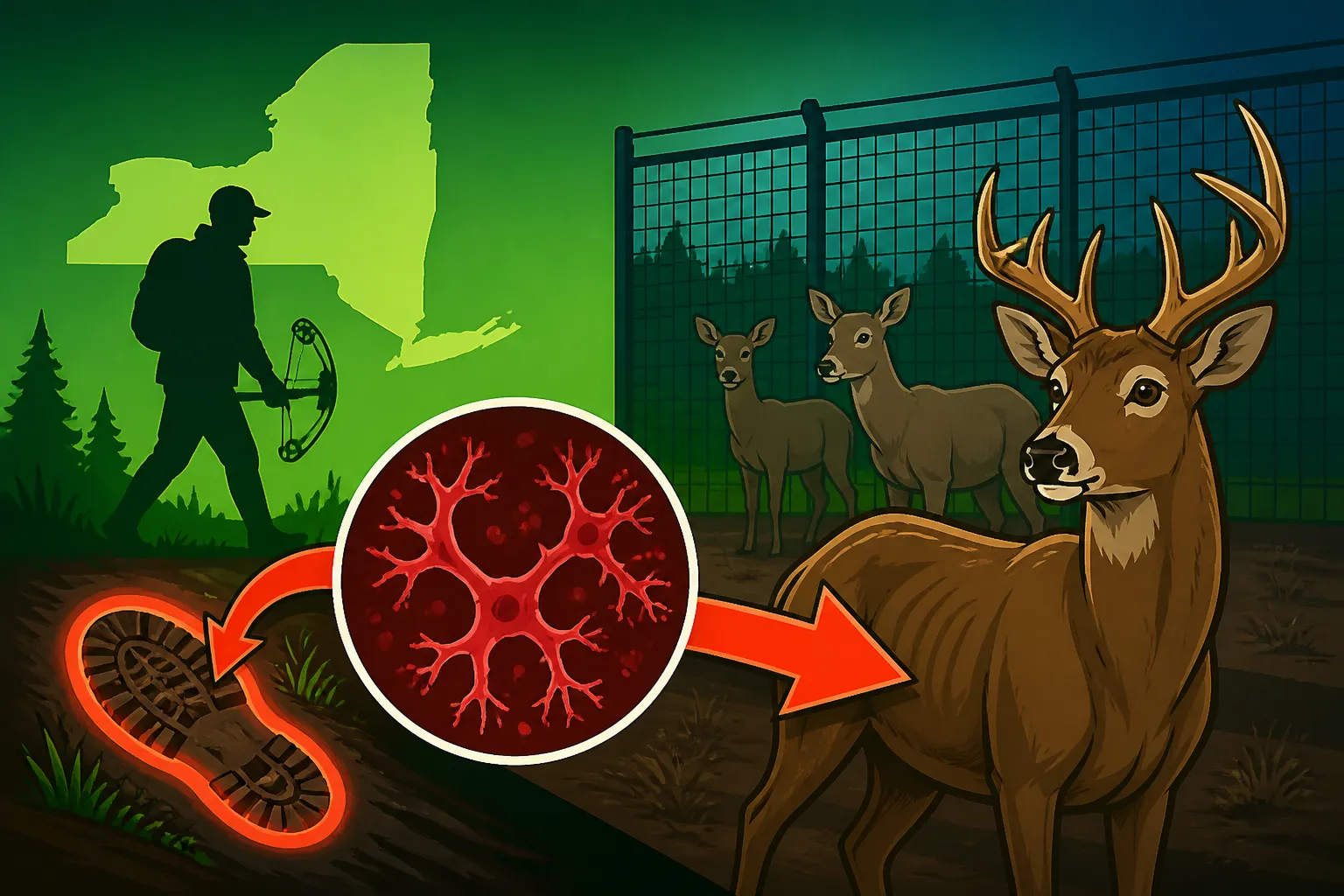
Imagine a disease that lingers in the environment, silently waiting for its next host. That's CWD. The prions are shed through saliva, urine, and feces of infected animals. Once shed, they can persist in the soil and on vegetation for years, making environmental contamination a significant concern. When healthy deer come into contact with these contaminated areas, they can ingest the prions and become infected. This creates a terrifying cycle where an infected deer spreads the disease, and the environment becomes a reservoir for future infections. Direct contact between animals, especially in confined or high-density situations, is also a prime way for it to spread. It's a silent killer, slowly turning a healthy deer into a zombie-like state before its inevitable death.
Why CWD is a Major Concern for New York Hunters
For New York hunters, CWD isn't just a scientific curiosity; it's an existential threat to our tradition and our deer herds. We pour our time, effort, and passion into pursuing these animals, and the thought of a disease that could wipe them out or make them unsafe to eat is truly disheartening. Beyond the emotional aspect, a widespread CWD outbreak would have dire ecological and economic consequences. It could lead to significant declines in deer populations, disrupt the delicate balance of our ecosystems, and severely impact the hunting industry that supports so many local communities. When CWD hits a region, hunters often face stricter regulations, mandatory testing, and even reduced hunting opportunities, profoundly changing the experience we cherish. We've seen the devastating effects in states like Wisconsin and Pennsylvania, and that's a future we are determined to prevent here.
The Oneida County Incident: How CWD Reached a Captive Herd
While New York has been fortunate enough to avoid widespread CWD in its wild deer population, we have had a very real and alarming encounter with the disease in a captive setting. This incident served as a stark reminder of how vulnerable our state is and the critical importance of strong regulations and vigilant monitoring. It also highlighted the very real danger that even a single imported animal can pose.
The Discovery at a Captive Cervid Facility
The alarm bells first rang in 2005. It wasn't in some remote, public forest, but rather at a privately owned captive cervid facility in Oneida County, right here in New York. A deer at this facility tested positive for CWD, immediately triggering a massive response from the New York State Department of Environmental Conservation (DEC) and the Department of Agriculture and Markets. The discovery sent shockwaves through the hunting community and state agencies, proving that the threat wasn't just hypothetical or distant; it was on our doorstep. This moment became a defining point in New York's approach to CWD, forcing everyone to confront the reality of the disease's potential impact.
Tracing the Source: The Out-of-State Connection
Investigations immediately launched to determine how CWD made its way into this Oneida County herd. The trail led quickly to an out-of-state connection: the CWD-positive deer had been brought to New York from a captive facility in South Central Pennsylvania. This was a critical piece of information, confirming that the disease had been imported. It wasn't a case of CWD naturally emerging in New York, but rather being introduced through the movement of animals. This discovery underscored the immense challenge of managing animal diseases across state lines, especially when private game farm operations are involved. The ease with which an infected animal could be moved, even unknowingly, showed a clear pathway for potential disaster.
Immediate Response and Herd Eradication
Once the CWD-positive deer was confirmed, the state's response was swift and decisive. To prevent any further spread, particularly to the wild deer population, the entire captive herd at the Oneida County facility was depopulated. This meant every single animal on that farm was culled and tested. It was an extreme, but necessary, measure to contain the threat. Imagine the heartache for the farm owner, but also the relief for hunters and conservationists knowing that immediate action was taken. This proactive, aggressive strategy was crucial in preventing a potentially catastrophic spillover into New York's wild deer, demonstrating the DEC's commitment to protecting the state's natural resources. Beyond the immediate culling, the premises were thoroughly disinfected, and a long-term monitoring plan for the surrounding wild deer population was put into place.
New York's Swift Action and Containment Strategy
The discovery of CWD in Oneida County galvanized New York into action, leading to a comprehensive and ongoing containment strategy. The state understood that merely eliminating the infected captive herd wasn't enough; they had to prevent any potential environmental contamination from affecting the wild deer, and that required a multi-faceted approach. This swift, aggressive response is a testament to the dedication of our state's wildlife management.
Establishing the Herkimer County CWD Containment Area
Following the positive CWD test, the DEC immediately established what became known as the Herkimer County CWD Containment Area. This zone, encompassing parts of Oneida and Herkimer counties, was a geographical safeguard designed to intensely monitor and manage deer movement and hunter activities. The idea was to create a buffer where enhanced surveillance and specific regulations could be implemented to detect any potential CWD presence in wild deer early and prevent its spread beyond that boundary. It's a stark example of how quickly and broadly an issue can impact our hunting landscape. Hunters in this area suddenly faced new rules, and while initially frustrating, it was a necessary step in the battle against this insidious disease. Understanding the boundaries of such areas is critical, and tools like the GoHunt app can be incredibly useful for hunters trying to navigate these specific regulations and geographical restrictions.
Intensive Surveillance in Wild Deer
Within the newly designated CWD Containment Area, the DEC implemented an intensive surveillance program for wild deer. This meant significantly increasing the number of deer sampled and tested for CWD, especially those harvested by hunters. Hunters within the zone were often required to submit heads from their harvested deer for testing, a process that provided invaluable data to state wildlife biologists. This active participation from hunters was, and remains, absolutely vital. By contributing their harvested animals for testing, hunters become front-line defenders, helping to ensure that if CWD were to appear in the wild, it would be detected as quickly as possible. This robust surveillance has been instrumental in keeping tabs on the health of the wild deer population in the region since the 2005 incident. If you're hunting in or near areas with elevated CWD risk, staying informed on current testing requirements is crucial, and the DEC website is always the best resource for the most up-to-date information.
Strict Carcass Transport Restrictions
One of the most critical components of New York's CWD containment strategy involved strict regulations on the transportation of deer carcasses, especially out of the Herkimer County CWD Containment Area. The science behind CWD shows that the prions are concentrated in certain parts of an infected animal, like the brain, spinal cord, lymph nodes, and spleen. Moving these parts could potentially spread the disease to new, unaffected areas. Therefore, hunters harvesting deer in the containment zone were (and in any future zones, would be) prohibited from transporting whole carcasses or specific high-risk parts out of the area. This meant deer had to be fully processed within the zone, with only deboned meat, clean antlers, or taxidermy-ready hides allowed to leave. This measure, while sometimes inconvenient, is a non-negotiable step to prevent hunters from unknowingly becoming vectors for the disease. If you're planning on Hunting the Southern Zone Holiday Hunt, it's always smart to check for any current CWD restrictions that might affect carcass transport, even outside historical containment areas.
Long-Term Vigilance and the Hunter's Role
The 2005 CWD incident was a wake-up call, but it also became a blueprint for how New York plans to deal with future threats. The state recognized that vigilance had to be ongoing, and that hunters are absolutely essential partners in protecting our wildlife. This isn't just a government issue; it's a collective responsibility.
Strengthening Captive Cervid Regulations
One of the most significant long-term outcomes of the Oneida County CWD case was a critical review and strengthening of regulations concerning captive cervid facilities in New York. The incident made it painfully clear that lax oversight or insufficient safeguards in these operations could directly threaten the wild deer herd. As a result, the state implemented stricter rules regarding the importation, breeding, and management of captive deer and elk. This includes enhanced fencing requirements, detailed record-keeping for animal movements, and mandatory CWD testing protocols for captive animals. The goal is to create multiple layers of protection, making it far more difficult for CWD to enter New York through captive animals again. It's an ongoing effort, and the DEC continues to monitor and adjust these regulations based on new scientific understanding and the evolving CWD landscape across North America.
Empowering Hunters in the Fight Against CWD
Hunters are truly on the front lines of wildlife conservation, and when it comes to CWD, their role is indispensable. The DEC relies heavily on hunters to be its eyes and ears in the field. This includes reporting any deer that appear sick or are exhibiting unusual behavior, as well as participating in voluntary or mandatory CWD testing programs when and where they arise. By understanding and complying with regulations like carcass transport restrictions or antler point rules, hunters help to minimize risk. Furthermore, tools like the GoHunt app or the New York HuntFishNY app can help hunters quickly access maps and regulations, including information on specific WMU boundaries and any CWD zones, allowing them to make informed decisions in the field. Knowing your New York Deer Management Permits Explained and understanding how they relate to specific WMUs can also become critical when CWD surveillance is focused on particular areas. Every hunter who takes the time to learn about CWD, follow the rules, and contribute to monitoring efforts becomes a crucial part of New York's defense strategy.
Keeping New York's Wild Deer Herd Healthy
New York's commitment to preventing CWD from becoming established in its wild deer herd is unwavering. This involves continuous monitoring, ongoing research, and public education. The DEC conducts regular surveillance across the state, even outside of specific containment areas, by testing road-killed deer, hunter-harvested deer, and deer that appear sick. This broad sampling helps to provide an early warning system. Furthermore, New York participates in regional and national CWD research efforts, staying up-to-date on the latest scientific findings about the disease. This proactive approach, combined with the active participation of hunters, is the best defense we have. We all want to preserve the legacy of deer hunting in New York, and that means working together to keep our wild deer healthy and free from this terrible disease. When considering topics like New York Deer Population Estimate, the impact of potential diseases like CWD is always a background concern for wildlife managers.
New York CWD Incident and Response Summary
| Aspect | Detail |
|---|---|
| Year of Discovery | 2005 |
| Location of Discovery | Captive cervid facility in Oneida County, NY |
| Source of Infection | Imported deer from South Central Pennsylvania |
| Immediate Action Taken | Entire captive herd (approx. 30 animals) depopulated and tested |
| Containment Zone | Established "Herkimer County CWD Containment Area" (parts of Oneida & Herkimer counties) |
| Hunter Requirements | Mandatory CWD testing for harvested deer within the zone for several years |
| Carcass Transport Rules | Strict restrictions on moving high-risk deer parts out of the containment area |
| Long-Term Impact | Strengthened state regulations for captive cervid facilities |
| Current Status (Wild Deer) | No CWD detected in New York's wild deer herd since initial wild surveillance |
Disclaimer
The information provided in this article is for general guidance and informational purposes only and does not constitute legal advice. Hunting regulations and CWD management protocols are subject to change. Always consult the official New York State Department of Environmental Conservation (DEC) regulations and guidelines before planning or engaging in any hunting activities.