Turkey Decoys That Work on Pressured Birds
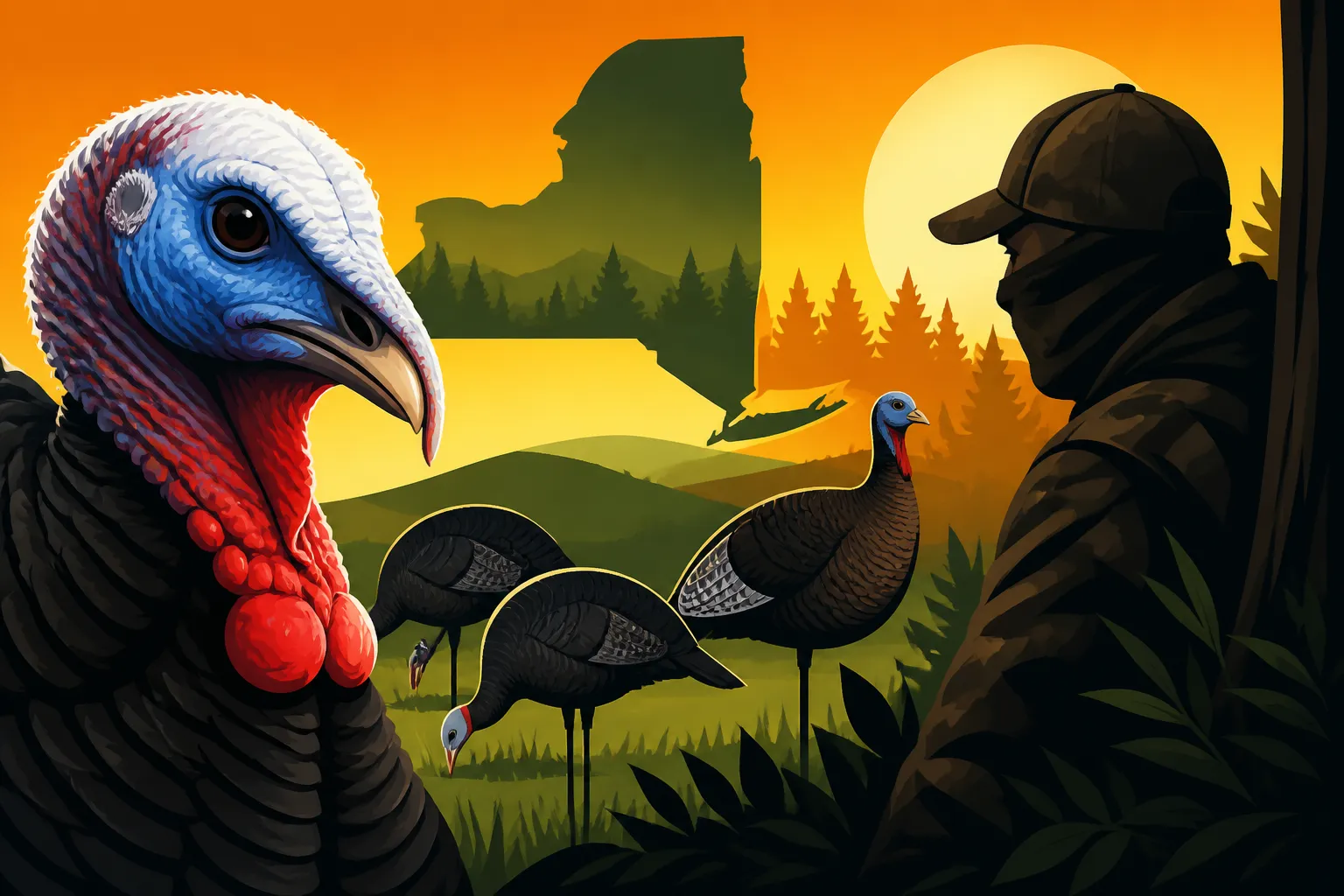
We’ve all been there: up before the sun, set up with what we think is the perfect decoy spread, only to have a gobbler hang up just out of range, or worse, see our setup and bolt for the hills. In New York, where turkeys get hunted hard and learn fast, these wily longbeards aren't easily fooled by just any plastic bird. This guide is all about understanding why those pressured turkeys shy away from typical decoy setups and, more importantly, how to adjust your strategy to bring them into range.
Understanding Why Pressured Gobblers Shun Decoys
It’s easy to get frustrated when a big tom skirts your setup, gobbling his head off but refusing to commit. You might think he’s just being a turkey, but often, it’s because he’s been "educated." New York’s spring turkey season draws a lot of hunters, and that pressure quickly teaches birds what looks suspicious.
The Education of a Wild Turkey
Imagine being a gobbler in the Catskills or the Southern Tier. You've heard every call, seen every decoy setup, and dodged hunters since you were a poult. When opening day arrives, you might be receptive, but as the weeks wear on, and especially after the initial rush, those birds become incredibly wary. They've likely seen full strut gobblers that don't move, or flocks of hens that are always in the same spot, looking a little too perfect.
This exposure makes them develop a keen sense for anything out of place. A gobbler that was fooled once might not be fooled again, and his caution can spread to others in the flock. They learn to associate certain visual cues with danger. If every hunter in a popular public land area is using a full-strut tom decoy with two feeding hens, those birds quickly figure out that these aren't real, living turkeys. Their survival instincts kick in, and they either avoid the area entirely or approach with extreme skepticism, often hanging up just out of shotgun range, especially if they’ve been shot at before. For success, understanding When New York Gobblers Go Quiet is key.
Common Decoy Mistakes Hunters Make
Beyond the basic "too many decoys" issue, there are subtle mistakes that can make your setup look artificial to a pressured New York gobbler. One of the biggest is improper placement. Hunters often set decoys too close to their position, thinking it will draw the bird in tighter. But a smart tom might circle the decoys, putting himself behind you and out of your shooting lane, or he'll get a better look at your concealed position.
Another common error is using unnatural poses or too many decoys. A full-strut tom decoy with three standing hens might look great in a catalog, but in a real-world, highly pressured area, it can scream "fake." Wild turkeys rarely stand perfectly still, and a static, unmoving plastic spread on a still morning can be a dead giveaway. Furthermore, if you're hunting smaller woodlots or thick cover in the Finger Lakes Region, a large, aggressive spread can be intimidating and unnatural to a gobbler just trying to find a receptive hen, not challenge a whole flock. For navigating these smaller areas, you might want to review Run-and-Gun Turkey Tactics on Public Land.
Decoy Strategies for Wary New York Toms
The key to fooling pressured gobblers is to make your decoy setup look as natural and non-threatening as possible, while still piquing their interest. This often means scaling back and thinking about what a real bird would actually encounter.
The Lone Hen Approach
When dealing with wary birds, simplicity is often your best friend. A single hen decoy, especially in a receptive or contented feeding pose, can be incredibly effective. Why? Because it’s subtle. It suggests a turkey that’s just going about her business, looking for a mate, but without any aggressive or overwhelming signals. A lone hen doesn't trigger a gobbler's suspicion in the same way a challenging strutting tom might.
For pressured birds, a breeding hen or a lay-down hen pose can be particularly enticing. These poses signal receptiveness without being overly flashy. Place her where she's visible, perhaps on a slight rise or at the edge of a clearing, but not so prominent that she looks out of place. Think about what a natural turkey encounter would look like. Often, it's a single hen moving through the woods or feeding in a field. This approach aligns perfectly with the cautious nature of educated gobblers. When calling, a soft cluck or purr to accompany your lone hen can add to the realism, drawing that tom in for a closer look.
Jakes and Subordinate Gobblers
While a full-strut tom can be a deterrent to pressured birds, a jake decoy can sometimes work wonders, particularly in specific scenarios. A jake decoy can tap into a gobbler’s instinct for dominance. If a mature tom sees a younger, subordinate male in the vicinity of a hen, it can ignite his desire to assert his authority. This strategy is best employed when you believe there’s a dominant gobbler in the area who isn’t responding to hen calls alone.
The type of jake decoy matters. An aggressive jake, with its tail fanned and head up, can challenge a dominant tom directly. This can be high-risk, high-reward; a tom might charge in to fight, or he might hang up if he’s extra wary. A more subtle, submissive jake, perhaps in a quarter-strut or feeding pose, can sometimes be more effective, signaling that there’s a hen available and just a "puny" jake to chase off. Remember to position the jake slightly away from the hen, simulating a natural interaction or a challenge that a real tom would want to break up. This setup can be especially potent when hunting the New York rut in November, though we're talking spring here. Consider checking New York Spring Turkey Bag Limits before heading out.
Material, Realism, and Movement in Decoys
Beyond the type of decoy, the physical characteristics and how you present them play a huge role in their effectiveness on pressured birds. A decoy that looks real and, more importantly, moves realistically, can make all the difference.
Foam, Inflatables, and Full-Bodied Realism
Decoys come in a variety of materials, each with its own advantages and disadvantages for pressured bird hunting.
- Foam decoys are lightweight and packable, making them ideal for long hikes into public lands, like those vast tracts in the Adirondacks or Catskills. Their softer material can also absorb minor impacts without cracking. However, they can sometimes lack the intricate detail of full-bodied plastic decoys.
- Inflatable decoys are incredibly light and compact, practically disappearing into your vest. They offer surprising realism once inflated, and their slight give can create subtle movements in the breeze. The downside is the need to inflate them in the field, which can be noisy or time-consuming, and they can be vulnerable to punctures.
- Full-bodied plastic decoys offer the highest level of realism in terms of feather detail and shape. They're often heavier and bulkier, which can be a drawback for hunters covering a lot of ground. However, their lifelike appearance can be invaluable when trying to fool a sharp-eyed gobbler who has seen it all.
For pressured birds, the more realistic the decoy, the better, especially regarding the head and neck detail. Turkeys are incredibly observant, and a poorly painted or overly shiny head can give away a fake. Modern decoys from brands like GoHunt often incorporate realistic paint schemes and subtle feather textures designed to fool even the most cautious birds. Whether you're setting up against a big oak or a field edge, a realistic decoy blends in better.
The Power of Subtle Movement
One of the biggest giveaways of a fake decoy is its lack of movement. Real turkeys are rarely static. They peck, they preen, they turn their heads, and even in a slight breeze, their feathers ruffle. Adding movement can be the single most effective way to breathe life into your decoy spread and convince a wary tom.
Simple motion stakes that allow a decoy to pivot or sway in the breeze can make a significant difference. Some hunters even attach a string to a decoy's head or tail from their blind, allowing them to subtly twitch the decoy for added realism. Be cautious with aggressive fanning or "reaping" on public land, especially in areas where other hunters might be present, as it can be mistaken for a real bird. Always prioritize safety and be absolutely certain of your target. For solo hunters who rely on visuals, a slight head movement or tail fan from a jake decoy can be enough to draw a hung-up tom that’s circling at 60 yards, wondering if what he sees is legitimate. A good mapping app, like the one offered by GoHunt, can help you scout for terrain that allows for natural movement and visibility.
Specific New York Scenarios and Decoy Tactics
New York's diverse terrain, from the sprawling fields of the Southern Tier to the thick woods of the Catskills, demands adaptable decoy tactics. What works in one area might be a bust in another, especially when dealing with pressured birds.
Timber Edge Tactics
Hunting the timber edge is a classic New York turkey scenario. Gobblers often roost in the hardwoods and pitch down into adjacent clearings or fields to feed and strut. Pressured birds, however, might be reluctant to commit fully to the open, preferring to stay just inside the tree line, gobbling their lungs out but refusing to step out.
In these situations, your decoy placement needs to reflect that caution. Instead of setting your decoys far out in the field, consider placing them closer to the edge, or even just inside the timber, peeking out. A single hen, or a jake and a hen, positioned where they'd naturally appear from the woods, can draw a hung-up tom into shooting range. Make sure your setup offers a clear line of sight, but also provides good concealment for you. If a gobbler is trying to locate the source of your calls, seeing a decoy appear naturally from the woods can be the final piece of the puzzle to draw him in. Remember to check Calling a New York Gobbler Off the Roost for optimal morning strategies.
Field Hunting Considerations
Open fields, especially vast agricultural tracts in Western New York or the Southern Tier, present unique challenges and opportunities for decoy usage. In these areas, visibility is high, and turkeys have a wide-open view, making them even more discerning.
For pressured birds in fields, again, less can be more. A single, high-quality hen decoy, perhaps with a slight motion stake, can often be more effective than a large, elaborate spread. Position your decoy so it's visible from a distance but also appears natural. A common mistake is placing it right in the middle of a field; often, turkeys will work the edges. Try setting your decoy along a fencerow, a subtle dip in the terrain, or near a patch of cover where a real hen might feed. If you're hunting Southern Tier farmland deer during their seasons, you've likely observed how deer use these edges, and turkeys are similar in their cautious approach.
Another critical consideration in fields is safety, especially if you plan to use fanning or reaping techniques. The high visibility means other hunters could be present and might mistake your fan for a real turkey. Always be absolutely certain of your surroundings and your target before attempting any aggressive decoy tactics. For field-edge setups, a good ground blind, brushed in effectively, can be an excellent way to maintain concealment while observing incoming birds. Tools like GoHunt's mapping features can help identify natural travel corridors and field edges that turkeys frequent.
| Decoy Type | Best Scenario | Pressure Level | Why it Works |
|---|---|---|---|
| Lone Hen (Feeding/Receptive) | Timber edges, smaller clearings, field edges | High | Non-threatening, natural, piques curiosity without alarm |
| Submissive Jake | Early season, areas with dominant toms | Medium-High | Challenges a dominant tom without being overly aggressive |
| Aggressive Jake (with hen) | Mid-morning, late season, specific dominant tom | Medium-Low | Directly challenges a tom, can draw him in for a fight |
| Strutter (full) | Low pressure, private land, very early season | Low | Highly visible, but can intimidate or alert wary birds |
| Inflatable Hen | Run-and-gun, long hikes, packing light | Any | Very portable, good realism once set, subtle movement |
| Full-Bodied Hen | Static setups, high realism needed | Any | Excellent realism, heavier to carry, good in wind |
Remember, New York turkeys are smart, and they adapt quickly. Don’t be afraid to change your tactics mid-hunt, or even mid-morning, if what you're doing isn't working. Sometimes, it's about making a calculated move, changing your calls, and adjusting your visual presentation to match the mood of the birds.
Disclaimer
This article is for general informational purposes only and does not constitute professional advice. Laws, prices and regulations vary by location and change over time. Consult a qualified professional for guidance on your specific situation.