Saddle Hunting in New York Hardwoods
Hunting the dense, often steep, and unforgiving hardwoods of New York can feel like an impossible challenge when you're tied to a heavy traditional treestand. Dragging bulky gear through endless timber, only to find the perfect tree isn't where you need it, is a frustratingly common experience for many hunters. This guide is dedicated to exploring how saddle hunting offers a truly mobile, adaptable, and stealthy approach that can revolutionize your pursuit of whitetails and even bears in the diverse New York wilderness.
Why Saddle Hunting Shines in New York Hardwoods
New York's hardwood forests, from the rolling Catskills to the expansive Adirondack Preserve, present a unique set of challenges and opportunities for hunters. Traditional treestand setups, while effective in some areas, often fall short when faced with the need for extreme mobility, quiet access, and versatile stand placement. This is where saddle hunting truly comes into its own, offering advantages that can make the difference between a frustrating season and a successful one.
Unparalleled Mobility and Adaptability
One of the biggest frustrations for hunters in New York's big woods is committing to a stand location, only to have deer patterns shift due to pressure, weather, or food source changes. Traditional stands often mean lugging heavy metal, only to have it sit unused. Saddle hunting, by contrast, is built around mobility. Your entire "stand" setup — the saddle, linemans belt, tether, and climbing sticks — is designed to be lightweight and packable.
Imagine scouting a promising oak ridge in the Finger Lakes region and noticing that deer are hitting acorns hard on one side, but a strong wind shifts, moving them to another draw a quarter-mile away. With a heavy fixed-position stand, you might be stuck. But with a saddle, you can quickly and quietly pack up, relocate, and be hunting a new tree in a matter of minutes. This adaptability is invaluable when deer are on the move, or when you're trying to stay ahead of hunting pressure on public land. It allows you to respond dynamically to changing conditions, rather than being anchored to a single spot. This also makes Scouting New York Public Land Before Season even more effective, as you can identify multiple potential ambush points without committing a heavy stand.
Enhanced Stealth and Concealment
New York whitetails, especially those in areas with consistent hunting pressure, are notoriously wary. The metallic clanging of a climbing treestand or the rustle of gear can alert deer long before you're in position. Saddle hunting inherently promotes a quieter approach. Your saddle itself is typically soft goods, and even modern climbing sticks are designed to be light and minimize noise.
Beyond just quiet entry, a saddle allows for superior concealment. Instead of being a distinct silhouette against the sky like in some ladder or hang-on stands, a saddle hunter is positioned around the tree, effectively using the trunk as natural cover. This broken outline makes you much harder for deer to spot, especially in dense hardwoods where every branch and knot provides additional camouflage. You can swivel silently around the tree, adjusting your shot angle as deer approach from any direction, turning the tree into a dynamic blind rather than a static platform. This ability to use the tree as cover also works wonders when you're trying to get a bead on a strutting gobbler during Spring Turkey Hunting in New York or a black bear that wanders into range during Bear Hunting Without Bait in New York.
Strategic Advantage on Steep or Irregular Terrain
Anyone who has hunted the Catskill Mountains or the steeper sections of the Adirondacks knows that finding a "straight" tree suitable for a traditional climbing stand can be a monumental task. Ravines, rock ledges, and uneven ground make stand placement incredibly challenging. Saddle hunting laughs in the face of such topography.
Because you're not relying on a platform that needs to be perfectly level, you can ascend trees on steep hillsides, in ravines, or even those with significant leans. This opens up entirely new hunting locations that would be inaccessible with traditional methods. You can climb to an ideal height that overlooks a natural deer funnel or a bedding area, taking full advantage of elevation changes to catch wind currents and maximize visibility. This is particularly effective when Reading a Ridge for Catskill Deer Movement or setting up in tight, overlooked pockets of timber that traditional hunters simply can't reach. The ability to utilize nearly any tree, regardless of its angle or the ground beneath it, provides an unmatched tactical advantage in New York's rugged hardwood environments.
Essential Gear for a New York Saddle Hunt
Embarking on a saddle hunt in New York's diverse hardwoods requires specific gear that prioritizes safety, comfort, and efficiency. This isn't just about throwing some ropes in a bag; it's a system designed for silent, mobile access and secure positioning high in a tree. Getting the right components is crucial for a successful and safe experience.
The Saddle System Itself
At the core of saddle hunting is, of course, the saddle. This isn't a simple harness; it's a sophisticated piece of gear that distributes your weight, allows for comfortable sitting or leaning, and integrates with ropes for ascent and security. Look for a saddle that is comfortable for extended sits, breathable for those warmer early-season archery days, and durable enough to withstand the rigors of the New York woods. Some popular brands offer modular systems, allowing you to customize pouches and accessories.
Beyond the saddle, you'll need a lineman's belt and a tree tether. The lineman's belt is your lifeline during ascent and descent, keeping you securely attached to the tree as you move up or down with your climbing method. The tree tether is what you attach to the tree once you're at hunting height, allowing you to lean back into your saddle and comfortably move 360 degrees around the tree. Both of these ropes need to be robust, easy to adjust, and made from materials that won't fray easily. Always check the weight ratings and ensure they meet or exceed your body weight plus gear. Safety is paramount, especially when you're high off the ground in remote areas.
Climbing Methods: Sticks, Aiders, and Platforms
How you get up the tree is as important as the saddle itself. For New York hardwoods, climbing sticks are the most common and versatile option. These are lightweight sections that attach to the tree, providing steps as you ascend. Look for sticks that are quiet to deploy and pack easily. Some hunters pair their sticks with "aiders," which are small fabric loops attached to the stick steps, effectively increasing your step height and reducing the number of sticks needed. This can save weight and bulk, which is a huge benefit when you're deep in the Adirondack backcountry. Climbing Sticks for Adirondack Hardwoods covers this in more detail.
Additionally, a small platform is highly recommended for saddle hunting. While the saddle itself allows you to lean and pivot, a small platform provides a stable place for your feet, significantly increasing comfort for long sits and making shot execution much more steady. Platforms are designed to be lightweight, easy to attach, and silent. Some innovative designs even allow you to attach multiple mini-platforms to the tree, giving you more foot room. When choosing sticks and a platform, consider the bark types of common New York hardwoods like oak, maple, and beech; some stick designs grip certain barks better than others.
Accessory Gear for a Complete Setup
While the saddle and climbing system are the core, several accessories enhance the saddle hunting experience, particularly in New York. A good lightweight backpack is essential for carrying your saddle, sticks, platform, and other hunting essentials like calls, water, and snacks. Look for a pack with external attachment points or straps to secure your sticks and platform, keeping everything snug and quiet.
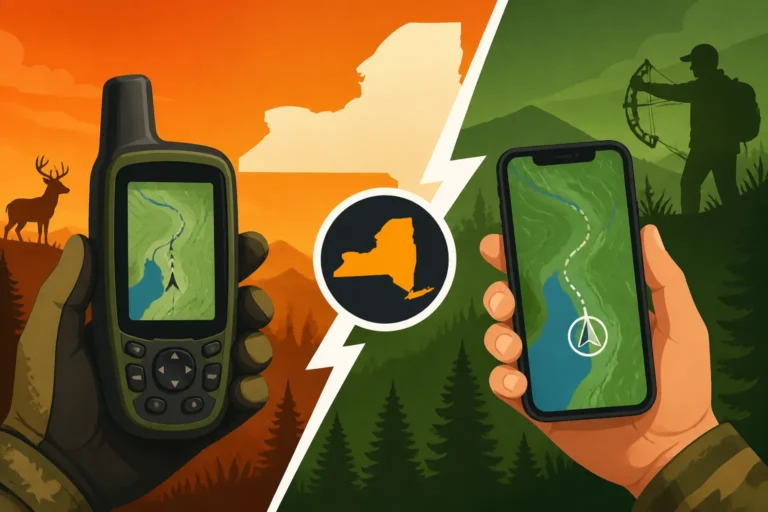
For navigation, especially when exploring new public land, a reliable GPS unit or a mapping app like GoHunt on your smartphone is indispensable. GoHunt offers satellite imagery and public land boundaries, which are crucial for finding those overlooked pockets of hardwoods that are perfect for saddle hunting. Also consider a compact, hands-free headlamp for pre-dawn entries and post-dusk exits, especially important when navigating uneven terrain with your hands occupied. Finally, always carry a small first-aid kit and an emergency signaling device (like a whistle or satellite messenger) – remote New York hardwoods can be unforgiving if something goes wrong.
Mastering the Setup: From Scout to Shoot
Saddle hunting, while mobile, isn't about haphazardly throwing gear on the nearest tree. It's a strategic process that begins long before you even step foot in the woods on hunting day. Mastering the setup means careful planning, efficient execution, and understanding the nuances of tree selection and quiet ascent, all crucial for success in New York's pressured environments.
Strategic Tree Selection and Scouting
Your hunt begins with intelligent scouting. Before you even think about climbing, you need to identify areas where deer are actively moving, feeding, or bedding. Use mapping tools, like GoHunt, to pinpoint natural funnels, ridge lines, saddles, and potential food sources within the hardwoods. Look for areas of transition – where different timber types meet, or where dense cover provides security near a travel corridor. Once you've identified a promising area, boots on the ground scouting is paramount. Look for fresh sign: rubs, scrapes, tracks, and droppings.
When it comes to actually picking a tree for your saddle, think critically. Don't just pick the first big tree you see. Look for a tree that offers good cover from prevailing winds (important for scent control), breaks up your outline, and provides multiple shooting lanes. In dense New York hardwoods, a tree with a few branches or even some thicker foliage can be a huge advantage for concealment. Consider the tree species: some, like smooth-barked beech or red maple, might be slicker or harder for climbing stick straps to bite into than a shaggy bark oak or hickory. Also, think about the sun's position – you want to avoid being backlit if possible, especially during prime morning and evening hours.
Silent Ascent and Optimal Position
The most important aspect of any tree stand setup, and especially saddle hunting, is doing it silently. Deer have an incredible sense of hearing, and any metallic clink or scrape can send them fleeing. Before you start climbing, remove any unnecessary items from your person that might make noise. Use stealth straps on your climbing sticks if they're prone to rattling.
When ascending, move deliberately and smoothly. Keep your lineman's belt taut as you move each stick up. Once at your desired height – usually between 15 and 25 feet, depending on cover and terrain – secure your tree tether. This tether is what you’ll be leaning into, so ensure it’s wrapped securely around a strong point on the tree. Your optimal position is one where you can comfortably lean back into your saddle, with your feet on the platform, and pivot silently 360 degrees around the tree. Practice at home to get comfortable with this movement. The goal is to become an extension of the tree, blending in and having fluid movement for shot opportunities. Remember, your comfort directly impacts how long you can remain still and focused.
Wind, Thermals, and Entry/Exit Routes
Understanding wind and thermals is critical, particularly in the undulating terrain of New York hardwoods. Even the best saddle setup is useless if your scent is blowing directly to where deer are. Before every hunt, check the wind direction and use it to your advantage. A saddle's mobility allows you to be much more flexible with your stand choice based on the day's wind. If the wind shifts unexpectedly, you have the option to relocate, which isn't always feasible with traditional stands. Check out Wind and Thermals on a Catskill Ridge for more insights on how these forces affect deer movement.
Thermals, the rising and falling air currents, are especially important in steep terrain. In the morning, as the sun warms the earth, thermals rise. In the evening, as the air cools, they fall. Plan your entry and exit routes to minimize your chances of spooking deer. Avoid walking through bedding areas or known travel corridors, especially when your scent cone is likely to be carried on rising or falling thermals. Utilize natural cover, ravines, or logging roads for quiet access. A well-planned entry and exit is just as vital as the stand setup itself, especially when hunting pressured public land where deer quickly learn patterns of human activity.
Tactics for Success in New York's Diverse Terrain
New York's hunting landscape is incredibly varied, from the big, rugged timber of the Adirondacks and Catskills to the more fragmented woodlots of the Southern Tier and Finger Lakes. Saddle hunting offers unique advantages in each of these environments, allowing hunters to adapt their approach to the specific challenges and opportunities presented.
Ridge Lines and Steep Terrain in the Catskills
The Catskills are renowned for their steep, unforgiving terrain and vast hardwood forests. Traditional treestand hunters often struggle here, limited by the sheer difficulty of finding suitable trees and carrying heavy gear up steep grades. Saddle hunting transforms this challenge into an advantage. You can target those hard-to-reach ridge lines, saddles, and benches that deer use as natural travel corridors, spots often overlooked by other hunters.
Focus on setting up just below the crest of a ridge, using the elevation to your advantage. This allows you to hunt slightly below the deer's line of sight, and often puts you in a position to catch thermals as they drop in the evening or rise in the morning. Look for funnels created by sharp elevation changes or thick sections of blowdowns. Saddle hunting's light weight makes the climb much more manageable, and the ability to set up on leaning or irregularly shaped trees means you're not restricted by the ground you're on. Always remember your Treestand Safety Gear for Steep Ground when hunting these areas.
Hunting Big Timber in the Adirondacks
The Adirondack Forest Preserve presents hunters with immense tracts of unbroken hardwoods, often miles from any road. Deer densities can be lower here, but the bucks are often mature and wise. Success in the Adirondacks demands an extremely mobile and adaptable approach, qualities that define saddle hunting.
Instead of committing to a single stand, saddle hunting allows you to cover vast amounts of ground, scouting and moving throughout the day if necessary. Focus on finding micro-funnels within the big timber – subtle changes in topography, small draws, or the edges of dense conifer swamps where deer will naturally travel. You can quickly set up on a rub line you just found, or shift your position if you hear deer movement in a different direction. The compact nature of saddle gear makes those long hikes deep into the Adirondack interior much more bearable. Using GoHunt to scout aerial imagery can help identify these subtle features before you even enter the woods, saving precious time and energy.
Overlooked Pockets in the Southern Tier
The Southern Tier of New York features a mix of farmlands, small woodlots, and larger state forest blocks. While there might be more traditional hunting pressure here, saddle hunting allows you to access those often-overlooked pockets of timber that traditional hunters pass by. Think about small ravines, thick creek bottoms, or dense brushy areas adjacent to larger fields – places where a traditional stand might be too cumbersome to carry or set up quietly.
A saddle allows you to quickly get into a smaller, less ideal tree in one of these overlooked spots, providing a perfect ambush point for deer moving between bedding and feeding areas. You can also quickly adjust your setup based on changing food sources, such as fresh clear-cuts or acorns dropping in a specific woodlot. The ability to climb quietly and blend into the tree line gives you a significant edge when targeting pressured deer in these more fragmented, often closer-to-civilization environments. For those looking to increase their chances, understanding Filling Extra DMPs in Unlimited WMUs can be key in these areas.
| Feature | Traditional Treestand (Hang-on/Climber) | Saddle Hunting System |
|---|---|---|
| Mobility | Low to Moderate (heavy, bulky) | High (lightweight, compact, easy to relocate) |
| Stealth (Noise) | Moderate (metal components, can clank) | High (soft goods, quiet climbing sticks) |
| Concealment | Moderate (can silhouette hunter) | High (uses tree trunk as natural cover, broken outline) |
| Terrain Versatility | Limited (prefers straight, level trees) | High (can climb leaning, irregular trees on steep ground) |
| Comfort | High (platform seat) | Moderate to High (leaning comfort, small platform for feet) |
| Setup Speed | Moderate to Slow | Moderate to Fast (with practice) |
| Pack Weight | Moderate to High (20-40+ lbs) | Low to Moderate (10-25 lbs) |
| Field of View | Fixed to one direction, turning limited | 360-degree pivot around the tree for shooting |
Disclaimer
This article is for general informational purposes only and does not constitute professional advice. Laws, prices and regulations vary by location and change over time. Consult a qualified professional for guidance on your specific situation.