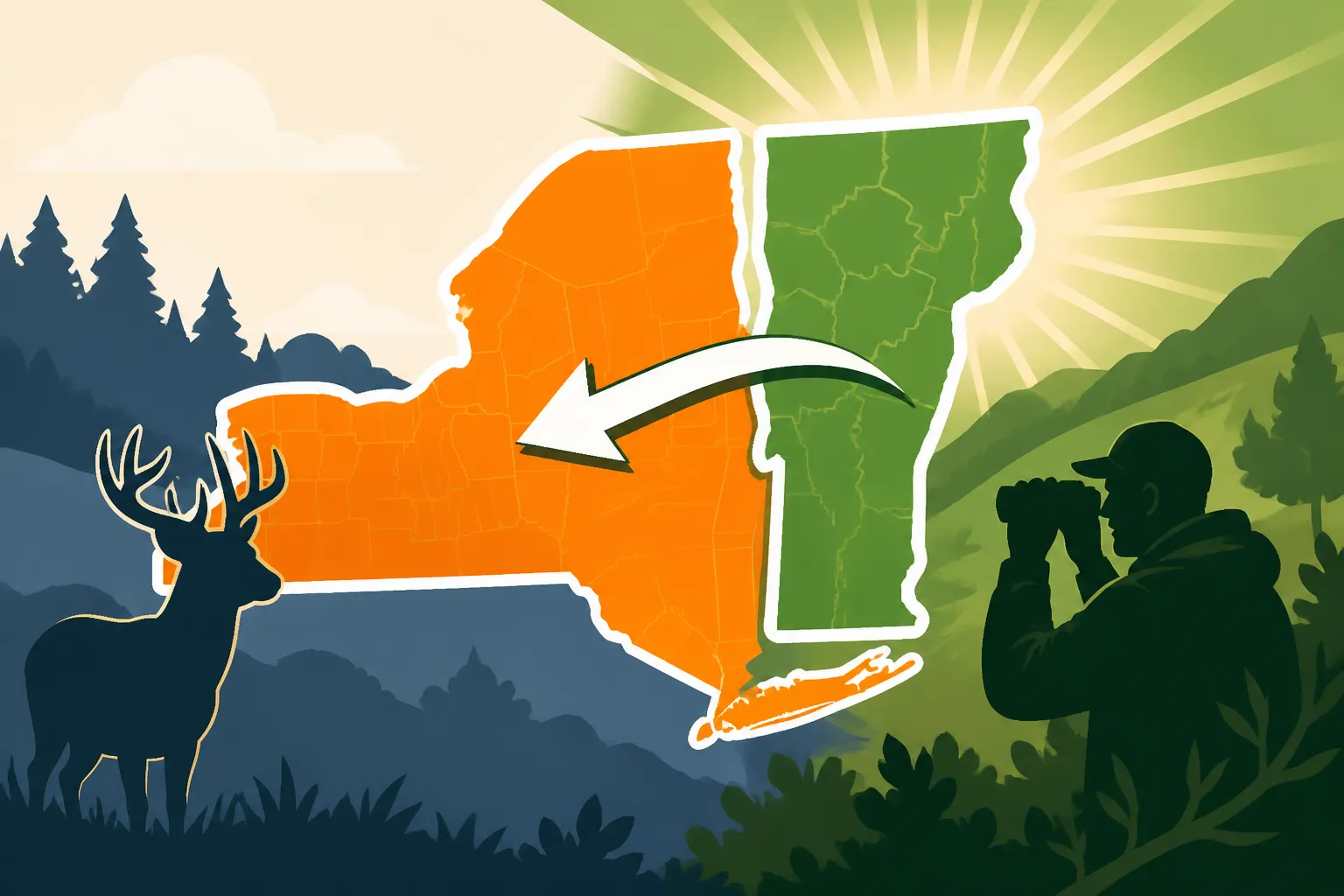
Why Vermont Sets New York’s Champlain Dates
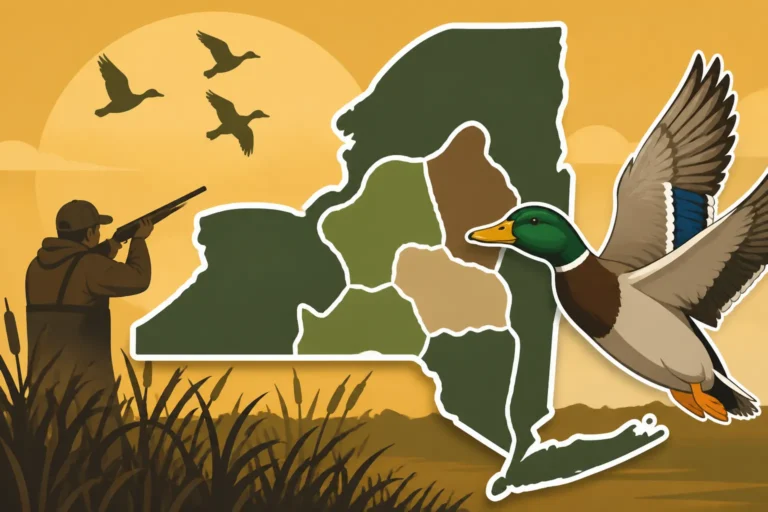
It's a question that perplexes many, especially those who hunt the New York side of majestic Lake Champlain: why do hunters there have to follow Vermont's duck season calendar? It feels counterintuitive, almost like an arbitrary line in the sand. This guide will delve deep into the historical agreements, migratory bird management, and federal regulations that explain this seemingly odd cross-state calendar alignment for waterfowl hunters, ensuring you understand the rationale behind the dates you follow.
The Interconnectedness of Migratory Bird Management
When it comes to migratory birds like ducks and geese, state borders really don't mean much to them. They follow ancient pathways, driven by instinct, weather, and the search for food and safe havens. This simple fact is at the heart of why managing waterfowl hunting seasons is a complex, multi-state, and federal undertaking. New York, like all states, doesn't get to unilaterally decide its waterfowl seasons.
Federal Oversight and Flyway Councils
At the highest level, the United States Fish and Wildlife Service (USFWS) is the federal agency responsible for managing migratory bird populations under the Migratory Bird Treaty Act. This act, along with subsequent legislation, gives the USFWS the authority to establish broad frameworks for hunting seasons, including setting maximum season lengths, earliest opening dates, and latest closing dates. They don't dictate exact state-by-state calendars, but they provide the guardrails.
To help with this massive task, the USFWS works closely with four regional Flyway Councils: the Atlantic, Mississippi, Central, and Pacific. New York, being on the eastern seaboard, is part of the Atlantic Flyway Council. These councils are made up of state wildlife agency representatives from across their respective flyways. They serve as a crucial forum for discussing population data, habitat conditions, and hunter feedback, ultimately making recommendations to the USFWS for annual season frameworks. This collaborative approach ensures that management decisions are based on the best available science and consider the health of the entire migratory population, not just isolated state populations.
The Atlantic Flyway's Collaborative Approach
Within the Atlantic Flyway, states often have unique geographical and ecological features that influence their waterfowl populations and hunting traditions. However, the underlying principle is always cooperation. For instance, understanding the broader dynamics of New York Waterfowl on the Atlantic Flyway helps put the Champlain situation into perspective. Ducks that stage in Lake Champlain might have bred in Canada or the far northern U.S., and their migration takes them through multiple states. If each state set entirely independent dates without considering its neighbors, it could lead to unsustainable harvest rates, create enforcement nightmares, or simply be ineffective in managing the resource.
Imagine if New York opened its season weeks after Vermont on Lake Champlain. The ducks would simply sit on the New York side, unpressured, until the season opened, only to be hammered when the gates finally opened. Or, conversely, if New York opened earlier, ducks would quickly learn to cross the imaginary state line to Vermont's sanctuary. This is why the Atlantic Flyway Council and the USFWS encourage and often mandate harmonized regulations in shared ecological zones, especially for a body of water as significant as Lake Champlain.
Lake Champlain: A Unique Bi-State Waterfowl Resource
Lake Champlain isn't just a big lake; it's an ecosystem, a critical migratory corridor, and a wintering ground for countless waterfowl. For the ducks, geese, and other migratory birds that depend on it, the invisible line separating New York and Vermont means absolutely nothing. This shared biological reality is the primary driver behind the shared hunting regulations.
Shared Ecology and Migratory Patterns
Lake Champlain is a single, continuous body of water that spans hundreds of miles, shared by two states and even a small part of Canada. It serves as a vital stopover point and staging area for ducks and geese traversing the Atlantic Flyway. Species like mallards, black ducks, greater and lesser scaup, buffleheads, and goldeneyes utilize the lake extensively. The timing of their arrival and departure is dictated by factors like breeding success further north, weather fronts, and the availability of food sources along the entire flyway.
The ducks don't land on the New York shore and consult a calendar before deciding to fly to the Vermont shore. They follow food, open water, and safety. This shared ecology means that whatever happens on one side of the lake inevitably impacts the other. For instance, if there's a good hatch up north and ducks migrate down early, both states experience this influx simultaneously. It's an ecological continuum, not two separate ponds. Because of this, Duck Migration Timing Through New York is a critical factor for both states.
The New York-Vermont Border and Waterfowl Behavior
Consider the practical implications of separate seasons. If New York’s Champlain duck season opened significantly later than Vermont’s, hunters on the Vermont side would immediately put pressure on birds. Those birds, feeling that pressure, would simply fly a few miles west to the New York side, where they would find refuge. This would create an unfair advantage for one state, make hunting on the Vermont side less productive, and defeat the purpose of managing the migratory resource effectively.
Conversely, if New York opened earlier, birds would retreat to the unpressured Vermont waters. It's a game the ducks would win, and wildlife managers would lose control over harvest numbers and distribution. This dynamic is especially true in open water areas, but also along the marshy shorelines where birds frequently cross. Hunters familiar with Hunting the Lake Champlain Marshes know that a duck can be in New York one minute and Vermont the next with just a few wingbeats. Therefore, aligning the season dates removes this "refuge" effect and ensures that hunting pressure is distributed somewhat equally across the lake's ecosystem, supporting the long-term health of the waterfowl populations.
Historical Agreements and Regulatory Harmonization
The decision to align the Lake Champlain waterfowl seasons didn't happen overnight or arbitrarily. It's the result of decades of collaborative management, understanding the unique nature of this shared resource, and federal guidance to ensure sustainable hunting opportunities.
The Need for Consistent Regulations
From an administrative and enforcement standpoint, having wildly different waterfowl seasons on opposite sides of a shared, continuous body of water would be a nightmare. Imagine a conservation officer on the New York side trying to explain to a hunter why the person across the narrow channel is legally hunting, while they are not. It creates confusion for hunters, challenges for law enforcement, and fosters an environment where non-compliance might inadvertently increase.
Consistent regulations simplify things for everyone. Hunters in the Lake Champlain Zone, whether they launch from Plattsburgh or Burlington, know they are operating under the same set of dates. This clarity reduces accidental violations and ensures that all hunters are playing by the same rules, which is fundamental to fair chase and responsible wildlife management. The USFWS encourages states to harmonize seasons in these bi-state zones precisely for these reasons – to ensure effective management and easier compliance.
How Vermont's Early Season Influence Developed
Now, to the specific question of why Vermont's influence often dictates the dates for the Champlain Zone, even for New York hunters. The key lies in geography and migratory timing. Much of Lake Champlain, especially its northern reaches, is at a higher latitude than the primary waterfowl hunting areas in New York's other zones. Vermont, as a state further north than much of New York's Southern Zone, often experiences colder weather and earlier freeze-up dates.
Waterfowl, particularly many dabbling ducks and early-migrating divers, move through these northern areas earlier in the fall as temperatures drop and wetlands begin to freeze. To ensure hunters have an opportunity to pursue these birds before they push further south, Vermont's traditional season structure often aims for an earlier opening. Because Lake Champlain is a single, interconnected ecosystem, and the birds are responding to those northern conditions, it made practical sense for the shared zone's dates to align with this earlier migratory push.
Essentially, the federal framework for waterfowl seasons allows for different zones, and the Lake Champlain Zone is treated as its own entity. Both New York and Vermont submit their recommendations for this zone to the Atlantic Flyway Council and the USFWS, but the prevailing ecological conditions of the entire lake, influenced by its northern geography and Vermont's more northerly state character, often lead to a calendar that more closely mirrors Vermont's general duck season patterns. It's less about one state dictating to the other, and more about collaboratively recognizing the ecological realities of the shared waterbody. When planning your hunting excursions, it's wise to consult resources like GoHunt that provide detailed season breakdowns by specific zones.
Practical Implications for New York Hunters
For those of us in New York who hunt the Champlain Zone, understanding this unique arrangement is paramount. It means a slightly different approach to season planning and regulation checks than if you were hunting New York's other waterfowl zones.
Understanding the Vermont Calendar
If you plan to hunt ducks or geese on the New York side of Lake Champlain, you absolutely cannot just consult the general New York Waterfowl Zones and Seasons brochure or the New York Duck Zone Boundaries for the state. You need to specifically look for the Lake Champlain Zone regulations. The New York Department of Environmental Conservation (DEC) will publish these dates, but they will explicitly state that these dates are in conjunction with Vermont's regulations for the Lake Champlain Zone.
This means you’ll often find that the Lake Champlain Zone opens earlier than, say, New York’s Western or Long Island Zones. It might also have slightly different season splits or bag limits for certain species if Vermont's recommendations, based on specific population data for the shared lake, lead to those adjustments. It’s crucial to check both the New York DEC's official waterfowl hunting guide and to be aware that these dates are synchronized with Vermont's. Many hunters find it helpful to also check the Vermont Fish & Wildlife Department's regulations to gain a complete picture, ensuring there are no misunderstandings.
Planning Your Hunt on the New York Side
Armed with this knowledge, you can better plan your waterfowl adventures on Lake Champlain. If you're accustomed to waiting until October for New York's general duck opener, you might be surprised to find that the Champlain Zone could be open in late September. This earlier opening can offer fantastic opportunities, especially for early season teal and wood ducks, or even some local mallards before the major northern flights arrive. However, it also means being prepared for potentially warmer weather than you might expect for duck hunting.
Scouting is always key, no matter where you hunt, and that's especially true on a body of water as vast as Lake Champlain. Use mapping tools to identify potential staging areas, marshy coves, and river deltas along the New York shoreline. Understanding where the birds are feeding and resting is far more important than the arbitrary state line. Services like GoHunt can offer satellite imagery and property data that help identify promising spots and clarify access. Remember, just because the seasons are harmonized, it doesn't mean you can ignore other specific New York regulations, such as New York Migratory Bird Certification requirements or the need for a New York Federal Duck Stamp Requirement.
Ultimately, the reason Vermont sets New York’s Champlain dates is a testament to effective, collaborative wildlife management. It acknowledges that nature doesn't respect political boundaries and that the best way to manage a shared migratory resource is through shared responsibility and harmonized regulations. For hunters, it means a bit more attention to detail when planning, but it ensures a healthy waterfowl population for generations to come.
Disclaimer
The information provided in this article is for general guidance and informational purposes only, and does not constitute legal advice. Hunting regulations in New York are subject to change, and it is the responsibility of every hunter to consult the most current official New York State Department of Environmental Conservation (DEC) hunting regulations guide and any relevant federal regulations before engaging in any hunting activities. Always prioritize safety, ethical hunting practices, and compliance with all applicable laws.