New York Trespass and Permission Law
Few things can ruin a hunting trip faster than the gnawing uncertainty of whether you're standing on public land or about to accidentally trespass onto private property. In New York, with its patchwork of state forests, WMAs, and private tracts, understanding trespass and permission law isn't just a good idea—it's absolutely essential to staying out of trouble and maintaining a positive image for all hunters. This comprehensive guide will walk you through the specifics of New York's trespass and permission laws, offering practical advice to navigate private land boundaries and ensure you hunt legally and ethically.
Understanding New York's Core Trespass Laws for Hunters
The foundational principle of hunting on private land in New York revolves around permission. It's not always as straightforward as "posted means no," and understanding the nuances can save you a lot of headache, and potentially, your hunting privileges. Ignoring these rules isn't just a minor infraction; it can lead to serious consequences and reflects poorly on our entire hunting community.
The Fundamental Rule: Posted Versus Unposted Land
For many years, there was a common misconception, almost an unwritten rule in some circles, that if land wasn't explicitly "posted," it was fair game for hunting. This idea, however, is a dangerous one in New York. The law here is pretty clear: private land is private land, whether it has signs or not. While the consequences for trespassing on unposted land might differ slightly from posted land, the underlying fact remains that you need permission from the landowner to be there. This is especially true for hunting, where the landowner has a clear right to control who accesses their property, and for what purpose.
Think of it this way: your backyard doesn't need a "No Trespassing" sign for it to be illegal for someone to walk through it. The same applies to a farmer's woodlot or a timber company's acreage. The burden of proof and the responsibility to know where you are falls squarely on the hunter. Always assume land is private until you confirm otherwise, and always seek permission. It’s the safest and most respectful approach, preventing misunderstandings and keeping you on the right side of the law.
What "Posted" Really Means in New York
When land is posted in New York, it means the landowner has gone the extra step to formally notify individuals that entry is prohibited without permission. New York law specifies what constitutes proper posting. Generally, "No Trespassing" signs or similar notices must be conspicuously placed along the boundaries of the property, at intervals of not more than 500 feet. These signs must be of a certain size and contain specific language to be legally enforceable under the Environmental Conservation Law. You can't just slap up a handwritten note and expect it to hold up.
Properly posted land makes the landowner's intent undeniably clear. Ignoring these signs is a direct violation of the law and is viewed much more seriously than an accidental wander onto unposted land, even though both require permission. When you see those bright yellow or red signs, or notice specific markings like purple paint on trees (which some states use as a universal "no trespass" marker, though not universally adopted in NY, it's a good indicator), consider it a definitive boundary. Tools like the onX Layers for New York Land Status in mapping apps such as onX Hunt can be incredibly helpful here, showing you exactly where those property lines are, often with landowner names, before you even set foot on the ground. This digital scouting can prevent you from inadvertently crossing a boundary and ending up on land that is strictly off-limits. Understanding New York Posted Land Rules is paramount to avoiding fines and protecting your hunting license.
Navigating Permission: The Hunter's Responsibility
Obtaining permission isn't just a legal necessity; it's a crucial part of building good relationships with landowners and ensuring future hunting opportunities for everyone. It shows respect and responsibility, qualities that are highly valued in the hunting community.
The Importance of Written Permission
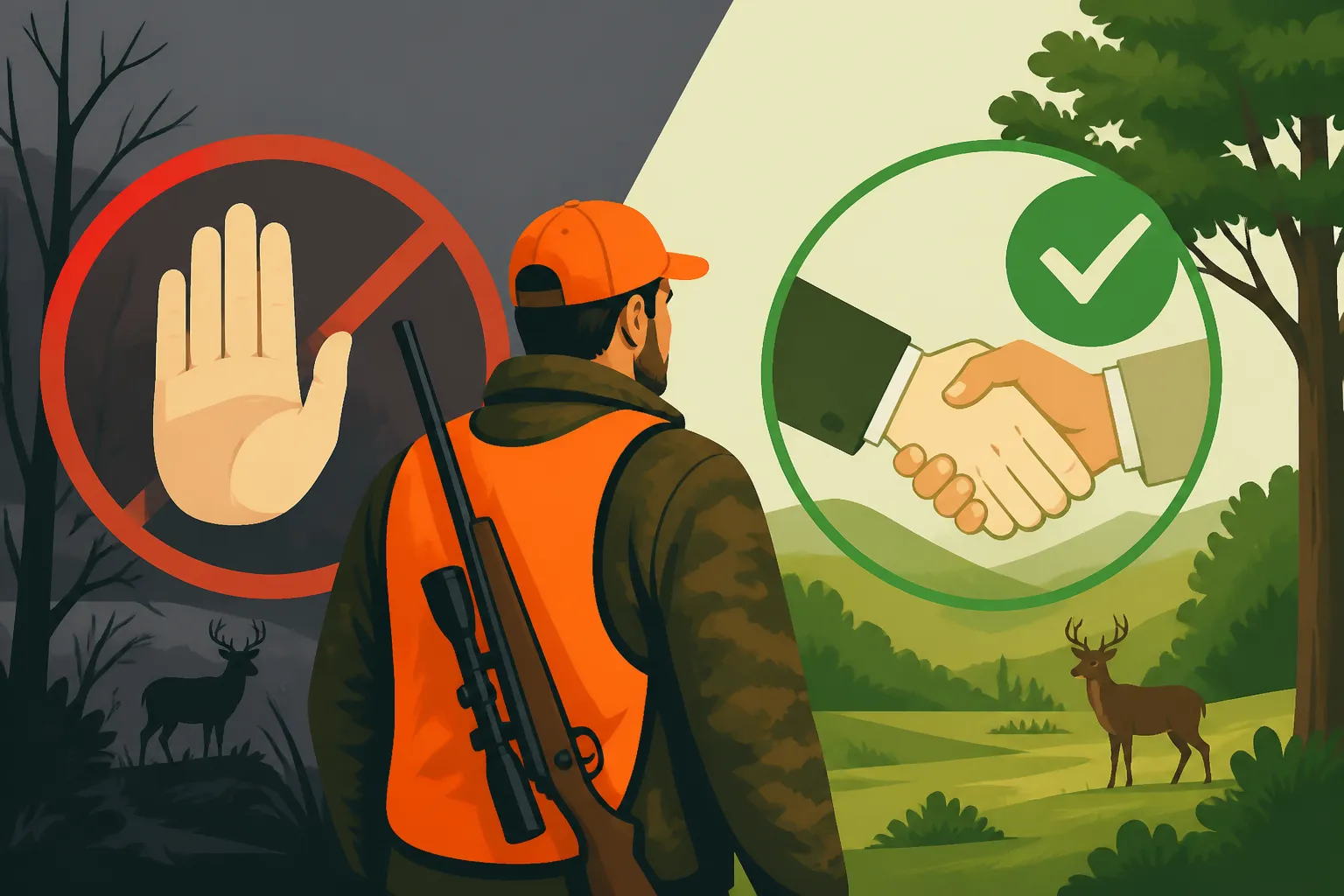
While a friendly handshake and a verbal "Sure, go ahead" might feel sufficient in the moment, New York law does not always require written permission for hunting. However, the best practice is almost always to get it in writing. Why? Because verbal agreements can be easily forgotten, misinterpreted, or disputed. Imagine you have permission from a landowner, but their neighbor or a family member spots you and calls the authorities, claiming you're trespassing. Without written proof, it's your word against theirs, and that can put you in a very difficult position.
A written permission slip, even a simple one, acts as a clear record. It should ideally include:
- The landowner's name and contact information.
- Your name and contact information.
- The specific dates for which permission is granted.
- The exact parcel of land you're allowed to hunt (perhaps with a map attached).
- The type of hunting permitted (e.g., deer archery, small game, turkey).
- Any specific conditions or restrictions (e.g., no vehicles, stay away from certain areas, specific parking).
Having this document in your pack, alongside your hunting license, can quickly resolve any misunderstandings. It demonstrates your diligence and respect, showing that you've gone the extra mile. For details on whether you specifically need written permission, consult Do You Need Written Permission in New York?.
Asking for Permission: Tips for Success
Approaching a landowner can be intimidating, but a polite, respectful, and prepared hunter often finds success. The key is to remember that you're asking for a privilege, not asserting a right. Landowners have many reasons to say no, from past bad experiences with hunters to concerns about liability or simply wanting their privacy. Your goal is to alleviate those concerns and build trust.
Here are some tips:
- Timing is key: Don't show up on opening day. Try approaching them well before the season, perhaps in late summer or early fall, when they're not rushed.
- Be presentable: Dress neatly, not in hunting camo, unless you're explicitly scouting. A clean appearance makes a good first impression.
- Be polite and concise: Introduce yourself, state your intention clearly, and respect their time. "Hello, my name is [Your Name], and I'm a local hunter. I was hoping to speak with you for a few minutes about the possibility of hunting deer on your property this fall."
- Offer value: Can you help with chores? Keep an eye on their property? Share some venison if you're successful? Sometimes, a mutually beneficial arrangement can be made.
- Show respect for their land: Ask about fences, gates, specific areas to avoid. Emphasize that you'll leave no trace, pick up any litter (even if it's not yours), and treat their property with the utmost care.
- Have your license ready: Show them you're a legal, licensed hunter.
- Leave contact info: If they're hesitant, leave a card or a piece of paper with your name and phone number and suggest they call you if they change their mind.
Successfully Knocking on Doors in Southern Tier Farm Country or approaching landowners in other regions requires patience and perseverance. Remember, a "no" today isn't necessarily a "no" forever. Sometimes, it's about building a relationship over time. These small private tracts can offer fantastic hunting opportunities, so learning to effectively approach landowners is a valuable skill for Hunting Small Private Tracts in New York.
Special Scenarios and Common Hunter Dilemmas
Hunting, particularly in areas with mixed public and private land, inevitably leads to unique situations where the lines of permission and trespass can get blurry. Knowing how to react in these moments is crucial for ethical and legal hunting.
Retrieving Game From Private Land
This is perhaps one of the most stressful situations a hunter can face: you've made a good shot, but your deer, turkey, or bear runs onto adjoining private property. Your heart sinks. It's a natural instinct to pursue a wounded animal to ensure a humane recovery and to not waste the meat. However, in New York, you generally do not have the right to retrieve game from private property without the landowner's permission. This applies even if you believe the animal is fatally wounded and just over the fence.
The protocol for Retrieving Game From Private Land in New York is clear:
- Do Not Trespass: Resist the urge to immediately cross the line. Taking matters into your own hands can turn an ethical dilemma into a legal violation.
- Contact the Landowner Immediately: If you know who owns the property, try to contact them as soon as possible. Explain the situation calmly and respectfully. Offer to retrieve the animal quickly and cleanly, perhaps with their supervision, or ask if they'd prefer to handle it themselves.
- Respect Their Decision: The landowner has the absolute right to deny you access. It's frustrating, heartbreaking even, but their property rights take precedence. If they say no, you must respect that.
- Involve Law Enforcement (if necessary, with landowner consent): In some cases, if you can't reach the landowner or if there's a dispute, you might be able to involve an Environmental Conservation Officer (ECO). However, even an ECO usually needs landowner permission to enter private land for game retrieval, unless there's an immediate public safety concern or a clear violation of law. Do not assume an ECO can simply grant you access.
The stress of having a wounded animal near a property line is immense, especially when daylight is fading and you're worried about Blood Trailing After Dark in New York. But remember, your actions in this situation will reflect not just on you, but on all hunters. Always choose the legal and ethical path, even if it means losing an animal.
Hunting Adjacent to Private Property
Hunting near a property line, whether it's public land bordering private, or your own permitted private land bordering another private parcel, requires extra vigilance. It's easy for a deer to run across a line, or for your stand placement to be perceived as too close to a neighboring residence.
One critical aspect here involves New York Firearms Discharge Setback Rules. In New York, there are specific regulations concerning how close you can discharge a firearm or bow to a dwelling, school, farm building, or other occupied structure. These distances vary, but generally, you must be a certain distance away, often 500 feet, unless you have permission from the owner of that structure. This rule applies even if you are on land where you have permission to hunt or on public land. It's about safety and avoiding accidental harm or disturbance.
When hunting close to a boundary:
- Know Your Boundaries: Use a reliable mapping app like onX Hunt to constantly monitor your position relative to property lines. These apps provide GPS accuracy that can be invaluable in dense woods where boundary markers might be scarce or unclear.
- Consider Shot Angles: Always think about where your projectile will go if you miss or if it passes through an animal. Ensure your backstop is always on land where you have legal permission to hunt.
- Communicate with Neighbors: If you have permission on a property that borders another, it's often a good idea to introduce yourself to the adjacent landowner and let them know you'll be hunting. This can prevent calls to law enforcement based on simple misunderstanding.
- Respect Their Privacy: Don't set up a stand where you'll be looking directly into a neighbor's yard, even if it's technically legal. Being a good neighbor goes a long way in maintaining positive hunter-landowner relations.
Accidental trespass can happen, but meticulous attention to detail and proactive measures can minimize the risk significantly.
Tools and Resources for Land Navigation
In today's world, hunters have access to incredible technology that can virtually eliminate confusion over property lines and public land boundaries. Embracing these tools is part of being a responsible and effective hunter.
Modern Mapping Apps: Your Digital Compass
Gone are the days when a crumpled paper map and a compass were your only navigational aids. While those are still vital backup tools, modern mapping applications have revolutionized how hunters scout, navigate, and stay legal in the field. Apps like onX Hunt are absolute game-changers for New York hunters, allowing you to carry detailed property information right in your pocket.
Here's how these apps help:
- Property Line Overlay: The most significant feature is the ability to display property lines and landowner names directly on a satellite or topographical map. This means you can see exactly where private property begins and ends, and more importantly, where you are in relation to it. The accuracy is astounding and can save you from accidental trespass.
- Public/Private Land Identification: These apps clearly distinguish between public lands (state forests, WMAs, national forest) and private parcels. This is invaluable for finding new hunting spots or confirming access points. Using the New York HuntFishNY Map Tool or commercial apps can prevent a lot of headaches.
- GPS Tracking: Your phone's GPS will show your live location on the map, so you always know where you stand. You can track your route, mark waypoints for treestand locations, and find your way back to your vehicle with ease.
- Offline Maps: Crucially, many areas in New York, especially in the Adirondacks or Catskills, have no cell service. Good mapping apps allow you to download maps for offline use, ensuring you always have your information, even deep in the backcountry.
- Boundary Alerts: Some apps can even send you an alert if you get too close to a property boundary, offering an extra layer of protection against accidental trespass.
While GoHunt is another excellent mapping and scouting resource, it's generally more focused on Western big game hunting, so for New York, tools like onX Hunt are incredibly practical and widely used by local hunters. Having these detailed onX Layers for New York Land Status available at your fingertips is an indispensable asset for any serious hunter, helping you scout smarter and hunt more confidently.
New York's Public Access Programs
Beyond simply identifying public land, New York offers some programs that expand hunting access on what would otherwise be private land. These are often known as Public Access Cooperator Farms or similar initiatives, where landowners voluntarily open their property to public recreation, often in exchange for tax benefits or other incentives.
These programs are fantastic opportunities for hunters, but they come with their own set of rules. You might find signs indicating these lands are open, but they often have specific stipulations regarding the type of hunting allowed, parking areas, or areas that remain off-limits (such as around farm buildings or livestock).
- Read the Signs: Always read any posted signs carefully. Even if the land is part of a public access program, there might be specific conditions you need to follow.
- Check DEC Resources: The New York State Department of Environmental Conservation (DEC) website often has maps and details on these cooperator areas. Always check their resources for the most current information.
- Respect the Landowner: Even though it's publicly accessible, remember that a private landowner is still allowing you on their property. Treating their land and property with the utmost respect ensures these programs continue.
Understanding What Access New York Cooperator Farms Allow and how to identify Posted Land and Public Access Cooperator Farms can open up new hunting opportunities in areas that might otherwise be unavailable. These programs are a testament to the willingness of some landowners to share their resources, and it's our collective responsibility as hunters to ensure we uphold our end of the agreement through respectful and lawful conduct.
Penalties and Ethical Considerations
Ignoring New York's trespass and permission laws carries both legal and ethical weight. Understanding the potential repercussions and embracing a strong ethical code is fundamental to responsible hunting.
Consequences of Trespassing While Hunting
New York takes trespassing seriously, especially when it involves hunting. The legal consequences can range from fines to the loss of your hunting license and even jail time, depending on the severity and nature of the offense. It's not just a slap on the wrist.
- Fines: Even for a first-time, simple trespass without major damage, you could face significant fines. These can quickly add up, turning an enjoyable hunt into a costly mistake.
- License Revocation: One of the most severe penalties for hunters is the potential revocation of your hunting license. This means you could lose the privilege to hunt in New York, and potentially in other states as well (due to interstate compacts), for a set period or even permanently. This consequence alone should be a powerful deterrent.
- Criminal Charges: In more serious cases, such as trespassing with intent to commit a crime, property damage, or refusing to leave when asked, trespass can escalate to criminal charges, potentially leading to arrest and jail time.
- Confiscation of Equipment: In some instances, hunting equipment used during a trespass violation could be confiscated.
The state's Environmental Conservation Officers (ECOs) are well-versed in these laws and actively enforce them. Ignorance of the law is not an excuse. Familiarize yourself with New York Wildlife Violation Penalties to truly understand the gravity of these infractions. The risk simply isn't worth it.
The Ethical Hunter's Code
Beyond the explicit laws and penalties, there's an unspoken but equally important ethical code that every hunter should adhere to. Our actions in the field directly influence how the public, and especially landowners, perceive hunters. One person's poor judgment can create negative stereotypes that impact all of us.
- Respect for Property: This is the cornerstone. Treat private land, whether you have permission or not, as if it were your own cherished property. Leave no trash, do no damage, close gates, and avoid disturbing livestock or crops.
- Respect for Landowners: They are stewards of the land, and allowing hunters is a privilege they extend. Be courteous, appreciative, and understand their perspective. A good relationship with a landowner can last for years and provide incredible hunting opportunities.
- Respect for the Resource: Ethical hunting means making every effort to recover game, regardless of property lines (while following legal retrieval protocols). It also means adhering to bag limits, season dates, and all regulations designed to conserve wildlife.
- Positive Image for Hunting: Every time a hunter is caught trespassing or behaving irresponsibly, it reinforces negative stereotypes about hunting. Conversely, every time a hunter demonstrates respect and ethical conduct, it builds goodwill and strengthens the future of our hunting heritage.
Hunting is a privilege, not a right. By adhering to a strong ethical code, we ensure that landowners continue to grant access, the public views us favorably, and the traditions we hold dear can be passed down to future generations. Let's all do our part to represent the hunting community with integrity and respect.
| Permission Type | Description | Best Practice for Hunters | Legal Status (NY) |
|---|---|---|---|
| Written Permission | Formal document from landowner outlining terms of access. | Always seek written permission for clarity and proof. | Highly recommended; provides clear legal defense. |
| Verbal Permission | Landowner grants access verbally. | Obtain if written isn't possible, but follow up in writing if you can. | Legally valid, but harder to prove in disputes. |
| Unposted Land | Private property with no "No Trespassing" signs. | Always assume permission is required. Seek it out. | Trespass without permission is still illegal, though penalties might differ from posted land. |
| Posted Land | Private property with legally compliant "No Trespassing" signs. | Absolutely do not enter without explicit permission. | Trespass is illegal and carries higher penalties. |
| Public Access Cooperator Farm | Private land enrolled in a program allowing public hunting under specific rules. | Research specific rules for the property; obey all signage. | Legal if adhering to program rules, but specific conditions apply. |
Disclaimer
This article is for general informational purposes only and does not constitute professional advice. Laws, prices and regulations vary by location and change over time. Consult a qualified professional for guidance on your specific situation.