How Many Acres Are in the Adirondack Preserve
Trying to figure out where you can actually put boots on the ground in the vast expanse of the Adirondacks can feel like deciphering an ancient map, especially when you hear terms like "Adirondack Park" and "Adirondack Forest Preserve" thrown around interchangeably. It's confusing, and it can leave you wondering just how much of that wild country is truly open for you to hunt. This guide is here to untangle that terminology, pinpoint the huntable acreage, and offer practical advice for tackling New York's largest wilderness.
Understanding the Adirondack Landscape: Park Versus Preserve
Before we dive into numbers, it's crucial to grasp a fundamental distinction that trips up many hunters new to New York, or even seasoned folks who haven't spent much time up north: the difference between the Adirondack Park and the Adirondack Forest Preserve. They sound similar, but they are not the same thing, and understanding this difference is your first step to unlocking the region's hunting potential.
The Adirondack Park: A Mosaic of Land
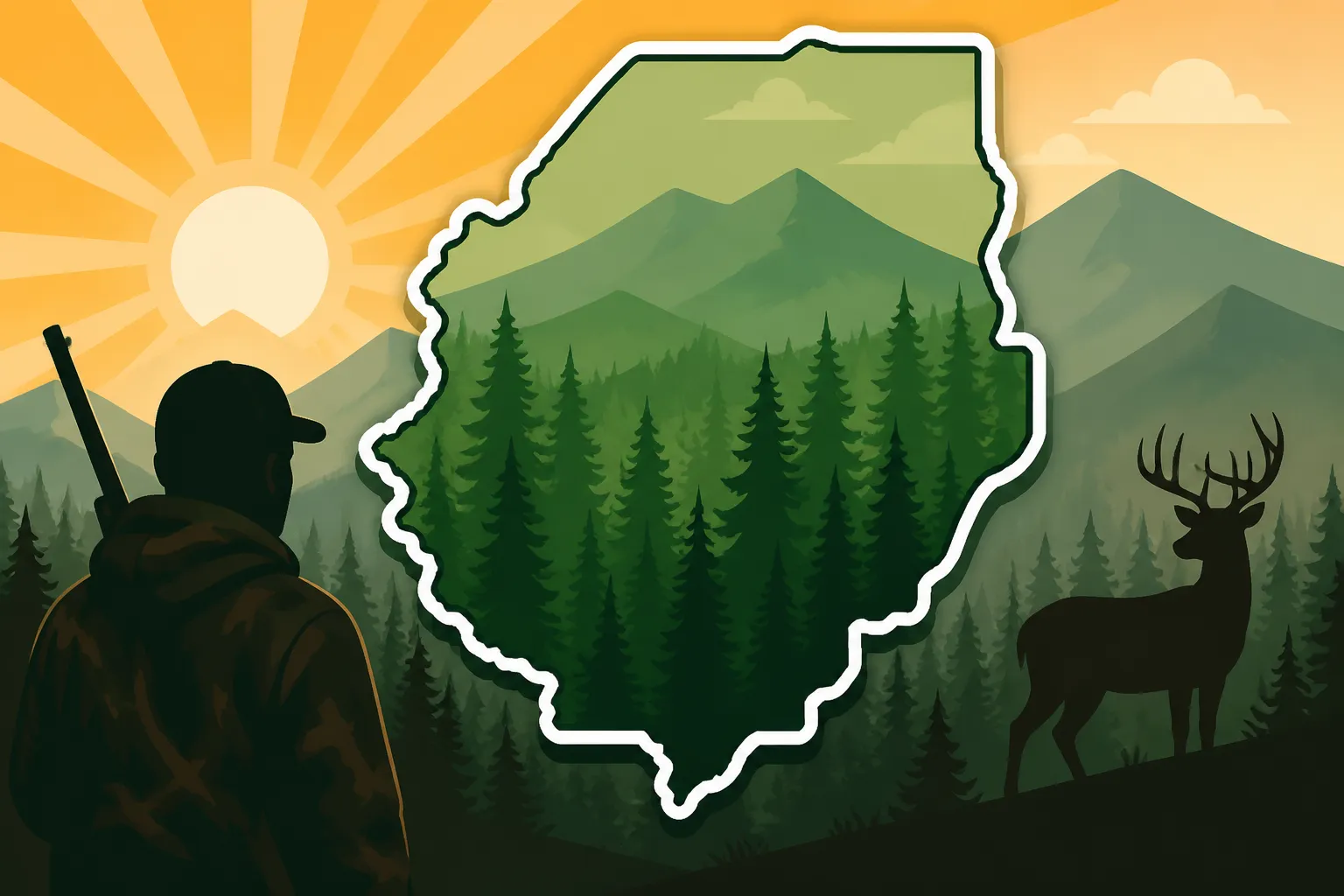
Imagine a huge, roughly circular area encompassing over 6 million acres. That's the Adirondack Park. It's not one giant block of public land, but rather a complex checkerboard of both public and private lands, intertwined and managed under a unique set of regulations. Think of it as a protective boundary drawn around an entire region, not just state-owned property. Within this park boundary, you'll find bustling towns, small villages, working forests, private camps, farms, and plenty of people living their lives, all alongside vast tracts of wild public land.
The Adirondack Park Agency (APA) oversees land use and development across all lands within the park boundary, both public and private. Their goal is to balance conservation with economic development, creating a truly unique blend of protected wilderness and human activity. This means that just because you're "in the Adirondack Park" doesn't automatically mean you can hunt there. You need to know which specific parcels are public and allow hunting.
The Adirondack Forest Preserve: Our Hunting Grounds
Now, let's talk about the Adirondack Forest Preserve. This is the good stuff, the core of what most hunters envision when they think of the Adirondacks. The Forest Preserve refers specifically to the state-owned lands within the Adirondack Park boundary, along with some state-owned lands in the Catskill Park. These lands are explicitly protected by Article XIV, Section 1 of the New York State Constitution, often called the "Forever Wild" clause. This legendary clause dictates that these lands "shall be forever kept as wild forest lands." That means no logging, no selling, no leasing, and generally, no development. They remain wild, untamed, and crucially, mostly open for public recreation, including hunting.
When you're planning an Adirondack hunt, it's the Forest Preserve lands you're primarily targeting. These are the vast, undeveloped tracts where you can truly immerse yourself in a wilderness experience. Understanding that the Preserve is a part of the larger Park is key to navigating the region effectively. Many state forest roads, hiking trails, and designated campsites are located within the Preserve, offering access to these wild hunting grounds.
The "Forever Wild" Forest Preserve: Public Hunting Acreage
So, how much of this "Forever Wild" land is there for us hunters? It’s a staggering amount, truly one of New York's greatest treasures.
The Grand Total: Millions of Acres
The Adirondack Forest Preserve, the public hunting land within the Adirondack Park, totals approximately 2.6 million acres. Let that sink in for a moment. That's more public land than many entire states offer. This immense acreage provides unparalleled opportunities for big woods hunting, whether you're chasing deer, bears, or grouse. It's a place where you can walk for miles and rarely see another soul, truly experiencing what it means to hunt wild, unpressured game.
These 2.6 million acres are managed by the New York State Department of Environmental Conservation (DEC) and are typically divided into different classifications, such as Wilderness Areas, Wild Forest Areas, Primitive Areas, and Canoe Areas. While all of these classifications fall under the "Forever Wild" umbrella, they each have slightly different rules regarding access, motor vehicle use, and camping, which can subtly impact your hunting strategy. For instance, Adirondack Wild Forest Versus Wilderness Areas delves into these distinctions.
Public Land Versus Private Land Within the Park
It's important to remember that while the Forest Preserve is massive, it doesn't represent the entire Adirondack Park. The remaining acreage within the 6-million-acre park boundary is private land. This private land is often managed for timber, recreation, or residential use, and generally, you cannot hunt on it without explicit permission from the landowner. Some private timber companies do offer access programs or lease hunting rights, but that requires separate arrangements.
This mixed ownership can sometimes create confusion, especially with the intricate patchwork of land. You might be hunting a vast tract of Forest Preserve, only to come across a small, privately-owned parcel embedded within it. This is where tools like detailed maps and GPS units become absolutely indispensable, helping you differentiate between what's open to you and what's not.
| Feature | Adirondack Park (Boundary) | Adirondack Forest Preserve (Public Land) |
|---|---|---|
| Total Area | ~6 million acres | ~2.6 million acres |
| Land Ownership | Mixed (Public & Private) | Exclusively State-Owned (Public) |
| Management Body | Adirondack Park Agency | NYS Department of Environmental Conservation |
| Constitutional Protection | No direct "Forever Wild" | Yes, "Forever Wild" Article XIV |
| Hunting Access | Varies by parcel | Generally open for hunting |
| Primary Goal | Balance conservation/development | Preserve wild character and public use |
How to Hunt Such a Vast Wilderness
Hunting 2.6 million acres of wild land isn't like hunting a small woodlot downstate. It requires a different mindset, a greater emphasis on preparation, and a willingness to embrace the challenges of true wilderness hunting.
Embracing the Backcountry Mindset
The sheer scale of the Adirondack Forest Preserve demands a backcountry approach. You won't find manicured trails leading to prime stand locations or easy access to every corner. Often, the best hunting means putting in the miles, hiking deep into remote areas where game animals see less pressure. This often means planning for multi-day trips, carrying all your gear, food, and water, and being prepared for any contingency. Think about how you would approach Packs for a Backcountry Adirondack Hunt and ensuring you have enough supplies.
The terrain itself can be rugged, with steep climbs, dense conifer swamps, vast hardwood ridges, and unpredictable weather changes. You need to be physically fit and mentally prepared for solitude and self-reliance. This is not for the faint of heart, but the rewards—a truly wild experience and potentially an unpressured animal—are immense.
Scouting and Planning for Success
With so much land, effective scouting is paramount. You can't just show up on opening morning and expect to stumble onto game. Aerial photos and topographic maps are your best friends. Look for natural funnels, pinch points, subtle changes in elevation, and water sources that might concentrate animal movement. Areas bordering private land, especially those with agricultural fields or specific timber management, can sometimes funnel deer onto public parcels. Finding Sign in Big Adirondack Timber is a completely different game than hunting agricultural edges.
Modern mapping apps like onX Hunt have revolutionized this process, allowing you to overlay satellite imagery with property boundaries, topo lines, and even private land ownership information right on your phone or tablet. This can save you countless hours of unproductive walking. Similarly, GoHunt's mapping tools, while often geared towards Western states, can still offer valuable insights into terrain and access points for any big wilderness area. Don't forget to consider seasonal factors like late-season food sources for New York whitetails or how winter ticks impact Winter Ticks and the Adirondack Moose Herd.
Strategies for Adirondack Big Game
Deer in the Adirondacks often exist at lower densities than in the more fertile Southern Zone. They're also often nomadic, moving widely to find food and cover. This means still-hunting, slowly working through promising areas, can be incredibly effective. Look for subtle changes in vegetation, old logging roads, and natural clearings. For bears, focus on natural food sources like beech nut ridges or berry patches, especially during the early season. Hunting Bears Over Natural Food Sources is key, as baiting is illegal in New York.
Treestands can be effective in specific, well-scouted locations, particularly near bedding areas or travel corridors between food and cover. However, due to the vastness and often thick cover, many hunters favor mobile tactics or even ground blinds, especially if they are trying to cover a lot of ground. Remember to always check Treestand Rules on New York Public Land before you set up shop.
Essential Tools for Navigating the Adirondacks
Navigating 2.6 million acres of wild land requires more than just a good pair of boots and a positive attitude. You need reliable tools to stay safe, stay found, and stay on track.
GPS Units and Digital Mapping Apps
This cannot be overstated: a reliable GPS unit or a smartphone with a robust mapping app is absolutely essential. The Adirondack wilderness is notorious for its challenging terrain and often indistinct trails. Getting turned around is a real possibility, even for experienced woodsmen. Apps like onX Hunt provide detailed satellite imagery, topographic maps, and crucially, property boundary lines, allowing you to clearly see what's Forest Preserve and what's private. You can drop waypoints for your truck, your stand, or fresh sign, and track your movements in real-time. For instances where cell service is unreliable, having offline map capabilities is a must. Many hunters also carry a dedicated GPS unit like a Garmin handheld as a backup, especially when heading deep into areas where Using HuntFishNY Without Cell Service is a certainty.
These tools allow you to explore with confidence, knowing exactly where you are and where you're going. They can also help you identify remote pockets of public land that might see less pressure, increasing your chances of finding undisturbed game. GoHunt is another excellent mapping resource that many hunters use to research terrain and access points, though its primary focus tends to be out west.
Physical Maps and Compass: Your Backup Plan
While digital tools are incredibly powerful, they rely on batteries. In the cold, wet conditions often found in the Adirondacks, battery life can diminish rapidly. Always, always, always carry a physical map and a compass as a backup. Learn how to use them proficiently. A good waterproof topographic map of your specific hunting area, available from the DEC or specialty outdoor stores, can be a lifesaver if your electronics fail.
Understanding contour lines, identifying landmarks, and being able to orient yourself with a map and compass are fundamental wilderness skills that every Adirondack hunter should possess. This traditional method of navigation also forces you to pay closer attention to the land itself, often revealing nuances that you might miss when just staring at a screen.
Communication and Safety Gear
Given the remote nature of much of the Forest Preserve, reliable communication and safety gear are paramount. Cell service is spotty at best in many areas, and non-existent in others. Consider carrying a satellite messenger or a two-way radio if you're hunting with a partner. These devices can literally be a lifeline in an emergency.
Beyond communication, think about a comprehensive first-aid kit, fire-starting materials, extra layers of clothing, and plenty of water. A headlamp with fresh batteries is also non-negotiable, as you'll often be walking out after dark. The vastness of the Preserve means help can be a long way off, so being prepared to self-rescue or wait for assistance is critical. It's a true wilderness, and it demands respect and thorough preparation.
Disclaimer
This article is for general informational purposes only and does not constitute professional advice. Laws, prices and regulations vary by location and change over time. Consult a qualified professional for guidance on your specific situation.