How Many Acres Are in the Catskill Preserve
One of the biggest hurdles for any hunter, especially newcomers to a vast state like New York, is simply figuring out where to go. You hear about these legendary public lands, vast tracts of wilderness, but getting a handle on their actual size and what that means for your boots on the ground can be incredibly confusing. This guide will cut through the fog, specifically zeroing in on the Catskill Forest Preserve, revealing its impressive scale and helping you understand how that acreage translates into real-world hunting opportunities.
Understanding the Scale: The Catskill Forest Preserve's Acreage
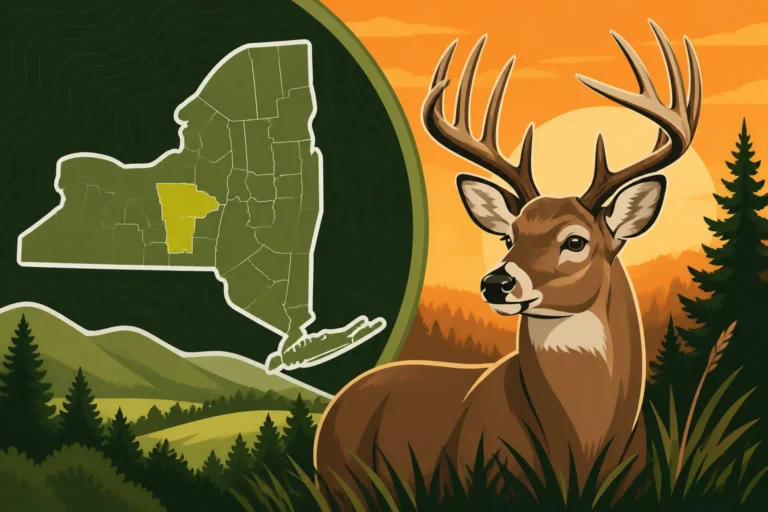
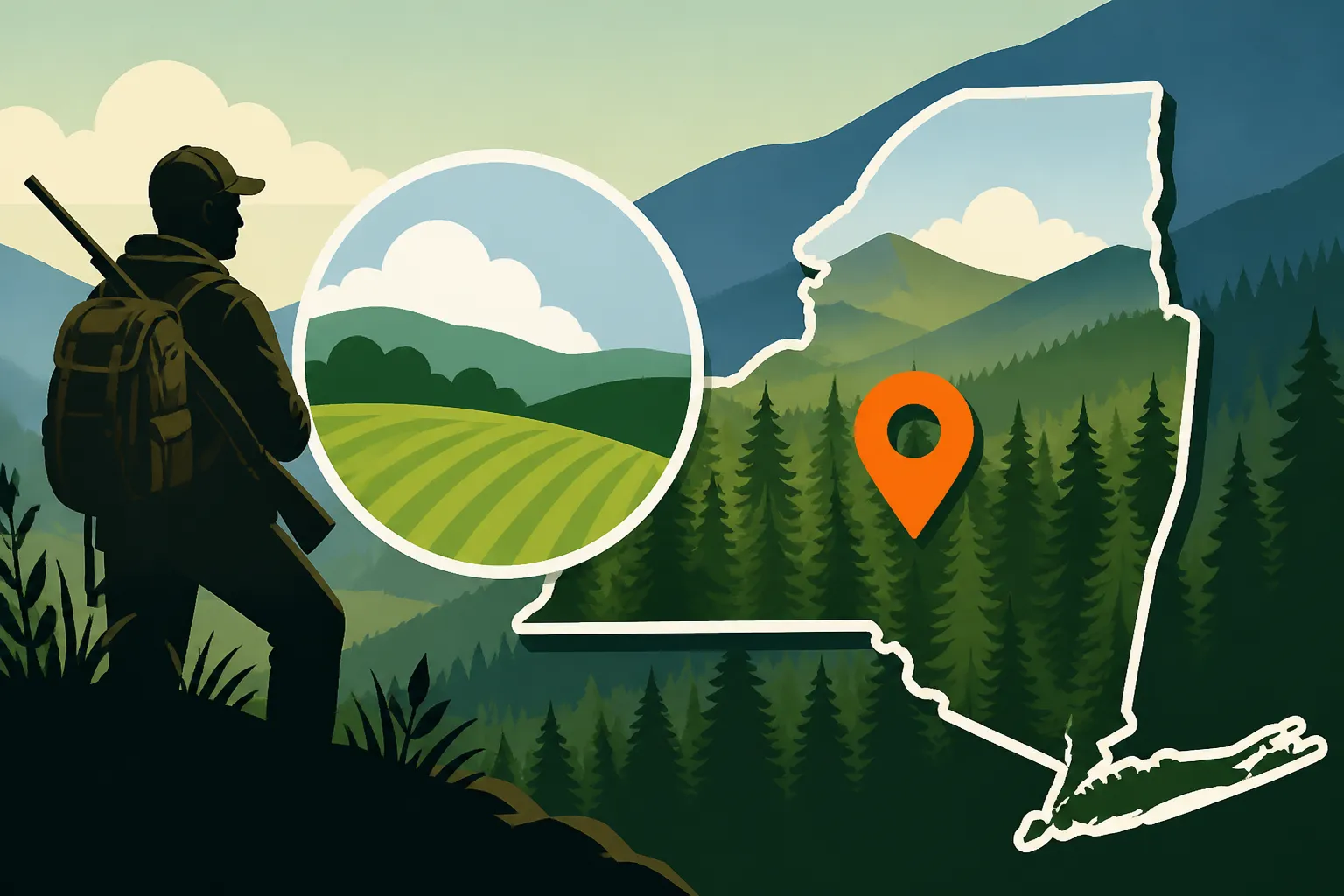
When you hear "Catskill Forest Preserve," it conjures images of endless mountains and deep valleys, and for good reason. The sheer size of this public land is truly remarkable, offering an immense playground for those willing to put in the effort. Officially, the Catskill Forest Preserve encompasses over 287,500 acres of state-owned land within the Catskill Park Blue Line, which itself covers roughly 705,000 acres across four New York counties: Delaware, Greene, Sullivan, and Ulster.
This isn't just one contiguous block, mind you. The Preserve is a mosaic of state-owned parcels, interspersed with private property throughout the larger Catskill Park. While the total number of acres can feel abstract, it's crucial to understand that this quarter-million-plus acres provides an enormous amount of varied terrain for hunters seeking everything from whitetails to black bears. It's a land of steep climbs, dark timber, rushing streams, and hidden pockets that demand exploration.
What this substantial acreage means for you as a hunter is opportunity, but also responsibility. With so much ground to cover, finding areas that see less pressure often involves pushing a little further, hiking a little deeper, and being prepared for extended time away from easy access. This scale is both its greatest asset and its biggest challenge for hunters.
Breaking Down the Geographic Spread
The Catskill Forest Preserve isn't confined to a single mountain range; it sprawls across several counties, each offering a slightly different flavor of terrain and accessibility. For instance, Ulster County, particularly around the iconic peaks like Slide Mountain, boasts extensive tracts of unbroken Preserve land that are often steep and rugged. This can be fantastic for those seeking solitude and a true wilderness experience.
Further west into Delaware and Sullivan counties, while still mountainous, you might find a slightly more broken landscape with more interspersed private holdings, but still massive state parcels. This distribution means that no matter where you are in the Catskills, you're likely not far from some significant public hunting ground. Understanding this spread is key to identifying potential hunting zones and planning your approach. The topography shifts from sharp, rocky ridges to gentler slopes and wider river valleys, all within the Preserve's boundaries.
Greene County, in the northern Catskills, also contributes significantly to the Preserve's acreage, with dramatic escarpments and deep hollows. Each region within the Catskill Park's Blue Line has its own character, shaped by geology and historical land use. It’s not just one big chunk of woods; it’s a collection of unique environments, all under the "Forever Wild" umbrella. This diversity means you can hunt different types of terrain, from high-elevation spruce-fir forests to lower-elevation hardwood ridges, providing a wide range of habitat for game.
The "Blue Line" and Private Land
It's important to differentiate between the "Catskill Park" and the "Catskill Forest Preserve." The Catskill Park is a larger administrative boundary, delineated by a "Blue Line" on maps, encompassing both public (Forest Preserve) and private lands. While the Forest Preserve itself is over 287,500 acres, the entire Catskill Park is much larger, around 705,000 acres. This distinction is vital for hunters, as you can only legally hunt on the state-owned Forest Preserve lands within that Blue Line, not necessarily all land inside the Blue Line.
Imagine you're driving through a picturesque Catskill town; you're likely within the Blue Line, but the houses, farms, and businesses you see are private property. The Forest Preserve lands are the state-owned sections, often marked with yellow state land signs. This intermingling of public and private land means constant vigilance with your maps and GPS is essential. Tools like onX Hunt become invaluable here, with their clear property line overlays, preventing accidental trespass which can quickly ruin a hunt and land you in trouble. Navigating this checkerboard pattern is a skill in itself, almost as important as reading deer sign.
More Than Just Numbers: What "Forest Preserve" Means
The term "Forest Preserve" in New York carries significant weight, rooted in a constitutional mandate that dates back to the late 19th century. It's not just a fancy name for public land; it represents a unique and fiercely protected conservation status that directly impacts how you can hunt and recreate within its boundaries. Understanding this fundamental concept is crucial for anyone stepping foot onto these special lands.
The state's constitution mandates that Forest Preserve lands "shall be forever kept as wild forest lands." This "Forever Wild" clause is not just poetic language; it's a legal framework that dictates how these lands are managed. It prohibits logging, restricts development, and prioritizes the preservation of the wild character of the landscape. This is a key difference from other types of public land, like State Forests or Wildlife Management Areas (WMAs), which are often actively managed through logging or other silvicultural practices to enhance specific habitats or for timber production.
What this means for hunters is a truly wild experience. You won't find extensive logging roads or clear-cuts designed to create browse for deer. Instead, you'll find mature forests, natural regeneration, and a landscape that largely dictates its own course. This makes for a challenging but incredibly rewarding hunt, forcing you to truly immerse yourself in the natural rhythms of the wilderness. It's a different kind of hunting, one where the landscape itself sets the rules. Why Forest Preserve Land Cannot Be Logged helps explain the history and implications of this unique designation.
The "Forever Wild" Mandate
The "Forever Wild" clause is the bedrock of the Catskill Forest Preserve (and its Adirondack counterpart). This isn't just a political slogan; it's Article XIV, Section 1 of the New York State Constitution, making it incredibly difficult to alter. This legal protection has shaped the Catskills into the wild haven it is today. Unlike National Forests where timber harvesting, mining, and other resource extraction might be permitted under multiple-use mandates, the Forest Preserve is dedicated to conservation above all else.
For hunters, this translates into vast tracts of undisturbed habitat. While it means fewer managed food plots or cutovers, it also means less human disturbance from heavy machinery and industrial activity. The deer, bear, and turkey here live by the dictates of natural food sources and topography. This wildness demands a different scouting approach and a deeper understanding of animal behavior within an unmanaged forest system. The integrity of the wilderness experience is paramount, and every hunter benefits from it, even if it presents unique challenges.
Contrasting with Other Public Lands
New York State has a variety of public hunting lands, and understanding the differences helps you choose the right area for your hunting style.
| Feature | Catskill Forest Preserve | State Forests | Wildlife Management Areas (WMAs) |
|---|---|---|---|
| Primary Mandate | "Forever Wild" (Conservation) | Sustainable Timber/Recreation | Wildlife Habitat Management |
| Logging | Prohibited | Active management | Active management (habitat) |
| Development | Highly Restricted | Limited | Limited |
| Road Systems | Minimal, mostly foot trails | Logging roads, some open | Variable, often good access |
| Habitat Management | Natural processes | Timber harvest for habitat | Intensive for target species |
| Hunting Pressure | Variable, deep woods can be low | Moderate | Often high, especially opening |
As you can see, the Catskill Forest Preserve stands out for its hands-off management approach. This means hunters must adapt to natural habitat conditions. You'll rely more on finding natural food sources like acorns, beechnuts, or browse, and understanding how deer move across unmanaged terrain. It's a different game than hunting areas with actively managed clear-cuts or agricultural fields. When you're Hunting the Catskill Forest Preserve Deer Ground, these distinctions become incredibly important for your scouting and stand placement strategies.
Hunting the Catskill Preserve: Opportunities and Challenges
Hunting in the Catskill Forest Preserve is an experience unlike many others in New York. The sheer scale and "Forever Wild" nature of the land create unique opportunities for solitude and true wilderness hunting, but they also present significant challenges that require careful preparation and a specific skillset. It's a place where you truly earn your game, and the satisfaction that comes with it is immense.
Deer hunting here is primarily a big-woods affair. You won't find many agricultural fields to set up on the edge of, nor will you see widespread timber cuts providing abundant early successional growth. Instead, you'll be navigating mature hardwood forests, scouting for natural food sources, and understanding how deer use the challenging topography. Bucks often find refuge in the steepest, most remote hollows and thickets, pushing hunters to their physical limits. For hunters targeting the Catskills, studying Reading a Ridge for Catskill Deer Movement is essential, as subtle terrain features dictate much of the action.
Bear hunting is also a major draw in the Catskills, which boasts a healthy and growing black bear population. The expansive, wild nature of the Preserve provides ideal habitat for bears, offering plenty of cover and natural food. Unlike some other states, bear hunting in New York, especially within the Preserve, is strictly without bait. This means hunters must rely on tracking, still-hunting, and understanding bear movement patterns, often over natural food sources like beech nuts or wild berries. Hunting Bears Without Bait in the Catskills explores these unique challenges.
Deer, Bear, and Turkey: Game Species in the Preserve
The Catskill Forest Preserve is home to a robust population of white-tailed deer. While the deer densities might not be as high as in some of the more agricultural Southern Tier regions, the bucks that call the Catskills home are often mature and wise, having learned to navigate the challenging landscape and evade pressure. Success here often comes from patient still-hunting, locating secluded bedding areas, and understanding how deer use thermal currents and wind on steep terrain. Don't underestimate the potential for a mature buck to hold tight in a laurel thicket on a steep sidehill.
Black bears are another prominent species, with a thriving population that offers excellent hunting opportunities. Spot-and-stalk tactics can be effective in certain open areas, but more often, hunters will be covering ground, looking for fresh sign like scat, torn-up logs, or tracks, particularly around food sources. Bear hunting in the Catskills is an exercise in persistence and woodsmanship. For a deeper dive, check out Spot-and-Stalk Tactics for Catskill Bears.
Wild turkeys also inhabit the Catskill Preserve, though their distribution can be more localized, often favoring areas with a mix of mature hardwoods for roosting and more open areas or edges for feeding. Spring turkey hunting can be exhilarating, with gobblers echoing through the valleys, but access can be challenging. Fall turkey hunting offers a different dynamic, often involving breaking up flocks and calling birds back in. The sheer expanse of the Preserve allows for significant freedom in pursuing these wary birds. For more on the statewide population, see Wild Turkeys in New York.
Topographical Challenges and Rewards
The Catskills are, by definition, mountains, and hunting them means embracing significant topographical challenges. Steep slopes, rocky terrain, and dense undergrowth are the norm. Expect long, strenuous hikes, both in and out. This physicality often deters casual hunters, which can be a huge reward for those willing to put in the effort, leading to less pressured animals and a greater sense of wilderness immersion. The elevation changes create complex wind and thermal patterns that are critical to understand.
When you're climbing up a steep ridge in the morning, remember that the thermals will be rising, carrying your scent uphill. As the day progresses and the sun warms the air, thermals will begin to drop, pulling scent down into the valleys. Mastering these dynamics is crucial for success, especially when planning your approach to a bedding area or an ambush point. Knowing how Wind and Thermals on a Catskill Ridge behave can make or break your hunt. The reward for tackling this tough terrain? The potential for truly unpressured game and breathtaking views that make every bead of sweat worthwhile.
Planning Your Hunt and Navigating the Terrain
Hunting the Catskill Forest Preserve demands thorough preparation, both in terms of physical readiness and navigational prowess. The wild nature of the land means you'll be largely self-sufficient, relying on your gear and skills to get you in and out safely and successfully. Don't just show up and expect to wing it; a well-thought-out plan is your best asset here.
One of the most critical aspects of hunting in the Catskills is navigation. Cell service can be spotty to non-existent in many of the deeper valleys and remote sections of the Preserve. Relying solely on your phone for maps is a recipe for trouble. Always carry a physical map and compass, and know how to use them. Modern GPS devices or robust phone apps with downloaded offline maps are invaluable. Brands like onX Hunt offer fantastic topographic maps with public/private land overlays, helping you avoid trespass and identify key terrain features before you even step foot in the woods. GoHunt also provides valuable resources for planning, including data and articles that can inform your strategy.
Access points to the Preserve vary widely. Some areas have designated parking lots and well-maintained trailheads, while others might require parking along a less-traveled road and hiking in via unmarked routes. Researching these access points beforehand is crucial. The New York State DEC often has maps available online that show Forest Preserve boundaries and designated access points. Knowing your entry and exit routes, and having backup plans, is part of being prepared. For more general advice on finding your way, consider Scouting With the New York HuntFishNY App.
Essential Mapping and Navigation Tools
In the vastness of the Catskill Preserve, a reliable navigation system isn't just a convenience; it's a safety imperative. As mentioned, cell service is often unreliable, so relying on real-time data streaming is a gamble. Instead, invest in tools that work offline. A dedicated GPS unit or a smartphone with a robust mapping app like onX Hunt, where you can download maps for offline use, is a must-have. These apps provide invaluable layers showing property boundaries, topography, and even past user activity, which can help you find less pressured areas.
Always double-check your position against a physical map. Technology can fail, batteries die, and screens crack. A good old-fashioned topographical map and compass are your ultimate backup. Mark your truck, key terrain features, and potential exit routes. Even if you're a tech-savvy hunter, knowing how to orient yourself without electronics is a core woodsmanship skill that the Catskill Preserve will test. Furthermore, understanding specific features like Entry Routes on Steep Catskill Ground can be greatly enhanced by examining detailed topo maps before your hunt.
Physical Conditioning and Packing for the Backcountry
The Catskills are physically demanding, and underestimating their ruggedness can quickly lead to exhaustion or injury. Before your hunt, engage in activities that mimic the conditions: hiking with a loaded pack, climbing hills, and navigating uneven terrain. This isn't flat-ground hunting, and your body needs to be ready for the climbs, descents, and side-hilling you'll encounter. A strong core and sturdy ankles will be your best friends.
Your pack should be meticulously organized and carry everything you need for the duration of your hunt, plus emergency supplies. Water is critical, especially on long climbs; plan to carry more than you think you'll need, or identify potential water sources on your map and filter them. High-energy snacks, a first-aid kit, emergency shelter, a headlamp, and appropriate layers of clothing are non-negotiable. For anyone planning to spend significant time deep in the Preserve, a pack designed for extended backcountry use, capable of carrying heavy loads, is a wise investment. Consider exploring options for Packs Built for a Multi-Day Backcountry Hunt to ensure you're equipped for the rugged terrain and potential for a successful harvest.
Respecting the Resource and Other Users
Hunting in the Catskill Forest Preserve isn't just about bagging game; it's about being a steward of a special resource. Always practice Leave No Trace principles: pack out everything you pack in, and leave the woods cleaner than you found them. Be mindful of other users, whether they are hikers, campers, or fellow hunters. While the Preserve is vast, popular trailheads and certain areas can see significant foot traffic.
Knowing the local regulations regarding camping, campfires, and vehicle access is also crucial. Many areas prohibit motorized vehicles, meaning your hunt starts where the road ends. Understanding the nuances of hunting on such a unique land, with its "Forever Wild" designation, means respecting not just the animals, but the environment itself and the rights of all who use it. By doing so, you ensure these magnificent lands remain wild and accessible for generations of hunters and outdoor enthusiasts to come.
Disclaimer
This article is for general informational purposes only and does not constitute professional advice. Laws, prices and regulations vary by location and change over time. Consult a qualified professional for guidance on your specific situation.