Hunting Tug Hill Plateau Deer Yards
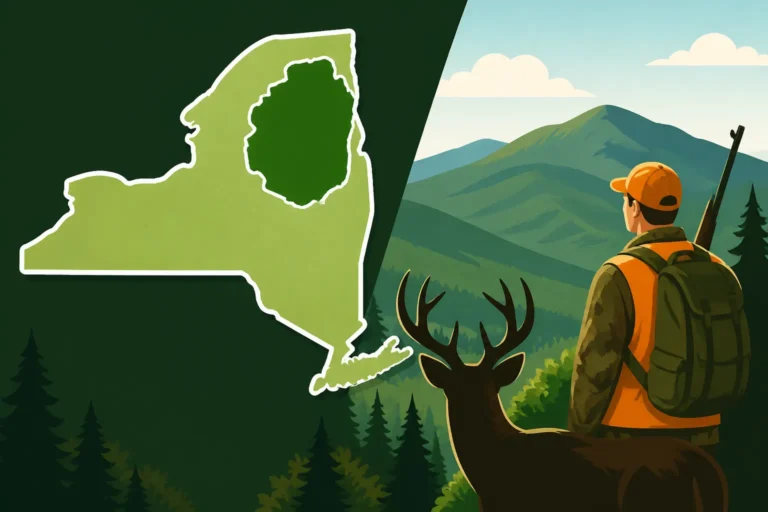
Hunting the Tug Hill Plateau in New York during the late season can be one of the most challenging, yet rewarding, experiences a deer hunter can face. The sheer amount of snow and biting cold up there forces deer into very specific, often predictable, areas. If you've ever found yourself struggling to locate deer once winter truly sets in on the Tug Hill, feeling like they've just vanished into thin air, you're not alone. This guide will walk you through understanding why deer "yard up" in this unique environment, how to pinpoint those crucial deer yards, and the specific tactics you'll need to employ to be successful and safe when chasing whitetails in the deep snows of the Tug Hill.
Understanding Tug Hill's Unique Environment and Deer Behavior
The Tug Hill Plateau is an anomaly in New York State, known for its extreme lake-effect snowfalls and brutal winter conditions. It's a vast, elevated region situated between Lake Ontario and the Adirondack Mountains, and its weather patterns fundamentally dictate how deer survive and, consequently, how we need to hunt them.
The Impact of Lake-Effect Snow and Cold
When those frigid winds sweep across Lake Ontario, they pick up moisture, which then dumps prodigious amounts of snow on the western and northern slopes of the Tug Hill. We're talking feet, not inches, of snow – sometimes well over a hundred inches in a season. This isn't just a pretty winter wonderland; it's a harsh, unforgiving environment that directly impacts deer movement and survival. Deep snow makes foraging incredibly difficult, burying vital food sources and forcing deer to expend immense amounts of energy just to move a few yards. Combine this with sub-zero temperatures and biting winds, and survival becomes a constant struggle. You can see similar effects, albeit less extreme, in parts of the Adirondacks where How Severe Winters Hit Adirondack Deer.
Deer are incredibly resilient, but they're also smart. They adapt to these conditions by seeking out areas that offer the best chance of survival. This means finding thermal cover and accessible food sources. Their very survival mechanism leads them to "yard up," congregating in specific areas where the combination of habitat and topography gives them a fighting chance against the elements. Ignoring these environmental factors means you're effectively hunting a ghost herd.
Why Deer Yard Up on Tug Hill
Deer yards are essentially winter survival camps for whitetails. They aren't random; they are strategic locations chosen for very specific reasons. The primary draw is thermal cover, usually dense stands of conifers like hemlock, spruce, or white cedar. These trees act like a natural insulated blanket, intercepting snowfall and reducing wind penetration, creating pockets of relatively warmer air and shallower snow depths compared to open hardwoods or fields. Think of it as a natural snow tunnel and windbreak all in one.
Beyond thermal cover, deer yards also offer a slightly more accessible food supply. While winter browsing is generally tough, these conifer stands often contain browse species that deer can reach, or adjacent areas might have specific plants that hold up better under snow. South-facing slopes are also highly prized locations within these yards because they catch more direct sunlight, melting snow faster and exposing ground forage or warming the air slightly. Lower elevations, where snow depths tend to be a little less extreme than higher ridges, are also favored. It's a matter of energy conservation – every calorie saved by not wading through deep snow or fighting frigid winds is a calorie that helps them survive until spring.
Identifying and Scouting Deer Yards
Finding these elusive deer yards is the first critical step to a successful late-season hunt on the Tug Hill. It's not about stumbling upon them; it's about systematic scouting, often blending modern tools with old-school woodsman's knowledge.
Using Topographical and Aerial Maps for Pre-Season Scouting
Before you even pull on your boots, spend significant time poring over maps. Topographical maps will reveal elevation changes, showing those crucial lower elevations and south-facing slopes. These slopes are often warmer and accumulate less snow, making them prime candidates for yarding activity. Look for areas with minimal contour lines, indicating flatter ground where snow might settle more evenly but also where specific vegetation can create a microclimate.
Aerial imagery is your best friend for identifying cover. Look for those dark green patches on the map that indicate dense conifer stands—hemlock, cedar, or spruce. These are the classic components of a deer yard. Compare these dark patches to surrounding open hardwoods or clearcuts. Deer will often move between these dense thickets and adjacent feeding areas, especially if there's an early morning sun to warm things up. Mapping apps like onX Hunt are invaluable here, allowing you to layer topography and aerial photos, even marking potential yard locations and travel corridors from your couch. Reading Aerial Photos for Southern Tier Deer offers excellent principles that apply across New York, including the Tug Hill. You'll want to trace likely escape routes, bedding areas, and feeding zones on your digital map.
In-Season Ground Scouting for Active Yards
Once the snow starts to pile up, it's time to hit the woods. Ground scouting is absolutely essential to confirm which of those mapped potential yards are actually active. Snow is your biggest ally here, as it turns the forest floor into a giant canvas, recording every deer's movement. Look for heavily used deer trails, often beaten down into trenches in the snow, leading into and out of the dense cover.
Within the conifer stands, you'll find concentrations of deer tracks. Pay attention to the size and freshness of the tracks – are they fresh groups of deer moving together, or just a few scattered wanderers? You'll also find evidence of heavy browsing on young trees and shrubs, particularly on species like balsam fir, hemlock, or red-osier dogwood. Deer droppings will be concentrated in these areas, another clear sign of extended occupancy. GoHunt's mapping features can also help you track your progress, mark observations, and even share data with hunting partners, allowing you to cover more ground efficiently and zero in on the most active areas. Remember that scouting in deep snow is hard work, and knowing Tracking a Deer in Fresh New York Snow is a skill that will pay dividends.
| Indicator | Location in a Deer Yard | Significance |
|---|---|---|
| Dense Conifers | Interior of the yard, typically hemlock, spruce, cedar | Primary thermal and snow cover, provides shelter |
| Heavy Trails | Leading into and out of dense cover, often "trenched" | Indicates frequent, concentrated deer movement |
| Browsed Vegetation | Within the yard, especially young trees/shrubs | Deer are feeding actively here, signaling a food source |
| Concentrated Droppings | Throughout the active areas of the yard | Confirms deer are bedding and spending significant time here |
| South-Facing Slopes | Edges of the yard, or within its boundaries | Warmer microclimates, less snow, earlier melt |
| Rub/Scrape Lines | Less common in deep winter, but might find older sign at edges | Indicates buck activity prior to severe winter, or early yarding |
Tactics for Hunting Tug Hill Deer Yards
Hunting deer in their winter yards requires a different approach than chasing them through open hardwoods in October. The conditions are brutal, and the deer are focused on survival, making them both vulnerable and incredibly wary.
Still-Hunting and Slow Drives in Deep Snow
Still-hunting is perhaps one of the most effective methods for hunting deer yards, especially if you're alone or with a small group. The key is slow. We're talking painfully slow, sometimes taking an hour to cover a couple hundred yards. The deep snow works in your favor by muffling your footsteps, but it also makes moving quickly impossible. Use the terrain and cover to your advantage, moving from tree to tree, glassing ahead, and scanning for any flicker of movement. Deer in these yards are often bedded down tightly in the thickest cover, conserving energy. Your slow, deliberate movement might allow you to spot them before they bolt. Pay close attention to wind direction, as deer will often bed facing downwind, relying on their nose to detect danger approaching from behind.
For groups of two or three, a very slow, controlled drive can be highly effective. The idea isn't to blast through the cover and push deer out fast, which often results in scattered deer and poor shot opportunities. Instead, one or two hunters, acting as "drivers," move slowly and deliberately through the heart of the yard, making just enough noise to encourage deer to move. The "stander" or "post-up" hunter positions themselves quietly on known escape routes or trails leading out of the yard, often on the downwind side. This tactic is about gently nudging deer towards the waiting hunter, rather than stampeding them. Communication is key, especially when you're navigating deep snow and thick cover. Make sure everyone is clear on their roles and safe zones. Deer drives of Deer Drives With Three or Four Hunters discuss general principles that can be adapted for winter conditions.
Stand Placement on Travel Corridors and Edges
While deer are concentrated in yards, they still move, especially during periods of slightly milder weather or to access specific food sources. Setting up a stand on a travel corridor leading into or out of an active yard can be deadly. Look for trails that connect the dense conifer cover to more open hardwood ridges where some browse might still be available, or to specific patches of persistent food. These travel lanes will be well-defined in the snow.
Edge habitat is also critical. The boundary between a dense deer yard and more open cover often sees a lot of deer activity. Deer might stage on the edge of the thick stuff before venturing out to feed, or retreat quickly into the cover if disturbed. Positioning a portable treestand or even a ground blind (brushed in well to break up your outline, like Brushing In a Blind on a Field Edge) on these edges, particularly overlooking a south-facing slope or a saddle, can put you in a prime ambush spot. Ensure your entry and exit routes to your stand are quiet and won't spook deer already in the yard. Remember that Cold-Weather Sitting Strategy in New York will be paramount for staying comfortable and alert on stand.
Navigating Deep Snow and Extreme Cold
Hunting the Tug Hill Plateau in late season means confronting deep snow and extreme cold head-on. Without proper preparation, you're not just uncomfortable; you're putting yourself at risk. Snowshoes are non-negotiable for covering any significant distance. They not only prevent you from post-holing with every step, but they also distribute your weight, making movement more efficient and quieter over the snow. When you have a successful hunt, pulling a deer out of that deep snow will be a monumental task without a Deer Sleds for Snow Country.
Layering your clothing is paramount. Start with a moisture-wicking base layer, add insulating layers (fleece, down, or wool are excellent), and top it with a waterproof/windproof outer shell. Wool is especially good because it retains much of its insulating properties even when wet. Think about your hands and feet; mittens are often warmer than gloves, and a good pair of insulated, waterproof boots is essential. Consider wearing Insulated Boots for All-Day Sits for maximum warmth. Chemical hand and foot warmers can be a lifesaver. Carry a thermos of hot coffee or tea to help regulate your core temperature. Navigation is also critical; a reliable GPS unit or a smartphone app like onX Hunt, loaded with offline maps, is a must. Remember that cell service can be spotty, so don't rely solely on your phone. Reviewing Scouting With the New York HuntFishNY App can provide useful tips for leveraging mapping technology.
Essential Gear and Safety for Extreme Conditions
Hunting in the Tug Hill's winter requires not just skill, but also the right gear and a serious focus on safety. Conditions can change rapidly, and being unprepared can turn a challenging hunt into a dangerous situation.
Critical Clothing and Footwear
The cold on Tug Hill is a different beast entirely. It’s not just chilly; it's bone-chilling, and it can become life-threatening quickly if you’re not dressed appropriately. Forget cotton; it absorbs moisture and loses all insulating properties. Focus on synthetics or wool for your base layers, as they wick moisture away from your skin, which is crucial for staying warm. Mid-layers should be fleece or down, chosen for their warmth-to-weight ratio. Your outer layer needs to be completely windproof and waterproof. A good quality shell will cut the biting wind and keep melting snow or freezing rain from saturating your inner layers.
For your feet, dedicated winter boots rated for extreme cold are essential. Look for boots with ample insulation and a waterproof membrane. Layering wool socks can help, but ensure your boots aren't so tight they restrict circulation. On your hands, mittens often provide more warmth than gloves because your fingers share body heat. Consider a thin pair of gloves inside your mittens for dexterity when shooting or handling gear. And never underestimate a good hat – a significant amount of body heat escapes through your head.
Navigation and Emergency Preparedness
Getting lost in the vast, snow-covered expanses of the Tug Hill is a real possibility, even for experienced woodsmen. Everything looks different under a blanket of snow, and familiar landmarks can vanish. Always carry multiple forms of navigation. A reliable GPS unit with extra batteries is paramount. Couple that with a topographical map and a compass, and know how to use them without relying on electronics. Apps like onX Hunt allow you to download maps for offline use, which is critical in areas with no cell service. Before you head out, tell someone exactly where you're going and when you expect to return.
Beyond navigation, an emergency kit is a non-negotiable item. This should include a first-aid kit, fire-starting materials (waterproof matches, lighter, fire-starter tabs), an emergency blanket or bivy sack, a whistle, a headlamp with extra batteries, and high-energy snacks. Even if you plan for a day hunt, pack for an unexpected overnight. The weather can turn on a dime, a fall can lead to injury, or a retrieved deer might take longer than anticipated. Having a good Packs Built for a Multi-Day Backcountry Hunt will ensure you have space for all this critical gear.
Firearms, Optics, and Muzzleloader Specifics
Your choice of firearm for hunting deer yards needs to be practical for the conditions. Shots will likely be at closer ranges in the thick cover, so heavy magnum rifles aren't usually necessary. A reliable rifle in a common caliber or a slug gun (where allowed) is generally sufficient. Whatever you choose, make sure it functions reliably in extreme cold and is zeroed for realistic woods distances. Your optics should be clear, fog-proof, and designed for low-light conditions, as deer yards are often dark and shadowy. A good pair of 8x or 10x binoculars can help you pick apart dense cover. Binocular Power for Timber Hunting is an excellent resource for selecting the right optic.
If you're hunting during the New York muzzleloader season, special considerations apply. Keeping your powder dry in wet snow and extreme cold is crucial. Many hunters use electrical tape to seal off the muzzle and the breech to prevent moisture intrusion. Practice loading and shooting your muzzleloader in cold weather to understand how it performs. Muzzleloader Tactics in December Cold offers specific advice for these conditions. Always carry cleaning supplies and be prepared for potential misfires or hangfires, which are more common in severe cold.
Disclaimer
This article is for general informational purposes only and does not constitute professional advice. Laws, prices and regulations vary by location and change over time. Consult a qualified professional for guidance on your specific situation.