Deer Drives With Three or Four Hunters
Trying to organize a deer drive with a full crew can feel like herding cats sometimes, especially when everyone has different schedules or distances to travel. It's a common frustration to have just a handful of dedicated hunters ready to hit the woods, yet feel like you can't be effective. But don't despair! You absolutely can execute a successful deer drive with only three or four hunters in New York, and this guide will walk you through how to maximize your chances, making every person count.
Understanding the Dynamics of a Small Deer Drive
When you're working with a limited number of people, every hunter needs to be acutely aware of their role and the overall objective. It's not about brute force pushing deer; it's about smart strategy, leveraging the terrain, and using precise movements to encourage deer into specific areas.
The "Driver" and "Stander" Roles in a Limited Group
In a traditional, larger deer drive, you might have several drivers making noise and pushing, and an equal number of standers covering every possible escape route. With only three or four in your group, these roles become far more fluid and demanding.
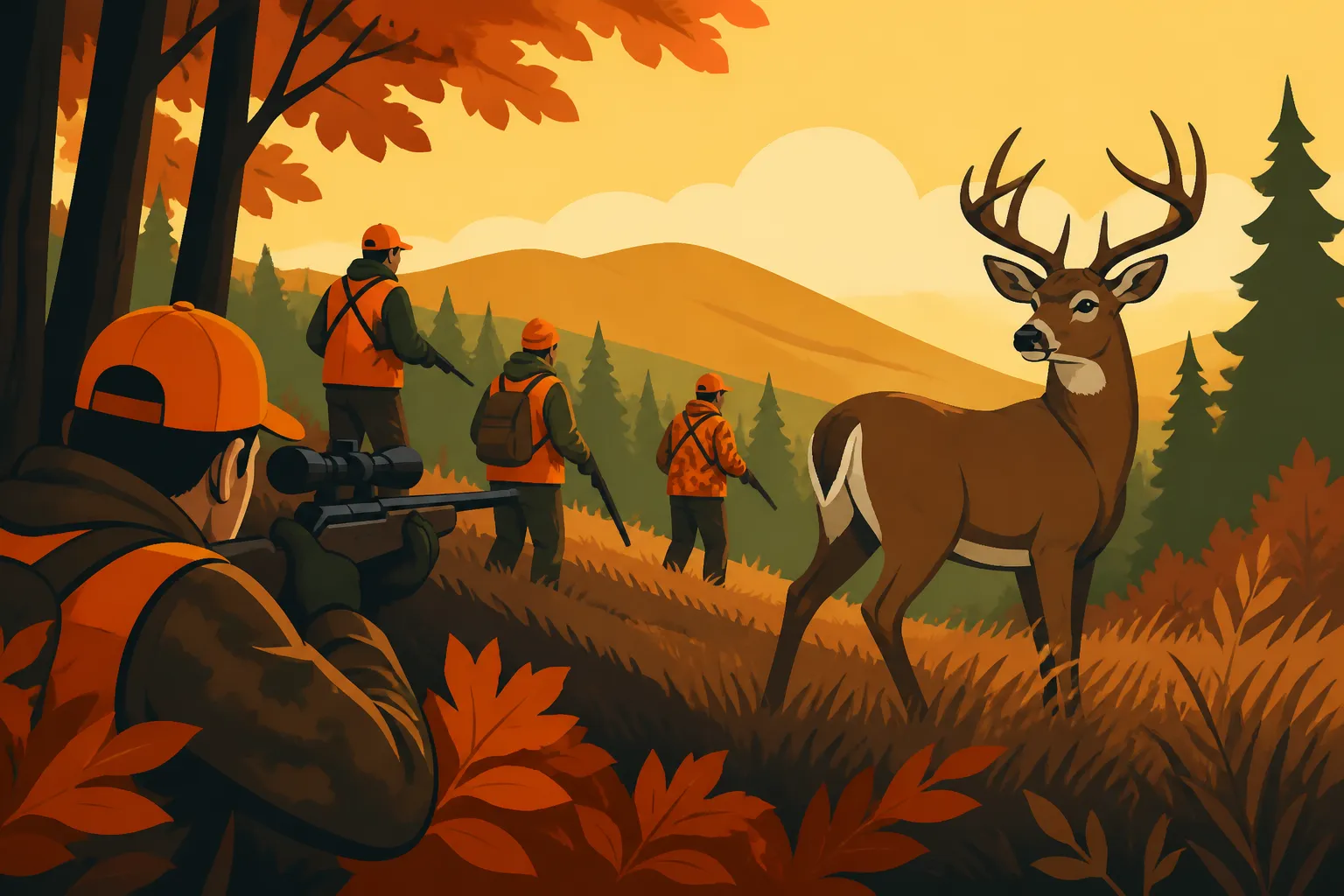
Let's say you have three hunters: you might have one stander and two drivers, or two standers and one driver. With four hunters, you'll typically have two standers and two drivers, which is often the sweet spot for a small drive. The challenge here is covering enough ground and anticipating deer movement with fewer eyes and less noise. The stander's role isn't just to be quiet and wait; it’s to understand the terrain, predict where a pushed deer might go, and have clear shooting lanes. The driver's job, meanwhile, shifts from a purely noisy, pushing force to a more strategic, quiet movement that directs deer rather than simply flushing them in a random direction. This means drivers need to think like deer, understanding their escape habits and using natural funnels to their advantage.
Key Considerations for Terrain and Wind
Successful deer drives, especially with smaller groups, are heavily reliant on picking the right ground. You can't just pick a random block of woods and expect success. You need to leverage natural funnels, thick cover, and terrain features that will work with your limited numbers.
Think about saddles between ridges, narrow strips of timber between open fields, creek bottoms, or even small patches of dense evergreens surrounded by more open hardwoods. These are places where deer are naturally inclined to travel or seek refuge. When you have fewer drivers, these natural bottlenecks become your best friends. Your goal is to apply pressure from one direction, gently nudging deer along these natural corridors towards your standers. For instance, if you're hunting the Southern Tier, those rolling hills and steep ravines can be perfect for setting up a small drive.
Wind direction is equally critical. You want the drivers to move with the wind in their faces, pushing their scent ahead of them, which helps to subtly move deer without alarming them too much initially. Standers, on the other hand, should always be positioned downwind of where you expect the deer to appear. This ensures your scent is blowing away from the deer's approach, giving you the element of surprise. Ignoring the wind in a small drive is a surefire way to have deer circle around your limited drivers or smell the standers long before they're in range. Understanding how Wind and Thermals on a Catskill Ridge can influence deer movement is crucial for these nuanced strategies.
Strategy and Execution for 3-4 Hunters
The success of a small deer drive hinges almost entirely on meticulous planning and coordinated execution. You can't afford wasted effort or miscommunication when every person is so vital to the outcome.
Mapping Out Your Drive: The Critical Pre-Planning Phase
Before you even step foot in the woods, the drive needs to be planned out on a map. This is where modern tools shine. Using detailed topographical maps or hunting apps like GoHunt is invaluable. Identify potential bedding areas, known travel corridors, thick cover where deer might hold up, and most importantly, all possible escape routes. Look for pinch points, benches, and terrain features that naturally restrict deer movement.
For instance, if you're looking at a state forest block on your GoHunt map, you might spot a dense stand of hemlocks bordering a clear-cut. That hemlock stand could be a bedding area, and the deer might try to sneak out along the edge of the clear-cut or through a small draw. Your pre-planning should identify these areas, allowing you to set your standers effectively. Don't forget to incorporate recent scouting information – fresh tracks, rubs, and scrapes can tell you where deer are currently active. This is a critical step, much like the detailed work involved in Scouting New York Public Land Before Season. By laying out your plan on a map, everyone knows their starting point, their route, and their destination, minimizing confusion and maximizing efficiency.
Positioning Your Standers for Success
With only one or two standers, their placement is paramount. Forget spreading them out thin across a wide area; that's a recipe for deer slipping through. Instead, focus on covering the most likely escape routes and natural funnels.
If you have two standers, they should be positioned where they can cover intersecting deer trails or a bottleneck where deer are forced to condense their movement. Think about placing one on a point overlooking a ravine and another on a bench above it, or both covering a narrow strip of woods that deer would use to move between two larger blocks of timber. They need clear shooting lanes, a good vantage point, and the ability to remain absolutely still and silent. Safety is also a huge concern here; standers must know exactly where the drivers will be moving and where the other stander is located to ensure no one is in a potential line of fire. Considering options like using a Ground Blind on New York Public Land can also give standers an advantage in concealment and scent control, especially if the terrain doesn't offer much natural cover.
Effective Driving Tactics with Limited Numbers
When you have only one or two drivers, your movement isn't about creating a wall of noise. It's about being a persistent, subtle nudge that encourages deer to move in a desired direction.
The drivers should move slowly and deliberately. They don't need to yell constantly; instead, an occasional soft call, a tap on a tree, or even just the sound of their slow, steady footsteps can be enough to keep deer moving. Focus on pushing deer along the edges of thick cover, using natural obstacles like a steep ridge, a deep creek, or a clear-cut boundary as "fences" to guide them towards the standers. If you're hunting in the Southern Tier, you might have one driver walk a known deer trail along a ridgetop while another driver moves through the slightly thicker cover below, effectively funneling deer down into a predetermined kill zone. The pace is critical – too fast, and deer will burst out unpredictably; too slow, and they'll simply sneak around you. It's a delicate balance, and often requires drivers to pause, listen, and adjust their pace based on any sounds of deer moving ahead. This method of subtle pressure is often more effective for experienced deer, which quickly learn to avoid a noisy, linear push. For deeper insights into similar strategies, refer to Deer Drives on New York Public Land.
Safety, Communication, and Post-Drive Details
Even with a small group, safety remains the absolute top priority. The fewer eyes and ears you have, the more important it is that everyone is on the same page and fully aware of their surroundings.
Prioritizing Safety in Small Group Drives
Before any drive begins, a thorough safety briefing is non-negotiable. Every hunter must wear hunter orange, adhering to New York Blaze Orange Requirements. This isn't just a suggestion; it's a legal and ethical imperative. Clearly mark on your GoHunt app or physical map where each stander is positioned, and the general direction the drivers will be moving. Establish clear zones of fire for each stander, ensuring they only shoot in safe directions and never towards where another hunter might be.
For example, if a stander is posted on a hillside, their safe zone of fire might be limited to downhill and away from the ridge where drivers are pushing. With fewer people, the chances of someone getting disoriented are higher, so clear landmarks and constant awareness of each other's locations are critical. Never assume; always communicate and confirm. This heightened need for awareness is a core principle when planning any group hunt.
Communication is Key: Radios, Signals, and Hand-Held Devices
Effective communication is the backbone of a successful small deer drive. While shouting is generally counterproductive, having a reliable way to talk to your team is essential. Two-way radios are ideal, especially in areas with spotty cell service, common in many parts of the Adirondacks or Catskills. Agree on specific codes or phrases beforehand to convey information quickly and discreetly.
For instance, a simple "movement" could indicate deer are approaching a stander, while a "halt" might mean drivers need to pause their push. If cell service is available, sharing your live location through an app like GoHunt can provide real-time updates on everyone's position, adding another layer of safety and coordination. For example, a driver might see deer trying to circle back and can alert a stander or the other driver to adjust their line of push, making the drive much more dynamic and responsive to deer behavior. Clear communication helps to prevent dangerous situations and ensures everyone knows what's happening.
What to Do After the Shot and Beyond
Once a shot is fired, the first thing is to communicate. The stander who took the shot should immediately inform the group, stating their location and what happened. Drivers should stop their push and wait for instructions. Resist the urge to rush in. Give the deer time, especially if it's a marginal hit. A common rule is to wait at least 30 minutes for a deer hit in the chest, and several hours for a gut shot, giving the animal time to bed down and expire.
After the waiting period, the entire group can help with tracking, which is much more efficient with multiple sets of eyes. Even if it's not snowing, looking for blood, disturbed leaves, and broken twigs is much easier with a team. Knowing how to efficiently field dress your deer, especially Field Dressing a Deer in Cold Weather, is important for meat care. With fewer hunters, the task of dragging a deer out can be more challenging, so consider bringing a deer sled or a game cart if the terrain allows, particularly on public lands with established trails. Finally, remember your obligation to report your harvest. New York requires you to report your deer online or via phone within seven days.
| Role | Number (3-4 Hunters) | Primary Responsibility | Key Action | Safety Consideration |
|---|---|---|---|---|
| Stander | 1-2 | Intercept deer at pre-determined escape routes/funnels | Remain silent, still, and alert; identify clear shots | Know driver positions, establish clear shooting lanes |
| Driver | 2-3 | Move deer from bedding/holding areas towards standers | Move slowly, strategically, use terrain as funnel | Know stander positions, maintain awareness of surroundings |
Disclaimer: Always consult the official New York State Department of Environmental Conservation (DEC) hunting regulations guide for the most current laws and regulations. Hunting laws can change, and it is every hunter's responsibility to stay informed and hunt safely and ethically.