Why Long Island Runs Special Deer Hunts
For anyone accustomed to New York's typical deer hunting seasons, whether in the vast Northern Zone or the more populated Southern Zone, looking at the regulations for Long Island can feel like staring at a different rulebook entirely. The seasons are often longer, the methods more restricted, and the permit requirements distinct, leaving many hunters confused about why things are so different. This guide will dive deep into the specific reasons behind Long Island's unique deer management approach and what it means for hunters.
The Unique Ecological and Social Pressures of Long Island
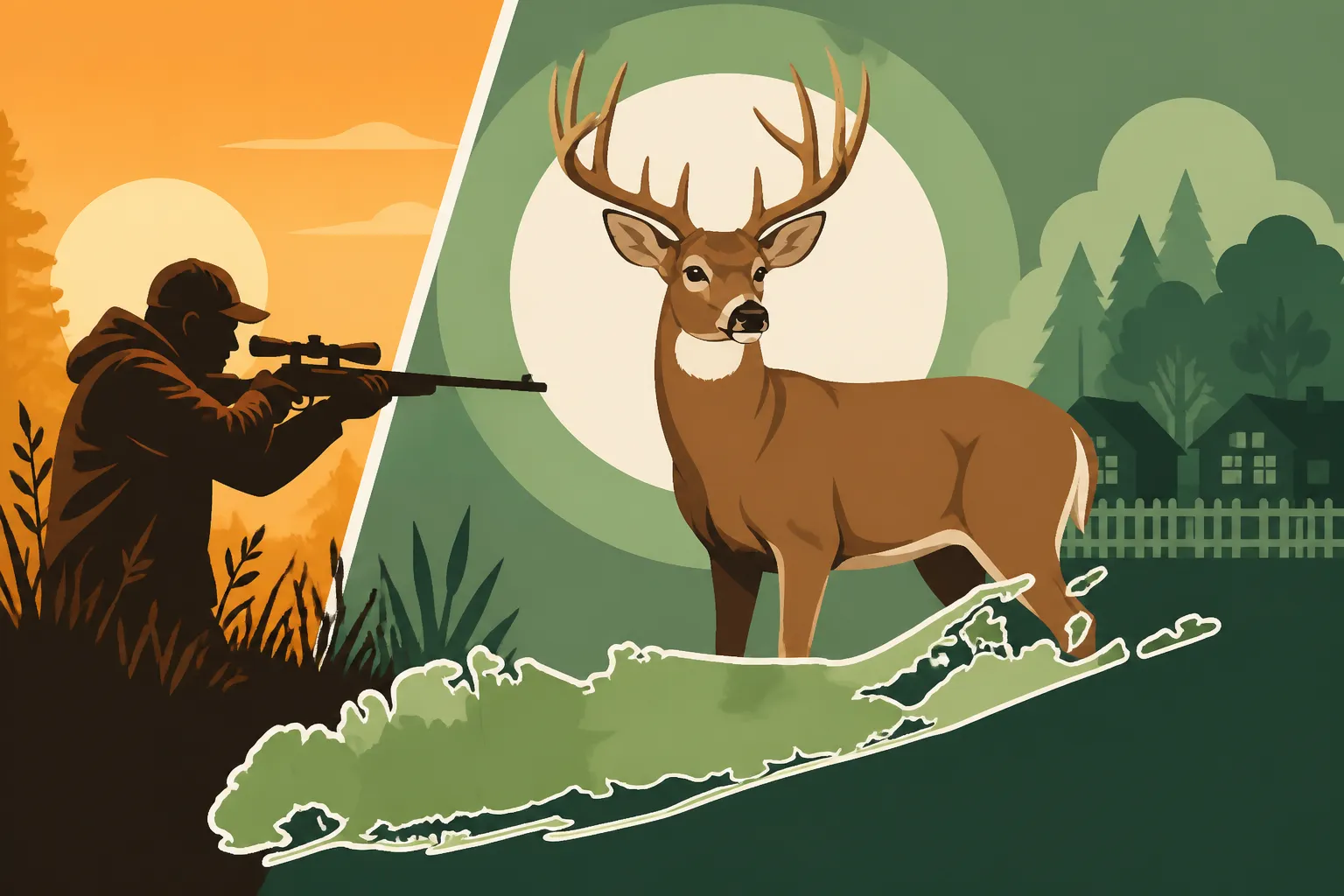
Long Island, while part of New York State, exists in a unique ecological and social bubble, unlike almost anywhere else in the state. This distinct environment creates a very different set of challenges when it comes to managing the white-tailed deer population, leading directly to the specialized hunting regulations we see today.
A Fragmented Landscape Amidst Urban Sprawl
One of the most significant factors on Long Island is the sheer density of human population and the fragmented nature of its landscape. Imagine miles of suburban development, crisscrossed by major roadways, with pockets of woodlands and green spaces. Deer, being incredibly adaptable creatures, thrive in this environment. They find shelter in small woodlots, feed in people's gardens, and often navigate neighborhoods as easily as they would a forest. This isn't the expansive, unbroken timber of the Adirondacks or the sprawling farmlands of the Southern Tier. Hunting Long Island and the Hudson Valley touches on some of these unique conditions. The continuous pressure of human activity, including roads, homes, and businesses, means that traditional deer hunting methods, like large-scale firearm drives or long-distance rifle shots, are simply not feasible or safe in many areas. The habitat is broken up, leading to deer concentrations in smaller, often isolated patches, which complicates both population control and safe hunting access.
High Deer Density and Human-Wildlife Conflicts
Despite the fragmentation, or perhaps because of it, Long Island experiences some remarkably high deer densities in certain areas. With fewer natural predators (like bears or wolves, which are non-existent here) and an abundance of landscaped vegetation to browse, deer populations can quickly outgrow the carrying capacity of their habitat, especially when considering human tolerance. This leads to a myriad of human-wildlife conflicts that are far more pronounced here than in more rural parts of New York. We're talking about extensive property damage to gardens and shrubs, a significant increase in deer-vehicle collisions on busy roads, and perhaps most critically, a higher risk of tick-borne diseases like Lyme disease, which can be a serious public health concern for residents. These issues compel wildlife managers to implement aggressive, yet carefully controlled, strategies to manage the herd.
Tailored Deer Management Strategies for a Complex Environment
Given the severe human-wildlife conflicts and the unique landscape, New York's wildlife managers have developed specialized, often localized, deer management strategies specifically for Long Island. These aren't just minor tweaks; they represent a fundamental shift from the state's broader hunting paradigms.
Extended Archery Seasons and Restricted Firearm Use
The most obvious difference you'll notice is the emphasis on extended archery seasons. Bowhunting is inherently safer in densely populated areas because of its shorter effective range and the trajectory of an arrow compared to a bullet. On Long Island, the archery season runs significantly longer than in other parts of the state, often starting earlier and extending much later into the winter. This provides ample opportunity for hunters to participate while minimizing risk to the public. You'll find specific dates and rules detailed under sections like New York Southern Zone Archery Dates, though Long Island will have its own variations. Traditional firearm hunting with rifles is largely prohibited on Long Island for safety reasons, given the residential density. Instead, hunters who use firearms are typically restricted to shotguns with slugs, and even then, these seasons are often shorter and more tightly controlled, often limited to specific areas or through special access programs. This restriction directly addresses the concern about projectile travel in populated areas and the potential for accidental injury or property damage.
Special Permit Systems and Controlled Access
Managing deer on Long Island often involves complex special permit systems, beyond just the general Deer Management Permits (DMPs) used statewide. For example, Suffolk County has historically had its own specific management plans and permits that dictate how and where deer can be taken. Suffolk County Deer Management Permits is a good example of this localized approach. These permits often tie into specific parcels of land, including county parks, state parklands, or even private properties under special agreements. The goal is to funnel hunting pressure into areas where it's needed most to reduce deer numbers, while maintaining public safety and controlling access. This might mean that to hunt certain areas, you need a specific permit in addition to your regular hunting license and DMPs, and you might need to apply through a separate lottery or registration process. This controlled access ensures that hunting is conducted safely and efficiently, often with specific check-in/check-out procedures and even escort requirements in some particularly sensitive zones.
Collaborating with Localities and Landowners
Because so much of Long Island is privately owned or managed by local municipalities, effective deer management relies heavily on collaboration. The state works closely with county parks departments, town governments, and even large private landowners (like golf courses or agricultural operations) to implement deer reduction strategies. These partnerships often lead to unique hunting opportunities that might not exist elsewhere. For instance, some municipalities might open specific sections of their parklands to bowhunting for a limited time, or allow supervised hunts on private properties that are experiencing severe deer damage. Hunters seeking access on Long Island often need to go beyond the typical public land search and actively seek permission from landowners or inquire with local government agencies about special programs. Using a mapping tool like onX Hunt can be incredibly helpful here, allowing you to identify property boundaries and potential areas for access, even showing public lands that might be hidden gems amidst the sprawl. It helps hunters understand where they stand legally, avoiding issues with New York Trespass and Permission Law.
Navigating Long Island's Special Deer Hunts as a Hunter
For hunters new to Long Island, or those used to more conventional seasons, the specific rules and access requirements can feel daunting. However, understanding the framework and knowing how to navigate it can lead to rewarding opportunities.
Obtaining Necessary Permits and Understanding Regulations
First and foremost, you'll need your standard New York State hunting license with bowhunting privileges if you intend to hunt with a bow, which is the predominant method on Long Island. Beyond that, pay very close attention to any supplementary permits or registrations required for specific areas, especially in Suffolk County. These details are often published annually and can vary from year to year. Make sure to check the latest New York State Department of Environmental Conservation (DEC) regulations specifically for Long Island (Wildlife Management Unit 1C) before planning your hunt. The season dates, bag limits, and even allowable hunting implements can differ significantly from the general statewide rules. For instance, while crossbows are generally allowed during archery season in New York, there might be specific nuances or restrictions in certain Long Island WMU subsections. Always consult the official DEC guide to confirm. New York Deer Management Permits Explained offers a good overview of the state's general DMP system, but remember that Long Island often layers additional requirements on top.
| Feature | Typical Southern Zone (e.g., WMU 7R) | Long Island (WMU 1C) |
|---|---|---|
| Archery Season Length | Standard ~50-60 days (Oct 1 – Nov 19 & Dec 12 – Dec 20, roughly) | Extended, often over 100 days (Sept 1 – Jan 31, roughly) |
| Firearm Season | Full firearm season with rifles/shotguns (mid-Nov to mid-Dec) | Restricted, shotgun/muzzleloader only, often shorter and localized |
| Primary Method | Rifles, shotguns, muzzleloaders, bows widely used | Primarily bowhunting; limited firearm opportunities |
| Deer Density | Varies, generally lower in large timber, higher in agricultural areas | High in many suburban and fragmented natural areas |
| Access | Extensive public land, private land permission | Limited public land, heavy reliance on municipal/special access programs |
| DMP Requirements | Standard statewide DMP lottery and instant issue | Often requires special local permits in addition to DMPs |
| Bag Limit | 1 buck, 2-3 antlerless (with DMPs), varies by WMU | Often higher antlerless bag limits to aggressively reduce numbers |
Finding Access in a Developed Area
Finding a place to hunt on Long Island is perhaps the biggest hurdle for many. While some state parks and county lands do allow hunting, these opportunities are often highly competitive or require special permits. Don't expect vast tracts of untouched public hunting land like you'd find upstate. This means that securing private land permission becomes even more critical. Approach landowners respectfully, explain the benefits of deer management to their property (e.g., reduced browsing damage, fewer ticks), and always leave the property cleaner than you found it.
Beyond private land, research municipal hunting programs. Many towns or counties on Long Island have specific deer management initiatives that open up limited hunting opportunities in parklands or other controlled areas. These often involve an application process, a lottery, or specific training requirements. It's a different kind of scouting; instead of looking for rubs and scrapes, you're often looking for information on local government websites or calling park offices. Using mapping apps, such as onX Hunt, can help identify property boundaries to ensure you're always aware of where you're hunting and whose land you're on, which is invaluable in a patchwork landscape. This detailed insight helps hunters understand Finding Ground Others Walk Past by seeing unpressured pockets.
Prioritizing Safety and Ethical Hunting Practices
Hunting on Long Island means being acutely aware of your surroundings and prioritizing safety above all else. With homes, roads, and people often in close proximity, every shot must be carefully considered. This is why archery is so prevalent and why strict rules regarding firearm use exist. When bowhunting, always know your target and what is beyond it, and only take clear, ethical shots at close range. Follow all blaze orange requirements, even when bowhunting if it's during a shared season or a special hunt that requires it, though Orange Requirements for Archery Hunters may vary depending on the specific Long Island season.
Ethical hunting also extends to how you interact with the non-hunting public. Be discreet, respectful, and present yourself as a responsible conservationist. This helps maintain positive public perception of hunting in an area where it might not be as widely understood or accepted as in other parts of New York. Understanding New York Firearms Discharge Setback Rules is absolutely paramount, as these distances from dwellings, schools, and public roads are often much harder to maintain in a developed environment. The unique circumstances of Long Island's special deer hunts underscore the importance of being not just an effective hunter, but also a considerate and responsible steward of wildlife within a challenging human-dominated landscape.
Disclaimer
This article is for general informational purposes only and does not constitute professional advice. Laws, prices and regulations vary by location and change over time. Consult a qualified professional for guidance on your specific situation.